As buildings in Kigali, Rwanda continue to develop across residential, commercial, hospitality, office, and entertainment sectors, controlling unwanted noise has become an important part of interior planning.
Noise can enter a room from neighbouring spaces, travel through lightweight partitions, pass between floors, or escape from areas containing equipment and machinery. In many cases, improving the acoustic performance of the building requires more than simply adding soft furnishings or decorative acoustic panels.
This is where Mass Loaded Vinyl (MLV) can become an important component of a professionally designed sound isolation system.
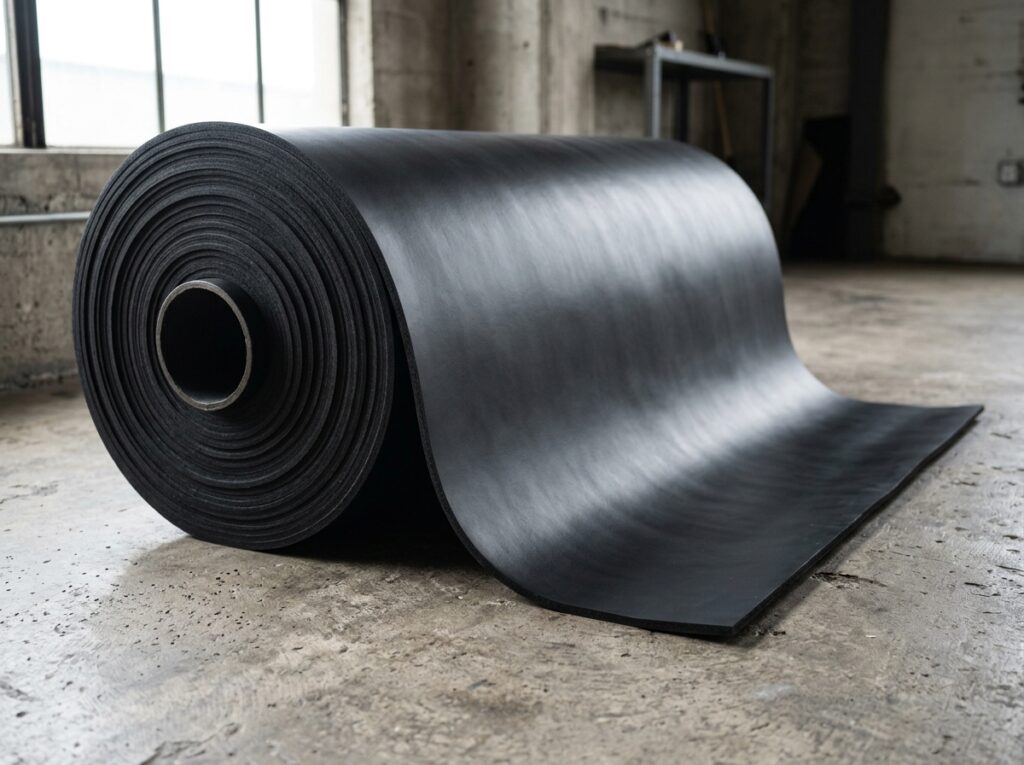
MLV is a dense, flexible barrier used to add acoustic mass to construction assemblies. It is commonly incorporated into walls, ceilings, floors, partitions, and specialist enclosures to help reduce airborne sound transmission.
Why Some Buildings Struggle With Noise Transmission
Sound does not necessarily travel through the most obvious route.
For example, noise from an office meeting may pass through a partition, but it could also travel around that partition through a ceiling void or through gaps surrounding electrical and mechanical services.
Similarly, noise from an upper floor may reach a room below through the floor-ceiling assembly.
This is why effective soundproofing begins with identifying the transmission path rather than immediately choosing a material.
Common sources of unwanted noise include:
- Conversations
- Television and entertainment systems
- Music
- Office activity
- HVAC equipment
- Pumps and machinery
- Traffic
- Commercial operations
- Neighbouring rooms
Once the transmission route is understood, an appropriate sound isolation system can be designed.
How Mass Loaded Vinyl Fits Into Soundproofing
MLV works differently from materials designed primarily to absorb sound inside a room.
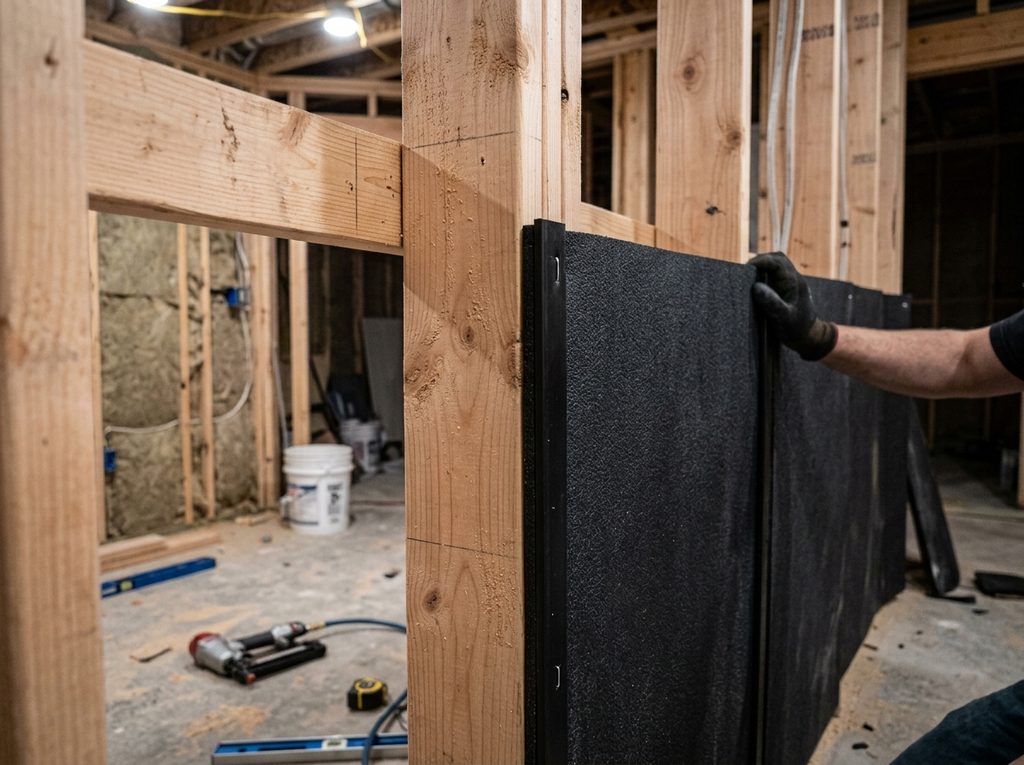
Its main purpose is to add mass to a building assembly, making it more resistant to airborne sound transmission. Its flexible form allows substantial mass to be introduced without requiring the same thickness as some rigid construction materials.
For example, an MLV layer can be incorporated behind plasterboard or within a wall assembly.
A simplified system might consist of:
Wall Structure
↓
Acoustic Insulation
↓
MLV Barrier
↓
Plasterboard / Finish Layer
The actual construction will depend on the project and the required acoustic performance.
MLV for Residential Properties in Kigali
Residential buildings can experience noise problems between bedrooms, living areas, neighbouring apartments, and other occupied spaces.
MLV may be incorporated into upgraded wall or ceiling assemblies where airborne sound transmission is the primary concern.
Shared Walls
Conversations, television, and music can travel through lightweight partitions.
An MLV-based wall upgrade can add acoustic mass as part of a broader sound isolation system.
Home Offices
With remote work and online communication becoming common, privacy can become important.
A sound isolation system can help reduce the amount of speech travelling between an office and adjacent rooms.
Media Rooms
Home entertainment spaces can generate significant airborne sound.
MLV can be incorporated into the surrounding construction to help limit sound transmission to other areas of the property.
Apartment and Multi-Unit Soundproofing
Multi-unit buildings can present particularly difficult acoustic conditions because several occupants share walls, ceilings, and floors.
A resident may hear:
- Conversations from neighbouring units
- Television
- Music
- General household activity
- Mechanical equipment
The appropriate solution depends on whether the noise is airborne, impact-related, or structure-borne.
For airborne noise travelling through a shared partition, MLV can be considered as one component of an upgraded wall assembly.
However, if footsteps or structural vibration are the primary problem, additional isolation methods may be required.
Improving Acoustic Privacy in Offices
Office privacy is not simply about keeping a room quiet.
In many situations, the objective is to prevent conversations from being easily understood outside the room.
This can be important in:
- Boardrooms
- Executive offices
- Meeting rooms
- Consultation rooms
- Training facilities
- HR offices
- Conference spaces
MLV can be integrated into partition systems to increase acoustic mass.
However, doors and glazing must also be considered.
A heavily upgraded wall will provide limited benefit if sound can easily pass through a lightweight door or an untreated gap around the frame.
Hospitality and Hotel Applications
Hotels require careful acoustic planning because guest rooms are located close to other rooms and shared circulation areas.
Noise may originate from:
Adjacent guest rooms
Hallways
Restaurants
Conference spaces
Service areas
Mechanical rooms
MLV can be incorporated into appropriate wall and ceiling assemblies where airborne sound isolation is required.
For example, a hotel room partition may use a combination of acoustic insulation, MLV, multiple board layers, and acoustic sealing to create a more robust barrier.
The complete assembly matters far more than the presence of MLV alone.
Soundproofing Restaurants and Entertainment Spaces
Restaurants, lounges, clubs, and entertainment areas can produce substantial amounts of sound.
Music and conversations can travel into neighbouring spaces, particularly when walls are lightweight or contain weak points.
MLV can form part of sound isolation assemblies surrounding entertainment areas.
However, two different acoustic problems should be separated.
Problem 1: Sound Escaping the Room
This requires sound isolation.
Problem 2: The Room Itself Is Too Loud
This generally requires sound absorption.
MLV addresses the first problem rather than the second.
If a restaurant has excessive echo, acoustic PET panels, wood wool, fabric treatment, ceiling baffles, or similar absorptive systems may be more appropriate.
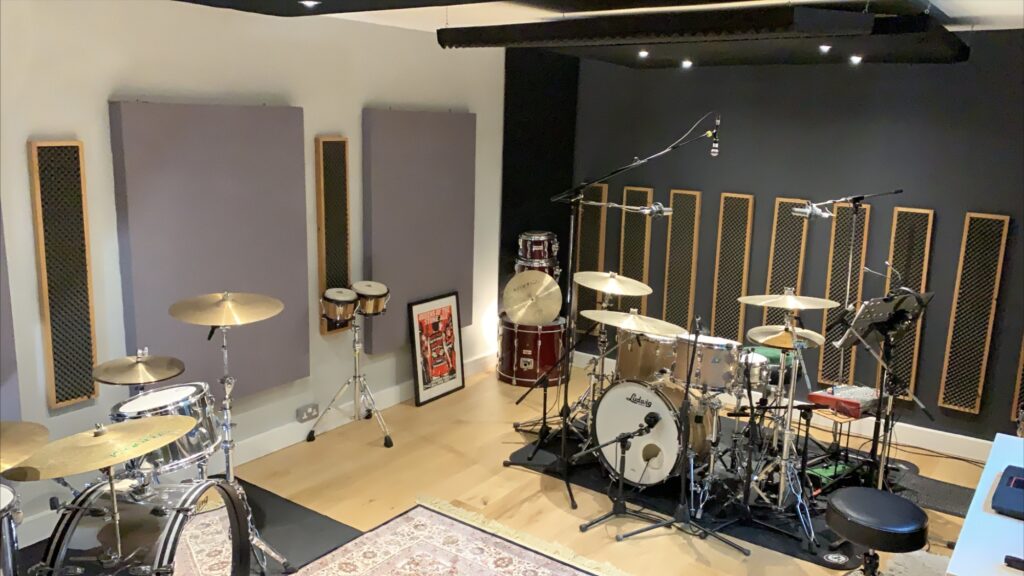
MLV for Recording and Media Spaces
Recording studios and media rooms require particularly careful acoustic construction.
The objective may be to prevent external noise from entering while also stopping music and other internally generated sound from disturbing surrounding areas.
MLV can be integrated into walls and ceilings as part of a multilayer isolation system.
A professional studio may combine:
- MLV
- Acoustic insulation
- Multiple layers of board
- Decoupled framing
- Acoustic doors
- Sealed penetrations
- Specialized floor construction
This layered approach addresses several different sound transmission mechanisms.
MLV provides additional mass, while other components address absorption, decoupling, and structural transmission.
Commercial and Industrial Noise Control
MLV is not limited to conventional walls.
Dense acoustic barriers can also be incorporated into certain equipment enclosures and mechanical noise-control applications. MLV products are used for walls, ceilings, floors, ductwork, and machinery enclosures.
Potential applications include:
- HVAC equipment
- Mechanical rooms
- Machinery
- Generator areas
- Ductwork
- Equipment enclosures
However, machinery can generate both airborne sound and vibration.
If vibration is travelling through the structure, additional vibration isolation may be necessary.
Why Installation Details Matter
One of the biggest mistakes in soundproofing is focusing entirely on the main wall surface.
Sound can exploit surprisingly small weaknesses.
Potential leakage points include:
- Electrical outlets
- Pipes
- Cables
- Air-conditioning openings
- Door frames
- Wall junctions
- Ceiling edges
- Service penetrations
MLV therefore needs to form part of a properly detailed assembly.
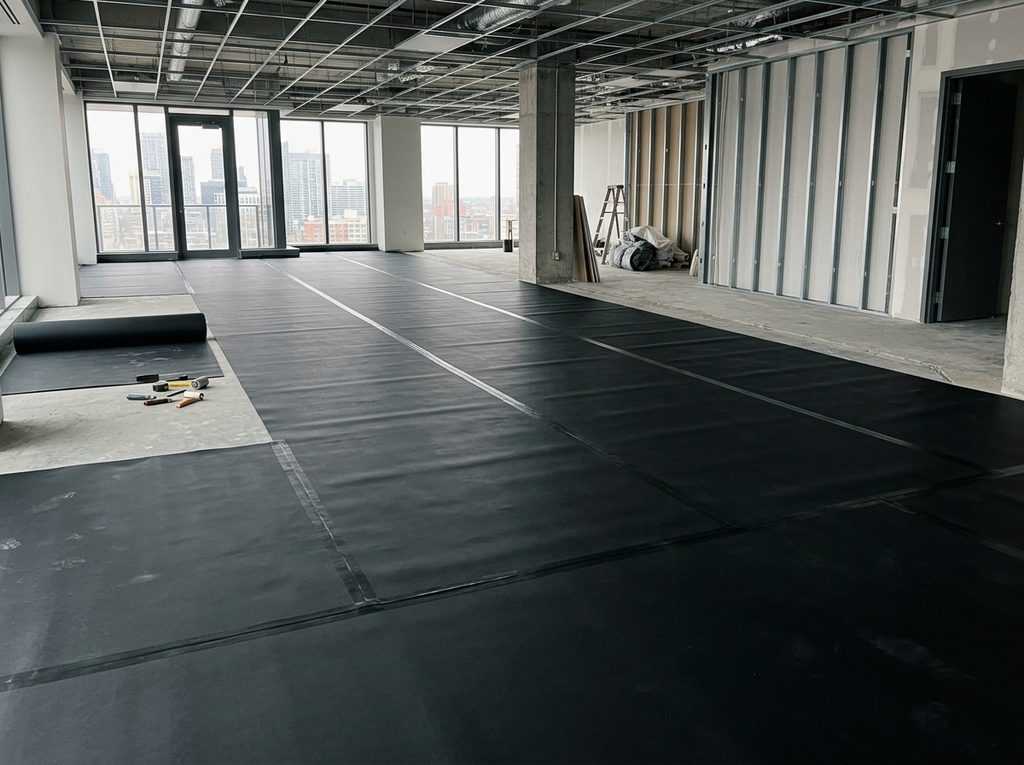
Continuous coverage, correctly treated seams, and sealed penetrations are important considerations during installation.
A sound barrier with multiple untreated openings can lose much of its practical advantage.
MLV in Ceiling Systems
Noise transmission is not always horizontal.
In multi-storey buildings, sound can move between floors through ceiling and floor assemblies.
MLV can be integrated into suitable ceiling constructions to help address airborne sound transmission.
Possible applications include:
- Apartments
- Hotels
- Offices
- Home theatres
- Recording rooms
- Commercial spaces
The ceiling design must also account for lighting, HVAC outlets, electrical installations, access panels, and other penetrations.
MLV for Floors
Floor systems present another acoustic challenge because they can be affected by both airborne and impact noise.
Airborne Noise
Examples include:
- Speech
- Music
- Television
- Equipment noise
Impact Noise
Examples include:
- Footsteps
- Dropped objects
- Furniture movement
MLV can contribute to floor assemblies where airborne sound transmission is the main concern.
Impact noise may require additional solutions such as resilient layers, floating floors, or vibration isolation.
This is why a proper assessment should take place before deciding which acoustic system is required.
MLV Is Not the Same as Acoustic Absorption
The difference between soundproofing and acoustic treatment is extremely important.
MLV is primarily a sound isolation material.
Acoustic PET panels, fabric panels, wood wool, and ceiling baffles are primarily designed to absorb reflected sound inside a room.
Consider an office where employees can hear conversations from the room next door.
MLV-based wall construction → potentially relevant
Now consider a restaurant where customers complain that the room is extremely echoey.
MLV → generally not the primary solution
Acoustic absorption → more appropriate
Some projects require both systems because they solve different problems.
When MLV Makes Sense
MLV can be particularly useful where a project needs additional acoustic mass without adding a very thick rigid barrier.
It can be considered for:
- Shared walls
- Office partitions
- Hotel rooms
- Home theatres
- Recording studios
- Ceilings
- Floor assemblies
- Mechanical enclosures
- Commercial sound isolation
The appropriate density and construction method should be selected according to the project requirements.
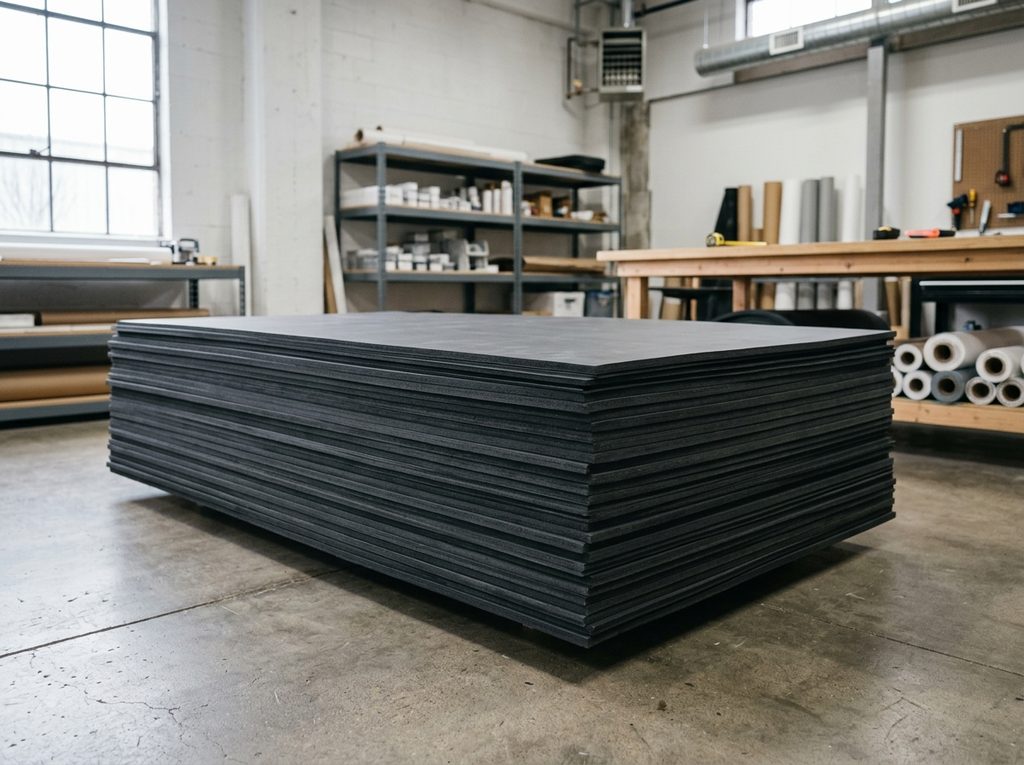
Published MLV specifications commonly offer different surface weights, with heavier barriers providing greater mass.
A Complete Soundproofing Approach
MLV should rarely be viewed as the entire soundproofing solution.
A high-performing assembly may combine several principles:
Mass
MLV and additional board layers increase the resistance of the assembly.
Absorption
Acoustic insulation within cavities can reduce sound energy within the wall.
Decoupling
Separated structural layers can reduce direct vibration paths.
Sealing
Acoustic sealants and carefully treated joints help prevent sound leakage.
Isolation
Specialized floor and mechanical systems can address vibration and impact transmission.
The exact combination depends on the building and the type of noise being controlled.
Professional MLV Soundproofing Services in Kigali
A professional acoustic project can begin with an evaluation rather than immediately selecting a product.
Services may include:
- Acoustic consultation
- Noise source identification
- Site assessment
- Sound transmission analysis
- Wall soundproofing
- Ceiling soundproofing
- Floor acoustic systems
- Partition upgrades
- Studio isolation
- Mechanical noise control
- MLV system planning
- Acoustic sealing
- Installation
This approach makes it possible to design the solution around the actual building rather than applying the same system everywhere.
How the Soundproofing Process Works
01 — Identify the Noise
Determine whether the main issue involves speech, music, machinery, traffic, HVAC systems, or another source.
02 — Find the Transmission Route
Establish whether the sound is travelling through walls, ceilings, floors, doors, glazing, ducts, or structural elements.
03 — Examine the Existing Construction
The existing assembly determines which upgrades are practical.
04 — Develop the Acoustic Strategy
MLV can then be introduced where additional mass is beneficial.
05 — Address Weak Points
Penetrations, joints, doors, and other potential leakage paths are incorporated into the design.
06 — Install the System
The selected acoustic assembly is installed according to its technical requirements.
MLV vs. Acoustic PET Panels
These systems should not be treated as alternatives for exactly the same problem.
| MLV | Acoustic PET Panels |
|---|---|
| Primarily sound isolation | Primarily sound absorption |
| Helps reduce sound transmission | Helps control room reflections |
| Usually concealed within construction | Usually visible inside the room |
| Adds acoustic mass | Absorbs sound energy |
| Used in walls, ceilings and floors | Commonly used on walls and ceilings |
The correct material depends on the acoustic objective.
Maintenance Considerations
MLV is commonly installed inside walls, ceilings, floors, or other assemblies, meaning it is not normally exposed to everyday room activity.
The most important consideration is therefore the integrity of the installation.
A soundproofing system should be protected from unnecessary punctures and modifications.
If future electrical, plumbing, or renovation work creates openings through the barrier, those areas should be properly resealed.
Frequently Asked Questions
What does Mass Loaded Vinyl do?
MLV adds dense acoustic mass to construction assemblies to help reduce airborne sound transmission.
Can MLV be installed inside a wall?
Yes. It can be incorporated into wall assemblies behind or between finishing layers.
Can it be used on ceilings?
Yes. MLV is used in suitable ceiling and floor-ceiling assemblies.
Does MLV eliminate room echo?
No. MLV is primarily intended for sound isolation rather than reverberation control.
Can MLV stop footsteps?
Not necessarily. Footstep noise can involve impact and structure-borne transmission, requiring additional acoustic measures.
Is MLV suitable for commercial buildings?
Yes. It can be incorporated into commercial walls, ceilings, floors, partitions, and certain equipment enclosures.
Acoustic Soundproofing Solutions for Kigali
A successful soundproofing project starts with the problem, not the material.
A hotel room, office, recording studio, apartment, and mechanical room all have different acoustic requirements.
For projects in Kigali, MLV can be considered where additional acoustic mass is needed to reduce airborne sound transmission.
When combined with appropriate insulation, decoupling, sealing, and other acoustic construction methods, it can form part of a much more complete sound isolation system.
Conclusion
Mass Loaded Vinyl offers a flexible method of introducing high acoustic mass into walls, ceilings, floors, partitions, and specialist acoustic assemblies.
Its primary role is to help reduce airborne sound transmission, making it useful for residential, commercial, hospitality, studio, and industrial applications.
However, effective soundproofing is rarely about one material.
The strongest results come from understanding the noise source, identifying its transmission path, examining the existing construction, and developing a system that combines the appropriate acoustic principles.
For buildings in Kigali, a professionally planned MLV soundproofing system can help create greater acoustic separation and more comfortable interior environments while working within the practical limitations of the existing architecture