A beautifully designed interior can still feel uncomfortable when the acoustics have not been considered.
In Accra, Ghana, modern offices, restaurants, hotels, educational facilities, creative studios, and commercial interiors increasingly use materials such as glass, concrete, tile, plasterboard, and other hard finishes. These materials can create a clean architectural appearance, but they can also reflect sound throughout a room.
As activity increases, conversations, telephone calls, movement, and background noise can accumulate.
The result is often an environment that feels louder than expected.
This is where a carefully planned acoustic PET panel system can make a difference. Rather than treating acoustic panels as simple wall decorations, they can be incorporated into the architecture to control reverberation, improve speech conditions, and make occupied spaces more comfortable.
PET acoustic systems are available for walls, ceilings, workstations, screens, and suspended applications, giving designers several ways to introduce sound absorption without changing the fundamental layout of a building.
The Difference Between a Quiet Room and a Well-Controlled Room
When people describe a room as “too noisy,” the problem is not necessarily the amount of sound being produced.
Sometimes the problem is what happens after the sound is produced.
A conversation creates sound waves. In a room containing large areas of glass, concrete, tile, or other reflective surfaces, those waves can bounce repeatedly between surfaces.
This creates reverberation.
When several people are speaking at once, the reflected sound can build into a continuous background that makes individual conversations harder to follow.
An effective acoustic design therefore aims to control the way sound behaves inside the space, rather than simply trying to eliminate every source of noise.
Where PET Acoustic Treatment Fits Into an Interior
PET acoustic panels are generally used as sound-absorbing elements.
Their fibre-based construction allows them to absorb part of the sound energy that reaches the panel, helping reduce reflections within the room.
Depending on the project, PET treatment can take several forms:
- Decorative wall panels
- Ceiling clouds
- Suspended baffles
- Acoustic screens
- Desk dividers
- Freestanding partitions
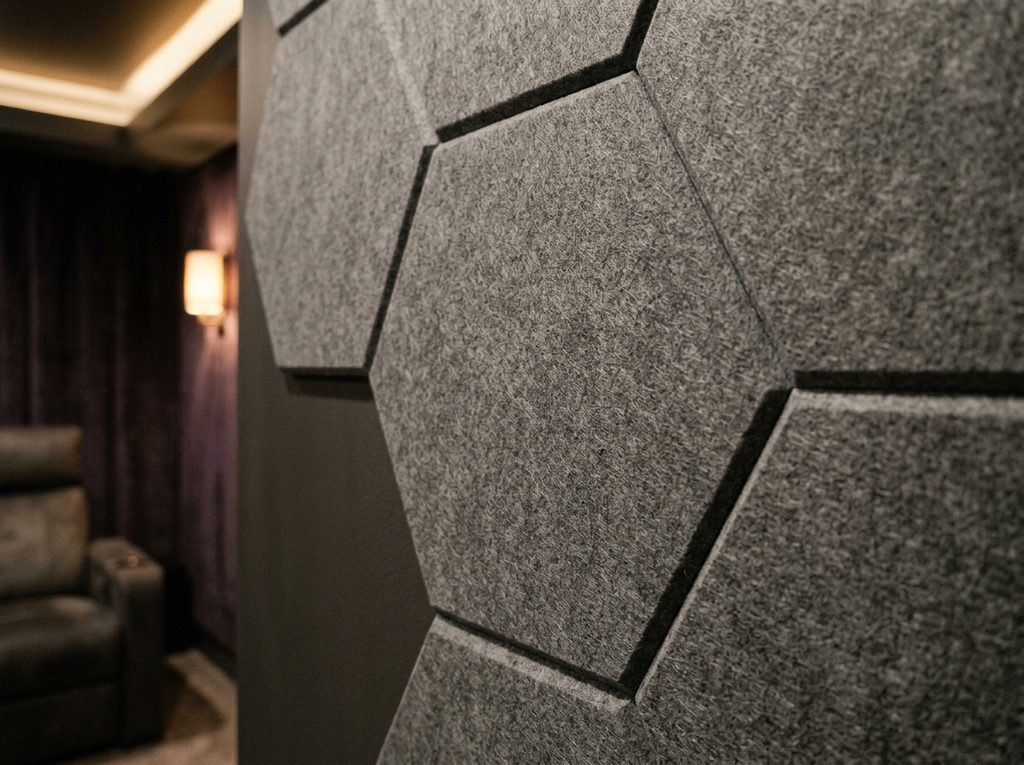
- Custom-cut wall features
- Ceiling rafts
This makes PET particularly useful when acoustic improvement needs to coexist with a modern interior design.
Designing Acoustic Treatment Around the Room
One of the biggest mistakes in acoustic treatment is assuming that more panels automatically mean better results.
The location of the treatment matters.
A small meeting room surrounded by glass may have completely different acoustic requirements from a large open-plan office.
Similarly, a restaurant with a high ceiling may benefit from suspended acoustic elements, while a private office may require strategically positioned wall treatment.
Before selecting the quantity and format of PET panels, an acoustic design should consider:
Room Size
The volume of the space influences how sound behaves.
Ceiling Height
Tall spaces can allow sound to remain active for longer.
Existing Materials
Glass, stone, tile, concrete, and other hard surfaces contribute to reflections.
Furniture
Soft furniture, curtains, carpets, and other elements already provide some absorption.
Occupancy
A room used by 10 people behaves differently from a space regularly occupied by 100 people.
Intended Function
A conference room, classroom, restaurant, and recording room do not require identical acoustic treatment.
PET Panels for Modern Accra Offices
The contemporary office is no longer simply a collection of desks.
Many workplaces now contain:
- Open workstations
- Meeting rooms
- Collaboration areas
- Phone-call spaces
- Breakout zones
- Reception areas
- Flexible work areas
This creates several different acoustic zones within the same floor.
In an open office, conversations and telephone calls can spread across the workspace, while hard surfaces reflect the sound back into the occupied area.
PET panels can be integrated into walls or ceilings to introduce additional absorption.
For open ceilings, suspended PET baffles can be particularly useful because both sides of the vertical panel can interact with sound in the surrounding space.
Turning Acoustic Treatment Into a Design Feature
Acoustic treatment does not have to look like technical equipment.
PET panels can be incorporated into the visual identity of an interior through:
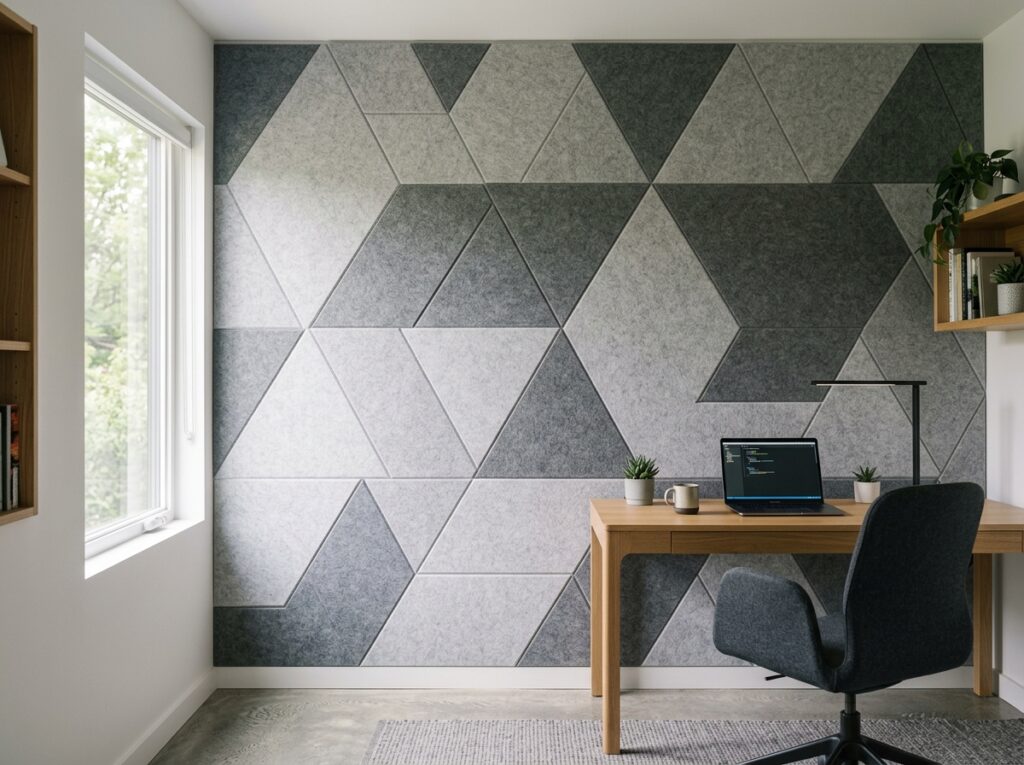
Geometric patterns
Layered shapes
Curved forms
Brand-inspired designs
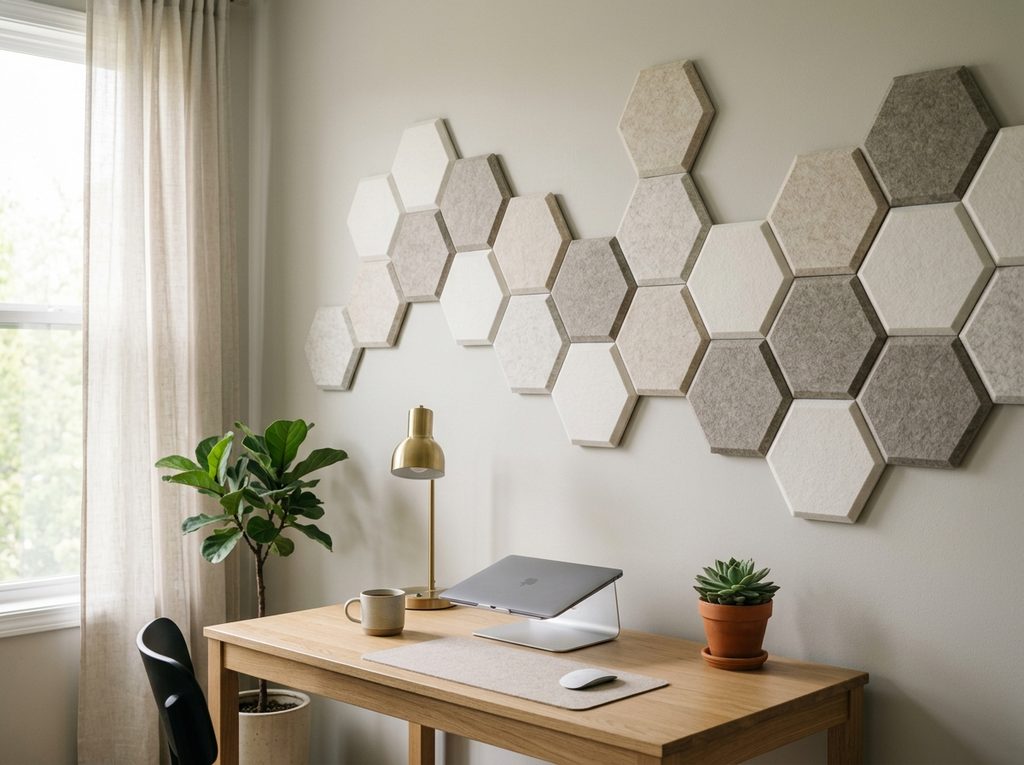
Decorative wall compositions
Custom-cut screens
This is especially useful for businesses that want their office or commercial space to maintain a distinctive visual character.
Instead of placing identical rectangular panels across every wall, the acoustic installation can become part of the interior architecture.
Custom shapes and configurations are commonly available for PET systems, including decorative wall installations and screens.
Meeting Rooms Need More Than Privacy Glass
Glass meeting rooms are visually attractive.
They allow natural light to move through the office and create a sense of openness.
Acoustically, however, large glass surfaces can be highly reflective.
Inside a meeting room, this can produce noticeable reverberation.
PET treatment can be introduced through:
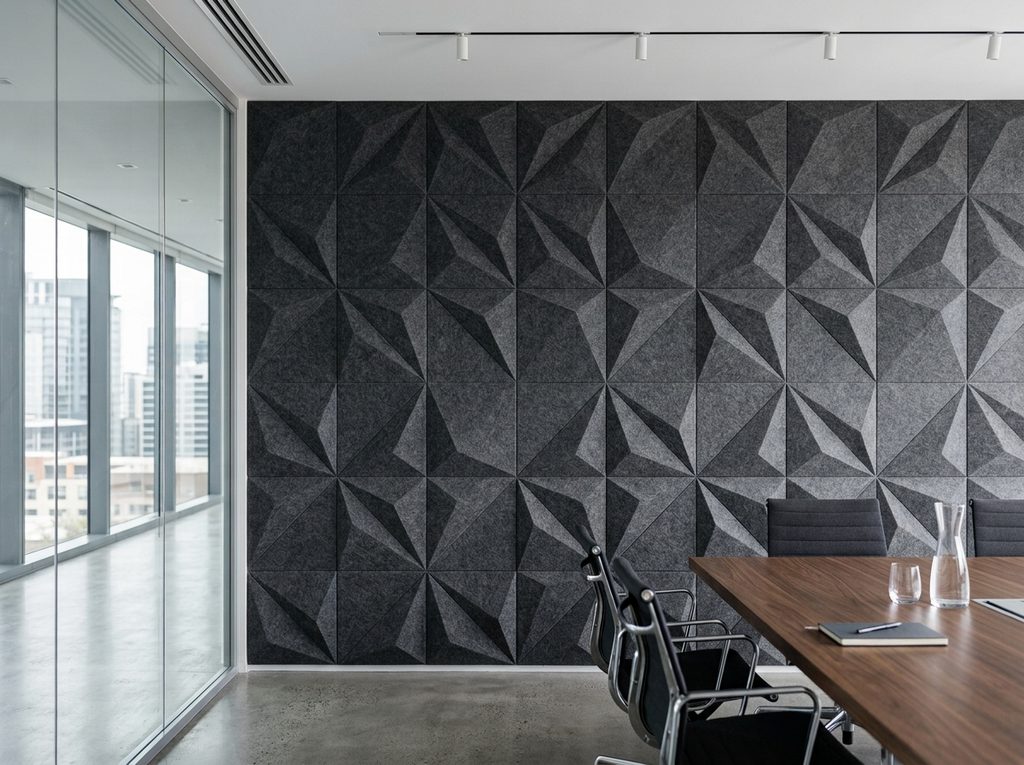
Feature Wall Treatment
A PET design can occupy the wall behind the presentation screen or meeting table.
Side-Wall Absorption
Panels can help control reflections travelling between opposing surfaces.
Ceiling Clouds
Suspended elements can introduce absorption from above.
Decorative Screens
PET screens can provide visual separation while also contributing acoustic absorption.
The final arrangement should be determined by the room’s geometry and acoustic objectives.
Improving Restaurants and Hospitality Interiors
A restaurant can be full of conversation without necessarily being pleasant to listen to.
As occupancy increases, the combined sound from customers and staff can become increasingly noticeable.
Hard floors, glass, exposed ceilings, and stone surfaces can allow these sounds to continue reflecting around the room.
PET acoustic elements can be incorporated without turning the restaurant into a conventional acoustic environment.
For example, treatment can be integrated into:
- Ceiling installations
- Decorative wall features
- Booth areas
- Room dividers
- Suspended architectural elements
The goal is to retain the restaurant’s character while reducing excessive reverberation.
Acoustic Treatment for Hotels
Hotels contain several spaces with different acoustic requirements.
A reception lobby has a different acoustic profile from a conference room, while a restaurant has different requirements from a lounge.
PET acoustic treatment can be considered for common areas such as:
Reception Areas
Large open spaces can benefit from carefully positioned ceiling or wall absorption.
Conference Facilities
Treatment can help improve speech conditions during meetings and presentations.
Lounges
Decorative acoustic features can complement soft seating and hospitality interiors.
Restaurants
Ceiling and wall treatment can help manage reflected conversations.
The acoustic design should always be based on the function and dimensions of each individual area.
Educational Spaces in Accra
Classrooms depend heavily on clear speech.
If a teacher’s voice continues reflecting around a room, students may have more difficulty following spoken information.
The problem can become more noticeable in classrooms containing hard floors, bare walls, windows, and relatively few absorptive surfaces.
PET panels can be incorporated into:
- Classrooms
- Lecture rooms
- Training centres
- Libraries
- Seminar rooms
- Student common areas
Wall-mounted panels can provide localized absorption, while ceiling treatment can be used where overhead reflections are significant.
PET Screens for Flexible Workspaces
Acoustic treatment does not always have to be permanently attached to a wall.
Freestanding and desk-mounted PET screens can create smaller acoustic zones within larger workspaces.
These can be useful for:
- Call centres
- Coworking spaces
- Hot-desking environments
- Shared offices
- Reception areas
- Collaboration zones
In addition to acoustic absorption, screens can create a degree of visual separation between users.
PET systems are available in desk-mounted and freestanding formats specifically for this type of application.
Using the Ceiling as an Acoustic Surface
In many commercial interiors, wall space is limited.
There may already be:
- Windows
- Artwork
- Displays
- Furniture
- Doors
- Branding
- Technology equipment
The ceiling therefore becomes an important location for acoustic treatment.
Suspended PET clouds and baffles can introduce additional absorption without requiring every wall to be covered.
They can also be arranged into architectural patterns, allowing the acoustic installation to contribute to the visual design of the space.
Ceiling baffles and suspended elements are commonly used in open-plan environments and spaces with exposed ceilings.
PET Acoustic Panels Are Not Soundproofing
This distinction is essential.
Acoustic treatment and soundproofing solve different problems.
PET panels primarily help control sound inside the room.
For example:
A restaurant has too much echo.
PET acoustic treatment may be appropriate.
But consider another situation:
Noise from the office next door is entering a private meeting room.
That is primarily a sound isolation problem.
The solution may involve construction methods such as:
- Acoustic insulation
- Mass Loaded Vinyl
- Multiple wall layers
- Decoupled partitions
- Acoustic doors
- Sealing systems
- Acoustic glazing
PET panels can potentially be used alongside these systems, but they should not be treated as a replacement for structural soundproofing.
Creating Acoustic Zones Within Large Spaces
Large rooms do not always need to be treated as one acoustic environment.
A commercial interior may contain several functional areas:
Reception → Collaboration → Workstations → Meeting Zone → Breakout Area
Each zone can have different acoustic requirements.
PET panels can help define these zones through both their physical arrangement and their acoustic function.
For example, a decorative PET screen can separate a collaboration area from workstations while providing additional sound absorption.
This approach allows acoustic planning and space planning to work together.
Custom PET Designs for Commercial Interiors
One of the most useful aspects of PET systems is their ability to be adapted to different interior concepts.
Panels can be cut into customized forms and arranged into larger compositions.
Possible concepts include:
- Abstract geometric patterns
- Repeating linear designs
- Curved installations
- Layered wall features
- Decorative partitions
- Company-inspired shapes
This makes it possible to develop an acoustic installation that looks intentionally designed for the space rather than added afterward.
How an Acoustic Assessment Can Help
Before specifying PET treatment, a professional assessment can identify the characteristics of the space.
The process may involve evaluating:
Existing Surfaces
Which materials are reflecting the most sound?
Reverberation
How long does sound remain active after the original source stops?
Room Usage
What activities normally take place in the space?
Occupancy
How many people typically use the room?
Acoustic Priorities
Is the main objective speech clarity, reduced reverberation, improved comfort, or a combination?
Treatment Locations
Would walls, ceilings, screens, or a combination provide the most useful result?
This prevents acoustic panels from being installed randomly.
Professional Acoustic PET Panel Services in Accra
A complete acoustic project can involve much more than supplying panels.
Professional acoustic services may include:
- Acoustic consultation
- Site assessment
- Room acoustic evaluation
- Treatment planning
- Wall panel design
- Ceiling acoustic design
- Custom PET layouts
- Decorative acoustic features
- Acoustic screens
- Installation planning
- On-site installation
The objective is to create an acoustic environment suited to the building’s actual purpose.
A Practical Project Workflow
Step 1 — Understand the Space
The room’s dimensions, surfaces, ceiling height, furniture, and usage are evaluated.
Step 2 — Identify the Acoustic Problem
Determine whether the main issue is reverberation, speech clarity, background noise, or another acoustic condition.
Step 3 — Develop the Treatment Layout
Decide where absorption would provide the greatest benefit.
Step 4 — Select the PET Format
Choose between wall panels, ceiling clouds, baffles, screens, or custom elements.
Step 5 — Coordinate With Interior Design
Colours, shapes, patterns, and positioning can be integrated with the architectural concept.
Step 6 — Install the System
The selected treatment is installed according to the project requirements.
Where PET Panels Can Be Used
| Environment | Potential PET Application |
|---|---|
| Open-plan offices | Ceiling elements, wall panels and workstation screens |
| Meeting rooms | Wall treatment and acoustic clouds |
| Restaurants | Decorative ceiling and wall treatment |
| Hotels | Lobbies, lounges and conference spaces |
| Classrooms | Wall and ceiling absorption |
| Libraries | Wall panels and ceiling systems |
| Coworking spaces | Screens and suspended treatment |
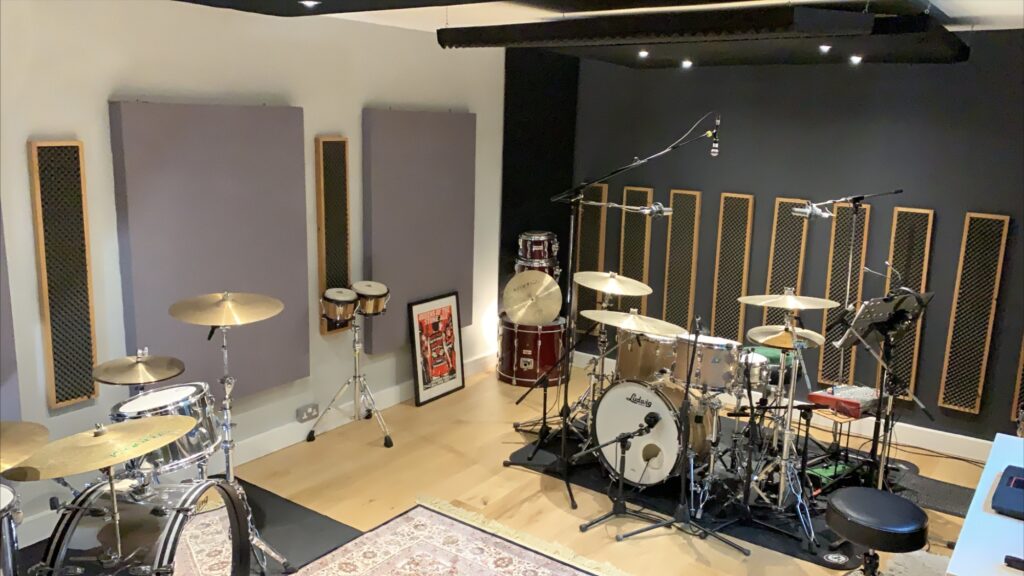
| Studios | Supplementary acoustic absorption |
| Reception areas | Decorative acoustic walls and ceiling features |
PET systems are used across offices, educational environments, hospitality spaces, studios, and other commercial interiors.
Looking After PET Acoustic Installations
Once installed, PET panels generally require straightforward routine care.
A maintenance program can include:
- Regular dust removal
- Gentle vacuuming where appropriate
- Immediate treatment of visible marks
- Avoiding excessive moisture
- Using cleaning methods recommended for the specific panel
- Checking panels periodically for physical damage
The manufacturer’s maintenance instructions should always take priority because cleaning requirements can vary between systems.
Frequently Asked Questions
What are acoustic PET panels used for?
They are primarily used to absorb reflected sound and reduce reverberation within interior spaces.
Can PET panels make an office quieter?
They can help reduce reflected sound and improve acoustic comfort, particularly in spaces with many hard surfaces.
Are PET panels suitable for high ceilings?
Yes. Suspended baffles and ceiling clouds can be particularly useful in larger or higher spaces.
Can PET panels be used as room dividers?
Yes. Freestanding and desk-mounted PET screens can provide both visual separation and acoustic treatment.
Do PET panels completely soundproof a room?
No. They primarily absorb sound inside the room. Sound isolation requires a different construction strategy.
Can PET panels be customized?
Many PET acoustic systems support customized shapes, colours, patterns, and configurations.
Building Better Acoustic Interiors in Accra
Good acoustics should be considered alongside lighting, furniture, materials, and spatial planning.
A successful interior is not only visually attractive. It should also sound appropriate for the activities taking place inside it.
For offices, restaurants, hotels, classrooms, meeting rooms, and other spaces in Accra, PET acoustic treatment can provide a flexible way to introduce sound absorption while maintaining the architectural character of the interior.
The key is not simply choosing an attractive panel.
It is choosing where, how, and why that treatment is used.
Conclusion
Acoustic PET panels provide a flexible approach to managing reverberation and reflected sound in modern interiors.
Their applications extend from conventional wall panels to suspended ceiling systems, decorative features, workstation screens, room dividers, and customized architectural installations.
For projects in Accra, they can be incorporated into offices, hospitality venues, educational environments, restaurants, studios, and other commercial spaces where acoustic comfort is important.
Most importantly, PET panels should be considered as part of a complete acoustic strategy. Their purpose is to improve the way sound behaves within a room—not to replace structural soundproofing.
With appropriate assessment, thoughtful placement, and professional installation, PET acoustic treatment can help transform reflective spaces into environments that feel clearer, calmer, and more comfortable for the people using them.