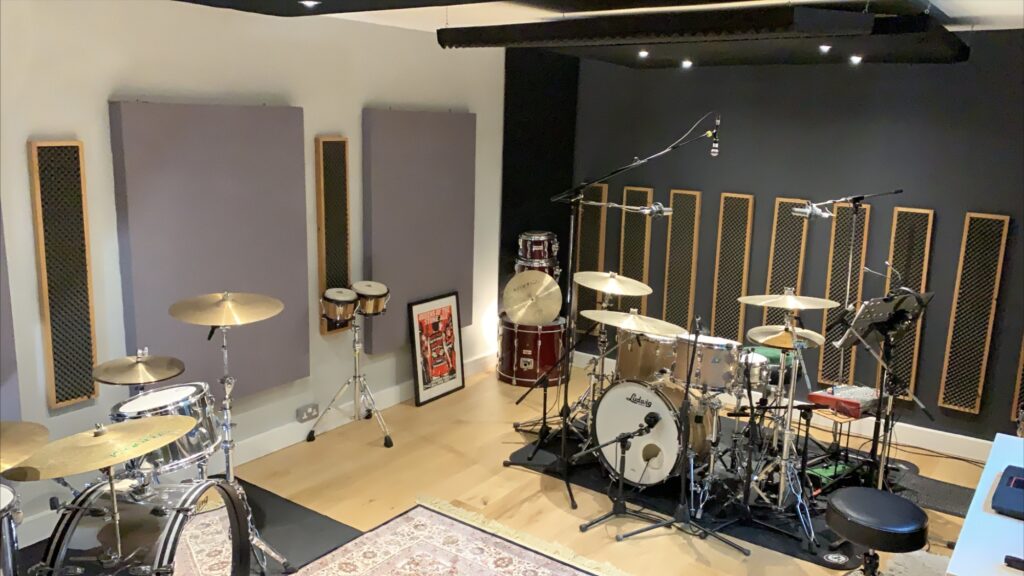
The architecture of Abu Dhabi, UAE combines expansive commercial spaces, luxury hospitality interiors, modern workplaces, educational facilities, and sophisticated residential developments. Many of these environments rely on materials such as glass, stone, concrete, ceramic surfaces, and other hard finishes.
Although these materials create a polished appearance, they can also make interior spaces highly reflective acoustically.
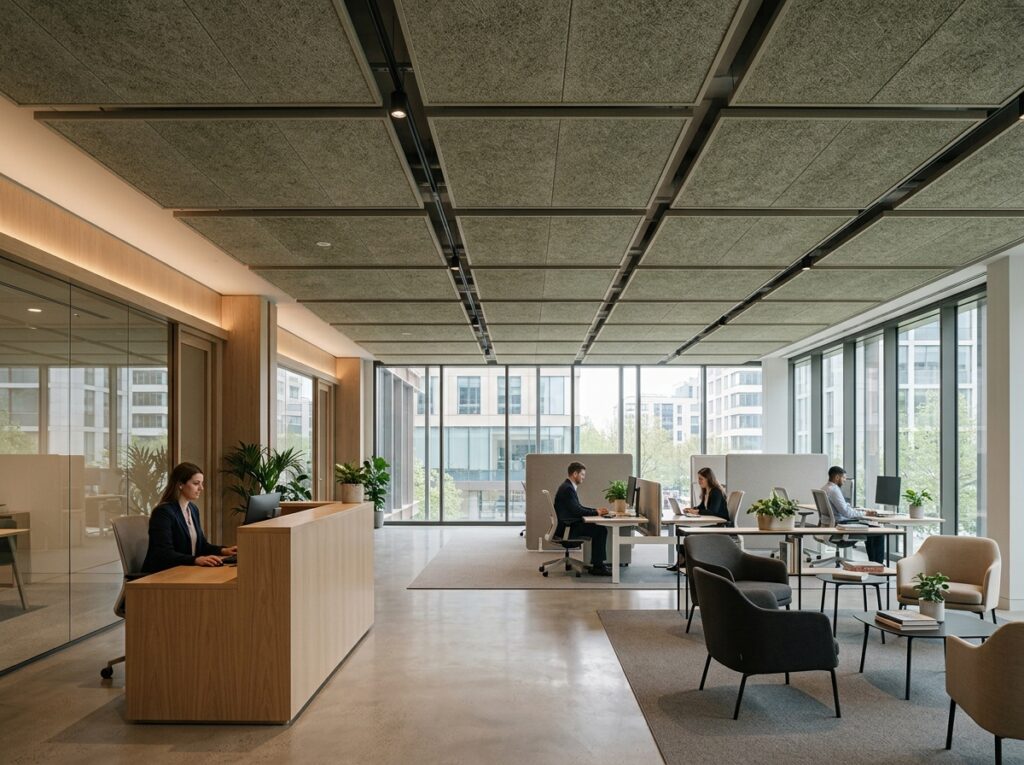
In a large office, for example, several conversations can continue bouncing across the room instead of being absorbed. In restaurants and hospitality spaces, the combined effect of customers, music, staff activity, and hard surfaces can create an increasingly loud environment.
This is where acoustic wood wool treatment can provide a practical solution.
Wood wool panels introduce sound-absorbing surfaces while maintaining a distinctive textured appearance that can complement contemporary architecture. Their performance depends on factors such as panel thickness, mounting configuration, air gaps, and the amount of treatment used.
Turning Hard Interiors Into More Balanced Acoustic Spaces
A room does not need to be completely quiet to be acoustically comfortable.
The goal is usually to control how sound behaves after it is produced.
When someone speaks, sound travels directly toward the listener while additional energy reflects from walls, ceilings, floors, and other surfaces. Too many reflections can make speech sound unclear and cause the room to feel noisy.
Wood wool treatment can help absorb a portion of these reflections.
This makes it particularly useful for spaces where speech clarity and reverberation control are important.
What Makes Wood Wool Suitable for Acoustic Treatment?
Wood wool acoustic boards are generally produced using wood fibres combined with a mineral-based binder. The resulting panel has a textured, open surface that can interact with sound waves.
Unlike a conventional decorative wall finish, an acoustic wood wool system can contribute directly to the acoustic performance of the room.
Depending on the specification, systems can be used on:
- Walls
- Ceilings
- Feature surfaces
- Suspended installations
- Large communal spaces
- Commercial interiors
The final acoustic performance is influenced by the panel and its installation assembly rather than the panel alone.
Where Wood Wool Can Make the Biggest Difference
Not every room needs the same amount of acoustic treatment.
The most effective approach is to identify areas where reflections are contributing significantly to the acoustic problem.
Corporate Workspaces
Open-plan offices can contain many simultaneous conversations and activities.
Wood wool treatment can be incorporated into selected walls or ceilings to help control reverberation and make communication more comfortable.
Conference Rooms
Meeting spaces depend on speech clarity.
Strategically positioned absorption can help reduce unwanted reflections around participants and presentation areas.
Restaurants
Restaurants often become acoustically challenging during busy periods. Wood wool can introduce absorption while functioning as part of the interior design.
Public Spaces
Large halls, educational environments, and communal spaces can have long reverberation times because of their size and reflective construction.
Wood wool is used in various public and commercial environments specifically because it can combine acoustic absorption with a durable architectural surface.
Acoustic Wood Wool for Abu Dhabi Offices
The modern workplace is no longer simply a collection of private rooms.
Many offices now incorporate:
- Open workstations
- Glass meeting rooms
- Collaboration zones
- Breakout areas
- Informal seating
- Large reception spaces
These layouts encourage interaction, but they can also allow sound to spread throughout the office.
A professional acoustic treatment plan can identify areas where absorption would be most beneficial.
For example, wood wool can be incorporated behind a reception desk, along a large reflective wall, or across selected ceiling sections.
This approach avoids unnecessarily covering every available surface.
Creating Better Meeting Environments
A boardroom can have excellent furniture and technology and still have poor acoustics.
Large tables, glass partitions, hard ceilings, and smooth flooring can all contribute to reflections.
Wood wool panels can be positioned on selected surfaces to reduce the amount of reflected sound returning into the occupied area.
The objective is not to eliminate every reflection.
Instead, the treatment aims to create a more controlled acoustic environment where participants can communicate without excessive reverberation.
Hospitality Interiors
Abu Dhabi’s hospitality sector includes restaurants, lounges, hotels, conference venues, and event spaces where appearance and acoustic comfort both matter.
Wood wool provides an opportunity to combine these requirements.
A designer can incorporate acoustic treatment into:
Hotel Lobbies
Large open lobbies can contain significant reflective surfaces. Wall or ceiling treatment can introduce absorption without compromising the architectural concept.
Restaurants
Acoustic wood wool can become a feature element while helping control the buildup of reflected customer conversations.
Lounges
The textured appearance of wood wool can complement warm interior materials while contributing to a more comfortable sound environment.
Conference Facilities
Strategically positioned treatment can support speech clarity during presentations and discussions.
Educational Spaces
Classrooms and training environments depend heavily on spoken communication.
When reverberation is excessive, speech may become less distinct, particularly for people sitting farther away from the speaker.
Wood wool acoustic treatment can be considered for:
- Classrooms
- Lecture rooms
- Libraries
- Training facilities
- Seminar rooms
- Multipurpose halls
The design should take room volume, occupancy, furniture, ceiling height, and existing surfaces into consideration.
Residential Wood Wool Applications
Acoustic treatment is not restricted to commercial buildings.
In larger residences, hard flooring, expansive glazing, stone surfaces, and open-plan layouts can create noticeable reflections.
Wood wool can be incorporated into selected residential spaces such as:
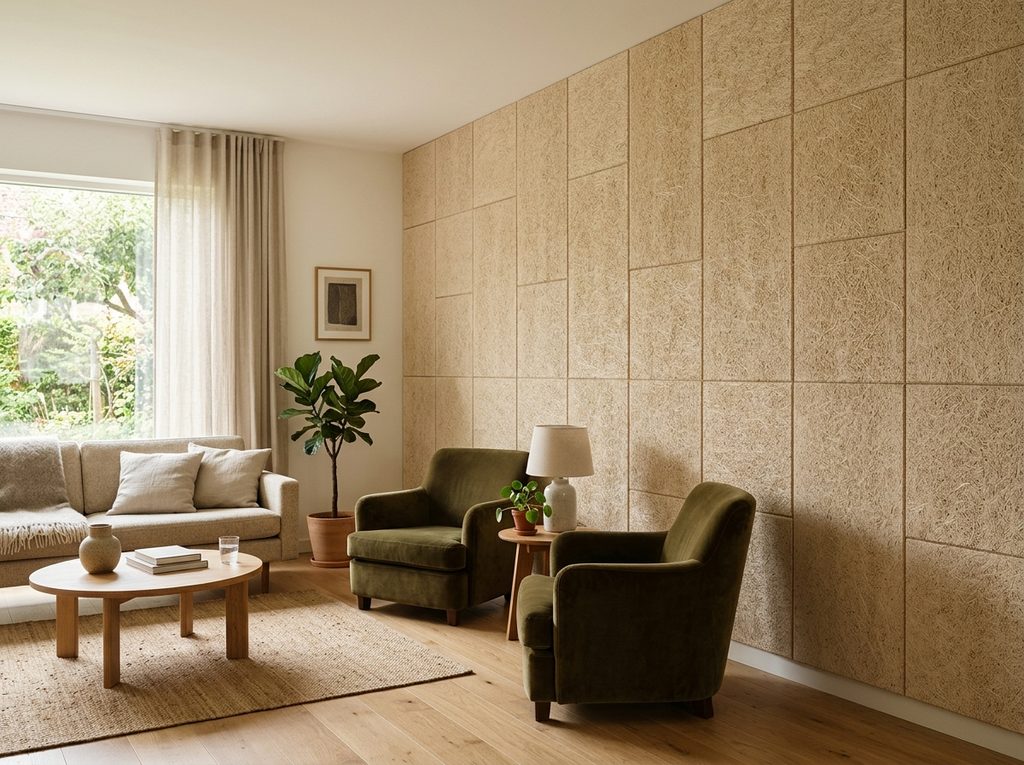
Living Rooms
Large living areas can benefit from additional sound absorption when furnishings alone are insufficient.
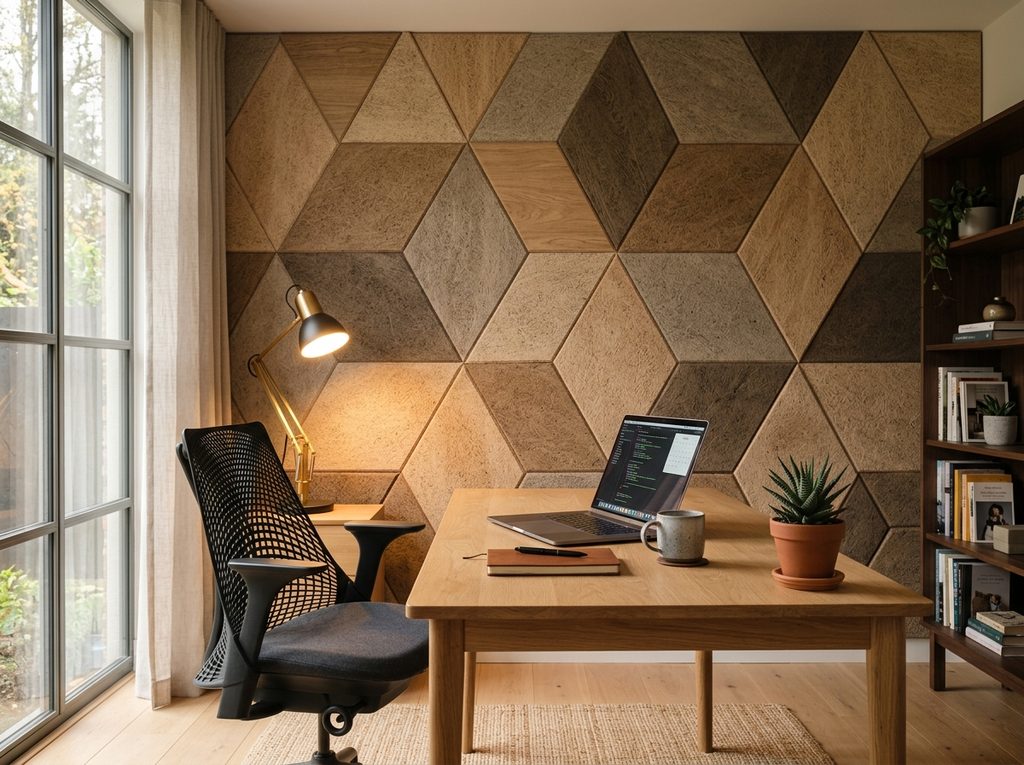
Home Offices
Treatment can help create a more controlled environment for calls and online meetings.
Media Rooms
Wood wool can contribute to controlling reflected sound around entertainment systems.
Open-Plan Areas
A strategically designed acoustic feature can provide both visual separation and acoustic absorption.
Wall Treatment Without Sacrificing Interior Design
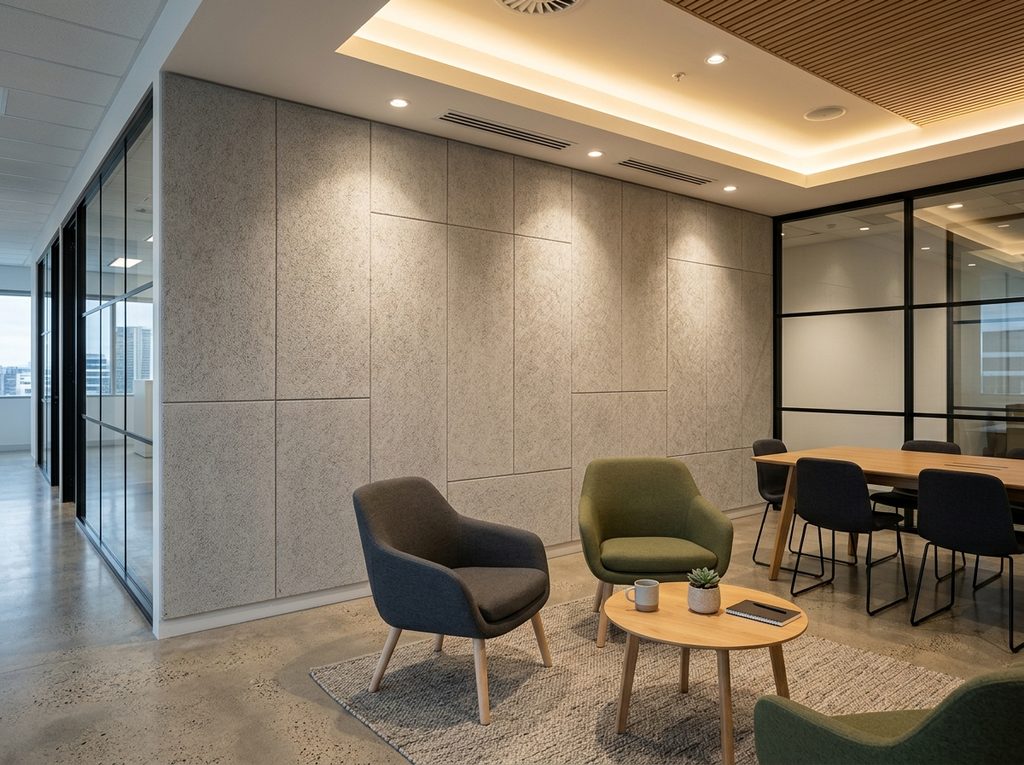
One reason wood wool is attractive to designers is that the acoustic surface itself can become part of the architecture.
Instead of hiding the treatment, it can be deliberately highlighted.
Potential applications include:
- Reception feature walls
- Decorative office walls
- Restaurant interiors
- Conference room backdrops
- Media room walls
- Educational feature areas
The natural textured appearance can provide visual depth to otherwise plain surfaces.
Ceiling Treatment for Large Spaces
Walls are only one part of the acoustic equation.
A large ceiling can act as a major reflective surface, particularly in open commercial environments.
Wood wool systems can be incorporated into ceilings to introduce additional sound absorption.
Depending on the design, ceiling treatment can also visually define specific areas.
For example:
Reception zone → Acoustic ceiling feature
Meeting area → Concentrated ceiling treatment
Dining area → Distributed acoustic treatment
This allows acoustic design and interior planning to work together.
Panel Thickness and Installation Matter
One of the common mistakes in acoustic projects is looking only at the material itself.
The installation assembly can have a significant influence on acoustic performance.
Factors can include:
- Panel thickness
- Mounting method
- Air cavity behind the panel
- Backing material
- Total coverage
- Room dimensions
For example, published acoustic data for wood wool systems shows that performance can vary substantially with thickness and mounting configuration.
Therefore, the correct approach is to specify the complete acoustic assembly, rather than choosing a panel based solely on appearance.
Wood Wool Is an Acoustic Treatment, Not Complete Soundproofing
This distinction is essential.
Acoustic treatment controls sound within a room.
Soundproofing attempts to reduce sound transmission from one space to another.
Wood wool panels are primarily used for absorption and reverberation control. They can help make a room sound better, but they should not be treated as a standalone solution for stopping neighbouring noise.
If noise is travelling between rooms, a different construction may be required.
A sound isolation project could involve:
- Acoustic insulation
- Mass Loaded Vinyl
- Multiple board layers
- Resilient channels
- Acoustic doors
- Acoustic glazing
- Sealing of gaps and penetrations
The appropriate combination depends on the building and the noise transmission path.
Why a Site-Specific Acoustic Strategy Is Better
Every room behaves differently.
A 20-person meeting room cannot be treated in exactly the same way as a large restaurant or auditorium.
A professional acoustic assessment can evaluate:
Room volume
Reflective surfaces
Existing absorption
Occupancy
Noise sources
Desired acoustic performance
From this information, treatment can be distributed where it is likely to have the greatest effect.
This can also prevent unnecessary material from being installed in areas where it provides little additional benefit.
Professional Acoustic Wood Wool Services in Abu Dhabi
A complete acoustic project can involve considerably more than supplying panels.
Professional services can include:
- Acoustic consultation
- Site assessment
- Room acoustic evaluation
- Acoustic treatment planning
- Wall treatment design
- Ceiling treatment design
- Material specification
- Custom acoustic layouts
- Installation
- Post-installation evaluation
The objective is to develop an acoustic environment around the requirements of the building rather than simply selecting a decorative material.
Maintenance and Long-Term Care
Wood wool installations generally require routine surface care rather than complicated maintenance.
Depending on the selected system and finish, maintenance may include:
- Removing dust regularly
- Gentle vacuuming
- Cleaning marks using suitable methods
- Avoiding excessive moisture
- Avoiding abrasive cleaning products
- Checking for physical damage
The manufacturer’s cleaning and maintenance recommendations should always take priority.
Frequently Asked Questions
Is wood wool good for reducing echo?
Yes. Wood wool panels can absorb reflected sound and help reduce excessive reverberation when properly specified and positioned.
Can wood wool be used on ceilings?
Yes. Wood wool acoustic systems are available for both wall and ceiling applications.
Is wood wool suitable for restaurants?
Yes. It can provide sound absorption while also functioning as an architectural finish. Wood wool is used in restaurant and hospitality environments for this combination of acoustic and visual properties.
Does wood wool block noise from another room?
Not by itself. Its primary role is sound absorption inside the treated space.
Can wood wool be used in offices?
Yes. It can be incorporated into open-plan offices, meeting rooms, reception areas, and other commercial environments where reverberation is an issue.
Acoustic Wood Wool Solutions for Abu Dhabi Projects
The right acoustic treatment should be built around the space.
An office may need better speech conditions, a restaurant may require control over cumulative background noise, and a large hall may require a more extensive reverberation strategy.
For projects in Abu Dhabi, professional acoustic planning can help determine where wood wool treatment can provide the greatest benefit and whether additional acoustic systems are required.
This creates a more considered approach than simply installing panels across available surfaces.
Conclusion
Acoustic wood wool offers a combination of sound absorption, durability, and distinctive architectural character.
For modern offices, restaurants, hotels, educational facilities, conference spaces, and residences in Abu Dhabi, it can provide an effective way to manage excessive reflections and improve the acoustic comfort of interior spaces.
Its greatest value comes when it is incorporated into a properly planned acoustic strategy.
By evaluating the room, identifying reflective surfaces, selecting an appropriate panel configuration, and carefully planning installation, acoustic wood wool can become both a functional acoustic treatment and an integral part of the interior design.