As buildings across Doha, Qatar continue to incorporate modern offices, residential developments, hotels, entertainment venues, studios, and commercial facilities, controlling unwanted noise has become an important part of interior planning.
Noise can travel through lightweight partitions, ceilings, floors, doors, and other building elements, creating privacy and comfort concerns. In spaces where conventional construction does not provide sufficient isolation, additional acoustic layers can be incorporated into the building assembly.
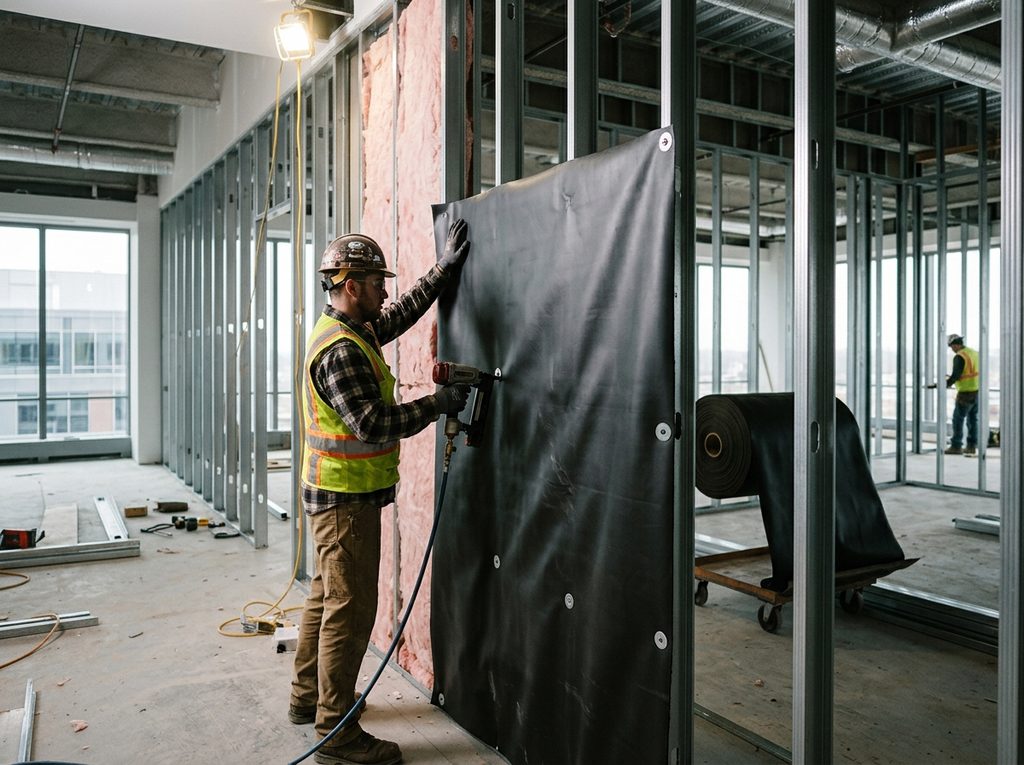
Mass Loaded Vinyl (MLV) is one such material. Its dense and flexible structure allows it to add acoustic mass to suitable walls, partitions, ceilings, floors, and other assemblies without requiring the thickness of a conventional rigid barrier.
What Is Mass Loaded Vinyl?
Mass Loaded Vinyl is a dense, flexible membrane engineered for use in sound isolation systems.
Its main function is to increase the mass of a construction assembly. Greater mass can make it more difficult for airborne sound energy to vibrate the structure and pass through it.
Unlike rigid acoustic barriers, MLV can be supplied in flexible rolls, allowing it to be incorporated into different construction configurations.
Common applications include:
- Partition walls
- Stud walls
- Ceilings
- Floors
- Doors
- Equipment enclosures
- Mechanical areas
MLV is most effective when designed as one component of a complete soundproofing assembly.
How Does MLV Help With Noise?
Airborne sound can cause walls and other building elements to vibrate. Those vibrations can then transfer sound energy into adjacent spaces.
Adding a dense membrane increases the overall mass of the assembly, helping make the structure more resistant to airborne sound transmission.
A simplified principle is:
Additional mass → Reduced structural response → Lower airborne sound transmission
However, sound can also travel through gaps, junctions, ventilation paths, doors, and other weak points.
For that reason, installing MLV alone does not guarantee complete soundproofing.
Soundproofing Challenges in Doha
Doha’s buildings include a wide range of environments with different acoustic requirements.
A luxury apartment may need greater privacy between neighbouring rooms, while a hotel may require better separation between guest areas.
Corporate offices can require quieter meeting rooms, while recording facilities may need considerably higher levels of sound isolation.
Potential sources of unwanted sound include:
- Neighbouring rooms
- Corridors
- Traffic
- Building services
- Mechanical equipment
- Entertainment systems
- Conversations
- Commercial activity
MLV can be incorporated into appropriate assemblies based on the source and transmission route of the noise.
MLV for Residential Soundproofing
Residential buildings often require acoustic separation between bedrooms, living spaces, corridors, and neighbouring units.
MLV can be integrated into suitable wall and ceiling constructions where additional mass is required.
Bedroom Walls
Where airborne noise is travelling between rooms, MLV can form part of an upgraded partition system.
Home Offices
Conversations and online meetings can travel through lightweight walls. A properly designed sound isolation assembly can improve acoustic privacy.
Home Entertainment Rooms
Televisions, speakers, and gaming systems can generate significant airborne sound. MLV can contribute to isolating the room from adjacent spaces.
Apartment Partitions
Shared walls can be upgraded with multilayer construction incorporating an appropriate acoustic membrane.
Commercial Office Applications
Open commercial spaces require a balance between collaboration and privacy.
Meeting rooms, executive offices, boardrooms, and conference spaces can all benefit from carefully designed sound isolation where unwanted transmission is an issue.
MLV can be incorporated into suitable partitions separating:
- Meeting rooms
- Boardrooms
- Private offices
- Training rooms
- Conference facilities
- Recording areas
- Reception zones
The required construction depends on the existing partition and the target acoustic performance.
MLV for Hotels and Hospitality Projects
Guest privacy is an important consideration in hotel design.
Noise can travel between guest rooms, corridors, service spaces, restaurants, and entertainment areas.
MLV can form part of sound isolation systems for:
- Guest room partitions
- Corridor walls
- Floor assemblies
- Ceiling systems
- Service areas
- Conference rooms
However, effective hotel soundproofing should consider the complete building assembly, including doors, ventilation, plumbing penetrations, and structural connections.
Recording Studios and Audio Rooms
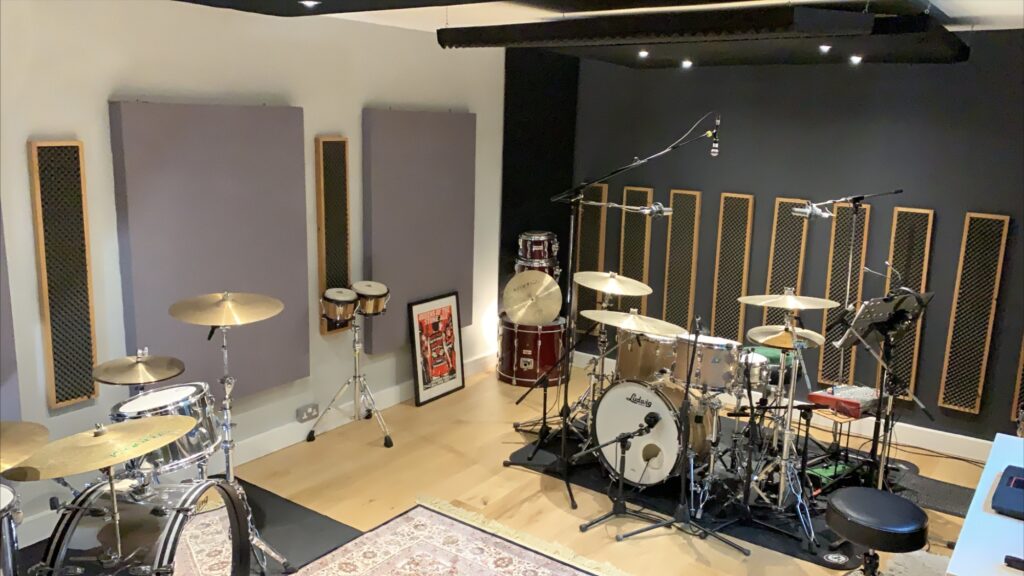
Studios have particularly demanding acoustic requirements because music and recording equipment can generate substantial sound levels.
MLV can be integrated into multilayer studio walls, ceilings, and floors to add mass and improve airborne sound isolation.
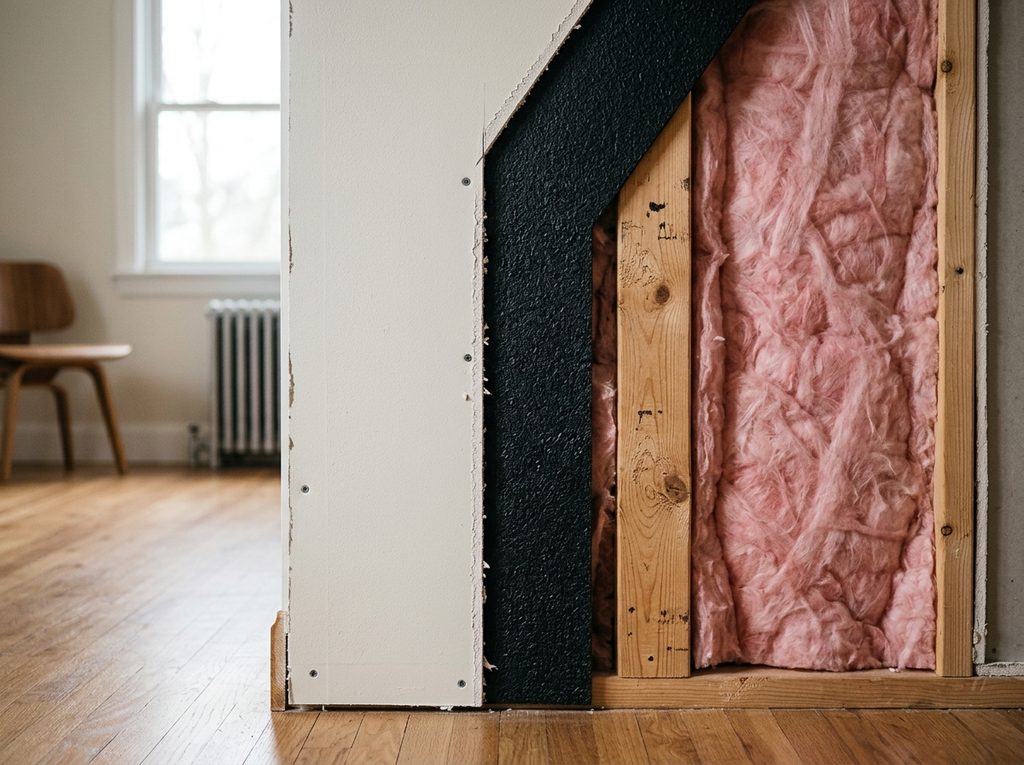
A professionally designed assembly may combine:
Mass Loaded Vinyl + Acoustic Insulation + Resilient Connections + Multiple Board Layers + Acoustic Sealing
Each component addresses a different part of the sound transmission problem.
MLV contributes mass, while insulation and resilient construction provide additional mechanisms for improving the assembly.
Soundproofing Floors and Ceilings
Noise does not always travel directly through walls.
In multi-level buildings, sound can move through floors and ceilings.
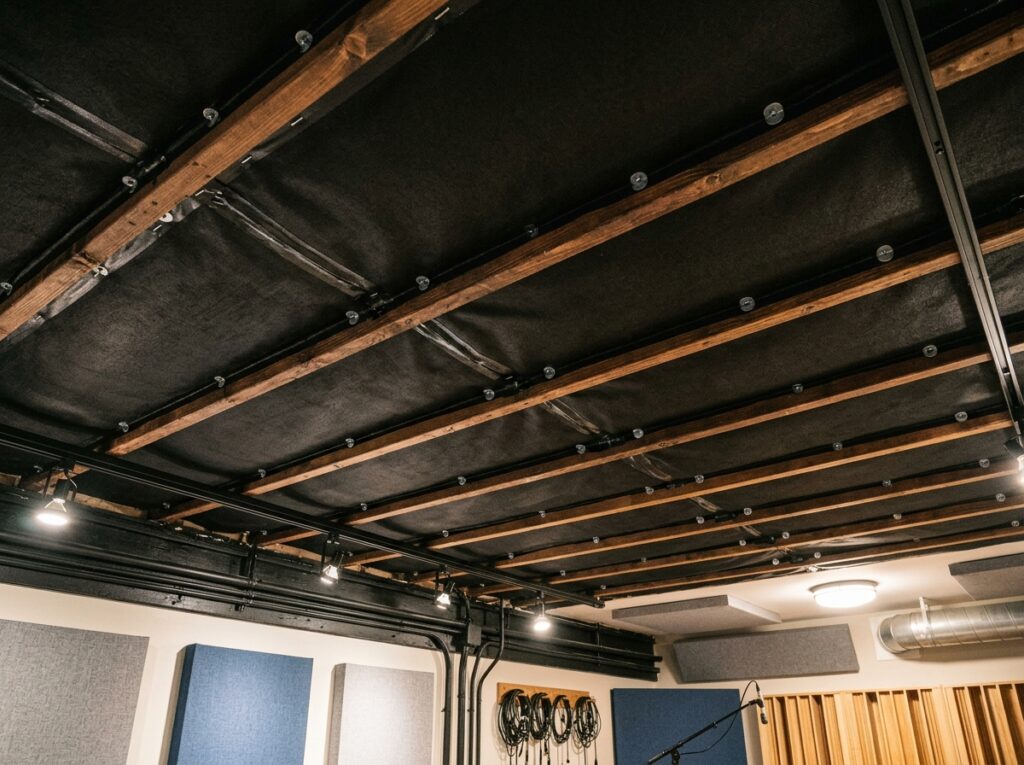
MLV can be incorporated into suitable floor and ceiling assemblies to increase acoustic mass.
However, it is important to distinguish between airborne noise and impact noise.
Footsteps, dropped objects, furniture movement, and similar sounds can create structural vibration. These problems may require additional solutions such as resilient underlayments, floating floors, or structural isolation.
MLV for Doors and Partitions
Doors are often one of the weaker elements in a sound isolation system.
Even when a wall has substantial acoustic construction, sound can still pass through gaps around a poorly sealed door.
MLV may be incorporated into suitable door constructions to add mass.
However, the complete door assembly should also consider:
- Door seals
- Frames
- Thresholds
- Gaps
- Hardware
- Surrounding construction
A high-performing wall paired with a poorly sealed door will still have limited overall acoustic performance.
Mechanical and Equipment Noise Control
Mechanical equipment can generate continuous noise throughout a building.
Potential sources include:
- HVAC equipment
- Generators
- Pumps
- Compressors
- Machinery
- Mechanical plant
MLV can be incorporated into suitable barriers or enclosures where airborne noise is the primary issue.
Where vibration is travelling through the building structure, additional vibration isolation may be necessary.
This distinction is important because airborne sound and structure-borne vibration require different approaches.
Benefits of Using MLV
Adds Acoustic Mass
The dense membrane increases the mass of suitable construction assemblies.
Flexible Installation
Unlike rigid barriers, MLV can be fitted around various construction elements.
Space Efficient
Its relatively thin profile can be useful when wall or ceiling thickness must be controlled.
Versatile
It can be incorporated into walls, ceilings, floors, partitions, doors, and equipment enclosures.
Works Within Multilayer Systems
MLV can be combined with insulation, boards, resilient channels, and acoustic sealing to create more comprehensive sound isolation systems.
Selecting the Correct MLV Specification
Different soundproofing projects require different approaches.
Identify the Noise Type
The first step is determining whether the problem involves:
- Airborne noise
- Impact noise
- Mechanical noise
- Structural vibration
- External noise
MLV is primarily intended to contribute mass for airborne sound isolation.
Examine the Existing Construction
A concrete wall and a lightweight partition will require very different solutions.
Consider Available Space
The complete thickness of the proposed assembly should be evaluated.
Determine the Required Performance
The desired level of sound isolation influences the design and materials selected.
Consider Structural Loading
Because MLV is dense, the supporting construction must be capable of accommodating the additional weight.
Why MLV Installation Must Be Carefully Planned
Soundproofing depends heavily on continuity.
If a membrane is interrupted by unnecessary openings or poorly treated joints, sound can find alternative transmission paths.
During installation, attention should be given to:
- Membrane continuity
- Seams and joints
- Wall penetrations
- Electrical outlets
- Pipes
- Cables
- Door openings
- Ventilation routes
The objective is to create a continuous sound isolation layer within the overall construction.
MLV vs. Acoustic Wall Panels
MLV and acoustic absorption panels have fundamentally different functions.
MLV is used primarily to improve sound isolation.
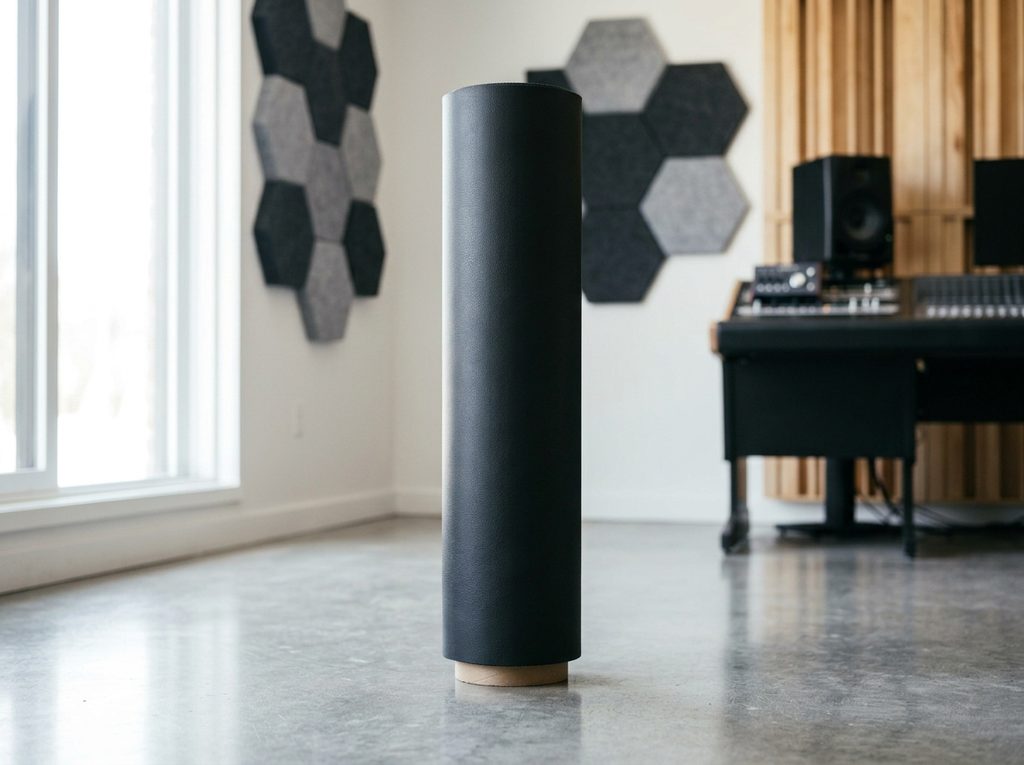
Acoustic panels made from materials such as PET, wood wool, or fabric are primarily used to absorb reflected sound inside a room.
For example, a conference room could require:
MLV inside the partition to help reduce sound travelling to neighbouring rooms.
Acoustic panels inside the conference room to help control reverberation and improve speech clarity.
Both solutions can be useful, but they address different acoustic problems.
Professional MLV Soundproofing Services in Doha
Effective soundproofing begins with identifying the source of the noise and understanding how it reaches the affected space.
Professional acoustic services can include:
- Acoustic assessment
- Noise source evaluation
- Soundproofing consultation
- Wall soundproofing
- Ceiling soundproofing
- Floor soundproofing
- Partition upgrades
- Door acoustic upgrades
- Studio isolation
- Mechanical noise control
- MLV installation
- Complete soundproofing system design
A project-specific approach helps ensure that the selected system matches the actual acoustic challenge.
Maintenance and Installation Considerations
MLV installed within a properly constructed wall, floor, or ceiling generally needs little routine maintenance because it remains protected inside the assembly.
Installation quality is therefore particularly important.
Best practices can include:
- Avoiding unnecessary punctures
- Maintaining continuous coverage
- Properly treating joints
- Sealing penetrations
- Protecting the membrane during construction
- Following manufacturer installation requirements
The supporting structure should also be assessed before installation because MLV contributes significant additional weight.
Frequently Asked Questions
What is MLV mainly used for?
Mass Loaded Vinyl is primarily used to add mass to building assemblies and help reduce airborne sound transmission.
Can MLV be installed inside walls?
Yes. It can be incorporated into suitable multilayer wall systems.
Can MLV be used for ceilings?
Yes. It can form part of ceiling sound isolation assemblies.
Does MLV stop all noise?
No. Soundproofing performance depends on the entire construction, including walls, ceilings, floors, doors, windows, penetrations, and structural connections.
Is MLV the same as an acoustic panel?
No. MLV primarily contributes to sound isolation, while acoustic panels generally absorb reflected sound inside a room.
Professional Soundproofing Solutions in Doha
Every building presents its own acoustic challenges.
An apartment may need improved separation between rooms, while a recording studio could require a much more comprehensive isolation system. A commercial office may focus on meeting-room privacy, whereas an industrial facility may need to address mechanical noise.
Professional acoustic planning can determine where MLV is appropriate and what additional construction measures should be incorporated around it.
This ensures that the material becomes part of a complete soundproofing strategy rather than being treated as a standalone solution.
Conclusion
Mass Loaded Vinyl is a versatile acoustic membrane that can add substantial mass to suitable building assemblies while maintaining a relatively thin and flexible profile.
For residential properties, offices, hotels, studios, commercial buildings, and specialist facilities in Doha, MLV can play an important role in reducing airborne sound transmission when correctly integrated into a complete soundproofing system.
The strongest results come from combining MLV with appropriate acoustic insulation, resilient construction, structural layers, and careful sealing. When every potential sound path is considered, a professionally designed system can provide improved acoustic privacy and a more controlled indoor environment.