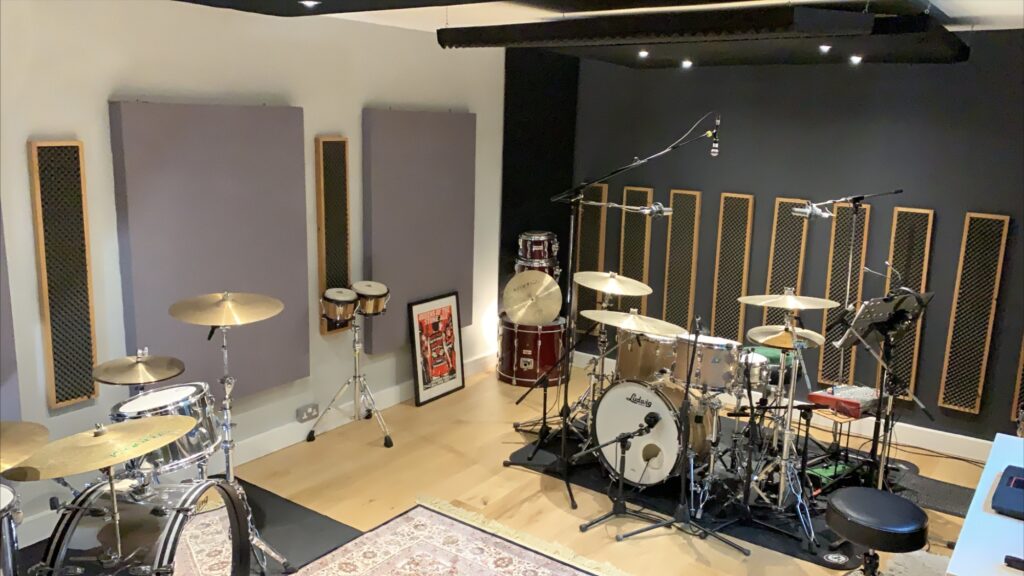
Some buildings are difficult to make acoustically comfortable simply because of the materials used in their architecture.
Large rooms, high ceilings, concrete surfaces, tiled floors, glass partitions, painted walls, and other hard finishes can create an environment where sound continues to reflect instead of being absorbed.
The result is not necessarily loudness from one specific source.
It is sound accumulation.
A conversation becomes part of the background noise. Footsteps remain audible. Voices bounce across the room. Music becomes less controlled. People have to speak louder to be heard.
For modern commercial and institutional interiors in Dakar, Senegal, acoustic wood wool panels provide a practical way to introduce sound absorption while maintaining a distinctive architectural appearance.
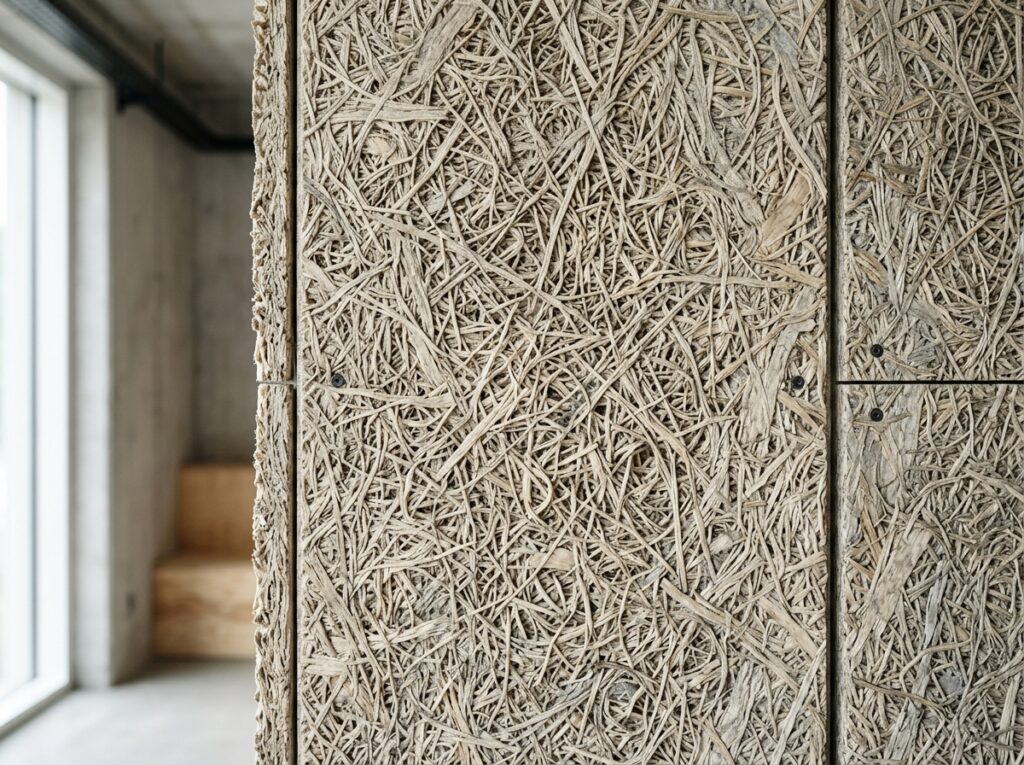
Wood wool acoustic panels are generally made from long wood fibres bonded with a cementitious binder, creating a rigid, textured panel that can be installed on walls or ceilings. Their porous structure allows them to absorb reflected sound, while the cement-bonded construction gives them a more robust surface than many soft acoustic treatments.
But their appeal goes beyond acoustic performance.
They can become part of the architecture itself.
When a Large Space Starts Sounding Too Loud
A large interior does not automatically need to be quiet.
It needs to be acoustically controlled.
Consider a large multipurpose hall with a hard floor, painted walls, a high ceiling, and limited soft furnishings.
A person speaking at one end of the room may hear their voice reflected from several directions.
Now add 100 people.
Then add chairs moving, conversations, footsteps, equipment, presentations, or music.
The room can quickly become acoustically overwhelming.
This is where sound absorption becomes important.
Wood wool panels can be positioned across walls and ceilings to reduce reflected sound and shorten reverberation.
Commercial wood wool products are used in offices, schools, sports centres, cultural venues, homes, and other building types for this reason.
What Makes Wood Wool Different?
Wood wool is not simply conventional timber cut into acoustic panels.
The material is typically produced from long, thin wood fibres that are mineralised and bonded with cement or another mineral binder.
This produces a rigid, textured board with an open fibre structure.
That texture is important.
Instead of presenting the room with a completely smooth reflective surface, the panel allows sound energy to interact with its porous fibre structure.
The exact acoustic performance depends on:
- Panel thickness
- Fibre structure
- Density
- Mounting method
- Air cavity
- Backing material
- Surface coverage
- Room geometry
For example, one commercial wood wool range reports NRC values from approximately 0.45 to 0.95 depending on thickness and mounting configuration.
This demonstrates why the panel itself should not be evaluated separately from the complete installation system.
Wood Wool for Large Public Interiors in Dakar
Dakar has a wide range of commercial, educational, cultural, hospitality, and public spaces where acoustic comfort can influence how people experience a building.
Large interiors often benefit from acoustic treatment because their volume and hard surfaces can increase reverberation.
Wood wool can be considered for:
- Multipurpose halls
- Conference facilities
- Educational buildings
- Auditoriums
- Cultural venues
- Restaurants
- Hotels
- Offices
- Sports facilities
- Community spaces
- Worship spaces
- Residential interiors
The material’s rigid construction also makes it suitable for environments where acoustic surfaces need to remain visually and physically durable.
Acoustic Wood Wool Ceilings
The ceiling is often the largest uninterrupted surface in a room.
Yet it is frequently overlooked when acoustic treatment is being planned.
A hard ceiling can reflect sound directly back into the occupied area.
Wood wool ceiling systems can introduce absorption across this large surface.
They may be installed as:
Direct-Fixed Panels
Panels are attached directly to the ceiling substrate.
Suspended Panels
Panels are suspended below the structural ceiling, creating an additional cavity.
Acoustic Clouds
Individual panels or groups of panels are suspended above specific activity zones.
Full Ceiling Coverage
A larger percentage of the ceiling is treated to provide broader acoustic control.
Suspended wood wool clouds are used in applications ranging from classrooms and auditoriums to restaurants, sports venues, and industrial facilities.
The appropriate arrangement depends on the room’s acoustic requirements and existing ceiling services.
Why High Ceilings Need Special Attention
A high ceiling can create an impressive sense of scale.
Acoustically, however, it increases the volume of the room.
When the ceiling and surrounding surfaces are reflective, sound has more opportunity to remain active in the space.
This can become particularly noticeable in:
- Atriums
- Large reception areas
- Auditoriums
- Sports halls
- Worship spaces
- Conference halls
- Exhibition areas
Wood wool ceiling treatment can help introduce absorption into these large volumes.
Rather than reducing the architectural scale of the room, the panels can become part of the ceiling design.
A Strong Option for Busy Educational Environments
Schools and educational buildings require more than attractive interiors.
They require speech clarity.
A teacher needs to communicate with a classroom.
Students need to hear instructions.
Presentations need to remain understandable.
Excessive reverberation can make these basic interactions more difficult.
Wood wool panels are used in classrooms, schools, lecture environments, and other educational spaces because they combine sound absorption with a comparatively robust surface.
They can be installed on:
- Rear classroom walls
- Side walls
- Corridors
- Common areas
- Assembly spaces
- Gymnasiums
- Lecture rooms
- Ceiling systems
For a school project, however, the acoustic treatment should always be designed around the room’s dimensions, occupancy, ceiling height, and intended activity.
Wood Wool in Conference and Meeting Spaces
A meeting room does not need complete silence.
It needs controlled reflections.
Hard conference tables, glass partitions, screens, drywall, and ceilings can create multiple reflective surfaces.
This can make speech sound less clear, especially when several people are talking.
Wood wool panels can be used on selected wall surfaces or ceilings to help reduce reverberation.
A meeting room could combine:
Wood Wool Wall + Acoustic Ceiling + Carpet/Floor Treatment + Soft Furniture
The goal is to create a balanced acoustic environment rather than relying on one material to solve every acoustic problem.
Restaurants Need Acoustic Balance
Restaurants are naturally active spaces.
People talk.
Cutlery moves.
Staff walk between tables.
Background music plays.
Kitchen activity generates additional sound.
The objective is not to eliminate these sounds.
It is to prevent them from becoming an uncontrolled acoustic mass.
Wood wool panels can be incorporated into restaurant interiors as:
- Ceiling panels
- Wall features
- Decorative acoustic zones
- Ceiling clouds
- Architectural partitions
The natural-looking fibre texture can also complement timber furniture, stone, concrete, metal, and other contemporary materials.
This makes wood wool particularly interesting when the restaurant’s design needs to feel warm and architectural rather than heavily technical.
Hotels: Acoustic Comfort Without a Clinical Appearance
Hotels often combine multiple hard materials.
Stone floors.
Glass.
Decorative walls.
Timber.
Metal.
Large open spaces.
These materials can create beautiful interiors, but the acoustic result needs to be considered.
Wood wool panels can be used in selected areas such as:
- Lobby ceilings
- Conference rooms
- Restaurants
- Lounges
- Corridors
- Reception areas
- Event spaces
Because the panels have a visible textured surface, they can contribute to the hotel’s overall material palette.
They do not have to be hidden.
The Architectural Character of Wood Wool
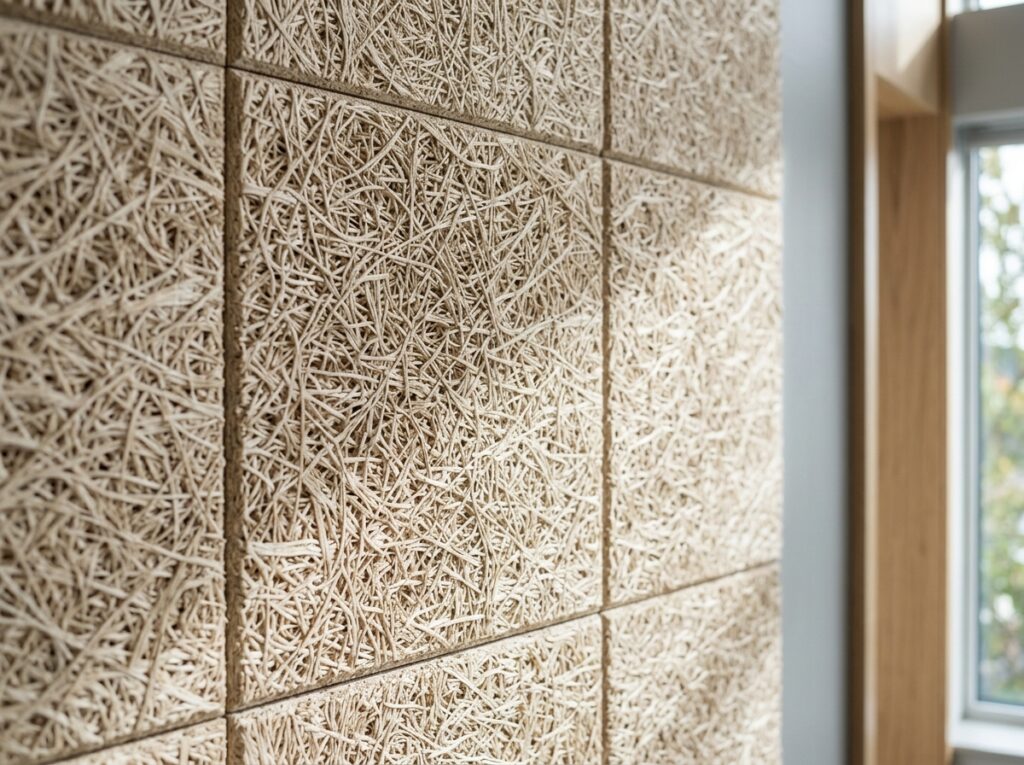
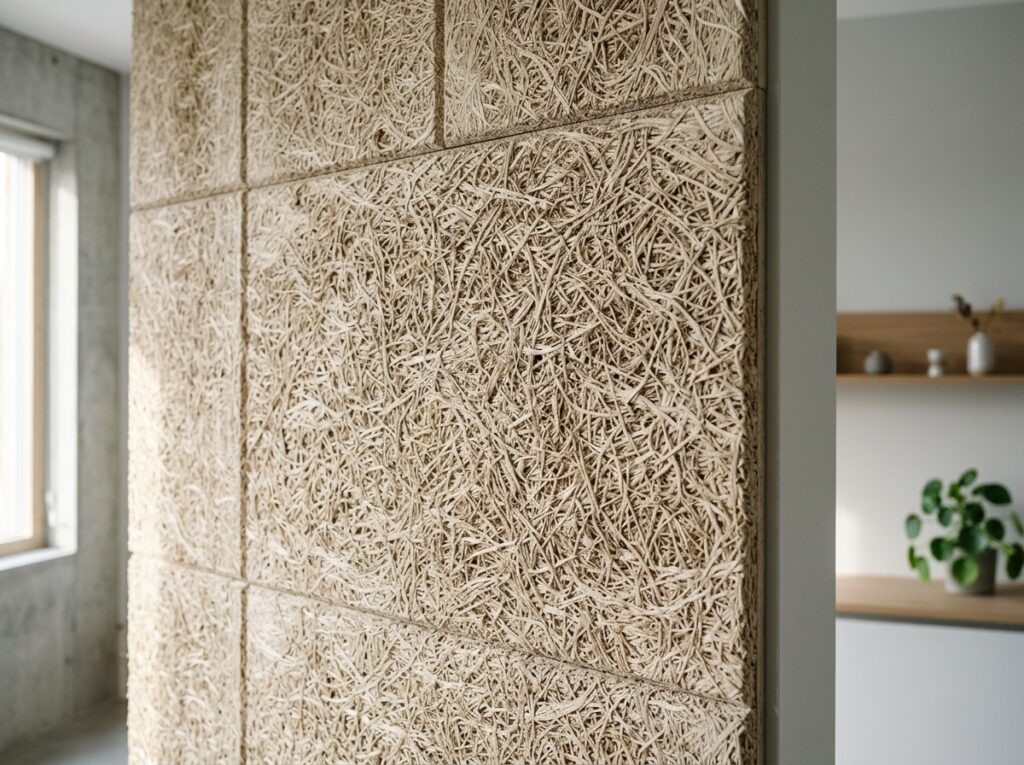
One of the most interesting features of wood wool is its texture.
The visible fibres give the surface a natural, slightly three-dimensional appearance.
Instead of looking like a smooth technical ceiling, the installation can become an architectural texture.
Panels can also be supplied in different shapes, colours, edges, and configurations depending on the manufacturer. One commercial range, for example, offers square, circular, hexagonal, triangular, plank, and rectangular forms.
This allows designers to move beyond a simple grid.
A ceiling could use repeating geometric panels.
A feature wall could combine different shapes.
A corporate interior could use coloured sections.
A school could introduce brighter architectural elements.
The acoustic treatment becomes part of the design language.
Wood Wool Can Be Both Functional and Visually Distinctive
Many acoustic products are designed to disappear.
Wood wool can do the opposite.
Its textured surface can deliberately remain visible.
That creates an interesting design opportunity:
Instead of hiding the acoustic treatment, make it part of the interior.
For example, a conference room could use a dark wood wool feature wall behind the presentation screen.
A restaurant could use a natural-toned ceiling.
A school could use coloured geometric panels.
A hotel could combine wood wool with timber, stone, and indirect lighting.
The acoustic function remains important, but the visual result becomes equally intentional.
How Wood Wool Performs Acoustically
Wood wool is primarily an absorption material.
When sound reaches the porous fibre structure, some of the acoustic energy enters the panel rather than being completely reflected into the room.
This can reduce:
- Reverberation
- Echo
- Reflected speech
- Excessive background buildup
- Acoustic harshness
Performance varies considerably depending on the complete assembly.
A thicker panel with an air cavity or acoustic backing can perform differently from the same panel installed directly against a wall.
For example, published data for one wood wool product range shows different absorption coefficients across 25 mm, 35 mm, and 50 mm configurations, demonstrating that thickness affects performance.
Therefore, acoustic design should use tested data for the specific product and installation configuration rather than assuming every wood wool panel performs identically.
Wood Wool vs Traditional Soft Acoustic Panels
Wood wool is not necessarily a replacement for every acoustic material.
It offers a different combination of characteristics.
| Feature | Wood Wool | Fabric-Wrapped Panel |
|---|---|---|
| Sound absorption | Yes | Yes |
| Rigid surface | Yes | Usually softer |
| Natural texture | Strong | Depends on fabric |
| Impact resistance | Generally robust | Fabric can be more vulnerable |
| Visual appearance | Textured/mineralised | Smooth/fabric finish |
| Wall applications | Yes | Yes |
| Ceiling applications | Yes | Yes |
| Custom colours | Available for many systems | Extensive |
| Soundproofing alone | No | No |
The right choice depends on the project’s acoustic requirements, visual design, durability expectations, fire requirements, and budget.
Durability Matters in High-Traffic Spaces
Acoustic panels installed in a rarely used boardroom face very different conditions from panels installed in a school corridor or public facility.
High-traffic spaces may experience:
- Accidental contact
- Cleaning
- Equipment movement
- Furniture movement
- Repeated daily use
Wood wool’s rigid cement-bonded construction can make it attractive where a more durable acoustic surface is desired.
This is one reason wood wool is used in educational, sports, public, and other high-use environments.
However, the suitability of a specific product should always be confirmed against the manufacturer’s technical documentation and the project’s cleaning and maintenance requirements.
Fire Performance Must Be Specified, Not Assumed
Fire performance is an important consideration for commercial interiors.
However, it is a mistake to assume that every wood wool product automatically has the same fire classification.
Different manufacturers and product constructions can have different certifications.
For example, Troldtekt offers a specific A2 product designed for areas with stricter fire safety requirements, including corridors and escape routes.
Another commercial wood wool product lists Class A performance under ASTM E84.
Therefore, project specifications should identify:
- Exact product
- Exact thickness
- Exact assembly
- Fire classification
- Applicable test standard
- Installation conditions
For commercial construction in Dakar, the appropriate local building and fire requirements should also be checked before installation.
Wood Wool and Sustainable Interior Design
Wood wool can also fit naturally into projects where material selection is part of the sustainability strategy.
The panels use wood fibre combined with a mineral binder, and many products are positioned as environmentally conscious acoustic materials.
However, sustainability should be evaluated based on the specific product.
Architects and project owners can request:
- Recycled or renewable material information
- VOC documentation
- Environmental product declarations where available
- Manufacturer sustainability statements
- Relevant certifications
This provides a more reliable basis for specification than simply describing a product as “eco-friendly.”
A Better Approach to Acoustic Design
One of the biggest mistakes in acoustic projects is treating every room in the same way.
A classroom is not a restaurant.
A restaurant is not a recording studio.
A sports hall is not a boardroom.
Each room has different acoustic requirements.
Classroom
Speech clarity is critical.
Restaurant
The objective is comfortable conversation while preserving atmosphere.
Boardroom
Speech intelligibility and controlled reflections are priorities.
Auditorium
The room may require carefully distributed absorption and reflection.
Sports Hall
Durability and large-volume acoustic control become important.
Office
Background noise and speech distraction may be major concerns.
Wood wool can be part of each solution, but the design configuration should change according to the room.
What a Professional Wood Wool Acoustic Project Looks Like
A properly planned project typically begins long before panels arrive on site.
Step 1 — Understand the Space
Measure room dimensions, ceiling height, surfaces, occupancy, and room use.
Step 2 — Identify the Acoustic Problem
Determine whether the primary issue is echo, reverberation, speech clarity, background noise, or sound transmission.
Step 3 — Select the Acoustic Strategy
Determine whether treatment should be concentrated on walls, ceilings, or both.
Step 4 — Select the Panel
Choose thickness, finish, colour, shape, and acoustic specification.
Step 5 — Design the Layout
Coordinate the panels with lighting, HVAC, electrical services, doors, windows, and architectural features.
Step 6 — Install Correctly
Follow the manufacturer’s recommended mounting system.
Step 7 — Review the Finished Space
The final result should satisfy both the acoustic and architectural objectives.
This process helps prevent the common problem of installing attractive acoustic panels without achieving meaningful room improvement.
Acoustic Treatment Is Not Soundproofing
This distinction is essential.
Wood wool panels primarily provide sound absorption inside a room.
They are not a standalone solution for stopping noise from travelling through walls, floors, ceilings, or doors.
For example:
Problem: A restaurant has too much echo.
→ Wood wool acoustic treatment may help.
Problem: Noise from an adjacent office is passing through a partition.
→ A sound-isolation system is required.
Problem: Footsteps are travelling between floors.
→ The floor construction and impact-isolation strategy need to be addressed.
A successful acoustic project begins by identifying the source and type of noise before choosing the material.
Where Wood Wool Can Make the Biggest Difference
For projects in Dakar, wood wool acoustic systems can be considered for:
| Space | Acoustic Objective |
|---|---|
| Offices | Reduce reverberation and background buildup |
| Boardrooms | Improve speech clarity |
| Classrooms | Control echo and support communication |
| Auditoriums | Manage reflections |
| Restaurants | Improve conversational comfort |
| Hotels | Improve lobby and event-space acoustics |
| Sports halls | Control sound in large volumes |
| Cultural venues | Balance room reflections |
| Community centres | Improve acoustic comfort |
| Residential interiors | Reduce excessive reflections |
| Studios | Provide room absorption as part of a larger acoustic design |
The final treatment should always be based on the actual room rather than simply selecting a standard quantity of panels.
Why Wood Wool Is Worth Considering for Dakar Projects
Acoustic treatment does not have to mean covering every wall with soft fabric panels.
Wood wool offers another approach.
It provides a rigid, textured architectural surface that can contribute to sound absorption while remaining visually prominent.
For large spaces, high-traffic interiors, educational facilities, hospitality projects, offices, cultural venues, and public buildings, this combination can be valuable.
The material can become part of the architecture rather than something added after the architecture is finished.
Frequently Asked Questions
What are acoustic wood wool panels made from?
They are generally manufactured from wood fibres combined with a mineral or cementitious binder. Exact compositions vary by manufacturer.
Do wood wool panels reduce echo?
Yes. They are designed primarily to absorb reflected sound and can reduce reverberation and echo when appropriately specified and installed.
Can wood wool panels be installed on ceilings?
Yes. Wood wool systems are available for both wall and ceiling applications, including suspended ceiling clouds.
Are wood wool panels suitable for schools?
Yes. They are commonly used in classrooms, educational buildings, lecture spaces, and other institutional environments.
Do wood wool panels soundproof rooms?
No. They primarily provide acoustic absorption inside a room. Sound isolation requires a different construction approach.
Can wood wool panels be painted?
Many commercial systems are available in painted finishes or can be supplied in different colours, but the manufacturer’s finishing instructions should always be followed.
Are all wood wool panels fire rated the same way?
No. Fire performance varies by product and assembly. The exact certification should be checked before specification.
Can wood wool be used in restaurants?
Yes. Wood wool panels can be used on walls, ceilings, and suspended surfaces in restaurants and hospitality interiors where reducing reverberation is important.
Build Quieter, More Comfortable Interiors With Wood Wool
Good acoustics should not require a space to lose its architectural character.
With the right design, an acoustic ceiling can become a visual feature.
A wall can provide sound absorption while adding texture.
A large public interior can become more comfortable without losing its sense of scale.
That is where acoustic wood wool panels offer a valuable combination of performance, durability, and architectural character.
For offices, schools, restaurants, hotels, auditoriums, sports facilities, cultural spaces, and other interiors in Dakar, Senegal, wood wool can become part of a carefully planned acoustic system rather than simply another wall finish.
The most successful projects begin with the room, identify the acoustic problem, and then select the appropriate panel, thickness, backing, mounting method, and coverage.
When acoustic performance becomes part of the architecture, better-sounding spaces can also become better-designed spaces.