A Ceiling Can Change More Than the Look of a Room
When architects design a modern interior, ceilings are often treated as a visual element.
But a ceiling can also have a major influence on how a room sounds.
A large exposed concrete ceiling, plasterboard surface, or other hard finish can reflect conversations, music, and general activity back into the occupied space. In restaurants, offices, schools, auditoriums, and hospitality environments, this can create excessive reverberation and make communication unnecessarily difficult.
This is where Acoustic Wood Wool Panels offer an interesting combination of architectural character and sound absorption.
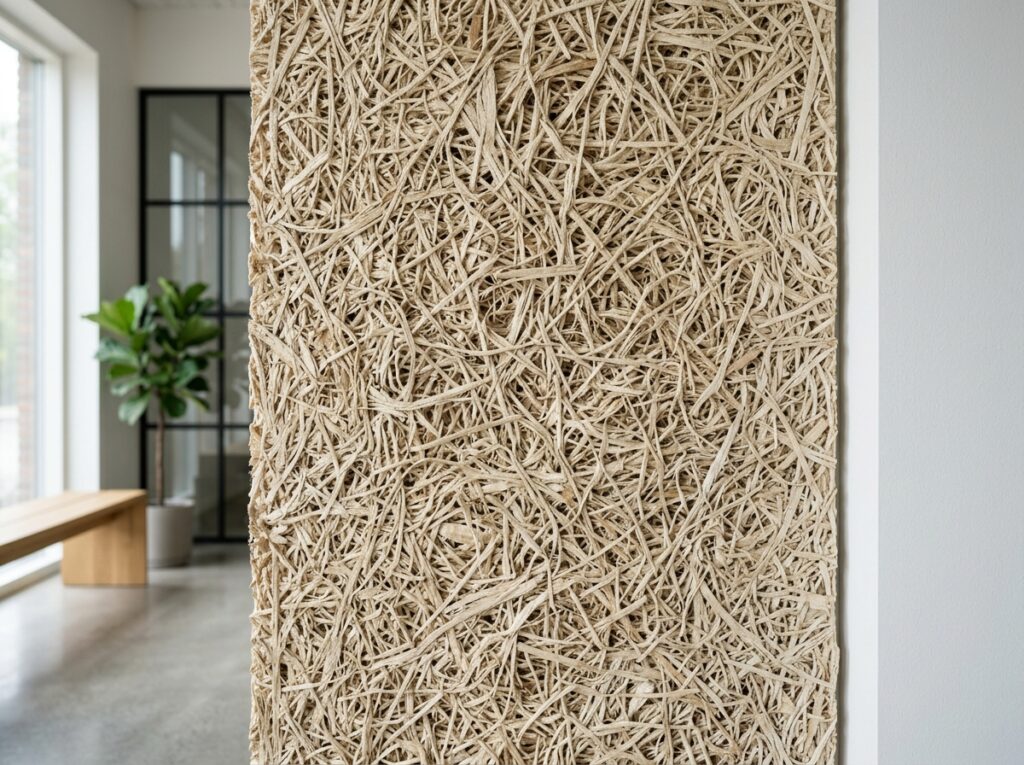
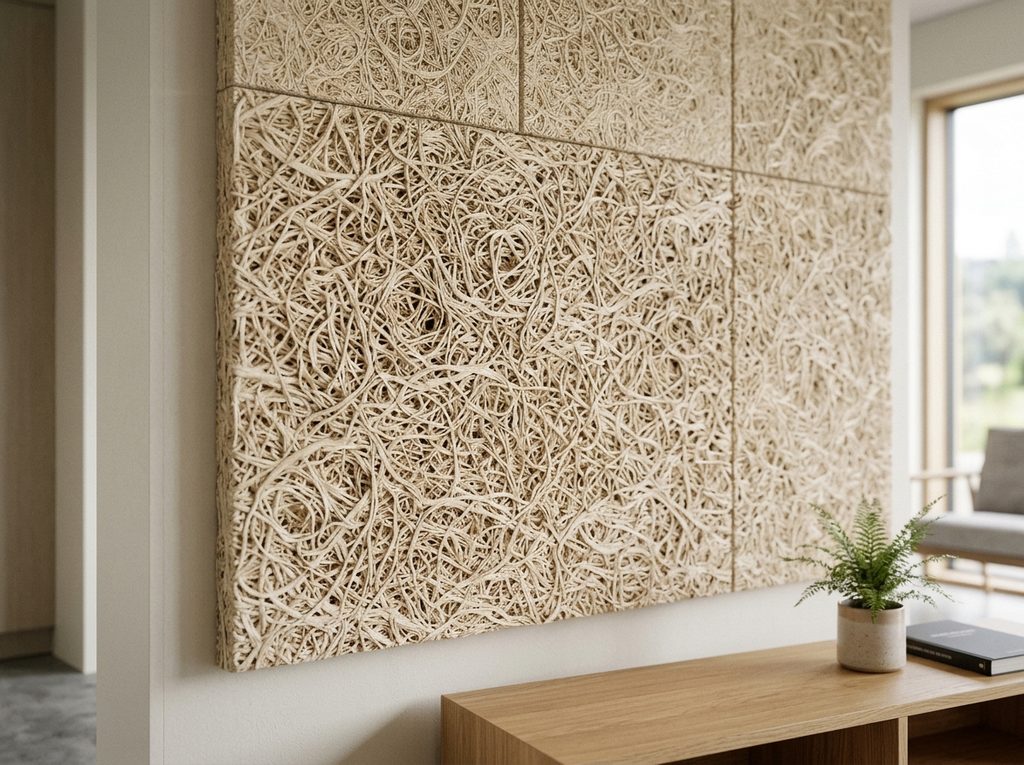
Wood wool acoustic panels are generally manufactured from wood fibres bonded with cement, creating a textured surface that can be used on walls and ceilings. They are designed primarily to absorb sound and reduce unwanted reflections inside a space.
For projects across South Africa, this makes wood wool an option for designers who want acoustic treatment without turning the interior into a collection of conventional fabric or foam panels.
Why Wood Wool Looks Different From Conventional Acoustic Treatment
Acoustic treatment is often associated with fabric-wrapped rectangles, perforated boards, or foam.
Wood wool has a completely different visual identity.
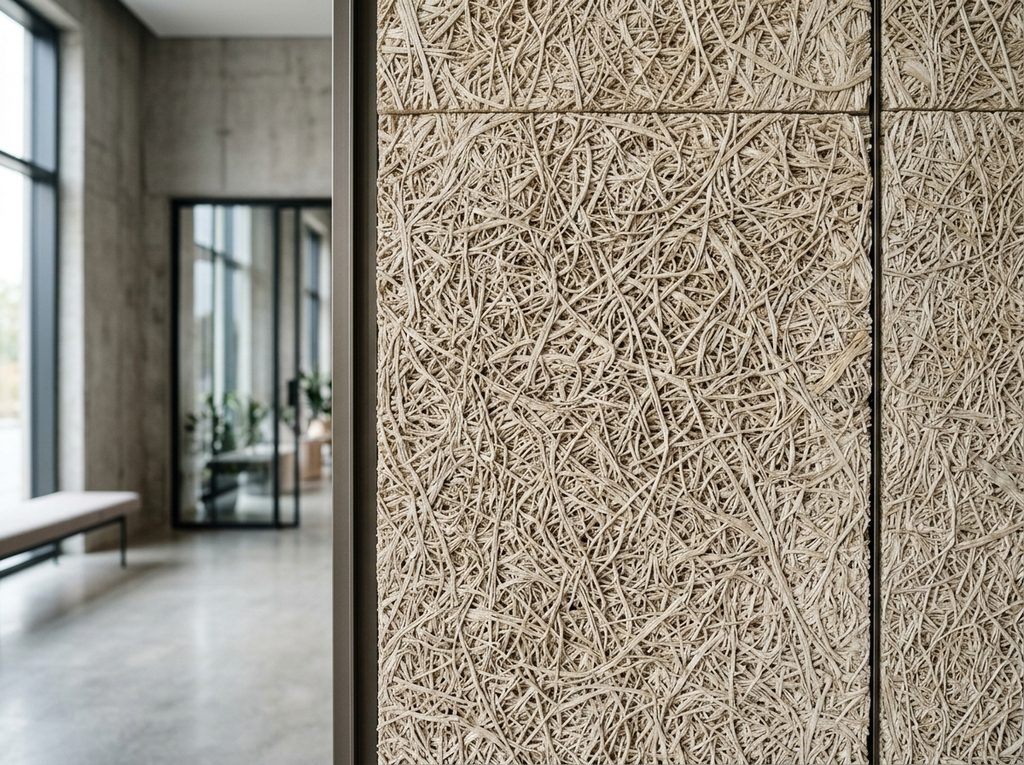
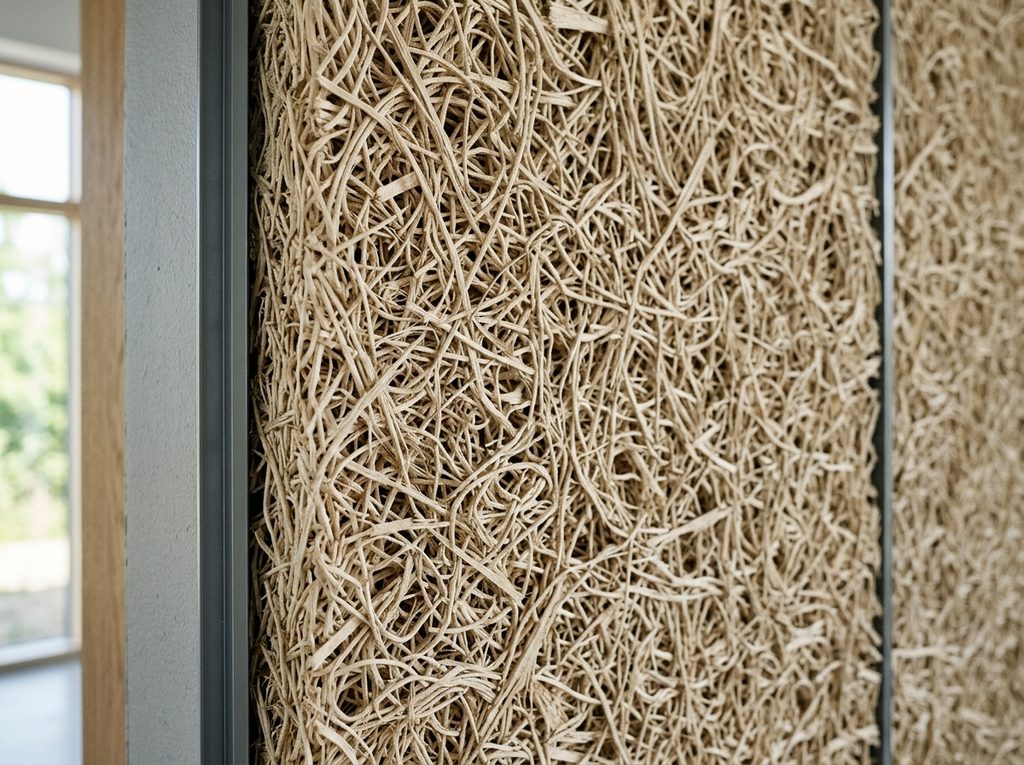
Its surface contains visible wood fibres, giving the panel a textured and architectural appearance.
That texture can become part of the interior design.
Instead of hiding the acoustic treatment, designers can deliberately expose it across:
- Ceilings
- Feature walls
- Auditorium surfaces
- Meeting rooms
- Restaurant interiors
- School spaces
- Hospitality areas
- Public buildings
Wood wool panels are available in different thicknesses, colours, finishes, and mounting configurations, allowing acoustic treatment to be integrated with the architectural concept rather than added after the design is finished.
The Acoustic Problem Behind Large Open Interiors
Consider a modern South African office with:
- Concrete floors
- Glass partitions
- Large windows
- Hard desks
- Exposed services
- A high ceiling
Visually, the room may look modern and spacious.
Acoustically, however, it can become challenging.
When someone speaks, their voice travels directly toward another person while also reflecting from surrounding surfaces.
Those reflections can overlap with the original speech.
As more people begin talking, the background sound increases.
Eventually, employees may find themselves speaking louder simply to be understood.
The room becomes progressively more difficult to communicate in.
This is where strategically placed absorption becomes important.
Wood wool panels can introduce additional sound-absorbing surface area to walls or ceilings, helping control reverberation and improve acoustic comfort.
Why the Ceiling Deserves More Attention
One of the most useful locations for wood wool acoustic panels is the ceiling.
The ceiling is often one of the largest uninterrupted surfaces in a room.
Instead of treating only the walls, designers can use the ceiling as a major acoustic element.
Wood wool ceiling panels can be installed as:
Suspended Systems
Panels are positioned below the structural ceiling, creating an acoustic layer while maintaining a visually distinctive ceiling plane.
Direct-Fixed Panels
Panels are mechanically fixed directly to an appropriate substrate.
Ceiling Clouds
Selected sections of the ceiling can receive suspended acoustic elements above areas with higher activity.
Integrated Ceiling Patterns
Panels can be arranged into geometric or linear layouts to complement lighting and building services.
Commercial wood wool systems are available for both wall and ceiling applications, with performance varying according to panel thickness, mounting configuration, backing, and air gap.
A Natural Material for Modern South African Interiors
The visual language of wood wool can work particularly well with interiors that use natural materials.
Think of a space containing:
- Timber
- Stone
- Concrete
- Plants
- Natural textiles
- Neutral colours
- Warm lighting
Wood wool can complement these materials without looking out of place.
The textured surface provides visual depth while maintaining an architectural appearance.
This makes it particularly suitable for spaces where designers want acoustic treatment to feel intentional.
Rather than asking:
“Where can we hide the acoustic panels?”
the design approach becomes:
“How can the acoustic ceiling become part of the architecture?”
Wood Wool in South African Offices
Office acoustics are not simply about reducing noise.
They are about making communication easier.
An open-plan office can contain dozens of simultaneous activities:
- Phone calls
- Team discussions
- Video meetings
- Presentations
- Informal conversations
- Individual work
Without sufficient absorption, these sounds can accumulate.
Wood wool panels can be positioned above work areas, meeting zones, or collaborative spaces to help control reflected sound.
For conference rooms, the same material can be used as a wall or ceiling treatment to support speech intelligibility.
Commercial wood wool products are specifically used in offices, meeting rooms, and public spaces for sound absorption and improved acoustic environments.
Restaurants: Keeping Energy Without Creating Noise
A successful restaurant should have atmosphere.
Music, conversations, movement, and activity are part of the experience.
But excessive reverberation can turn that atmosphere into acoustic discomfort.
A restaurant with hard floors, glass, stone counters, and exposed ceilings may generate substantial reflections.
The result can be a dining room where customers need to raise their voices to communicate.
Wood wool ceiling panels offer a way to introduce absorption while maintaining a strong architectural aesthetic.
They can be used across selected ceiling areas, above dining zones, or as feature elements integrated with lighting.
The objective isn’t to make the restaurant silent.
It is to make the sound environment more controlled.
Schools Need Clearer Communication
Classrooms have a very different acoustic requirement.
The teacher needs to communicate clearly.
Students need to understand speech.
Excessive reverberation can make this harder, particularly in rooms with hard floors, walls, ceilings, and large windows.
Wood wool acoustic panels can help introduce absorption into classrooms, lecture rooms, libraries, and school halls.
For larger educational spaces, suspended acoustic systems can also be used to increase the amount of absorptive surface available.
The exact configuration should be selected according to room dimensions, occupancy, existing finishes, and the desired reverberation characteristics.
Auditoriums and Large Public Spaces
Large rooms create larger acoustic challenges.
An auditorium may contain:
- High ceilings
- Large wall surfaces
- Hard flooring
- Stage areas
- Seating
- Reflective architectural elements
If reflections are uncontrolled, speech and music can become difficult to manage.
Wood wool systems can be used as part of the acoustic treatment strategy on walls and ceilings.
The panel configuration becomes particularly important at this scale.
Thickness, backing, cavity depth, mounting method, and total coverage can significantly affect acoustic performance.
For example, technical data from one wood wool product range shows different absorption values for direct-mounted panels compared with assemblies using mineral-wool backing.
This demonstrates why specifying only the panel material is not enough.
The complete build-up matters.
The Difference Between Direct Fixing and an Acoustic Build-Up
Not every wood wool installation performs identically.
A panel mounted directly against a wall has one acoustic behaviour.
The same panel combined with an absorptive backing and an air cavity can perform differently.
One published product dataset, for example, reports a 25 mm wood wool panel with direct fixing at a lower absorption classification than a configuration using the same panel with 50 mm mineral wool backing.
This is an important consideration when designing an acoustic system.
If the objective is simply to add some sound absorption, a direct installation may be appropriate.
If the room requires significantly stronger acoustic control, a more advanced assembly may be considered.
The specification should therefore be based on the room’s acoustic requirement rather than simply choosing the thickest available panel.
Wood Wool Is Not the Same as Soundproofing
This distinction is essential.
Wood wool acoustic panels primarily control sound inside the room.
They are not automatically a soundproof barrier between two spaces.
For example:
If a restaurant has excessive echo, wood wool can help absorb reflections.
If the restaurant’s music is passing through the wall into a neighboring property, a different sound-isolation strategy is required.
That may involve:
- Mass Loaded Vinyl
- Mineral wool
- Multiple gypsum layers
- Decoupling
- Acoustic sealants
- Soundproof doors
- Acoustic glazing
- Floating floors
Wood wool can be part of an overall acoustic design, but it should not be presented as a complete substitute for sound isolation.
A Material That Can Serve Both Function and Appearance
Architectural materials are often chosen because they perform one job.
Wood wool has the potential to contribute to several aspects of an interior.
Acoustic Function
The fibrous structure provides sound absorption.
Visual Texture
The exposed wood fibres create a distinctive surface.
Design Flexibility
Panels can be incorporated into different wall and ceiling arrangements.
Colour
Wood wool products can be finished in different colours depending on the manufacturer and specification.
Thermal Contribution
Some wood wool systems also provide thermal-insulation characteristics as part of their overall construction.
This combination allows architects to treat acoustic performance as part of the material palette.
From Plain Ceiling to Architectural Feature
A large ceiling does not have to remain visually flat.
Wood wool panels can be arranged to create rhythm.
For example:
Linear arrangement
Panels follow the direction of a corridor or room.
Grid arrangement
Panels coordinate with lighting and services.
Zoned arrangement
Acoustic treatment is concentrated above seating or work areas.
Floating arrangement
Suspended panels create a layered ceiling composition.
Feature arrangement
A selected section of the ceiling becomes an acoustic focal point.
These approaches allow the ceiling to contribute both acoustically and visually.
Healthcare and Public Interiors
Acoustic comfort can also matter in healthcare and public buildings.
Waiting rooms, consultation areas, corridors, and communal spaces can become uncomfortable when hard surfaces create excessive reverberation.
Wood wool products are available for wall and ceiling applications in public interiors, including healthcare, education, and hospitality environments.
However, product selection should always consider the specific project’s requirements for:
- Fire performance
- Cleaning
- Hygiene
- Moisture exposure
- Impact resistance
- Maintenance
- Indoor-air requirements
A material that works perfectly in an office may require a different specification in a healthcare environment.
Wood Wool and Fire Performance
Fire safety should be considered whenever acoustic materials are being installed in public or commercial buildings.
Wood wool is a wood-based material, but cement bonding and the specific construction of the panel influence its fire characteristics.
Individual products should be evaluated using their own certified test data rather than assuming that every wood wool panel has identical performance.
For example, Knauf’s HERADESIGN Superfine Alpha+ product lists a fire-performance classification alongside its acoustic specifications.
For a South African project, the correct product documentation should be reviewed against the requirements of the building and the applicable local regulations.
Where Wood Wool Works Particularly Well
The versatility of wood wool makes it suitable for many interior environments.
Corporate Offices
For open workspaces, meeting rooms, and collaborative areas.
Restaurants
For reducing reverberation while maintaining a natural interior aesthetic.
Schools
For classrooms, libraries, lecture rooms, and halls.
Hotels
For lobbies, restaurants, conference spaces, and communal areas.
Auditoriums
For controlling reflections across larger rooms.
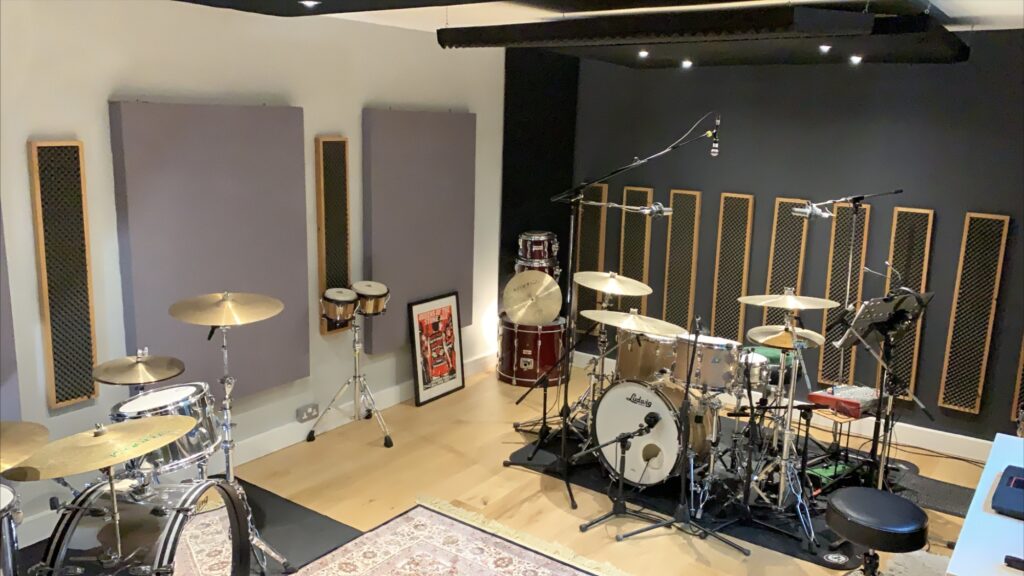
Recording and Media Spaces
As part of a broader acoustic treatment design.
Residential Interiors
For home offices, media rooms, entertainment spaces, and large living areas.
Public Buildings
For areas where speech clarity and acoustic comfort are important.
Choosing the Right Wood Wool Configuration
The right panel is not simply the one that looks best.
A professional specification should consider:
Room Size
Larger rooms generally require a different acoustic strategy than smaller spaces.
Ceiling Height
High ceilings can require additional suspended absorption.
Existing Surfaces
A room full of glass and concrete will behave differently from a room with carpets and soft furnishings.
Occupancy
People themselves absorb sound, so an empty room and occupied room can have different acoustic characteristics.
Frequency Range
Speech, music, machinery, and other noise sources contain different frequency distributions.
Panel Thickness
Thickness affects absorption characteristics.
Backing
Mineral wool or other acoustic backing can substantially change performance.
Air Gap
Spacing behind the panel can improve absorption at selected frequencies.
Why Acoustic Testing Matters
Acoustic performance should not be based solely on marketing language.
Products can be tested using standardized methods to determine sound absorption characteristics.
For example, published wood wool data can include measurements at frequencies such as:
- 125 Hz
- 250 Hz
- 500 Hz
- 1 kHz
- 2 kHz
- 4 kHz
These results help designers understand how a specific configuration behaves across different parts of the frequency spectrum.
The important word is configuration.
A panel’s measured performance depends on how it was tested and installed.
Therefore, acoustic consultants should use test data corresponding as closely as possible to the proposed installation.
Professional Wood Wool Acoustic Solutions in South Africa
A successful acoustic project begins before the panels arrive on site.
Professional acoustic planning can involve:
- Room assessment
- Reverberation analysis
- Acoustic treatment design
- Wall treatment
- Ceiling treatment
- Panel selection
- Mineral wool backing
- Air-gap planning
- Colour coordination
- Installation detailing
- Acoustic performance documentation
The objective is to create a system that works with the architecture rather than fighting against it.
For a restaurant, this could mean a warm textured ceiling.
For an office, it could mean a clean acoustic ceiling grid.
For a school, it could mean robust wall and ceiling treatment.
For an auditorium, it could mean a carefully calculated combination of absorption and reflection.
Frequently Asked Questions
What are acoustic wood wool panels?
They are acoustic panels generally made from wood fibres bonded with cement and water. They are designed primarily for sound absorption and are commonly used on walls and ceilings.
Are wood wool panels soundproof?
Not by themselves. They primarily reduce sound reflections and reverberation inside a room. Sound isolation between rooms requires a separate construction strategy.
Can wood wool panels be installed on ceilings?
Yes. Wood wool acoustic systems are widely used for ceiling applications, including suspended and direct-fixed configurations.
Do thicker wood wool panels absorb more sound?
Thickness is one factor, but mounting method, backing, air gap, density, and total coverage also affect acoustic performance.
Can wood wool panels be coloured?
Many manufacturers offer coloured or painted wood wool panels, allowing them to be coordinated with interior design schemes.
Are wood wool panels suitable for restaurants?
Yes. They can be used to control reverberation and improve acoustic comfort while providing a distinctive architectural finish.
Can wood wool be used in offices?
Yes. Wood wool acoustic panels are used in offices, meeting rooms, and open-plan environments to help control reflected sound.
Can wood wool panels replace Mass Loaded Vinyl?
No. They serve different purposes. Wood wool is primarily an absorptive acoustic treatment, while Mass Loaded Vinyl is a dense barrier used as part of sound-isolation assemblies.
Conclusion
Modern architecture does not have to choose between good acoustics and a strong visual identity.
Acoustic wood wool panels offer a way to combine both.
Their textured wood-fibre surface can become an architectural feature while the panel system introduces sound absorption into spaces where hard surfaces would otherwise create excessive reflections.
Across South Africa, this makes wood wool an option for offices, restaurants, schools, hotels, auditoriums, public buildings, and residential interiors.
But the most effective results come from treating wood wool as part of a designed acoustic system.
Panel thickness, mounting method, backing, air gap, room geometry, surface coverage, and existing finishes all influence the final result.
The objective is not simply to put acoustic material on a wall.
It is to create a space where people can speak more clearly, listen more comfortably, work with fewer distractions, and enjoy the architecture around them.
For professional Acoustic Wood Wool solutions in South Africa, properly designed wall and ceiling systems can bring together natural texture, architectural flexibility, and improved acoustic comfort.