Traffic, corridor chatter, and hallway echoes often slide straight under doors and into living spaces. Acoustic Door Seals target those tiny gaps so noise cannot sneak through. By sealing the sides, top, and bottom of a door, they turn a weak point into a strong sound barrier.
The frustrating part is that even a thick, solid door still leaks sound if light passes around the edges. Many UAE apartments, villas, offices, and hotel rooms have this exact problem. Walls feel solid, yet noise from neighbors, lifts, or busy streets still disturbs sleep and focus.
Acoustic door seals are specialized strips and profiles that close those air gaps tightly. Combined with a good door, they can add tens of decibels of sound reduction, turning a noisy room into a far calmer one. In this guide, you will see how they work, which types suit your doors, where they are used in UAE buildings, and why professional fitting by Waseem Technical matters.
As many acoustics specialists like to say, “If you can see light around a door, sound will pass through as well.”
Keep reading to learn how to stop noise at the door instead of chasing it around the room.
Key Takeaways
Door gaps are usually the biggest path for noise, even with solid walls and doors in place. Sealing these gaps with proper acoustic products often brings the fastest and most noticeable improvement in quietness.
Acoustic Door Seals block airborne sound by closing the path around the sides, top, and bottom of a door. The main types are perimeter seals, automatic drop-down bottom seals, and threshold seals that work together as one system.
With a correctly sealed solid-core door using quality acoustic hardware, you can reach sound ratings in the mid forties on the STC (Sound Transmission Class) scale. That level of performance can reduce perceived loudness by more than half compared with an unsealed interior door.
Professional installation from a specialist such as Waseem Technical usually outperforms DIY kits. Trained teams select the right seal for each gap, fit it to tight tolerances, and test the result so you get the noise reduction you paid for.
What Are Acoustic Door Seals And Why Do UAE Properties Need Them?
Acoustic door seals are purpose-made strips and profiles that sit around a door frame and threshold to close every air gap. They compress against the door when it shuts, so sound waves must pass through solid material instead of slipping through open air. In UAE buildings with high background noise, these seals turn ordinary doors into serious sound barriers.
Sound mainly travels through air gaps, not just through walls. Research from the Acoustical Society of America notes that a gap equal to around one percent of a wall or door area can cut sound insulation by almost half. In practice, that means even a 3 millimeter gap under a door can make a solid-core door perform like a much lighter one.
UAE cities such as Dubai, Abu Dhabi, and Sharjah add another layer to the problem:
High-rise corridors carry echoing footsteps and lift sounds.
Mixed-use towers place apartments next to offices, clinics, or restaurants.
Busy roads bring constant traffic noise that seeps through villa entrance doors.
Without proper sealing, all of this finds the easiest route inside through door edges and thresholds.
Acoustic Door Seals are built from dense, flexible materials such as silicone, EPDM rubber, and aluminum carriers that hold their shape in the Gulf climate. Summer temperatures in many parts of the Emirates regularly exceed 45 degrees Celsius according to the UAE National Center of Meteorology, so ordinary foam strips often harden, crack, and stop sealing well. Silicone and high-density rubber seals from specialists like Waseem Technical keep compressing properly even under this stress.
For homeowners, hotel operators, and facility managers across the UAE, that combination of noise pressure and harsh climate makes acoustic sealing around doors a practical first step for better comfort, privacy, and concentration.
How Do Acoustic Door Seals Actually Block Noise?
Acoustic door seals block noise by closing the main airborne sound paths around a door. They seal the gaps at the bottom, sides, and top so sound cannot pass through open air. While some vibration still travels through the solid structure, removing those air gaps usually cuts the loudest and most annoying part of the noise.
There are two main ways sound crosses a doorway:
Airborne transmission happens when voices, music, or machinery noises pass through the gaps around the leaf.
Structure-borne transmission happens when vibration travels through the frame, wall, or floor.
Acoustic seals mostly target the airborne part, which is usually the strongest in homes, offices, hotels, and clinics.
To understand the impact, it helps to look at sound ratings. Sound Transmission Class (STC) is a number that tells you how much sound a wall or door blocks. A typical hollow interior door with no acoustic seals might sit around STC 20 to 25. A well-built solid door with quality Acoustic Door Seals can reach STC 40 to 45. Guidance from the U.S. General Services Administration explains that each 10 point rise in STC roughly halves how loud the sound seems to the human ear.
In everyday language, that jump means turning clearly understood speech from next door into a faint murmur, or turning loud corridor noise into a soft background rustle.
The seals contribute in three key ways:
They close the direct air paths around the door. When the door shuts, perimeter seals on the head and jambs compress against the leaf, while bottom seals meet the floor or threshold. This creates a near continuous acoustic line so sound has no easy opening to pass through.
They help maintain consistent pressure around the entire frame. Poorly fitted doors often have uneven gaps, which makes some spots much weaker than others. Quality acoustic hardware with proper adjustment spreads compression evenly, so no single corner or edge becomes the weak link that leaks most of the noise.
They add extra mass and damping at the most sensitive points. Automatic drop-down seals and threshold systems include dense rubber or silicone elements held inside aluminum profiles. These components absorb some sound energy as they flex, rather than letting it reflect straight through the opening.
Together with a suitable door leaf, those effects can add up to around 40 decibels of extra sound reduction in well designed systems. That is why specialists like Waseem Technical look at the whole door assembly, not just the panel itself.
Which Types Of Acoustic Door Seals Are Right For Your Space?
Choosing the right types of acoustic door seals for your space starts with understanding where the gaps are. Most UAE properties benefit from a mix of automatic drop-down bottom seals, perimeter frame seals, and threshold seals at floor level. Each plays a different role and matches different door conditions.
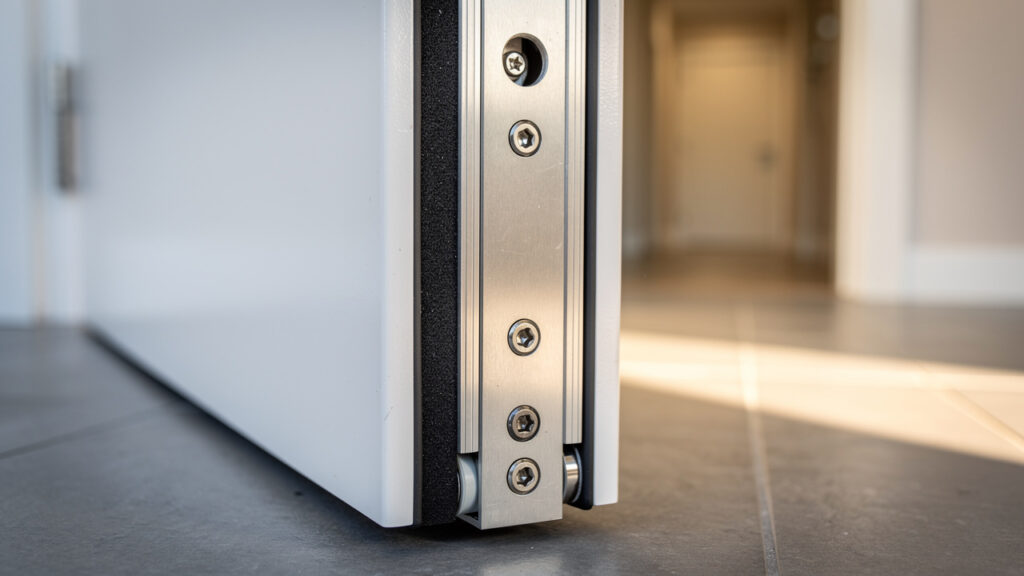
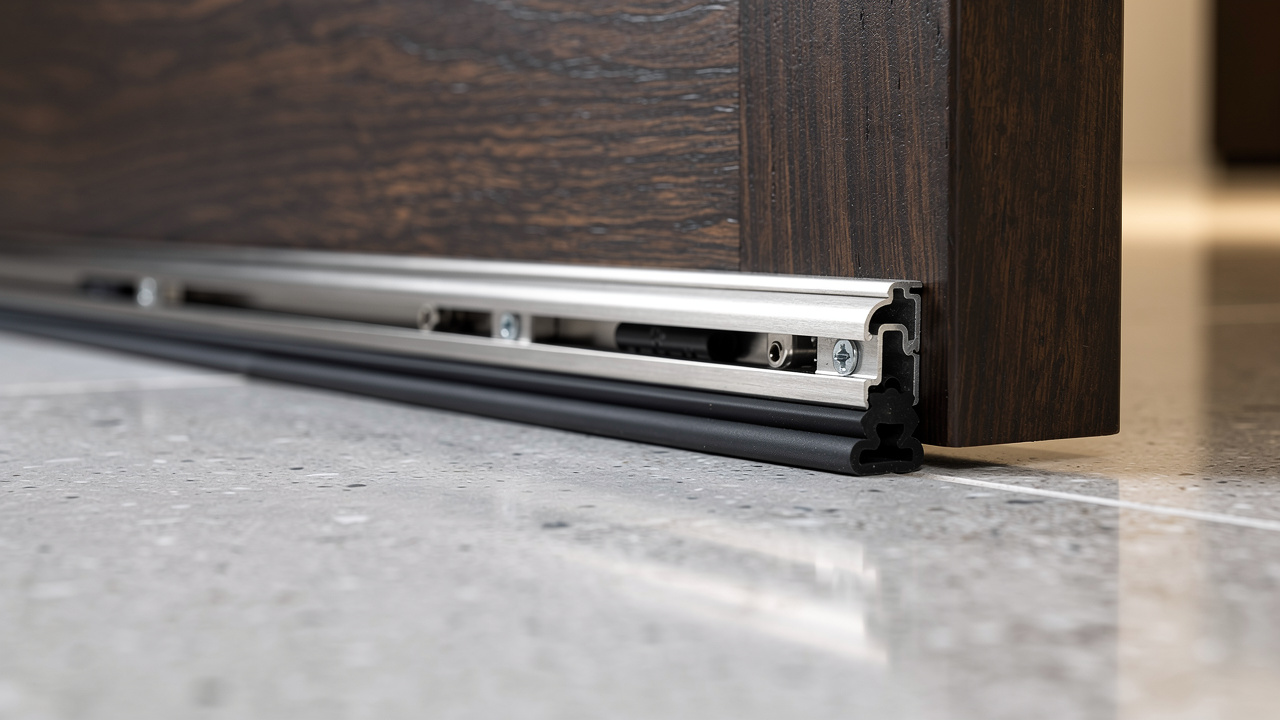
Automatic drop-down bottom seals handle the largest gap, which is almost always at the threshold. These slim devices fix to the bottom edge of the door. When the door closes, a small plunger touches the frame and the internal bar drops a rubber or silicone strip down to the floor. When the door opens, the strip lifts back up. This setup suits hotel corridors, office suites, clinics, and high traffic doors in malls, where people expect smooth movement and polished stone or tile floors.
Perimeter seals sit on or inside the frame along the sides and top. They may be surface-mounted strips or hidden in small grooves. When the door shuts, the seals compress slightly and fill the gap between the leaf and the frame. In UAE homes and commercial fit outs, these are often made from silicone or EPDM gaskets inside aluminum carriers. The materials stay flexible in heat and maintain compression for many years, unlike cheap PVC strips that tend to shrink and harden.
Threshold seals work together with the bottom seal to finish the barrier at floor level. A low metal or hardwood profile is fixed to the floor directly under the door swing. The automatic bottom seal presses against this raised strip, which creates a tight contact line even if the floor is not perfectly level. This is especially helpful in older towers in Dubai and Sharjah, where tiles may be uneven by a few millimeters.
The table below shows how these three main categories typically apply:
| Seal Type | Main Gap Sealed | Common UAE Uses |
|---|---|---|
| Automatic drop-down bottom | Door to floor gap | Hotel rooms, offices, clinics, studios, classrooms |
| Perimeter frame seal | Sides and head of door | Apartments, villas, conference rooms, meeting rooms |
| Threshold seal | Floor contact surface | Entrances, noisy corridors, older uneven floors |
For UAE conditions, material choice matters just as much as seal type. Silicone, high-density rubber, and anodized aluminum profiles cope well with strong sun, dust, and air conditioning cycles. Waseem Technical supplies Acoustic Door Seals in black, grey, white, and natural aluminum finishes, so doors in luxury villas, corporate offices, and hotels can stay both effective and visually neat.
How Waseem Technical’s Acoustic Door Seal System Eliminates Every Gap
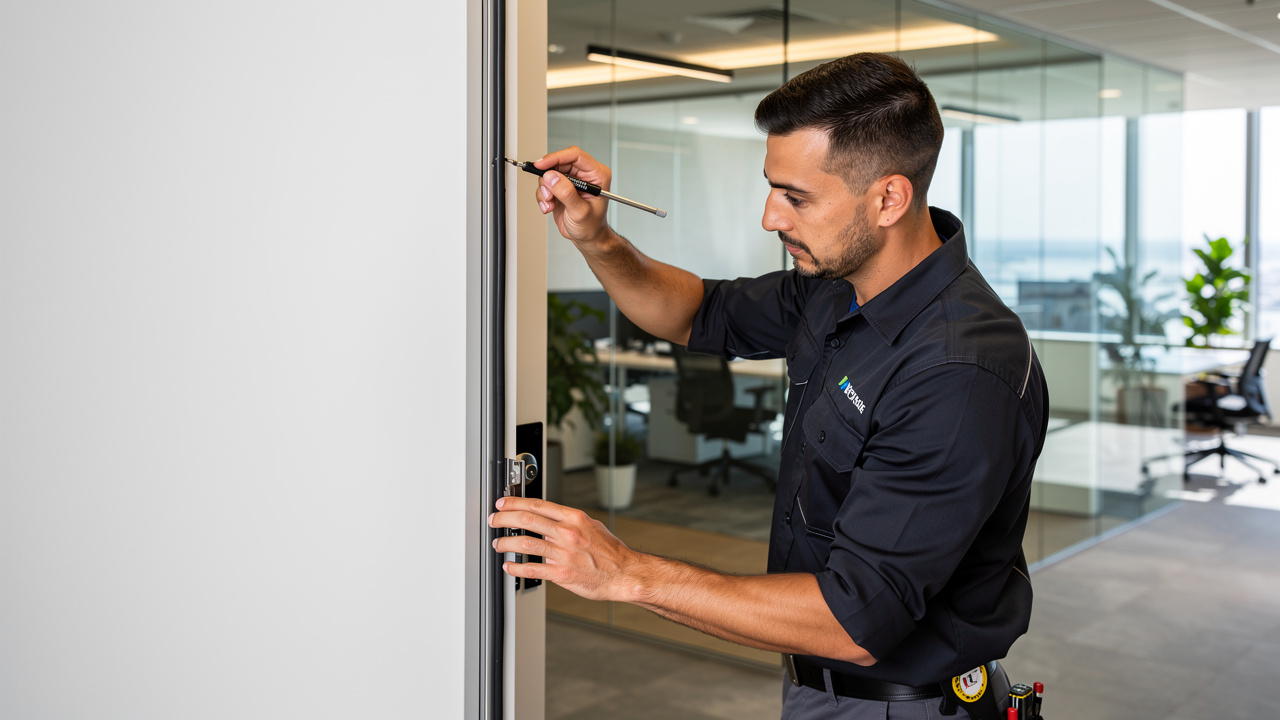
Waseem Technical approaches acoustic door sealing as a complete gap removal system, not as a collection of random strips. The team first looks at the door bottom, the frame perimeter, and the surrounding wall joints so no sound path is ignored. That whole-door check is what makes the final result feel genuinely quieter.
In practice, the process usually follows three clear steps:
Initial survey and acoustic check
Before work begins, Waseem Technical offers a free acoustic check across Dubai, Abu Dhabi, Sharjah, and the other Emirates. During this visit, technicians:Measure gaps at the bottom and sides of the door
Listen for flanking paths through adjacent walls and ceilings
Explain the options in clear language, with realistic expectations
Selecting the right combination of seals
For each door, Waseem Technical combines automatic drop-down bottom seals, perimeter seals, and threshold profiles that match:Door type and thickness
Floor finish (tile, marble, carpet, timber)
Fire rating and building-use requirements
Acoustic sealants, rubber and silicone gaskets, and backer rods then close the joints around the frame, so sound cannot slip through cracks beside or above the door.
Installation, adjustment, and testing
Trained installers fit each component to tight tolerances and adjust compression so the door still operates smoothly. Final checks confirm that:The door closes without excessive force
No visible light is passing through gaps
Noise leaking through the doorway has been audibly reduced
As Waseem Technical field teams like to put it, “Treat the whole doorway, not just the door leaf, and the noise drops fast.”
Where Are Acoustic Door Seals Used Across UAE Properties?
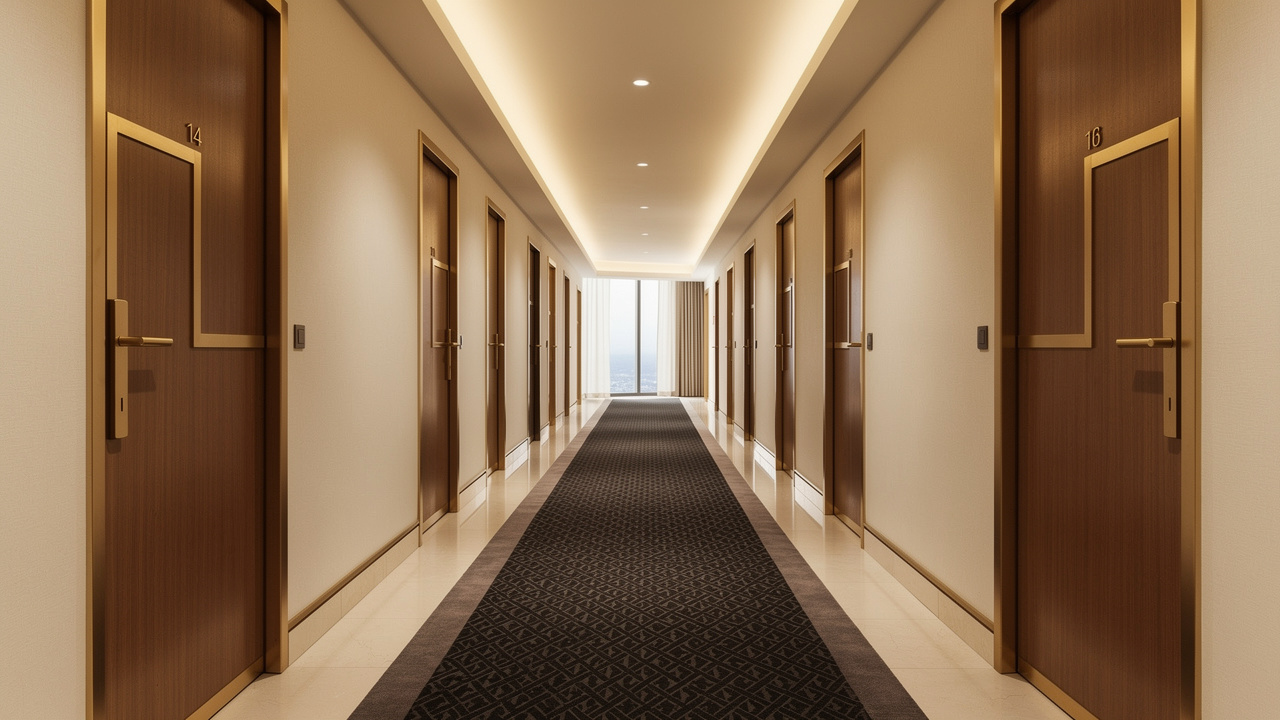
Acoustic door seals are used across UAE homes, offices, hotels, clinics, and industrial sites to calm noise at doorways. Each type of property faces different noise patterns, so the applications vary, but the goal is always the same: fewer sound leaks through gaps.
In residential buildings, common uses include:
Bedroom doors in high-rise Dubai apartments that face busy corridors
Home office doors for people working on video calls
Villa entrance doors that face main roads
Media rooms or gaming rooms so late night entertainment does not disturb others
Waseem Technical has installed Acoustic Door Seals in apartments and villas across Dubai, Abu Dhabi, Sharjah, and Ajman to handle exactly these cases.
Commercial and hospitality properties rely heavily on acoustic sealing:
Hotel guest room doors need quiet corridors so guests sleep well and leave positive reviews.
Conference and boardroom doors in business districts such as DIFC or Business Bay need strong speech privacy so conversations stay confidential.
Clinics and hospitals require calm spaces where patients can rest and talk with doctors without being overheard.
The World Health Organization notes that long-term exposure to high indoor noise can increase stress and disturb sleep, which shows why these applications matter.
Industrial and technical sites across JAFZA, KIZAD, and other zones use acoustic seals on:
Control room doors
Generator rooms
Pump rooms and plant rooms
These doors often sit between loud machinery spaces and quieter offices. By sealing the gaps around heavy fire doors, facility teams can reduce exposure to harmful noise levels and still meet safety codes.
Across all these property types, Waseem Technical supports clients not only in the UAE but also across the wider GCC, including Saudi Arabia, Qatar, Kuwait, Bahrain, and Oman. That regional experience helps match seal types to the many different door styles found in towers, villas, factories, and hotels.
Wrapping Up
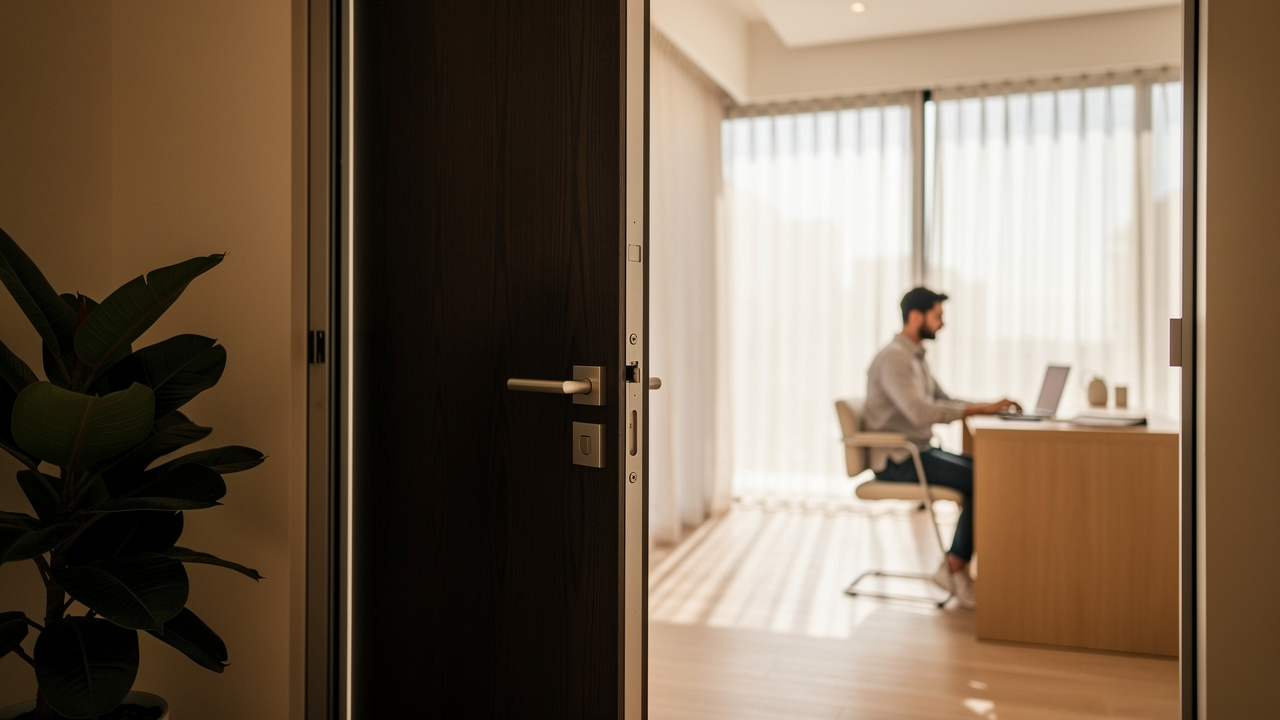
Acoustic Door Seals turn ordinary doors into strong sound barriers by closing the tiny gaps that let noise flow freely. Without them, even heavy walls and solid doors will struggle to deliver the quiet you expect.
The right mix of perimeter, bottom, and threshold seals, built from heat-resistant materials, can cut perceived loudness dramatically. When those parts are selected and fitted by specialists such as Waseem Technical, the improvement is not just on paper, it is something you hear every time you close the door.
Conclusion
Door gaps are often the forgotten reason that homes, offices, hotels, and clinics stay noisy despite good construction. By sealing these paths properly, Acoustic Door Seals protect privacy, support better sleep, and make working and learning spaces calmer. For UAE properties facing strong traffic noise, busy corridors, and powerful air conditioning, they are a smart first upgrade.
A professional, system-based approach is the most reliable path to real results. Waseem Technical focuses only on acoustics, using proven seal types, climate-ready materials, and careful installation methods learned over more than thirteen years. To find out how much quieter your rooms could be, contact Waseem Technical through waseemtechnical.ae or call +971 50 209 7517 and request a free acoustic check.
Frequently Asked Questions
Question: Can acoustic door seals really make a noticeable difference in noise reduction?
Yes, properly fitted acoustic door seals make a clear difference you can hear immediately. A hollow interior door with no seals might perform around STC 20 to 25, while a solid door with quality seals can reach the mid forties, which more than halves perceived loudness for many common noise sources.
Question: How long do acoustic door seals last in the UAE’s extreme heat?
High quality silicone and high density rubber seals hold up well for several years in UAE temperatures above 45 degrees Celsius. Waseem Technical specifies materials that resist heat, humidity, and UV. For best performance, a simple visual check every three to six months helps spot wear or damage early.
Question: Do acoustic door seals also help with air conditioning efficiency?
Yes, acoustic seals help air conditioning work more efficiently because they close air leaks as well as sound leaks. When the gaps around a door are sealed, less cooled air escapes into corridors or stairwells, so AC units cycle less often. That can support lower energy use and steadier room temperatures.
Question: Is professional installation necessary, or can I fit acoustic door seals myself?
DIY kits can help a little, but small mistakes often leave gaps that weaken acoustic performance. Professional installation from Waseem Technical means the right seal type is chosen, the frame and floor are checked carefully, and each seal is adjusted and tested. This matters most for hotels, clinics, studios, and high value homes.
Question: Which doors in my UAE property should be prioritized for acoustic sealing?
Start with doors that face the loudest areas or have visible gaps. Main entrance doors, bedroom doors near corridors or lifts, home office doors, and conference or meeting room doors usually bring the biggest gain. Waseem Technical’s free acoustic check helps rank doors by noise impact so you can plan upgrades in a smart order.