Achieving effective soundproofing is not just about installing high-quality materials; it depends heavily on how well the entire system is sealed. Many spaces are equipped with acoustic panels, insulation, and dense barriers, yet noise problems still persist. The reason behind this failure is often hidden gaps that allow sound to pass through unnoticed. Sound does not always travel directly through walls; instead, it looks for the easiest path, which is usually through small openings, joints, and weak points in the structure. Even a minor gap can significantly reduce overall acoustic performance, making an otherwise well-designed system ineffective.
Why Small Gaps Have a Big Impact on Soundproofing
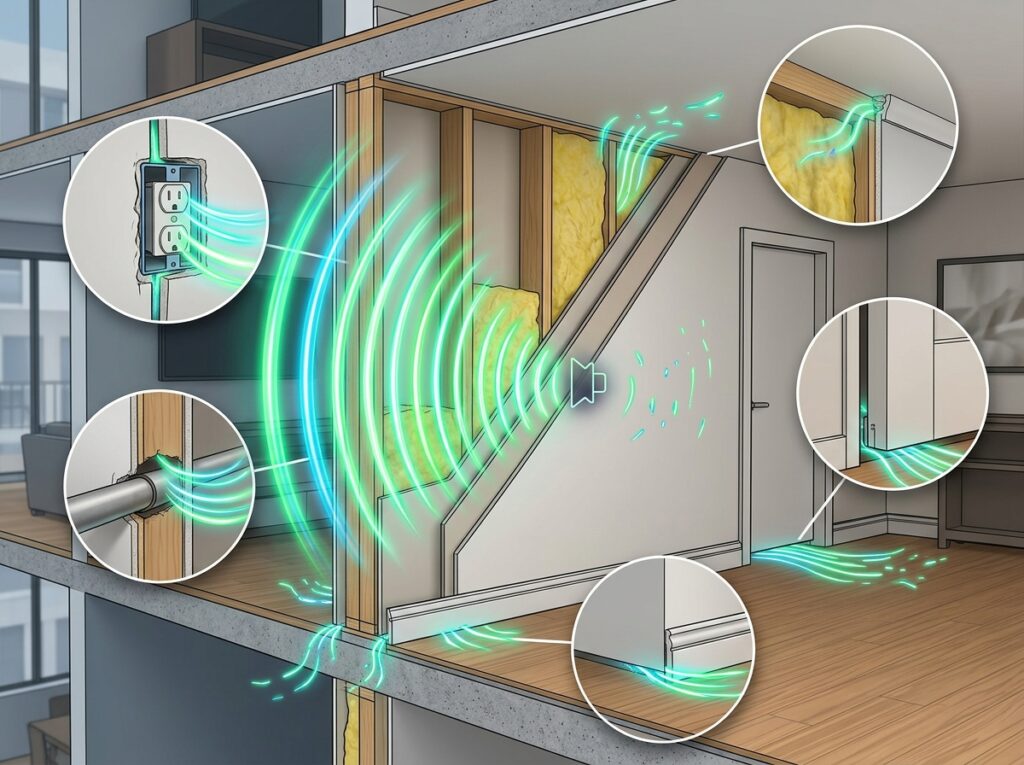
Sound behaves differently than most people expect. Rather than forcing its way through solid barriers, it escapes through the smallest available openings, a phenomenon commonly referred to as flanking noise. Gaps around doors, windows, electrical outlets, and wall joints act as channels that allow sound to bypass soundproofing materials entirely. For example, a door with poor sealing or a slight gap at the bottom can let in a substantial amount of noise, regardless of how thick the surrounding walls are. This is why even advanced acoustic setups fail when proper sealing is ignored.
Common Hidden Areas Where Sound Leaks Occur
One of the biggest challenges with acoustic gaps is that they are not always visible or obvious. These leaks are commonly found around door frames, window edges, ceiling joints, and service penetrations such as wiring and ducts. Suspended ceilings and ventilation systems also create hidden pathways that allow sound to travel between spaces. These areas are often overlooked during installation, yet they play a major role in determining how effective a soundproofing system will be. Without addressing these weak points, even the best materials cannot perform to their full potential.
The Role of Airtightness in Acoustic Performance
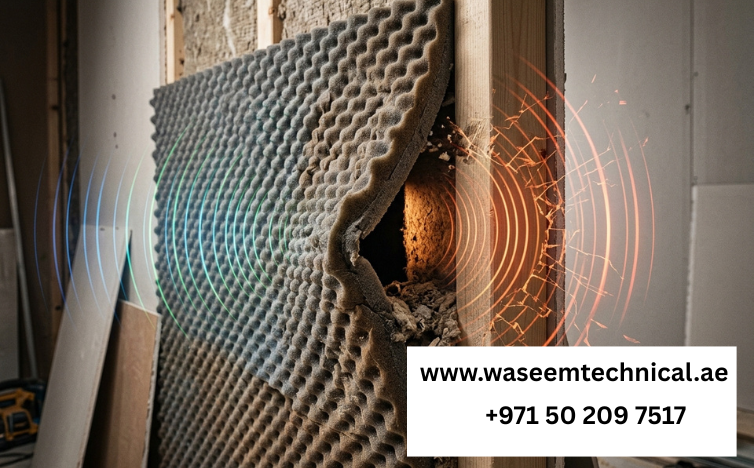
A critical principle in soundproofing is that if air can pass through a gap, sound can pass through as well. This makes airtightness one of the most important factors in achieving real noise control. Soundproofing systems must be designed to eliminate air leaks by sealing all joints, edges, and penetrations. Without proper sealing, sound will continue to travel freely, reducing the effectiveness of insulation and acoustic panels. This is why professional acoustic solutions focus not only on materials but also on precise installation and sealing techniques.
How to Fix Hidden Acoustic Gaps Effectively
Improving acoustic performance requires a detailed approach to sealing all potential leakage points. Acoustic sealants can be used to close cracks and joints, while rubber gaskets and door seals help eliminate gaps around openings. Electrical outlets and service penetrations should be properly sealed, and ventilation systems must be treated with acoustic solutions that allow airflow without compromising sound control. By addressing these small but critical areas, it is possible to significantly improve overall soundproofing performance without major structural changes.
Why Complete Systems Perform Better Than Single Solutions
Relying on a single product, such as acoustic panels or curtains, will not solve soundproofing issues if gaps are present. Effective noise control requires a complete system that combines mass, absorption, and airtight sealing. Hidden gaps undermine all three elements, making the system incomplete. When these gaps are properly sealed, the performance of existing materials improves immediately, resulting in noticeable noise reduction and better acoustic comfort.
Call us: Contact Waseem Technical Soundproofing Expert in Dubai: +971 50 209 7517
Conclusion
Hidden gaps are one of the most common reasons why soundproofing fails. They are small, often invisible, but have a major impact on overall performance. By understanding how sound travels and identifying potential leakage points, it becomes easier to fix the real problem rather than adding unnecessary materials. Proper sealing, combined with the right acoustic solutions, ensures that your soundproofing system works effectively and delivers the results you expect.