Noise between floors in UAE towers and duplexes can turn daily life into constant stress. Complaints, warnings, even lost tenants often follow.
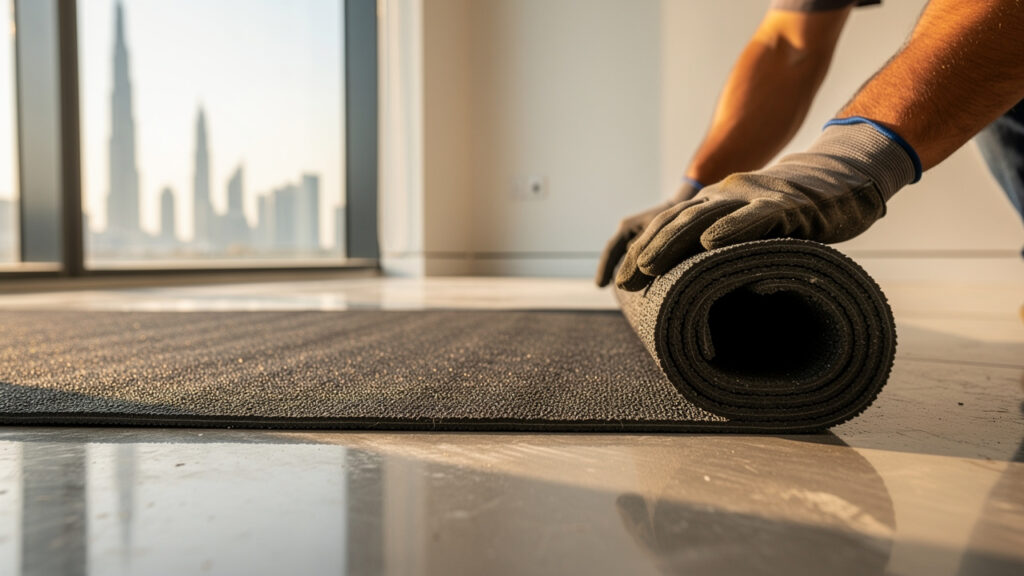
Acoustic Floor Underlay is a sound-dampening layer installed between the concrete slab and your finished floor. It cuts impact noise at the source. In multi-story buildings, this thin layer is one of the most effective ways to control footsteps, furniture movement, and trolley noise. This article explains why impact noise is so stubborn, how underlay works, the real benefits, how to choose a product, and where Waseem Technical fits in.
Keep reading to see how a thin layer under your floor can reshape comfort, privacy, and property value in your building.
Key Takeaways
This quick summary shows why Acoustic Floor Underlay matters in multi-story buildings across the UAE.
Impact noise is the main reason neighbors argue in many towers, because concrete slabs pass vibration directly to the flat below. That makes every footstep or dragged chair feel louder than it should. A simple decoupling layer under the floor changes that path.
Acoustic Floor Underlay separates the finished floor from the slab so impact energy has to pass through a shock-absorbing cushion. That reduces noise, improves comfort underfoot, and helps the floor finish last longer. Many premium Dubai and Abu Dhabi projects now treat this as standard.
The right underlay depends on floor type, traffic, moisture, and budget, and it works best with professional design and fitting. Waseem Technical matches underlay thickness and material to each site and supports code compliance, so owners, tenants, and managers all gain.
Why Is Impact Noise Such A Problem In Multi-Story Buildings?
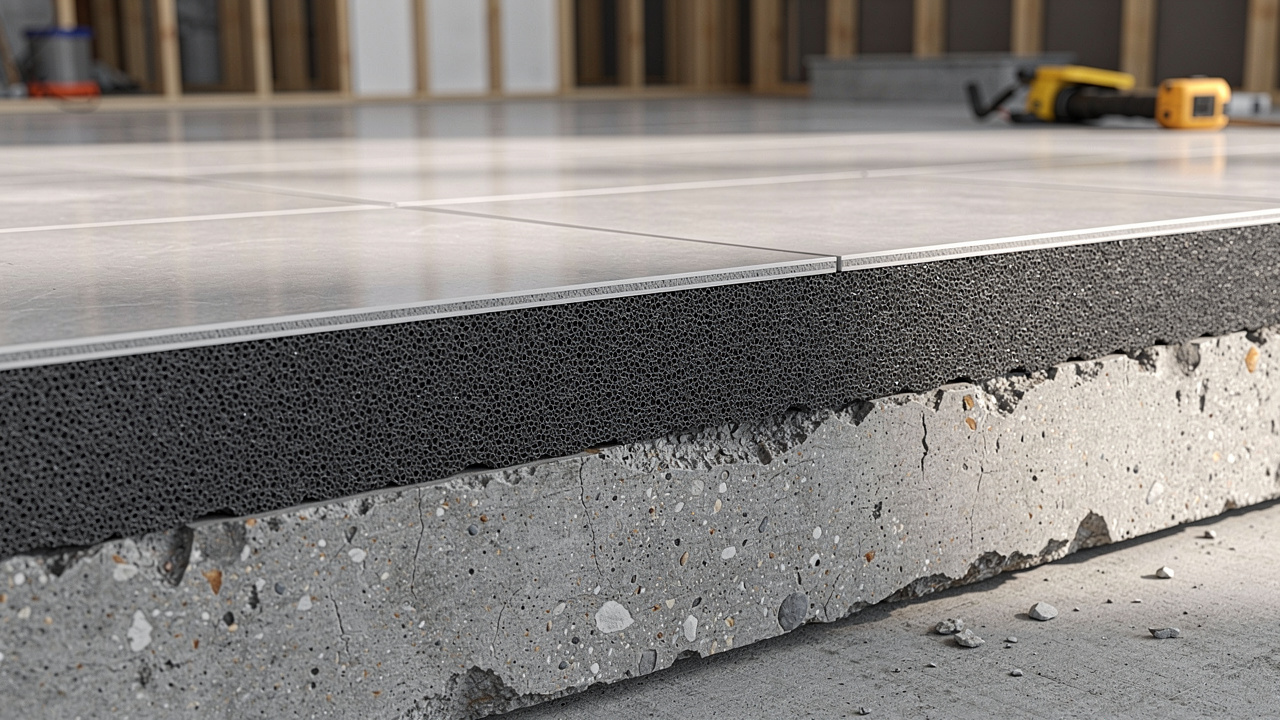
Impact noise is such a problem in multi-story buildings because hard concrete slabs carry vibration very efficiently. In typical UAE towers, every step, dropped toy, or moved chair on an upper floor can vibrate straight into the ceiling below. That turns normal daily activity into a constant background of thumps.
Impact noise is different from airborne noise like voices or music:
Impact noise starts inside the structure when feet, furniture, or trolleys strike the floor. The force goes straight into the slab.
Airborne noise (voices, TV, music) travels through the air first, then sets walls and ceilings vibrating.
Solid concrete works almost like a drum skin in the case of impact noise, sending vibration sideways and downward through slabs, beams, and columns — a problem well documented in studies on Pixels, chisels and contours examining how structural variation affects noise exposure across urban buildings.
Because of this, even strict quiet hours or carpet rules only go so far. In many Dubai Marina and Downtown Dubai towers, residents complain that they still hear children running, chairs scraping, and weights dropping from above. According to the European Environment Agency, over 20 percent of Europeans live with traffic noise above 55 decibels, which is linked to higher stress and sleep disturbance, and indoor impact noise adds another layer on top of that burden. When there is no acoustic break between the floor finish and the slab, vibration has a clear path, and complaints quickly follow.
How Does Acoustic Floor Underlay Actually Reduce Sound?
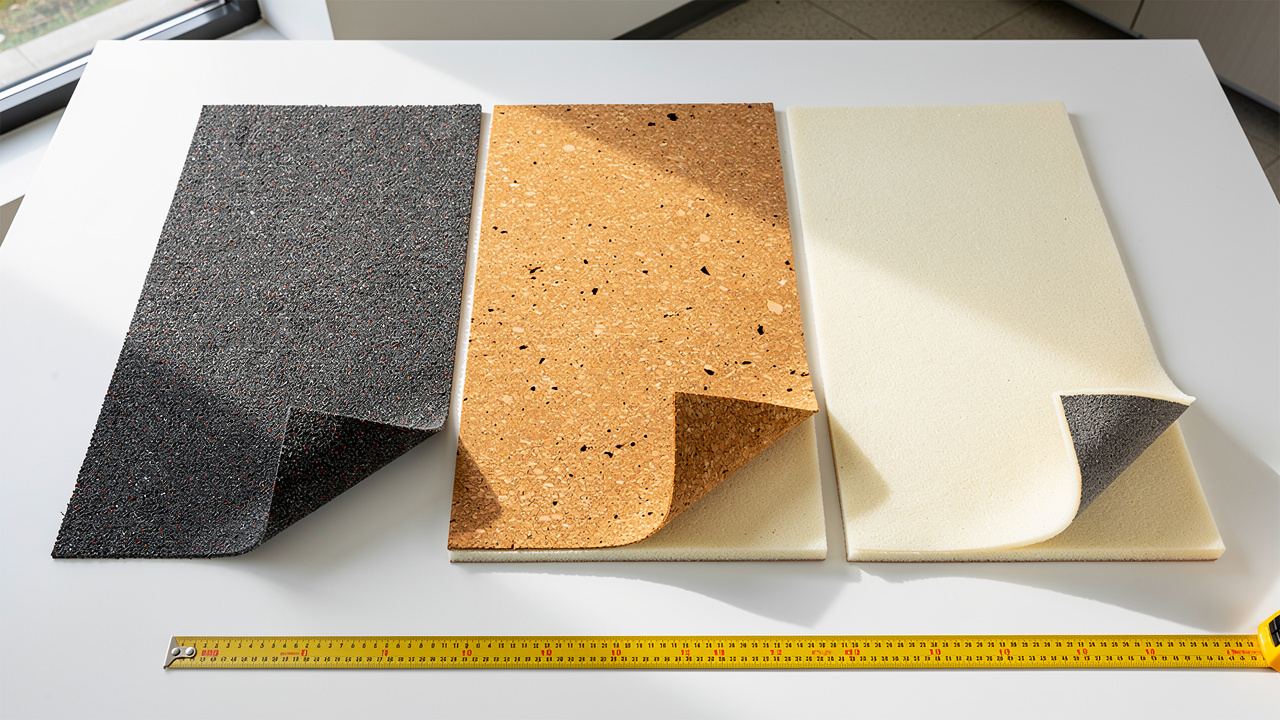
Acoustic Floor Underlay reduces sound in multi-story buildings by interrupting the path of vibration between the finished floor and the concrete slab. Instead of letting footsteps strike the slab directly, the underlay creates a compressible layer that absorbs part of that impact. Less energy reaches the structure, so less noise reaches the room below.
Most acoustic underlays use dense rubber, high-density foam, or cork. These materials deform slightly under load, then recover, which turns some of the impact energy into tiny amounts of heat inside the material. That is how they reduce sharp sounds from heels, dropped objects, or furniture movement. In a tiled corridor or a laminate living room, the underlay works quietly under the surface every time someone walks across.
You can think of it as three simple steps:
Decoupling – The underlay separates the hard floor finish from the concrete slab.
Damping – The material compresses and absorbs part of the impact energy.
Reduction – Less vibration reaches the slab, so much less sound reaches the ceiling below.
Engineers measure this performance with two main ratings:
Impact Insulation Class (IIC) – describes how well a floor assembly cuts impact noise from footsteps and hits.
Sound Transmission Class (STC) – focuses on airborne sound such as voices and televisions.
According to guidance summarized by the U.S. Department of Housing and Urban Development, many multi-family standards aim for IIC and STC ratings of at least 50 for comfortable living. In the UAE, developers and consultants in Dubai, Abu Dhabi, and Sharjah often use similar targets when specifying underlay systems. A 10-point increase in these ratings is typically perceived as roughly halving loudness, so even a modest improvement in numbers can feel very noticeable in real apartments and offices.
What Are The Real-World Benefits Of Installing Acoustic Floor Underlay?
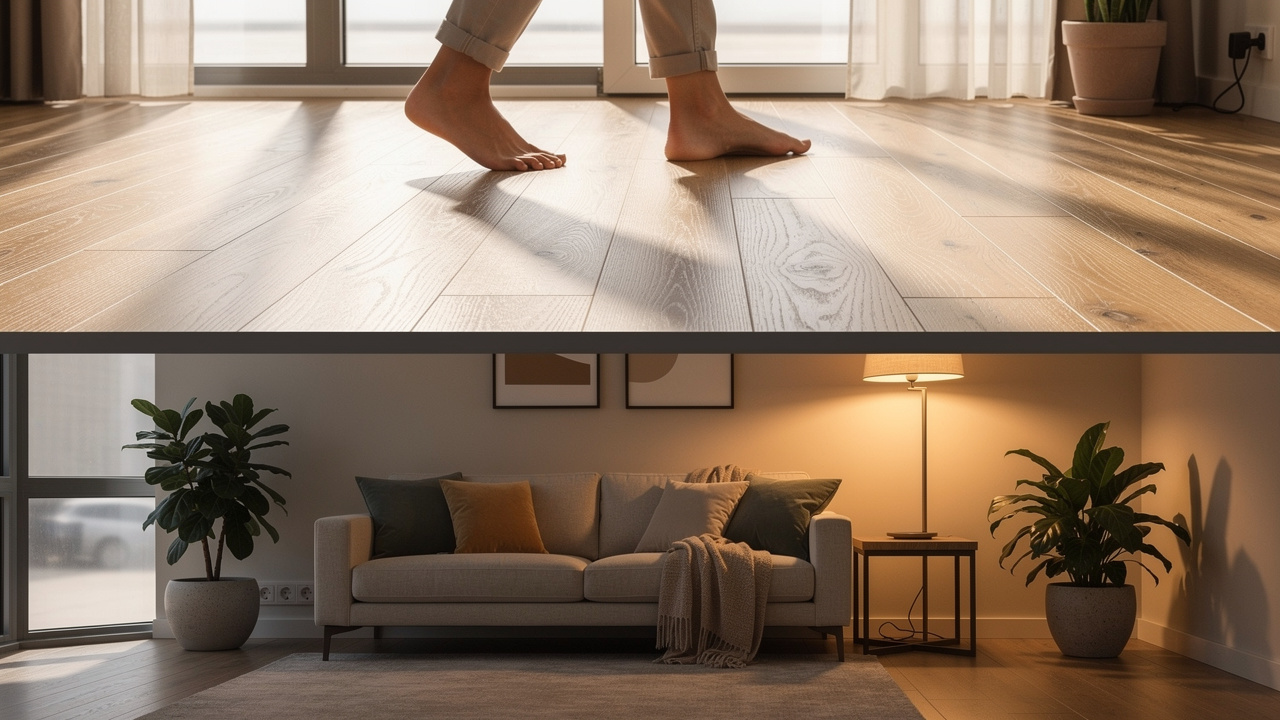
Installing Acoustic Floor Underlay in a multi-story building brings far more than a simple decibel drop. It directly reduces neighbor disputes, improves comfort, supports the flooring system, and strengthens the long-term value of the property. For many new towers across the UAE, it is now treated as part of the basic acoustic design rather than an optional extra.
Key benefits include:
Noise reduction and fewer complaints
Footsteps, running children, rolling suitcases, and restaurant trolleys all sound softer in the space below when impact energy hits an acoustic layer first. Research from the World Health Organization links prolonged exposure to unwanted noise above 40 decibels at night with poorer sleep quality and higher stress, so anything that quiets the daily sound picture supports health and wellbeing. Fewer complaints mean easier management for facility teams and a calmer community for residents.Comfort underfoot
Underlay adds subtle cushioning that feels kinder on joints, especially on hard floors like tile, vinyl, or engineered wood. People may not notice why a corridor or living room feels more comfortable, but they do notice when floors feel harsh and unforgiving.Floor durability and maintenance savings
Underlay helps spread loads more evenly, so click joints and tile adhesives deal with less shock. That can extend the life of the floor finish, reduce cracking, and cut down on noisy hollow spots. Over years, this reduces replacement cycles and saves owners money. Moisture-resistant underlays suited to the UAE climate also help protect floors from vapor rising through concrete slabs.Higher property value and better occupancy
For owners, investors, and hotel brands, there is a clear link between acoustic comfort and value. Quiet apartments and suites rent and sell faster, and they hold tenants for longer periods. In many Dubai and Abu Dhabi projects marketed by firms such as Emaar and Aldar, acoustic performance appears alongside views and amenities in brochures. Good sound control has become part of the quality story.
“Noise is not just an environmental nuisance, it is a threat to public health.”
— World Health Organization
The table below shows how life in a building changes once underlay is in place.
| Aspect | Without Underlay | With Acoustic Floor Underlay |
|---|---|---|
| Everyday impact noise | Strong, sharp thuds from above | Softer, shorter sounds that fade quickly |
| Resident relations | Frequent noise complaints and tension | Fewer disputes and better online reviews |
| Floor system life | Higher stress on joints and adhesives | Gentler loading and slower wear over time |
How To Choose The Right Acoustic Floor Underlay For Your Property
Choosing the right Acoustic Floor Underlay for your property means matching the material and thickness to your floor finish, usage, and budget. A quiet bedroom in a villa needs a different setup than a busy mall corridor or hotel lobby. A short site check and a few clear questions will point you in the right direction.
Start with these main factors:
Flooring type
Flooring type shapes the choice because each surface behaves differently under load.Laminate and engineered wood floating floors need firm support so their joints do not flex too much, so they pair well with dense, medium-thickness underlays.
Vinyl planks and tiles often prefer thinner, stiffer layers to avoid dents.
Tile and stone usually call for special acoustic mats that work with adhesives and grout, and research on Impacto de práticas construtivas confirms that construction method choices have a significant effect on the impact sound insulation performance of floor systems.
Traffic level
Traffic level matters because a light-use bedroom and a high-footfall corridor put very different stress on materials.For homes, a quality foam or cork underlay may offer enough impact control with comfortable resilience, as evidenced by IMPACT NOISE INSULATION PERFORMANCE studies of vinyl flooring installed with the floating floor technique showing strong results for residential applications.
For offices in Business Bay or retail spaces in Ajman, a dense rubber product resists long-term compression better and keeps its acoustic performance stable.
Available build-up height
Available build-up height can be tight in renovations where doors, skirtings, and thresholds must stay. Slim 3 millimeter underlays from Waseem Technical work well in these cases while still giving a clear noise drop. Where there is more freedom, 5 or 10 millimeter products provide stronger performance without making floors feel spongy.Moisture and climate
Moisture and climate must suit UAE conditions, especially on ground floors and podium levels where vapor can rise through slabs. Underlays with integrated moisture barriers or low water absorption guard against warping and mold around kitchens, laundries, and balcony doors. That keeps both the acoustic layer and the floor finish in better condition across the hot, humid months.
Selection is easier when you look at system types, not just single rolls:
Underlay only – Acoustic underlay on its own suits cost-conscious apartments and most retrofits.
Floating floor systems – A floating floor on top of underlay gives higher isolation for studios, cinemas, and luxury suites.
Combined assemblies – Where a floating floor sits on top of Acoustic Floor Underlay, you get maximum isolation for very demanding spaces such as recording rooms or high-end hospitality.
Research from Oxford Economics found office workers lose around 86 minutes per day to noise and other distractions, so the extra investment in higher performance systems can pay back quickly in commercial settings. Waseem Technical supports all three routes and helps match them to your project brief.
Tip: Bring your acoustic consultant, flooring supplier, and Waseem Technical into the conversation early. Coordinated design makes it far easier to hit acoustic targets without surprises on site.
How Waseem Technical Delivers Acoustic Floor Underlay Systems Across The UAE
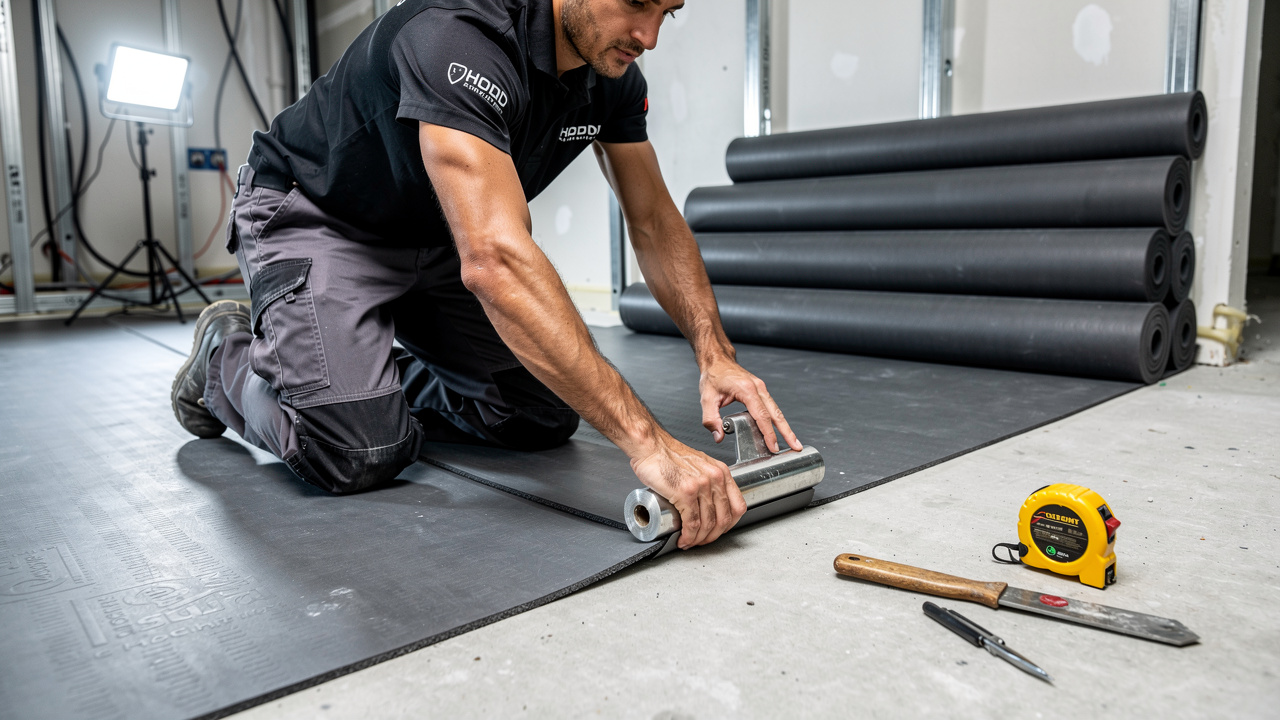
Waseem Technical delivers Acoustic Floor Underlay systems across the UAE by combining specialist products with focused acoustic expertise. The company works only in soundproofing and acoustics, which means every design decision centers on measurable noise control, not general fit-out convenience. That focus is particularly useful when multi-story projects must balance comfort, budget, and code compliance.
On the product side, Waseem Technical supplies high-density foam, rubber, and cork underlays in 3, 5, and 10 millimeter thicknesses. Rolls are typically 1.2 by 10 meters, with material properties suited to both residential and commercial traffic. Products are tested for performance and durability, and they work under laminate, engineered wood, vinyl, and tile systems commonly used from Dubai to Ras Al Khaimah.
Service is built as a clear, end-to-end path:
Assessment and acoustic check
The team begins with a free acoustic check and site survey, measuring current noise levels and checking slab condition, floor buildup, and existing finishes. Clients receive a written report that outlines weak points and proposes underlay options that fit both regulations and practical constraints such as door heights.Installation and coordination
During installation, trained technicians prepare the subfloor, lay Acoustic Floor Underlay in continuous sheets, tape joints to reduce flanking paths, and coordinate closely with flooring installers — an approach aligned with Noise Reduction Mat Performance research showing that slab conditions and installation method significantly influence real-world acoustic outcomes in apartment buildings. This careful approach helps products reach their tested IIC and STC performance on site. For complex builds such as hotels on Palm Jumeirah or clinics in Abu Dhabi, Waseem Technical also coordinates with project acoustic consultants.Post-handover support
After handover, the company remains available for checks, impact tests, and support if residents or tenants raise questions about sound. For landlords with portfolios across Sharjah, Ajman, or Al Ain, this ongoing support builds long-term trust and simplifies maintenance planning. Regional supply covers Saudi Arabia, Kuwait, Oman, and Bahrain as well, so cross-border developers can keep a consistent specification.
“From a single apartment renovation in Dubai to a large-scale commercial fit-out, Waseem Technical’s acoustic floor underlay systems deliver measurable noise reduction, backed by expert installation and a free acoustic check.”
According to the World Health Organization, unwanted noise ranks among the top environmental complaints worldwide, so having a specialist partner for flooring acoustics is no longer a luxury in busy Gulf cities. Waseem Technical gives that focus to every project.
Conclusion (The Takeaway)

Acoustic Floor Underlay in multi-story buildings across the UAE is not a nice-to-have upgrade. It is a practical, often necessary layer that tames impact noise, supports healthier indoor environments, and protects both flooring and property value.
Whether you manage a residential tower in Dubai, operate a hotel in Abu Dhabi, or own a busy retail unit in Sharjah, the right underlay can turn constant complaints into quiet satisfaction. Waseem Technical offers the materials, local experience, and acoustic know-how to recommend the right system and install it correctly.
If floor noise is already causing frustration, a free acoustic check from Waseem Technical is a simple first step toward a calmer building.
Frequently Asked Questions
What is the difference between standard underlay and Acoustic Floor Underlay?
How thick should Acoustic Floor Underlay be for an apartment in the UAE?
Answer: For most UAE apartments, 5 millimeter Acoustic Floor Underlay gives a strong balance of performance and floor height. Slim 3 millimeter products suit tight renovation spaces, while 10 millimeter options suit high-impact or premium acoustic needs. Waseem Technical uses a free acoustic check, floor layout, and existing floor build-up to recommend the right thickness for each unit.
Does Acoustic Floor Underlay comply with UAE building regulations?
Yes, quality acoustic underlays are intended to help projects meet acoustic targets referenced in UAE building codes and green frameworks such as LEED and Estidama. Waseem Technical supplies tested products with documented IIC and STC ratings, which supports consultants and contractors when they prepare compliance, LEED/Estidama documentation, and handover reports.
Can Acoustic Floor Underlay be installed during a renovation without raising floor height significantly?
Yes. Slim-profile Acoustic Floor Underlay from around 3 millimeters adds very little height, so doors, skirtings, and thresholds usually stay workable. Waseem Technical often uses these products in occupied apartment renovations, coordinating with flooring installers to improve acoustics with minimal disruption or structural adjustment. In many cases, existing transitions can be kept with only minor trimming.
Where does Waseem Technical supply Acoustic Floor Underlay products?
Waseem Technical supplies Acoustic Floor Underlay and related acoustic products across all emirates of the UAE, including Dubai, Abu Dhabi, Sharjah, and Ajman. The company also serves clients in Saudi Arabia, Kuwait, Oman, and Bahrain, with full installation services available within the UAE for both new builds and retrofit projects. For regional developers, this makes it easier to keep a consistent acoustic specification across several countries.