
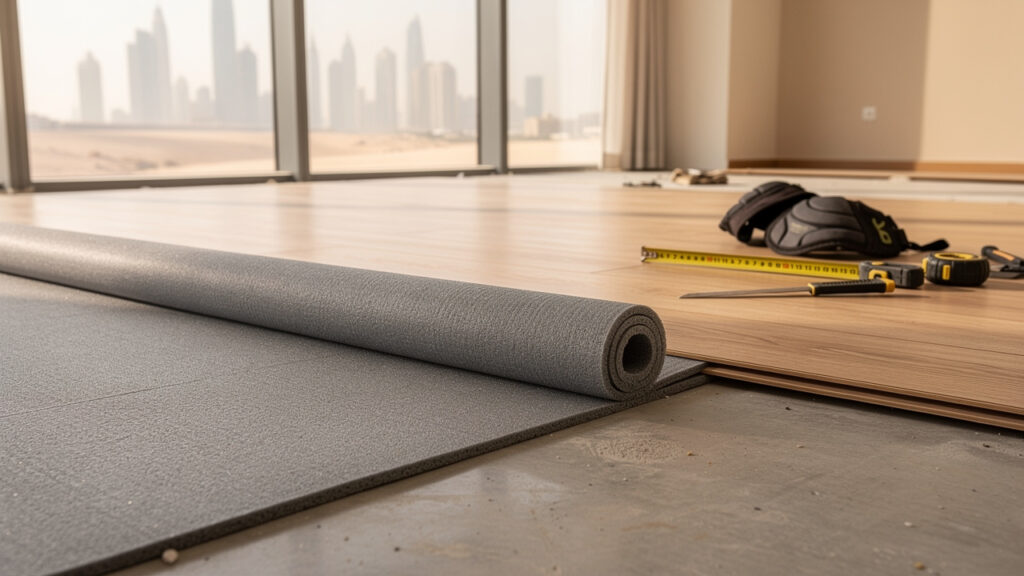
Persistent footstep noise between apartments makes many UAE homes feel less private and restful. Hard concrete slabs carry every impact straight into neighbors’ ceilings.
Floor underlay is a thin acoustic layer laid between the slab and your finished flooring. By absorbing impact vibrations where they start, it can cut footfall noise by tens of decibels and make UAE apartments noticeably quieter. This guide explains what impact noise is, how underlay works, which materials perform best, the main benefits, and how Waseem Technical installs it correctly.
Keep reading to see how a hidden layer under your floor can make a real difference to daily comfort.
Key Takeaways
Before going deeper, it helps to see the main points in one place. Impact noise behaves very differently from normal airborne sound, so it needs a different treatment at floor level.
Impact noise comes from direct hits on the floor surface, while airborne noise travels through the air first. Underlay mainly targets impact noise from footsteps and furniture movement, which is why it is so effective in apartments.
Acoustic underlay adds a softer, resilient layer between concrete and the visible floor. That layer absorbs vibration at the source, so less energy enters the slab and less sound reaches the apartment below.
On bare concrete slabs, good underlay products often achieve 15–35 dB of impact noise reduction. Research on resilient underlays reports typical drops around 20 dB (Acoustic Bulletin), turning loud thuds into a softer background sound.
Waseem Technical focuses only on soundproofing and acoustic treatments across the UAE and GCC. Their teams match underlay material, thickness, and density to each building and handle subfloor checks and installation so the acoustic result stays close to the target.
Underlay usually fits inside the existing floor build‑up, without touching the structure itself. That avoids major civil works that disturb neighbors or tenants and gives many apartments in Dubai Marina or Downtown Abu Dhabi a cost‑friendly way to cut impact noise.
What Is Impact Noise and Why Is It a Problem in UAE Apartments?
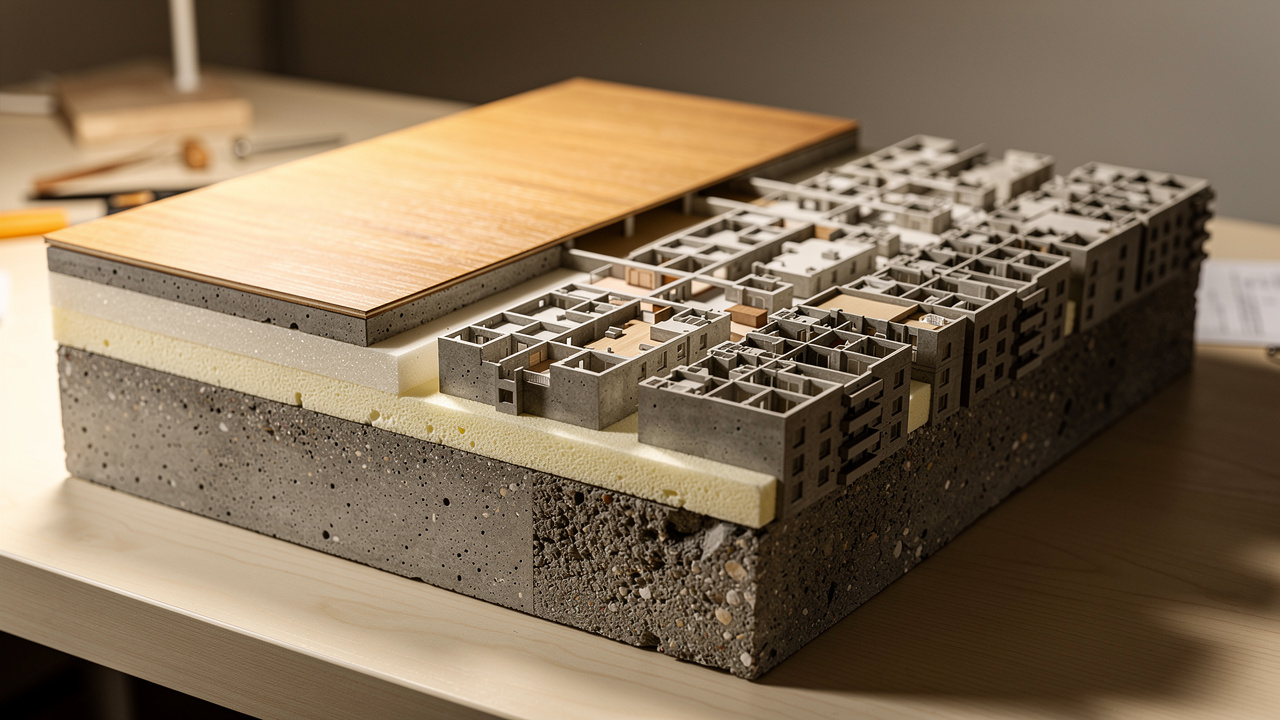
Impact noise in UAE apartments is the sound created when something strikes the floor and sends vibration through the building structure. This structure‑borne noise travels through concrete slabs far more easily than airborne sound from voices or televisions.
Typical sources include heavy footsteps, children running, chairs scraping, treadmills, and dropped objects. Each impact sends a shock into the concrete slab, which then behaves like a large speaker, radiating sound into the apartment below. Once that vibration is inside the slab, it is very hard to control with ceiling panels or rugs alone.
Airborne noise, by comparison, starts in the air and hits walls or windows first. Curtains, wall treatments, or double glazing can reduce it. Impact noise needs another approach, because the structure itself is carrying the sound. This is exactly where floor underlay makes a difference.
In dense high‑rise areas like Dubai Marina, Jumeirah Lake Towers, and Al Reem Island, neighbors often live directly above and below each other with only a concrete slab between them. Studies on environmental noise link unwanted sound exposure with sleep disturbance, stress, and even heart problems (World Health Organization). Regional surveys cited by the European Environment Agency show tens of millions of people in large cities reporting that they are highly annoyed by noise at home. UAE high‑rises follow many of the same patterns, so owners and residents now look at acoustic performance alongside finishes and views.
“Environmental noise is not just a nuisance; it is a public health issue.”
— World Health Organization
How Does Floor Underlay Actually Reduce Impact Noise?
Floor underlay reduces impact noise by absorbing vibration energy before it reaches the concrete slab. A resilient layer is placed between the structural floor and the visible finish, breaking the direct path that would normally carry sound into neighboring apartments.
When a heel hits a bare tile laid directly on concrete, most of the force goes straight into the slab. With the right underlay, the material compresses slightly, turns part of that energy into tiny amounts of heat, and slows the vibration. Less vibration entering the slab means less sound emerging below.
Acoustic specialists usually describe three main mechanisms working together inside quality underlays:
Vibration Absorption – the underlay cushions the impact. It compresses and rebounds instead of letting the slab take the full force, like a running shoe softening a step on a hard track.
Sound Dampening – the underlay reduces how long and how strongly the floor vibrates. Instead of a sharp, ringing response, the floor system settles quickly, which cuts the total noise heard in the room below.
Structural Isolation – the underlay reduces rigid contact between the finished floor and the structural slab. With fewer hard contact points, vibration finds it harder to pass through, which is especially helpful under tiles or engineered wood.
When thickness, density, and material are chosen correctly, acoustic underlay can reduce impact noise by around 15–35 dB. Testing on concrete slabs with resilient layers often reports improvements close to 20 dB in lab conditions, as explored in recent Noise Reduction Mat Performance research examining slab conditions in apartment buildings. In real apartments across Dubai and Abu Dhabi, careful product selection and installation by a specialist such as Waseem Technical are needed to reach the higher end of that range.
Which Underlay Materials Work Best for Impact Noise Reduction?
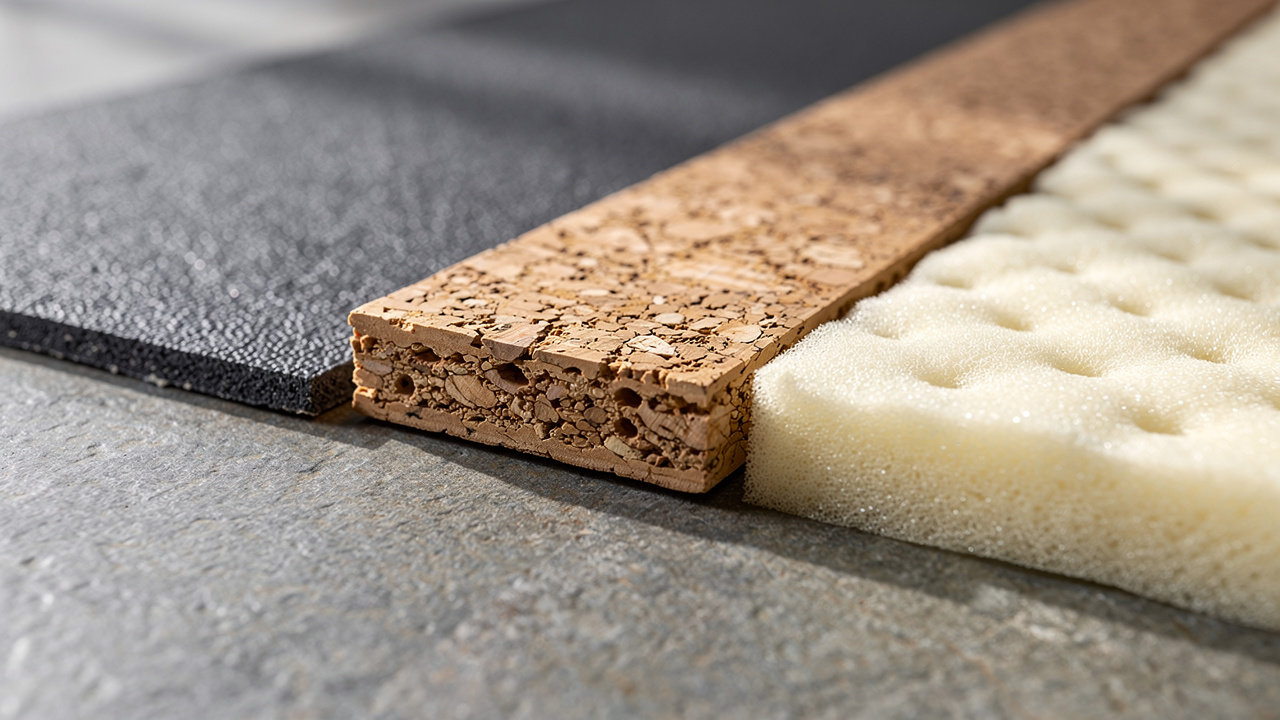
Underlay materials differ in density, resilience, and moisture behavior; in air‑conditioned UAE apartments with concrete floors, some options make more sense than others.
Rubber underlay has high density and excellent impact sound absorption. It performs very well under laminate, vinyl, or engineered wood in towers across Dubai and Sharjah, and it resists long‑term compression, which helps acoustic performance stay stable.
Cork underlay is a natural option with good acoustic and thermal behavior. Cork resists mold, which is useful in coastal areas like Abu Dhabi and Ras Al Khaimah, and many designers choose it under floating wood floors where sustainability is also important.
Foam underlay offers basic cushioning and is usually the most economical choice. It suits light residential spaces and simple laminate installations, but its acoustic performance is modest, so it is not ideal where serious noise complaints already exist.
Combination underlay layers materials, for example rubber with a foam or foil backing. These multi‑layer products manage both impact noise and moisture rising from concrete, which suits ground‑floor or podium apartments. Thickness and density still need to match the flooring manufacturer’s limits so click systems remain stable.
What Are the Benefits of Installing Acoustic Floor Underlay in Your Apartment?

Acoustic floor underlay in an apartment cuts impact noise, improves comfort, and protects your flooring investment. For many UAE residents, it is the most practical way to make a high‑rise home feel calmer without rebuilding ceilings or slabs.
The most obvious benefit is quieter living. Footsteps from children running, chairs sliding in the dining area, or people walking in heels become far less sharp. That means fewer late‑night complaints between neighbors in towers from Business Bay to Corniche Road.
Quieter floors also improve privacy. Conversations, laughter, and daily activity upstairs sound more distant when impact noise is controlled. Long‑term exposure to home noise has been linked to higher stress and sleep problems in urban residents (World Health Organization), so better acoustics support health as well as comfort.
Here is how the benefits go beyond sound:
More comfortable floors: Underlay adds gentle cushioning that makes standing and walking easier, especially over tiles or laminate. Families notice this in living rooms, corridors, and children’s bedrooms across Dubai and Sharjah. Over time, joints and backs feel the difference of a slightly softer step.
Longer‑lasting flooring: Quality underlay spreads loads and reduces small movements in the finished floor. This helps prevent cracks in tiles, joint wear in laminates, and premature aging of vinyl planks. Many flooring manufacturers even require specific underlays to keep their warranties valid.
Better rental and resale appeal: When acoustic underlay helps meet local acoustic guidelines and community standards, units are easier to rent and sell. Real estate agencies in Dubai and Abu Dhabi report growing interest in quieter apartments among professionals and families (JLL). Sound‑treated units stand out compared with similar flats that feel noisy and hollow.
In short, a correctly chosen underlay layer adds acoustic comfort, physical comfort, and long‑term value at the same time.
How Waseem Technical Delivers Professional Floor Underlay Services Across the UAE
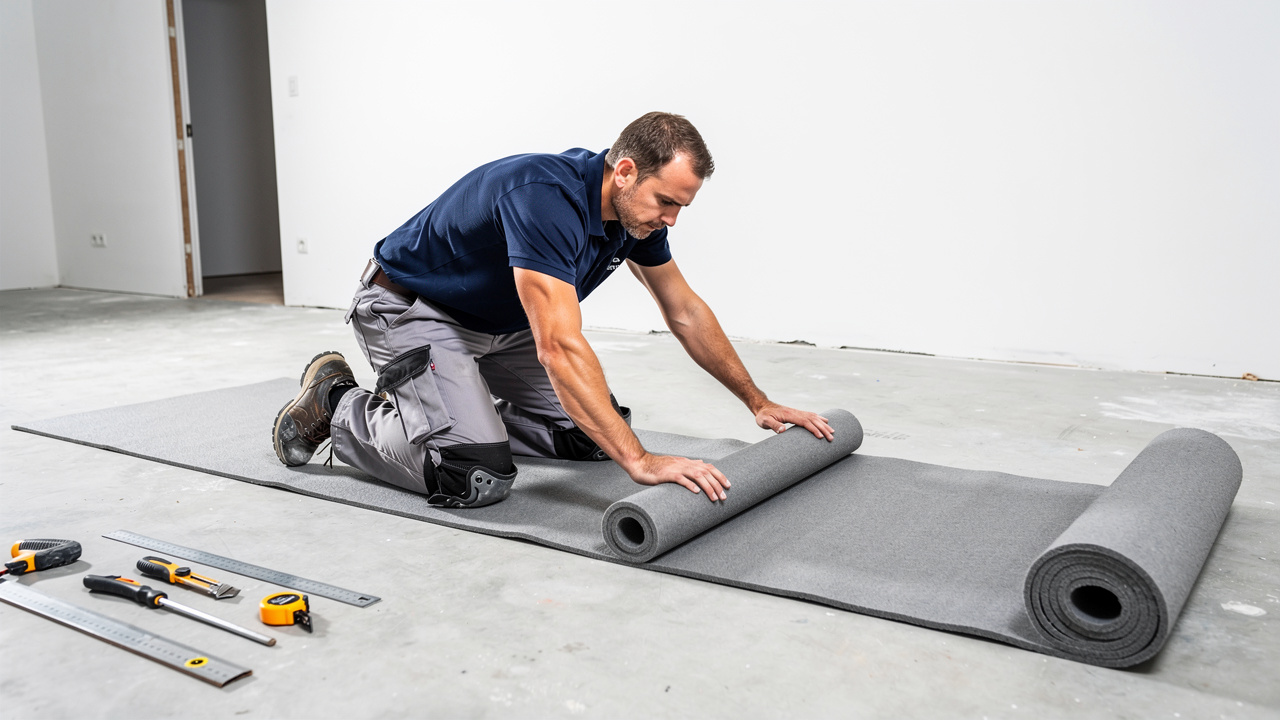
Waseem Technical delivers acoustic floor underlay projects across the UAE by combining detailed site assessment, appropriate materials, and trained installation teams. The company focuses only on soundproofing and acoustics, so every project starts with noise control as the main goal.
For a typical apartment in Dubai, Abu Dhabi, or Sharjah, Waseem Technical begins with a site visit. Technicians listen to the current noise problem, check the existing floor build‑up, and note where neighbors are located above and below. They also look at special factors such as moisture risk at podium levels or near pools.
Based on this assessment, they recommend an underlay type, thickness, and density that suit both the acoustic need and the flooring product. Rubber, cork, foam, or combination materials may be used, depending on whether the finish is tile, carpet, vinyl, or wood. The team also explains how much noise reduction is realistic for that specific structure, avoiding vague promises.
Installation is planned to keep disruption low for residents or hotel guests.
Old flooring, if present, is removed carefully and the concrete slab is cleaned and checked in line with Practice for the Installation of self-leveling underlayment standards. Any cracks or major level differences are repaired so the underlay sits on a sound base, which is important for both acoustic and structural performance.
The chosen underlay is laid wall to wall, with joints closely butted and taped where required. For products with moisture films, the film is placed facing the slab so vapor does not reach the flooring. Precise trimming around columns and door frames avoids acoustic gaps.
New flooring is installed over the underlay following the manufacturer’s guidelines. This might be laminate, vinyl plank, tile systems, or acoustic carpet. Waseem Technical coordinates with flooring suppliers in Dubai, Ajman, and other Emirates when special adhesives or methods are needed.
Final checks confirm that the floor feels firm, level, and noticeably quieter under normal walking. Most standard apartment projects finish within one or two working days, which keeps downtime short for residents and tenants.
“Small gaps or rigid contact points can transmit a surprising amount of noise,” notes the Waseem Technical team. “We treat detailing at edges and around pipes as carefully as the main floor area.”
For projects that need higher isolation, such as recording rooms or luxury penthouses, Waseem Technical also installs floating floor systems that sit on acoustic underlays. The table below compares the two main approaches.
| Feature | Acoustic Floor Underlay | Floating Floor System |
|---|---|---|
| Best for | Standard apartment upgrades and retrofits | Premium residential, studios, cinemas |
| Installation time | Around 1 to 2 working days | Longer, multi‑stage build‑up |
| Cost | Lower overall project spend | Higher investment per square meter |
| Noise reduction | Around 15 to 35 decibels | Maximum isolation when combined with other treatments |
| Disruption level | Minimal changes to structure | Moderate, with more construction activity |
Waseem Technical delivers these services across all Emirates and into Saudi Arabia, Qatar, Kuwait, and Bahrain, giving a consistent acoustic approach for regional portfolios.
The Bottom Line

Acoustic floor underlay gives UAE apartments a practical way to cut impact noise without rebuilding the structure. By adding a resilient layer between concrete slabs and finished flooring, vibration from footsteps and dragged furniture is absorbed before it becomes loud sound in neighboring units.
For homeowners, landlords, and facility managers in Dubai, Abu Dhabi, Sharjah, and beyond, this upgrade improves comfort, privacy, and property appeal at the same time. Waseem Technical combines specialist assessment, proven materials, and careful installation so each project delivers real, measurable noise reduction. To discuss an apartment, villa, or tower floor, contact Waseem Technical on +971 50 209 7517 or visit waseemtechnical.ae for a site assessment and tailored acoustic underlay plan.
Frequently Asked Questions
How much noise reduction can I realistically expect from acoustic floor underlay?
With the right material and proper installation, acoustic underlay typically delivers around 15–35 dB of impact noise reduction. The exact result depends on slab thickness, flooring type, and product density, which is why Waseem Technical assesses each apartment before recommending a system.
Does floor underlay work for all flooring types in apartments?
Yes. Acoustic underlay can work under laminate, vinyl, hardwood, tile, and carpet in UAE apartments. The key is matching underlay type, thickness, and stiffness to the specific flooring product and following the manufacturer’s guidance so locking systems and adhesives perform correctly.
Is acoustic floor underlay enough, or do I need a full floating floor system?
For most standard residential apartments, high‑quality acoustic underlay provides enough impact noise reduction. Floating floor systems are usually reserved for luxury units, studios, cinemas, or very strict acoustic targets. Waseem Technical reviews your building, budget, and goals, then advises which level of treatment makes sense.
How long does floor underlay installation take in a UAE apartment?
Most apartment underlay projects finish within one to two working days. The time depends on floor area, how much old flooring must be removed, subfloor repair needs, and whether new tiles, vinyl, or laminate are installed at the same time as the underlay.
Does acoustic floor underlay help with compliance with UAE building regulations?
Acoustic underlay supports compliance with building acoustic performance requirements by improving impact sound ratings across concrete slabs. Waseem Technical selects products and methods aligned with developer specifications and regional standards, helping contractors, property managers, and owners meet the noise criteria expected in modern UAE and GCC projects.