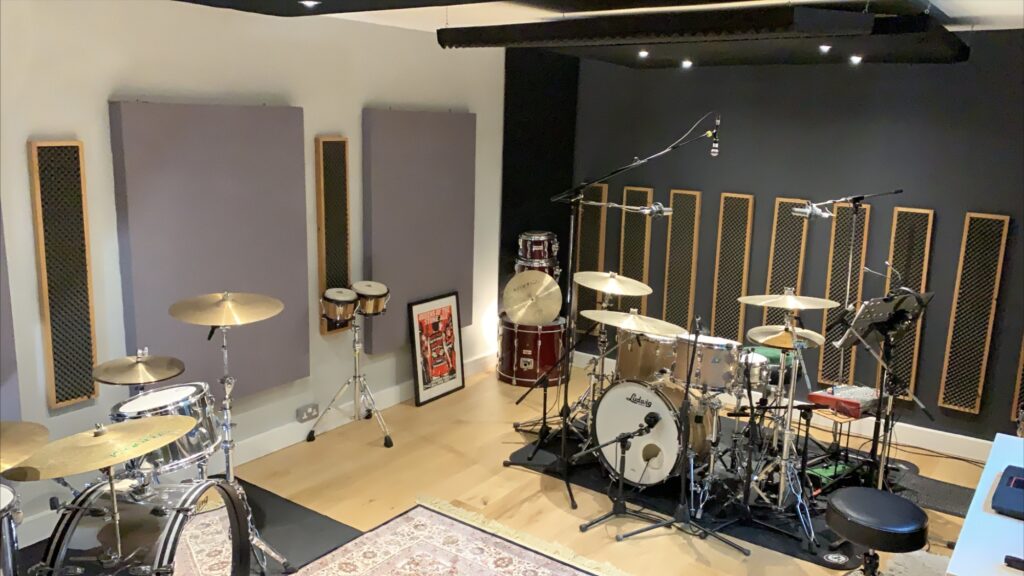
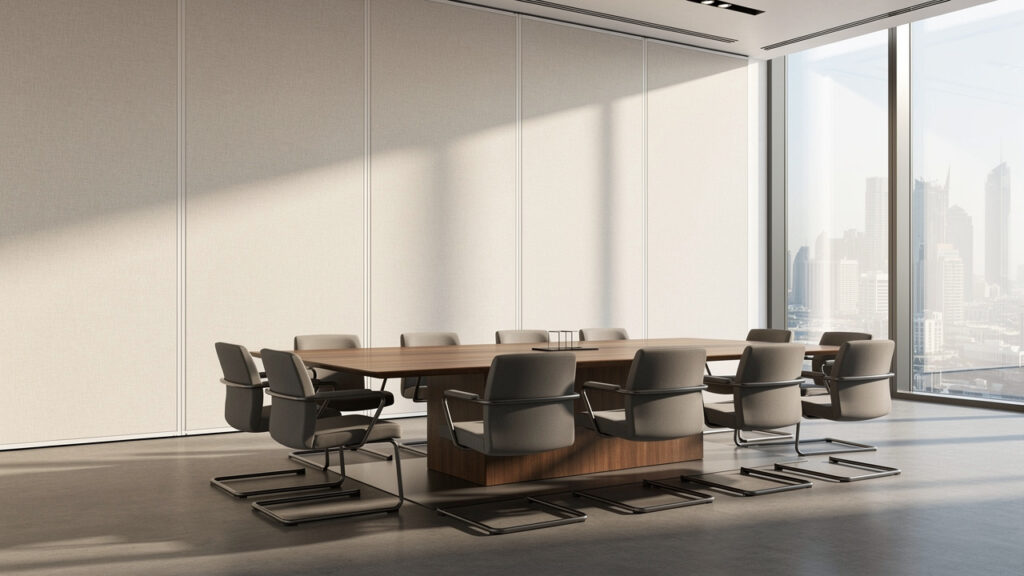
Choosing the right PVC profile track for a stretch fabric wall or ceiling often feels harder than it should, especially when heat, humidity, and noise all show up in the same room. There are many profile shapes, materials, and installation methods, and small decisions at the edges can decide whether the finished surface looks sharp or starts to sag.
A PVC profile track is the slim framework that grips and tensions acoustic fabric over insulation, creating a smooth, finished surface with hidden fixings. In this article you’ll see what a PVC profile track is, how it works inside a stretch fabric acoustic system, why PVC beats aluminum and wood in the UAE climate, where these systems are used, and how Waseem Technical designs and installs them across the UAE.
PVC Profile Track is a key component used in stretch fabric acoustic systems. It holds and tensions acoustic fabric neatly over insulation panels, creating clean edges and smooth finished surfaces on walls and ceilings. These profiles help achieve a professional architectural look while supporting effective acoustic treatment.
PVC profile tracks are commonly used in offices, studios, auditoriums, hotels, and commercial interiors where fabric-based acoustic systems are required. With on-site fabrication, they easily adapt to straight walls, corners, curves, and custom layouts.
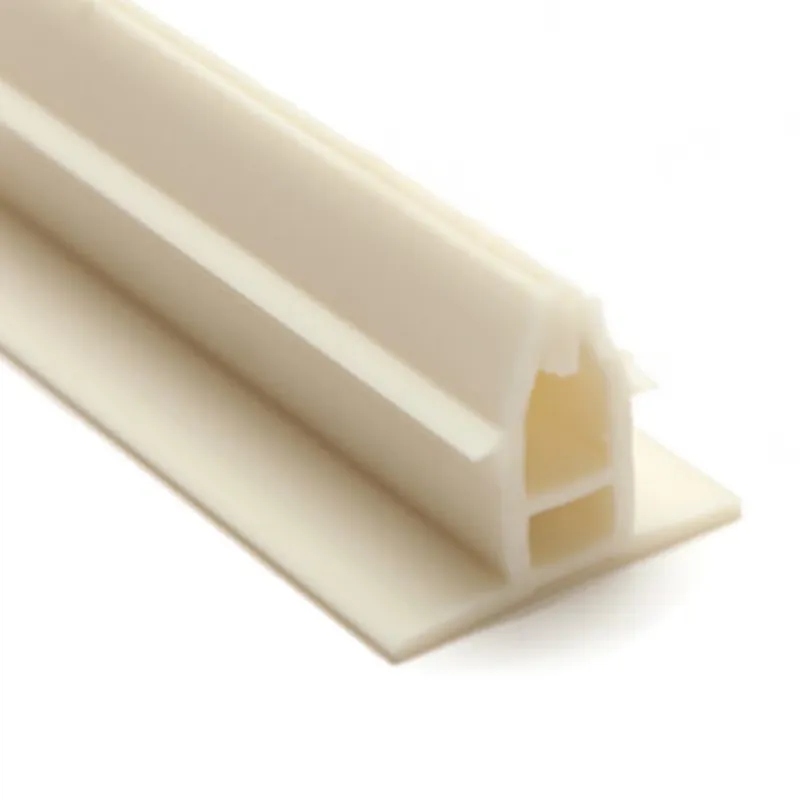
AED 20 per meter
Keep reading to see how this one discreet component can change the look and sound of your space.
Key Takeaways
Scan these key points before diving into the details; they show why track choice matters so much for stretch fabric acoustic systems in the UAE.
Hidden frame for fabric. A PVC profile track acts as the concealed frame for stretch fabric systems, gripping the fabric and holding it tight over acoustic panels. It replaces visible screws or trims, so the room keeps a clean, calm look and the track shape controls how neat the edges appear.
Climate‑ready in the UAE. PVC handles heat, humidity, and airborne salts better than aluminum or wood. It does not rust, swell, or flake, which means fewer surprise repairs and less frustration with warped trims around ceilings or media walls. Over time that stability protects both the acoustic fabric and the insulation behind it.
Two edge styles. Straight and V‑grooved edge options let designers choose between a flat, minimal finish or a fine shadow line. Straight edges suit clean, modern interiors where you want surfaces to read as one plane. V‑grooved edges add depth and definition along each joint for a more detailed architectural style.
Better room acoustics. A correctly chosen track works with acoustic panels and seals so the whole system absorbs echo and controls noise. The track holds steady tension, the panels absorb sound, and seals close small gaps where noise can leak. Together they turn hard, reflective rooms into comfortable listening spaces.
Professional design and install. Professional design and installation from a specialist like Waseem Technical avoid loose fabric, gaps, and rattling trims that weaken both acoustics and appearance. Their team checks the room, recommends the right track edge and layout, and handles precise on‑site fabrication so you get the result you expected, not an experiment.
What Is a PVC Profile Track and How Does It Work?
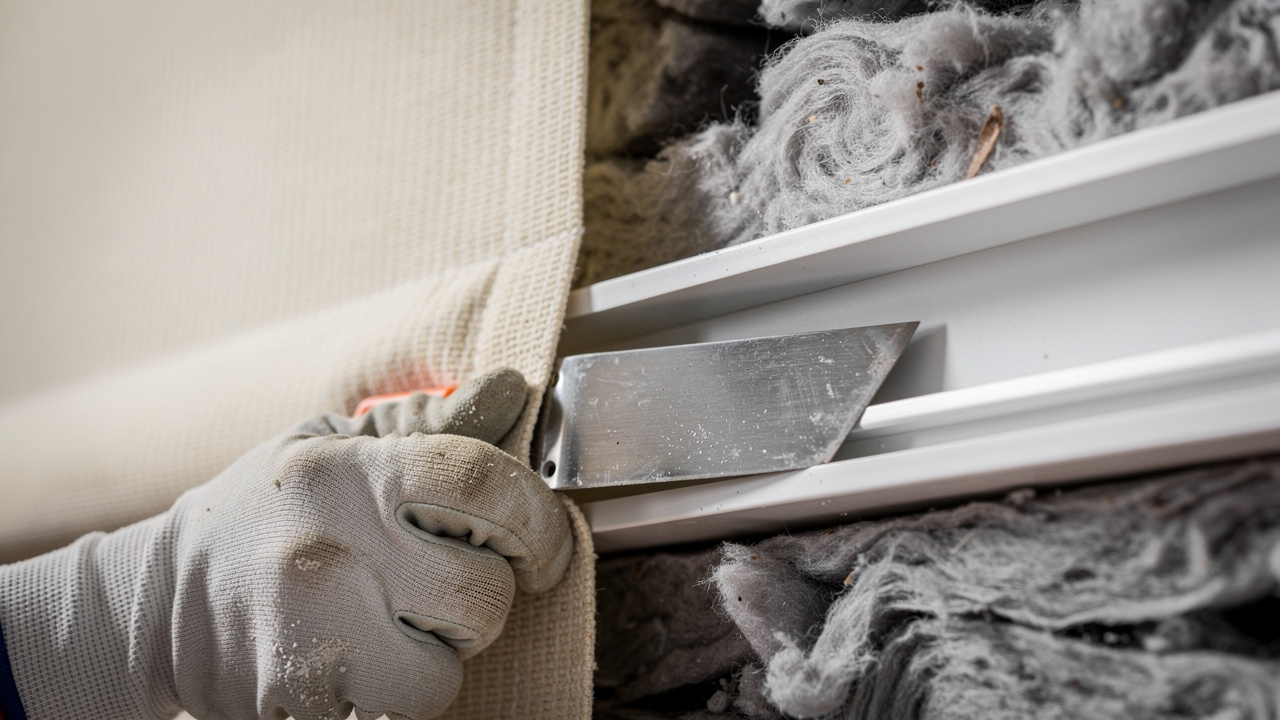
In a stretch fabric acoustic system, a PVC profile track is the slim structural frame that grips the fabric and keeps it tight. Instead of bulky timber frames and visible trims, the system uses a narrow PVC channel that locks fabric in place around the room and hides most fixings from view.
Typical installation looks like this:
Acoustic panels or insulation are fixed to the wall or ceiling.
The PVC profile track is fixed around the perimeter (and sometimes across large areas) to set the finished plane.
The fabric is pulled across the surface and pressed into the track with special spatula‑type tools.
Excess fabric is trimmed at the track so only a smooth, seamless surface remains.
Waseem Technical uses PVC tracks that are purpose‑built for acoustical work rather than generic framing profiles. The material is rigid enough to keep its shape under constant fabric tension, yet light enough for quick on‑site cutting and shaping. Research on towards net-zero emissions in global residential heating and cooling highlights how much building envelopes matter for energy efficiency; a well‑detailed track and fabric layer helps improve that envelope inside the room.
For design control, there are two main edge options. Straight edge PVC profile tracks give a flat, flush finish where the fabric meets adjacent surfaces, ideal for minimal interiors and corporate spaces. V‑grooved tracks introduce a fine shadow line that outlines each panel or zone, adding visual structure while still hiding fixings. Because the profiles are cut and formed directly on site, the same system can follow straight runs, inside and outside corners, curves, and even complex ceiling shapes without awkward joints.
Why PVC Outperforms Other Materials in the UAE’s Climate
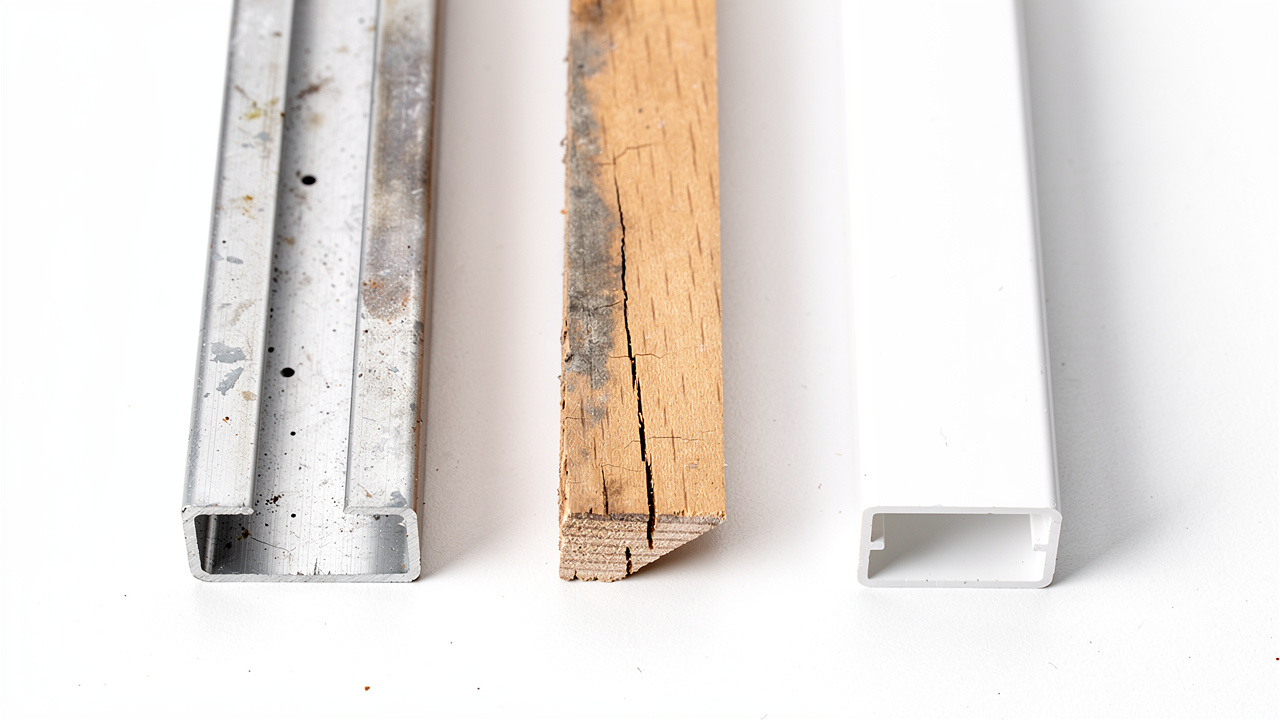
PVC profile track systems cope better with the UAE climate than aluminum or wood because the material resists heat, humidity, and airborne salts — a key consideration given that the role of HVAC in building energy consumption means interior materials must remain stable under sustained thermal stress. In cities such as Dubai and Abu Dhabi, outdoor temperatures often pass 40°C. Data from the UAE National Center of Meteorology shows that summer highs can reach the mid‑40s, which puts constant stress on building materials near façades and roof lines.
Aluminum tracks expand and contract strongly with temperature swings. Over time, that movement can loosen fixings or cause small waves along a stretch fabric ceiling line. Near the sea, airborne salts can also encourage corrosion, leading to stains or surface pitting that may show through light fabrics.
Wood trims face different problems. In humid air and air‑conditioned interiors, repeated swelling and shrinking can twist or crack them. Moisture, cleaning chemicals, and dust can damage coatings, and in some cases termites or rot become a real risk, especially in older buildings.
High‑quality PVC profile tracks behave differently. Studies such as the production and characterization of hybrid PVC materials show that modern PVC compounds include additives that significantly improve resistance to UV light and heat, so the profiles stay stable and do not become brittle. The material does not rust and does not absorb water, so there is no swelling or decay, even around chilled water pipes or in coastal properties in places like Jumeirah Beach Residence or Saadiyat Island. That stability keeps the fabric line smooth and the corners tight with only simple cleaning required.
The table below summarizes key differences among the three common materials used for track profiles in UAE projects.
| Material | Typical Climate Issues In UAE | Result For Stretch Fabric Systems |
|---|---|---|
| Aluminum | Strong thermal movement, possible corrosion near sea air | Visible gaps, loose fixings, noisy or rattling panels |
| Wood | Swelling, cracking, termite risk, moisture damage | Warped edges, paint peel, fabric misalignment |
| PVC | Resists UV, moisture, rust, and dust build‑up | Stable lines, clean finish, low maintenance over time |
How PVC Profile Tracks Make Stretch Fabric Acoustic Systems Work
PVC profile tracks make stretch fabric acoustic systems possible by locking the fabric under even tension along every edge. Without a reliable track, the fabric would sag, ripple, or pull free as temperature and humidity shift in cities like Sharjah or Doha. With a good track, the visible surface stays flat and sharp, even on large walls or ceilings.
The process starts with acoustic panels or mineral wool boards fixed to the wall or ceiling. The PVC profile track runs around (and sometimes across) this surface, setting the exact finished plane. Installers from specialists such as Waseem Technical then pull the fabric across the area and press it into the track with a blunt spatula tool, working gradually so tension stays balanced. Any extra fabric is hidden in the track, which avoids external trims that might spoil the look.
According to the World Health Organization, “environmental noise leads to at least one million healthy life years lost each year in Western Europe.”
This underlines how serious long‑term noise can be. When the fabric is held tightly over absorptive panels with no gaps, sound waves enter the fabric, pass into the soft core, and turn into a tiny amount of heat instead of bouncing back as echo. Even seemingly small details, such as clean joints between track pieces and neat corners, affect how consistent those sound paths are across a wall or ceiling.
Research on impacts of workplace noise exposure highlights why sealing every gap matters; PVC profile tracks let the system integrate seals around edges, sockets, and service penetrations to close the small joints where sound loves to leak. Flexible gaskets and backer rods can sit behind the fabric at junctions with doors, windows, and raised floors, closing the small joints where sound loves to leak. In conference rooms, recording studios, home theaters, and hotel ballrooms across the UAE and wider GCC, this mix of tight fabric, absorptive backing, and sealed edges creates a calmer, more controlled sound field. Rooms feel quieter, speech becomes easier to follow, and audio content sounds clearer at lower volume — outcomes consistent with findings on examination of hearing status and the measurable health effects of sustained noise exposure in built environments.
Where Are PVC Profile Track Systems Used in the UAE?
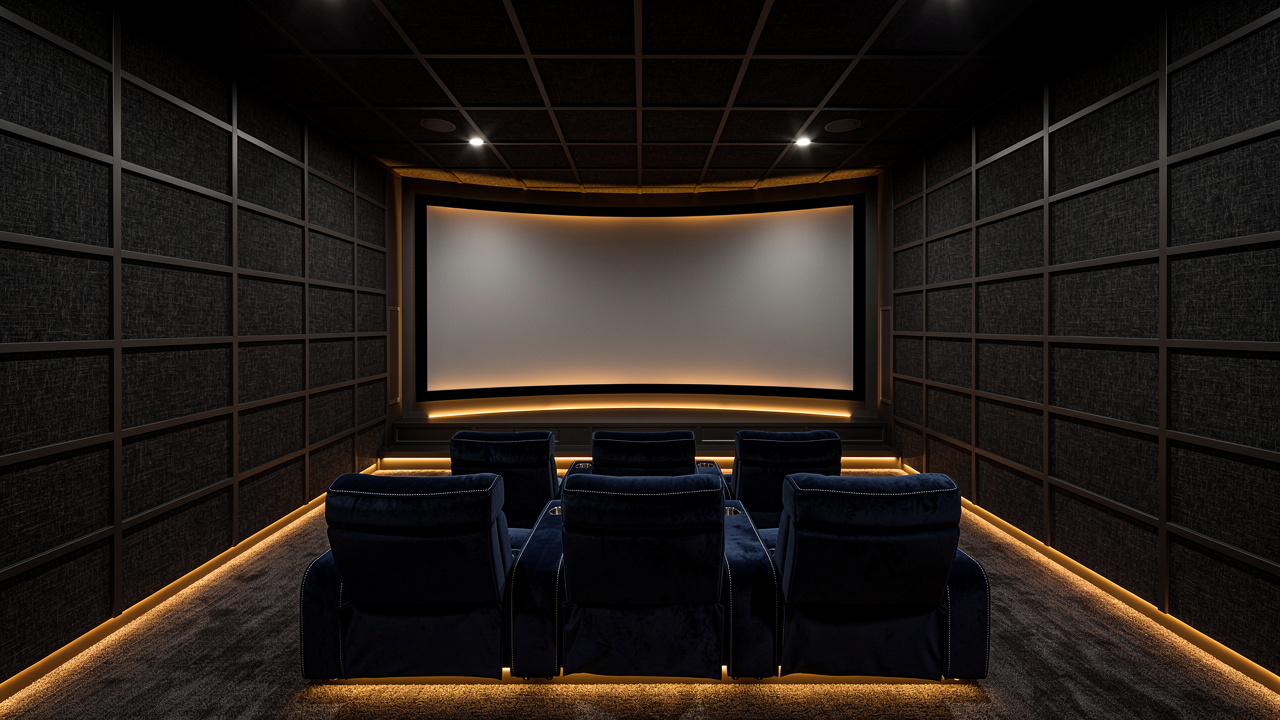
PVC profile track stretch fabric systems appear in many UAE property types wherever sound and appearance both matter. The same discreet track that hides in a cinema wall in Dubai can frame a small podcast studio in Sharjah or a lecture space in Al Ain. This flexibility comes from on‑site fabrication and the choice between straight and V‑grooved edges.
Common commercial and institutional spaces include open‑plan offices, boardrooms, recording studios, broadcast facilities, school auditoriums, hotel lobbies, and hospital waiting areas. Research from Steelcase found that around 85 percent of office workers are dissatisfied with noise levels in their workplace, so owners look for interior systems that improve focus without feeling heavy or technical. Stretch fabric walls with PVC tracks give a calm backdrop that still matches corporate interior design standards.
In the residential market, PVC profile track systems support home theaters, gaming rooms, living rooms along busy roads, and bedrooms close to noisy plant rooms or elevators. Developers in Dubai and Abu Dhabi often use these systems in premium apartments where residents expect both smart finishes and strong acoustic comfort, reflecting broader trends captured in a comprehensive dataset of residential air conditioning prevalence showing how climate-controlled interiors demand high-performance envelope and acoustic solutions. Because the same PVC track copes well with UAE temperature swings, clients do not have to worry about corners opening or fabric loosening a few summers later.
How Waseem Technical Delivers PVC Profile Track Systems Across The UAE
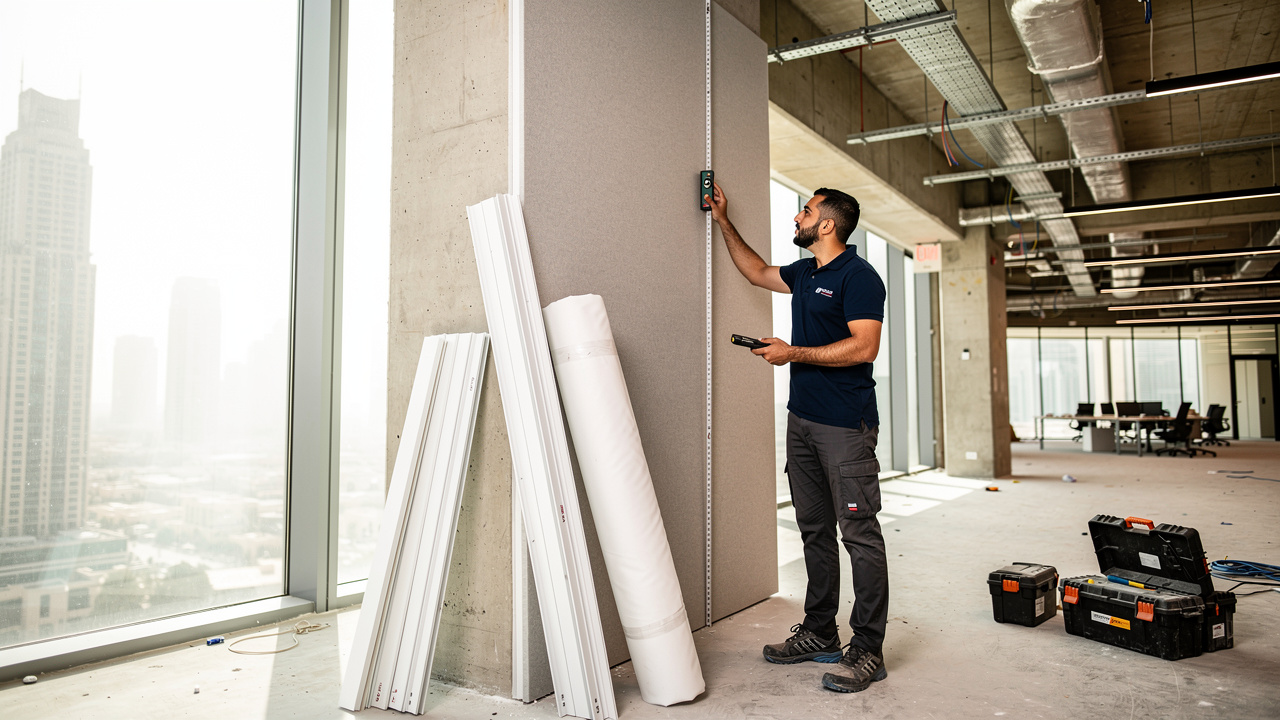
Waseem Technical delivers PVC profile track systems as part of complete stretch fabric acoustic installations across all Emirates and the wider GCC. The company focuses only on soundproofing and acoustics, so every PVC profile track they specify supports a clear acoustic goal instead of just filling a gap in a ceiling. With more than thirteen years of regional experience, the team understands how UAE building methods and climate affect long‑term performance.
“Good acoustics should disappear into the background; you only notice them when they are missing.”
— Waseem Technical project engineer
For design flexibility, Waseem Technical supplies PVC profile tracks with both straight and V‑grooved edge options. Straight edges suit corporate offices, hospitals, and minimal homes where you want the acoustic treatment to blend into the background. V‑grooved tracks suit feature walls, cinemas, and branded interiors where a fine frame line around each zone adds character. On site, installers cut and shape the track so it follows straight runs, tight corners, and curves without awkward junctions.
The track is only one part of their offer. Waseem Technical combines PVC profile tracks with tested acoustic panels, seals, and CNC‑cut components so the whole system works as a single package — an approach informed by research such as the analysis of the strength and quality properties of welded PVC profiles, which demonstrates how fabrication precision directly affects long-term structural performance. Custom‑printed acoustic fabrics are available for branded walls in hotels, schools, and retail spaces in locations such as Dubai Marina, Business Bay, and Yas Island. Because all these elements come from one specialist provider, clients avoid the risk of mismatched parts from different vendors.
To remove guesswork, Waseem Technical offers a free acoustic check before any PVC profile track layout is proposed. A technical team member visits the site in Dubai, Abu Dhabi, Sharjah, or any other Emirate, measures the room, listens to the noise issues, and prepares an easy‑to‑read report. This report explains where echo, reflections, or external noise enter the space and suggests track layouts, fabric choices, and panel thicknesses that fit the budget. The same service extends across GCC countries such as Saudi Arabia, Qatar, Kuwait, Bahrain, and Oman, so regional clients receive consistent support.
Wrapping Up
A PVC profile track may look simple, yet it acts as the structural and visual backbone of any stretch fabric acoustic system. It holds the fabric tight, sets the finished edges, and lets the acoustic panels behind it do their work without distraction from sagging or warped trims.
For UAE and GCC properties facing harsh climate, noise from roads, and high design expectations, PVC tracks clearly outperform aluminum and wood alternatives — a conclusion supported by lifecycle studies on the environmental costs of clean material cycles, which highlight PVC’s durability and recyclability advantages over competing building materials. Waseem Technical brings these tracks together with panels, seals, and careful design to create rooms that look refined and sound far more comfortable. To explore options for your home, office, or venue, book a free acoustic check with Waseem Technical and speak with their team about the right system for your space.
Frequently Asked Questions
PVC profile track and stretch fabric acoustic systems raise a few common questions before clients feel ready to act. These short answers give clear guidance, even if you read them on their own.
What Is The Difference Between a Straight Edge and a V-Grooved PVC Profile Track?
A straight edge PVC profile track creates a flat, flush joint where the fabric meets adjacent surfaces. This suits clean, minimal interiors that need calm, continuous planes. A V‑grooved track introduces a narrow recess that forms a shadow line, adding depth and highlighting each panel or zone on the wall or ceiling.
Can PVC Profile Tracks Be Used On Curved or Irregular Surfaces?
Yes. PVC profile tracks can follow curved and irregular surfaces when installers cut and shape them on site. The material allows careful notching and bending without breaking, so it can wrap columns, gentle curves, and angled junctions. This makes the system suitable for feature ceilings, auditorium walls, and custom‑shaped media rooms.
How Do PVC Profile Tracks Improve Acoustics In a Room?
PVC profile tracks improve acoustics by holding stretch fabric under even tension over acoustic insulation panels. The tight fabric and sealed edges stop sound from bouncing directly off hard walls and ceilings. Instead, sound energy passes into the soft core, which reduces echo and reverberation and makes speech and music clearer at normal listening levels.
Is a PVC Profile Track Suitable For The UAE’s Hot and Humid Climate?
A PVC profile track suits the UAE climate very well because it resists heat, UV light, and moisture. Unlike aluminum and wood, it does not corrode, swell, or crack when exposed to high temperatures and humidity. That stability keeps stretch fabric edges neat for many years, even in coastal or rooftop spaces.
Does Waseem Technical Offer a Consultation Before Installation?
Yes. Waseem Technical provides a free acoustic check before recommending any PVC profile track layout. A specialist visits the site, reviews the noise issues, and prepares a custom report that explains what the room needs. This advice helps homeowners, designers, and facility managers choose the right system with clear expectations on performance and cost.