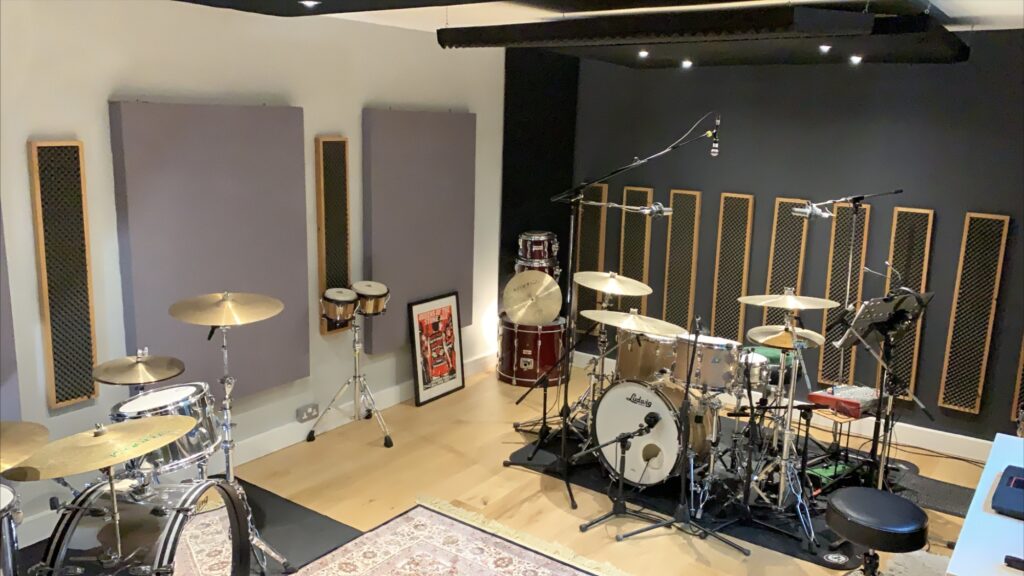
When a Beautiful Interior Becomes Too Noisy
A modern interior can look exceptional and still feel uncomfortable.
An open office may have impressive finishes, glass partitions, exposed ceilings, and contemporary furniture, yet conversations can become difficult to follow because sound continues bouncing around the room.
A restaurant can have beautiful lighting and carefully selected décor, but background conversations, kitchen activity, music, and hard surfaces can combine to create an exhausting acoustic environment.
The problem is often reverberation.
This is where Acoustic PET Panels can provide a practical combination of sound absorption and interior design.
Made from polyester/PET fibres, many acoustic panels are engineered to absorb sound energy and reduce unwanted reflections. Some products are manufactured using recycled PET content and can be shaped into wall panels, ceiling baffles, clouds, tiles, and decorative forms.
For modern spaces in Lagos, PET acoustic systems can turn acoustics into part of the interior design instead of treating them as an afterthought.
The Real Problem With Hard-Surface Interiors
Modern architecture often uses materials that look excellent but reflect sound strongly.
Consider a room containing:
- Glass
- Concrete
- Ceramic flooring
- Painted drywall
- Metal furniture
- Large windows
- Hard ceilings
Each surface can contribute to sound reflection.
When there is not enough absorption, sound remains active inside the room for longer.
The result can be:
Conversation → reflection → reflection → reflection
Instead of:
Conversation → absorption → controlled room response
The consequence is not necessarily that the room becomes “louder” in terms of the original sound source.
Instead, the room can feel busy, harsh, echoing, and difficult to understand.
PET acoustic panels are designed to introduce absorptive surfaces into these environments.
Why PET Has Become an Interesting Acoustic Material
PET stands for polyethylene terephthalate, a type of polyester used in many manufactured products.
Acoustic PET panels are generally produced from polyester fibres that are formed into rigid or semi-rigid boards.
Some commercial acoustic panels use recycled PET content. For example, one current PET acoustic felt product is described as 100% PET with 55% recycled content and is also recyclable.
The material offers several characteristics that make it useful for interior acoustic applications:
- Lightweight construction
- Easy handling
- Design flexibility
- Multiple colours
- Cuttable shapes
- Wall installation options
- Ceiling installation options
- Recycled-content possibilities
- Sound absorption
The exact acoustic performance varies according to thickness, density, mounting method, air gap, and product construction.
That last point is especially important.
A PET panel is not defined by its material alone.
Its installation configuration can significantly influence how it performs.
Lagos Offices: Controlling Noise in Open Workspaces
Open-plan offices are among the environments where acoustic comfort becomes especially important.
Several people may be:
- Taking phone calls
- Joining video meetings
- Speaking with colleagues
- Working independently
- Conducting presentations
- Moving around the office
Without sufficient sound absorption, conversations can travel across the room and reflect from hard surfaces.
Employees may then speak louder simply because they are struggling to hear each other.
This can contribute to a cycle of increasing background noise.
PET acoustic panels can be introduced strategically on walls or ceilings to absorb reflections and help create more comfortable work zones.
Rather than covering every surface, an acoustic design can target:
- Meeting areas
- Collaboration zones
- Open desks
- Reception spaces
- Phone areas
- Presentation walls
The goal is to place absorption where it contributes most to the room’s acoustic balance.
Turn Acoustic Treatment Into Interior Design
One of the biggest advantages of PET acoustic panels is that they do not have to look like conventional acoustic products.
They can become part of the visual language of a room.
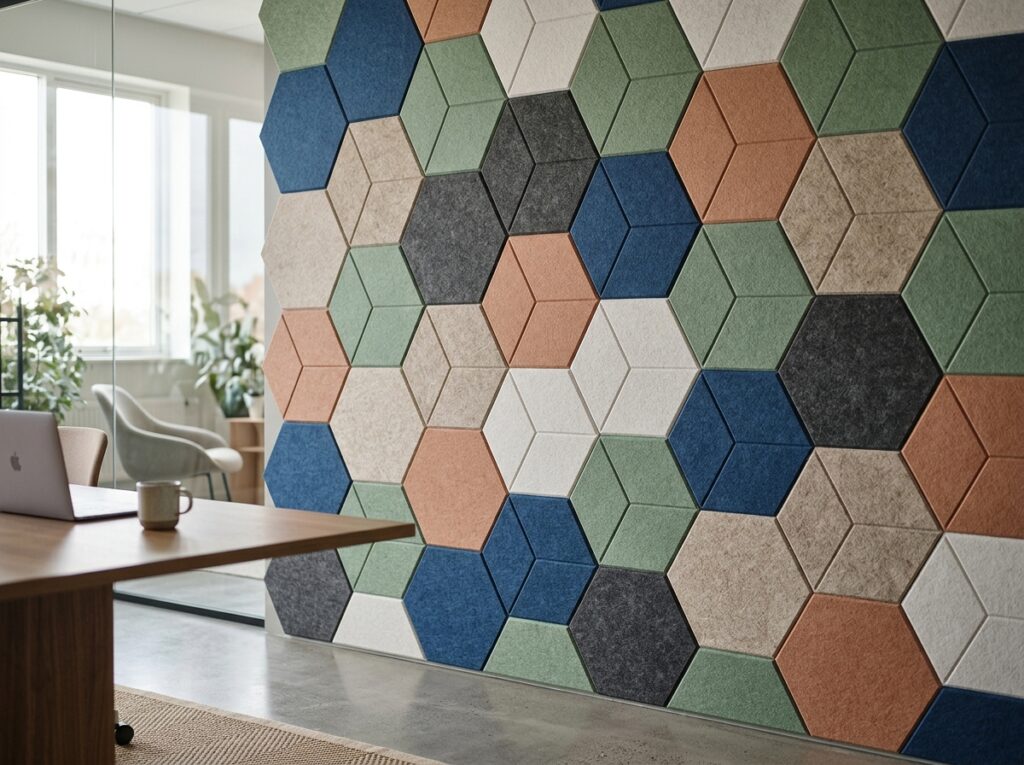
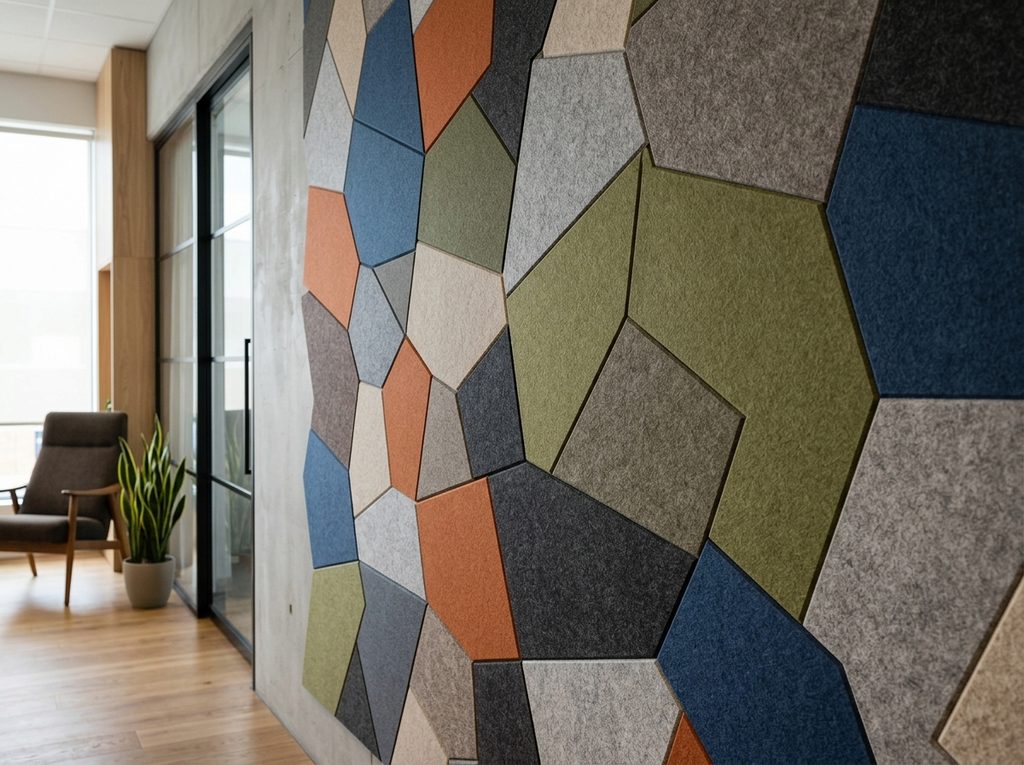
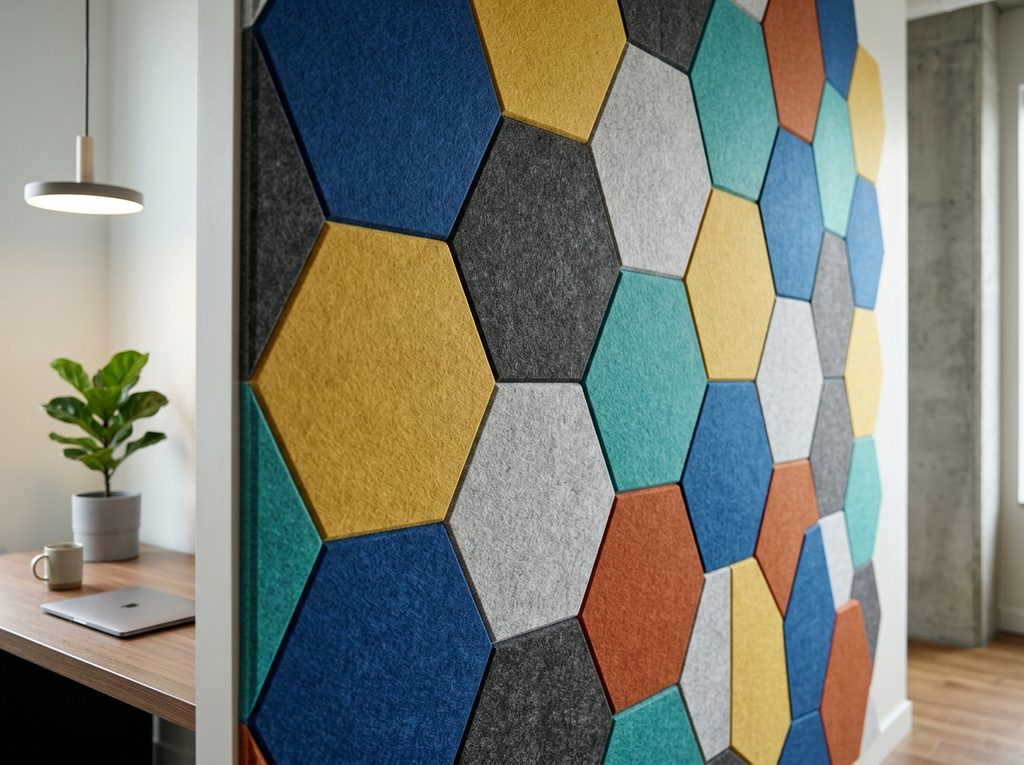
PET felt panels are available in multiple colours, shapes, and configurations. Some systems are specifically designed as decorative wall elements, allowing architects and designers to create geometric compositions while simultaneously introducing sound absorption.
This creates opportunities for:
Geometric Walls
Triangles, hexagons, rectangles, circles, and other shapes can be combined to form patterns.
Feature Walls
A large acoustic installation can become the visual focal point of a reception or meeting area.
Brand-Inspired Designs
Colours and shapes can be coordinated with corporate identity.
Layered Patterns
Different panel depths can create visual texture.
Directional Designs
Linear panels can reinforce the architectural direction of a room.
The acoustic treatment therefore becomes part of the design rather than something hidden from view.
Reception Areas Need More Than a Good First Impression
A reception area is often the first interior space a visitor experiences.
It may also be one of the most acoustically challenging.
Visitors are speaking with reception staff.
Phones are ringing.
People are entering and leaving.
Elevators and corridors may be nearby.
Large glass surfaces may surround the space.
A decorative PET acoustic installation can introduce absorption without turning the reception into a visually heavy environment.
For example, a large feature wall behind a reception desk can combine:
Brand identity + visual texture + acoustic absorption
This approach allows acoustic performance to become part of the architecture.
Restaurants in Lagos Can Benefit From Acoustic Planning
A restaurant does not need to be silent.
In fact, complete silence would probably make a restaurant feel uncomfortable.
The goal is controlled background sound.
Customers should be able to:
- Speak comfortably
- Hear their companions
- Understand staff
- Enjoy background music
- Feel comfortable during longer meals
Restaurants frequently contain hard flooring, glass, decorative surfaces, and open ceilings.
These elements can create considerable sound reflection.
PET acoustic panels can be used on walls or suspended from ceilings to introduce absorption without changing the restaurant’s overall design concept.
Ceiling clouds and baffles can be particularly useful when wall space is limited. PET ceiling systems are available as suspended acoustic elements, including baffles and clouds designed to absorb sound from open spaces.
Don’t Forget the Ceiling
Walls are not the only place acoustic treatment can go.
In many commercial interiors, the ceiling provides a large and relatively unused acoustic surface.
This is especially useful when walls are occupied by:
- Windows
- Artwork
- Shelving
- Branding
- Furniture
- Displays
PET acoustic ceilings can take several forms.
Ceiling Clouds
Individual suspended panels positioned above occupied areas.
Baffles
Vertical or suspended acoustic elements that increase absorptive surface area.
Grid Systems
PET elements integrated into ceiling layouts.
Decorative Ceiling Forms
Custom shapes designed around the architecture.
For example, one commercial PET baffle system uses suspended PET elements and is designed specifically for sound absorption in open-plan workplaces, retail, education, and hospitality spaces.
This makes ceilings an important part of a Lagos acoustic treatment strategy.
Education Spaces Need Speech Clarity
Classrooms, training rooms, lecture spaces, and educational facilities have a very specific acoustic requirement.
Students need to understand the teacher.
The teacher needs to communicate without constantly increasing their voice.
When excessive reverberation exists, speech becomes less distinct because reflections overlap with the original voice.
PET panels can help reduce these reflections.
Strategically placed wall panels or ceiling absorbers can help create a more controlled acoustic environment.
The objective is not simply to make the classroom quieter.
It is to make speech easier to understand.
That distinction is important.
Meeting Rooms and Boardrooms
A boardroom may have a completely different visual design from an open office, but the acoustic challenge can be similar.
A large conference table, glass walls, polished surfaces, and minimal furniture can produce strong reflections.
This can affect:
- Presentations
- Video conferences
- Executive meetings
- Telephone calls
- Group discussions
PET acoustic panels can be integrated into selected walls or ceilings without making the room appear heavily treated.
For example, a large rectangular PET installation behind a presentation screen can become both an acoustic feature and an architectural backdrop.
Acoustic PET Panels for Hospitality Interiors
Hotels have numerous spaces where acoustic comfort matters.
These can include:
- Lobbies
- Restaurants
- Conference rooms
- Guest corridors
- Lounges
- Event spaces
- Co-working areas
Each environment has a different acoustic requirement.
A hotel lobby may require broad reverberation control.
A conference room may require speech clarity.
A restaurant may need controlled background noise.
An event space may require a combination of absorption and other acoustic strategies.
PET panels are adaptable because they can be produced in different forms and installed in different locations.
What Makes a PET Panel Actually Effective?
Choosing a PET panel based purely on appearance is not enough.
Several technical factors influence performance.
Thickness
Thicker absorbers generally provide more material through which sound energy can be dissipated.
Mounting
A panel mounted directly against a wall behaves differently from a panel installed with an air cavity.
Air Gap
Spacing a panel away from a hard wall can improve absorption at certain frequencies.
Coverage
Installing a single decorative panel in a large room may have limited impact.
The amount and distribution of absorptive surface matter.
Panel Orientation
Wall panels, ceiling clouds, and vertical baffles interact with the room differently.
Room Geometry
A tall room with a large hard ceiling may require a different approach from a small enclosed office.
Commercial testing demonstrates that mounting configuration and airspace can substantially change measured absorption values. For example, a PET panel tested with a 50 mm air gap and cavity treatment showed considerably different absorption characteristics from the same basic material mounted directly.
This is why acoustic design should come before simply selecting a colour and shape.
Wall Panels vs Ceiling Baffles
Both are useful, but they solve different design challenges.
| Acoustic Element | Suitable For | Design Advantage |
|---|---|---|
| PET Wall Panels | Offices, meeting rooms, reception areas | Feature-wall potential |
| PET Ceiling Clouds | Open spaces, restaurants, lounges | Large-area absorption |
| PET Baffles | High ceilings, open-plan areas | Vertical absorptive surface |
| PET Tiles | Smaller rooms and decorative layouts | Modular installation |
| Custom PET Shapes | Branded interiors | Highly personalized appearance |
Ceiling baffles and clouds can be particularly useful in rooms with large exposed ceilings because they create additional absorptive surfaces without consuming valuable wall space.
PET Panels Are Not Soundproofing
This distinction should always be made clear.
Acoustic PET panels are primarily sound-absorbing products.
They help control sound within a room.
They are not the same thing as a soundproof wall or barrier system designed to prevent sound from travelling between rooms.
For example:
If an office has excessive echo, PET panels may help.
If a neighboring office can hear every conversation through a partition wall, the solution may require a sound-isolation assembly involving materials such as:
- Mass Loaded Vinyl
- Mineral wool
- Additional gypsum board
- Decoupling systems
- Acoustic sealants
- Acoustic doors
- Glazing improvements
The correct solution depends on the transmission path.
Sustainability Can Become Part of the Design Conversation
Another reason PET acoustic systems attract attention is their potential use of recycled material.
Some commercial PET acoustic products are manufactured with recycled PET content and are themselves recyclable. Current examples include products containing approximately 55% recycled PET content.
This can make PET attractive for projects where designers are considering:
- Material efficiency
- Recycled content
- Indoor environmental goals
- Long-term durability
- Flexible interior design
- Responsible material selection
However, sustainability claims should always be evaluated against the specifications of the exact product being selected.
Not every PET panel has identical recycled content, fire performance, or environmental certifications.
Designing PET Panels Around the Architecture
The best acoustic installations do not look randomly placed.
They respond to the architecture.
For example:
Long Corridor
Use repeated linear panels to reinforce the direction of the space.
Open Office
Use ceiling baffles above work areas to create acoustic zones.
Boardroom
Use a large feature wall behind the presentation area.
Restaurant
Suspend acoustic clouds above dining zones.
Reception
Create a branded geometric feature wall.
Classroom
Combine wall absorption with strategically positioned ceiling treatment.
This approach changes the question from:
“Where can we put acoustic panels?”
to:
“How can acoustic treatment become part of the architecture?”
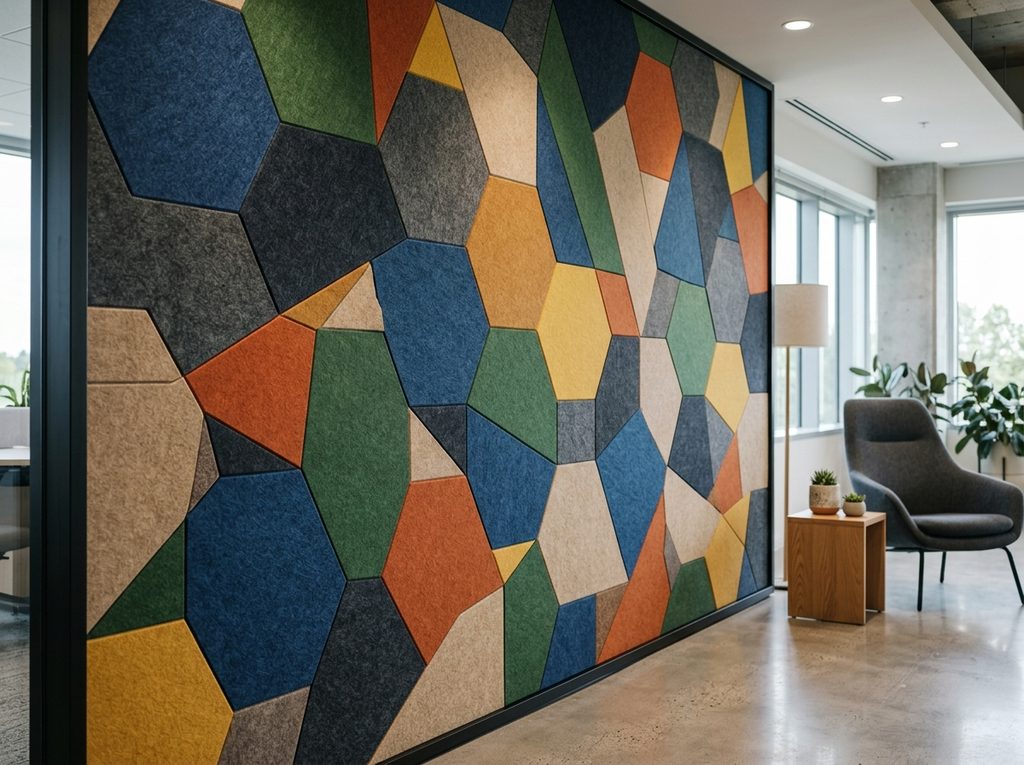
Professional Acoustic PET Panel Installation in Lagos
A successful PET acoustic installation begins with understanding the room.
Before selecting panels, an acoustic professional can assess:
- Room dimensions
- Ceiling height
- Existing finishes
- Occupancy
- Primary noise sources
- Reverberation characteristics
- Speech requirements
- Available wall space
- Available ceiling space
- Desired interior appearance
From there, the acoustic treatment can be designed around the actual room rather than simply covering the largest available surface.
Installation may include:
- Wall PET panels
- Ceiling clouds
- Acoustic baffles
- Decorative felt systems
- Custom-cut PET shapes
- Feature walls
- Reception treatments
- Meeting-room systems
- Open-office acoustic zoning
The result should balance acoustic performance and visual design.
Where Acoustic PET Panels Work Best
PET acoustic panels can be considered for a wide range of Lagos interiors.
Corporate Offices
For controlling reverberation and improving speech comfort.
Restaurants
For creating a more comfortable dining environment.
Hotels
For lobbies, restaurants, meeting rooms, and communal spaces.
Schools
For classrooms, training rooms, and lecture spaces.
Healthcare Interiors
For selected areas where reduced reverberation and improved acoustic comfort are required.
Studios
As part of internal acoustic treatment, alongside more comprehensive isolation measures.
Retail Spaces
For reducing reflections in large customer areas.
Residential Interiors
For home offices, media rooms, entertainment spaces, and other areas where room acoustics need improvement.
Why Professional Acoustic Planning Makes a Difference
Buying attractive PET panels is only the first step.
The real question is:
How many panels does the room need, and where should they go?
Too little treatment may produce only a minor improvement.
Too much treatment in the wrong locations may create an acoustically unbalanced room.
Professional planning considers the relationship between:
Sound source + room geometry + reflective surfaces + absorption + occupancy + furniture + ceiling height
This allows PET panels to be used strategically instead of simply decorating the walls.
Acoustic PET Panel Services in Lagos
For commercial and residential projects in Lagos, professional acoustic treatment can combine PET panels with other acoustic solutions according to the needs of each space.
Services can include:
- Acoustic consultation
- Room acoustic assessment
- Acoustic treatment design
- PET wall panel installation
- PET ceiling baffles
- Acoustic clouds
- Decorative acoustic feature walls
- Custom PET panel designs
- Office acoustic treatment
- Restaurant acoustic treatment
- Meeting-room acoustics
- Classroom acoustic treatment
- Studio acoustic treatment
The objective is to create interiors that are not only visually impressive but also comfortable to work, communicate, dine, teach, meet, and relax in.
Frequently Asked Questions
What are Acoustic PET Panels?
They are sound-absorbing panels made from polyester/PET fibres. Many products are manufactured with recycled PET content and are available in decorative wall and ceiling formats.
Do PET panels soundproof a room?
No. PET panels primarily absorb sound reflections inside a room. They are not a substitute for a complete sound-isolation assembly.
Can PET panels be installed on ceilings?
Yes. PET can be manufactured into suspended clouds, baffles, and other ceiling acoustic elements.
Are PET panels suitable for offices?
Yes. They can be particularly useful in open-plan offices, meeting rooms, reception areas, and collaboration spaces where excessive reverberation affects communication.
Can PET panels be customized?
Many PET acoustic systems are available in different shapes, sizes, colours, and configurations. Some can also be CNC-cut into custom patterns.
Are PET acoustic panels environmentally friendly?
Some products contain significant recycled PET content and are recyclable. However, environmental specifications vary by manufacturer and product, so the exact product specification should always be checked.
Do thicker PET panels absorb more sound?
Thickness is one factor that influences acoustic performance, but mounting method, airspace, density, coverage, and room conditions also matter.
Can PET panels be used in restaurants?
Yes. They can be used on walls or ceilings to help control reverberation and make conversations more comfortable.
Conclusion
Acoustic design does not have to compete with interior design.
Acoustic PET panels demonstrate how sound absorption can become part of the visual identity of a space.
In Lagos, where offices, restaurants, hospitality venues, educational facilities, and modern commercial interiors continue to evolve, acoustic treatment can play an important role in creating comfortable environments.
PET panels can introduce absorption while also providing opportunities for colour, geometry, branding, texture, and architectural expression.
But the best results do not come from simply covering a wall with felt.
They come from understanding the room, identifying the reflective surfaces, calculating the required acoustic treatment, and positioning the panels where they can make a meaningful difference.
From a bold reception feature wall to suspended ceiling baffles in an open office, Acoustic PET Panels can make sound control part of the architecture rather than an afterthought.
For professional Acoustic PET Panel solutions in Lagos, a properly planned acoustic treatment system can help transform echoing, uncomfortable interiors into spaces designed for clearer communication and better acoustic comfort.