
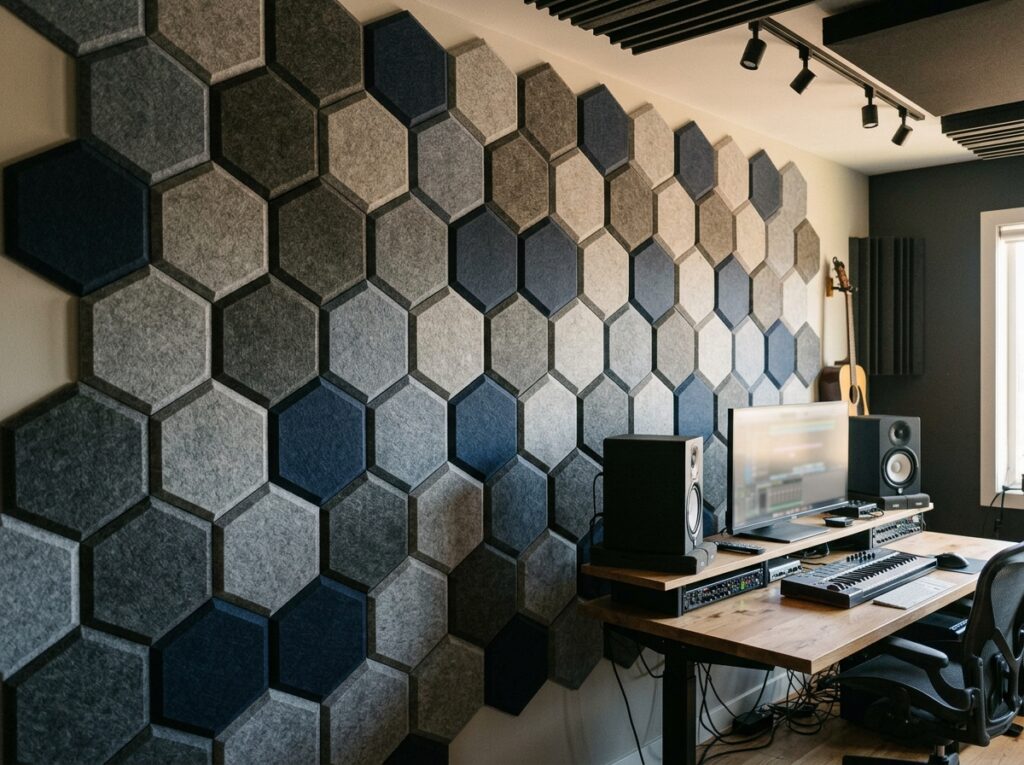
A well-designed interior should look attractive, feel comfortable, and support the activities taking place inside it. However, even beautifully finished rooms can suffer from excessive echo, distracting reflections, and unclear conversations when sound-absorbing materials are limited. These challenges can occur in offices, hotels, restaurants, educational facilities, retail spaces, and residential properties.
Acoustic PET panels in Salalah, Oman, offer a modern approach to improving indoor acoustic comfort while adding colour, texture, and decorative flexibility to interior spaces. Made from polyester fibres, these panels are available in various thicknesses, shapes, finishes, and mounting configurations to suit different design requirements.
For architects, interior designers, contractors, business owners, and property developers, PET acoustic panels can provide a practical way to combine sound absorption with contemporary interior design.
This guide explains how acoustic PET panels work, the types available, their benefits, common applications in Salalah, installation considerations, and the key factors to evaluate before purchasing.
What Are Acoustic PET Panels?
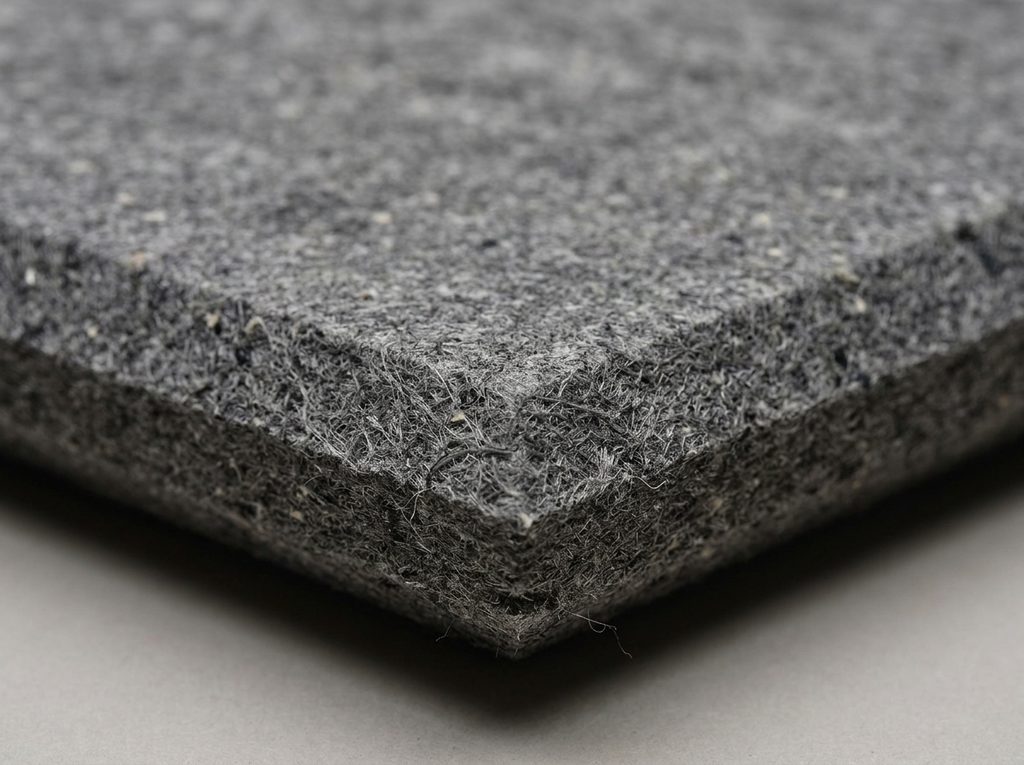
Acoustic PET panels are sound-absorbing products manufactured from polyester fibres, commonly referred to as polyethylene terephthalate (PET). Depending on the manufacturer, the fibres may include recycled material recovered from plastic bottles or other polyester sources.
The fibres are processed into a felt-like panel with a structure that allows it to absorb a portion of incident sound energy. The panels can be supplied as flat sheets, decorative wall coverings, ceiling elements, partitions, or customised shapes.
Unlike conventional decorative boards that primarily provide a visual finish, acoustic PET panels are designed to help manage reflected sound within an interior.
Their applications include:
- Acoustic wall treatments in offices and meeting rooms.
- Decorative panels for hotels, restaurants, and reception areas.
- Sound-absorbing elements for classrooms and training facilities.
- Wall features for residential living rooms and home offices.
- Acoustic screens and workstation dividers.
- Custom CNC-cut patterns, shapes, and branded designs.
- Selected ceiling systems and suspended acoustic features.
PET panels are particularly useful when a project requires a lightweight material that can be integrated into a creative interior design.
However, sound absorption and soundproofing are different functions. PET panels primarily help reduce reflections and reverberation within a room. They should not be treated as a standalone solution for preventing sound from passing through walls, doors, floors, or windows.
Why Consider Acoustic PET Panels in Salalah, Oman?
Salalah has residential, commercial, hospitality, educational, and administrative spaces with varying acoustic requirements. In rooms finished with glass, plaster, concrete, tile, and other hard materials, sound can reflect repeatedly between surfaces.
This can make conversations less clear and increase the perceived noise level, especially when several people are speaking at once.
Acoustic PET panels can help address these issues when selected and installed according to the room’s requirements.
1. Reduce Echo in Indoor Spaces
One of the main reasons to use PET acoustic panels is to control excessive sound reflection.
When sound reaches an absorptive panel, some of its energy is absorbed rather than being reflected into the room. Adding suitable acoustic treatment can help reduce reverberation and improve speech clarity.
This can be useful in meeting rooms, restaurants, classrooms, reception areas, and other interiors where clear communication matters.
The amount of improvement depends on the panel’s tested acoustic performance, thickness, mounting arrangement, surface coverage, and room characteristics.
2. Create More Comfortable Office Environments
Office environments often include conversations, telephone calls, meetings, and collaborative activities. In spaces with many hard surfaces, these sounds can become distracting.
PET panels can be positioned on selected walls or integrated into suitable partitions to absorb reflected sound.
For open-plan offices, the design may combine wall panels, ceiling absorption, workstation screens, and other measures to manage sound across the workspace.
Acoustic absorption alone does not guarantee confidential conversations, so offices requiring speech privacy may also need appropriate walls, doors, and sound-isolation measures.
3. Improve Hospitality Interiors
Hotels, cafés, restaurants, lounges, and reception areas must balance appearance with comfort.
Decorative PET panels can introduce visual interest while helping control reflections from hard surfaces. Designers can use complementary colours, repeated patterns, or feature walls to integrate acoustic treatment into the overall interior concept.
For hospitality projects, the selected product should also be evaluated for cleaning requirements, durability, fire performance, and suitability for the intended installation location.
4. Support Clearer Communication in Educational Spaces
Classrooms, training rooms, libraries, and learning centres benefit from environments where spoken information can be understood clearly.
Excessive reverberation can make it more difficult for listeners to distinguish speech, particularly in larger rooms or spaces with reflective ceilings and walls.
PET acoustic panels can form part of a classroom acoustic strategy, provided the panel layout and quantity are appropriate for the room’s dimensions and intended use.
5. Add Decorative Flexibility
PET panels are available in different colours and can often be cut into geometric designs, linear patterns, letters, logos, and custom decorative elements.
This gives architects and designers more flexibility than a plain acoustic treatment that is intended to disappear into the background.
A feature wall can use contrasting colours, while a more subtle design may coordinate with existing furniture, flooring, and wall finishes.
The design should support the acoustic objective rather than allowing appearance alone to determine the panel arrangement.
Types of Acoustic PET Panels Available
Different PET panel formats serve different visual and functional requirements. The best option depends on the project design, available installation space, acoustic target, and budget.
Flat PET Felt Acoustic Panels
Flat PET felt panels have a relatively uniform surface and are commonly used for wall and ceiling treatments.
Their simple appearance makes them suitable for corporate offices, classrooms, meeting rooms, and residential interiors.
They can be installed in individual sections or arranged across a larger area. Designers may choose a single colour for a clean appearance or combine several shades to create a decorative composition.
Before selecting a panel, review its acoustic test data and confirm whether the documented performance applies to direct mounting or another installation arrangement.
Decorative Geometric PET Panels
Geometric PET panels may feature hexagons, circles, triangles, curved profiles, strips, and other decorative shapes.
These designs can be used to create feature walls in reception areas, commercial interiors, hospitality venues, and collaborative spaces.
Different shapes can be arranged in repeating patterns or mixed layouts. The panel material remains responsible for the sound-absorbing function, while the shape mainly influences appearance and coverage.
When planning a decorative installation, account for the total area covered, gaps between panels, and the distribution of reflective surfaces around the room.

CNC-Cut Acoustic PET Panels
Computer numerical control (CNC) cutting allows PET felt sheets to be shaped according to digital design files.
This is useful for projects requiring consistent dimensions, detailed patterns, repeated geometric elements, decorative screens, or branded acoustic features.
CNC-cut panels can help designers translate a digital concept into a physical interior element with repeatable shapes.
Before approving production, confirm the sheet thickness, material properties, minimum feature dimensions, edge quality, and manufacturing tolerances with the supplier.
PET Acoustic Baffles
Acoustic baffles are suspended elements, commonly arranged vertically, that provide additional sound-absorbing surfaces within a room.
Suitable PET materials can be used to manufacture baffles in different colours, lengths, and shapes.
Baffles may be considered for selected commercial spaces where wall coverage is limited or where the ceiling is an important part of the acoustic design.
Suspended systems require suitable structural supports, fixing hardware, and clearances. Their performance depends on the complete installation rather than the panel material alone.
PET Acoustic Partitions
PET panels can also be incorporated into screens and partitions that help define work areas without constructing full-height solid walls.
These products can provide visual separation and absorb some sound within shared environments.
They are useful for selected workstations, collaborative spaces, reception areas, and multipurpose interiors.
However, a freestanding PET screen should not be assumed to provide the same sound isolation as a properly constructed wall. Its effectiveness depends on height, dimensions, placement, and the surrounding space.
How Do PET Acoustic Panels Absorb Sound?
Sound travels through the air as pressure variations. When these sound waves reach a hard surface, much of their energy may be reflected back into the room.
When multiple reflections occur, sounds can persist after the original source stops. This effect is known as reverberation.
Porous materials such as suitable polyester felt absorb some sound energy through interactions between moving air and the material’s fibre structure. A portion of the energy is dissipated rather than returned to the room as reflected sound.
The performance of a PET acoustic panel depends on several factors.
Panel thickness: Thickness influences the frequencies absorbed and the overall performance of the panel.
Material construction: Fibre composition, density, and manufacturing methods affect acoustic behaviour.
Installation method: Direct wall mounting can produce different results from mounting the panel with an air gap or as part of a suspended system.
Panel coverage: The total amount of absorbing material influences the room’s overall reverberation.
Room dimensions: Room volume, ceiling height, furniture, glazing, flooring, and existing wall finishes all contribute to the acoustic response.
This is why buyers should compare test reports for the actual product and mounting arrangement rather than assuming that all PET panels provide the same sound absorption.
Important Factors When Choosing Acoustic PET Panels in Salalah
Before purchasing panels for a commercial or residential project, consider the following factors.
Check Acoustic Performance Ratings
Manufacturers may provide ratings such as the Noise Reduction Coefficient (NRC) or other sound-absorption measurements.
NRC is a useful summary measure for comparing certain sound-absorbing materials, but it does not describe every aspect of acoustic performance across all frequencies.
Ask for the product’s acoustic test report and check the test standard, panel thickness, mounting method, and test configuration.
If the project has a specific acoustic target, a consultant can help determine the appropriate panel coverage and configuration.
Choose the Right Thickness
PET panels are available in different thicknesses, depending on the product range.
Thicker panels may provide better absorption at certain frequencies, but thickness alone is not enough to determine the best option.
The required thickness should be selected according to the acoustic objective, mounting arrangement, available space, and manufacturer’s test results.
Verify Material Composition
If recycled content is important to your project, request documentation showing the proportion of recycled polyester in the product.
Do not assume that every PET panel contains the same percentage of recycled material. Some products use a mixture of recycled and virgin polyester fibres.
For projects with environmental documentation requirements, confirm whether the manufacturer can provide relevant declarations or supporting evidence.
Confirm Fire Performance
Fire performance is particularly important when specifying acoustic products for public buildings, commercial interiors, hospitality spaces, and other regulated environments.
Ask for the applicable fire classification and test documentation for the exact panel being proposed. Ratings can vary according to material composition, thickness, finish, and mounting configuration.
A rating for one product should not automatically be applied to another product from the same supplier.
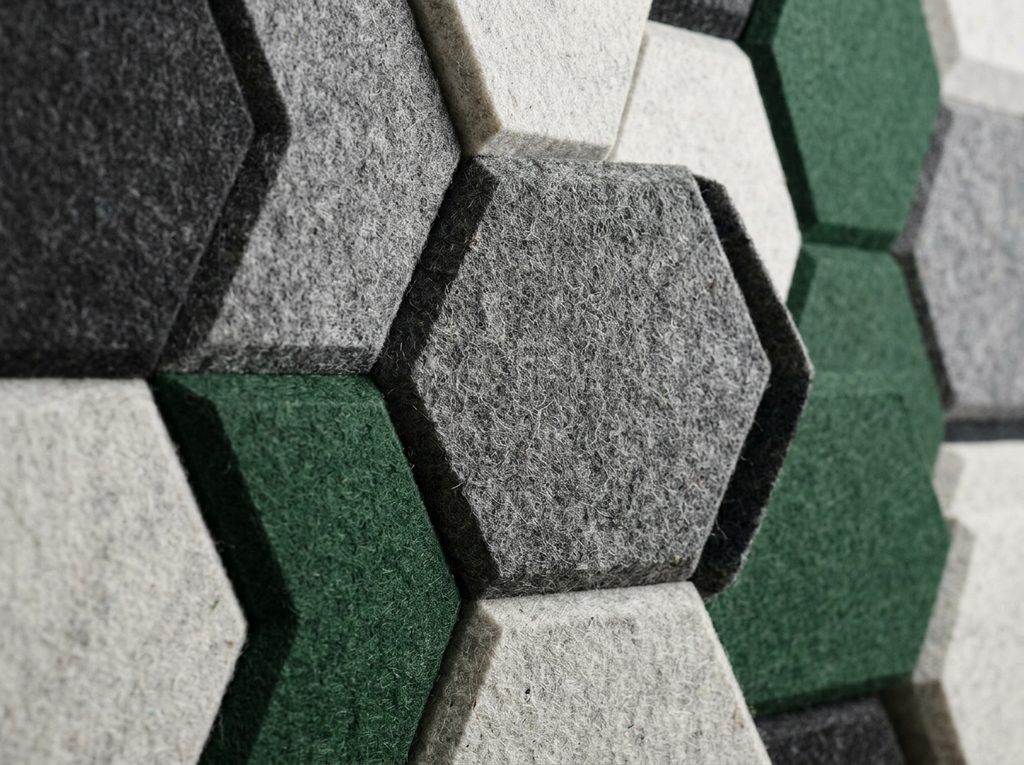
Consider Colour and Design
PET panels are available in a range of colours, with some suppliers offering custom finishes and cutting options.
Choose a colour that complements the interior’s furniture, lighting, flooring, and branding.
For large projects, request physical samples to evaluate colour and texture under the lighting conditions of the actual space.
Review Maintenance Requirements
Different panel finishes have different cleaning requirements. In commercial environments, consider whether the surface is likely to collect dust, experience frequent contact, or require regular cleaning.
Request the manufacturer’s maintenance instructions before selecting the product, especially for hospitality and high-traffic areas.
Applications of Acoustic PET Panels in Salalah
Offices and Meeting Rooms
Offices can use PET panels to improve acoustic comfort in meeting rooms, reception areas, workstations, and collaborative spaces.
Wall-mounted panels can absorb reflections, while PET partitions may help define individual work areas.
Where speech privacy is essential, combine acoustic absorption with appropriate sound isolation between rooms.
Hotels and Guest Facilities
Hospitality interiors often require a balance between visual appeal and a comfortable sound environment.
PET panels can be incorporated into selected wall areas, lounges, meeting rooms, and other suitable spaces. The design should account for cleaning procedures, fire requirements, and durability.
Restaurants and Cafés
Restaurants may contain numerous reflective surfaces, including tiled floors, glass, tables, and hard ceilings.
Suitable PET acoustic panels can help reduce some of the resulting reflections, supporting a more comfortable environment for conversations.
Panel coverage should be determined according to the room’s dimensions, seating layout, ceiling design, and expected occupancy.
Educational and Training Facilities
PET panels can be used in classrooms, libraries, training rooms, and administrative areas to help control reverberation.
Their lightweight construction and range of colours can make them suitable for selected interior applications, provided the product meets the project’s safety and maintenance requirements.
Residential Interiors
Home offices, living rooms, media areas, and multipurpose rooms may benefit from additional sound absorption.
PET panels can be installed as a decorative feature behind a desk or television, or arranged across selected walls to complement the interior.
If the main concern is noise entering from outside or passing between rooms, the project may require sound-isolating windows, doors, seals, or wall construction rather than PET panels alone.
Retail and Showroom Spaces
Retail interiors can use PET panels to introduce branded designs while managing reflected sound.
Custom-cut shapes and colours may complement display areas, product presentation zones, and reception counters.
The acoustic layout should account for the size of the space, ceiling height, background music, customer conversations, and other noise sources.
Installation Methods for Acoustic PET Panels
The correct installation method depends on the panel specification, surface condition, installation location, and manufacturer’s recommendations.
Direct Wall Mounting
Panels may be attached directly to a suitable wall using a compatible adhesive or approved mechanical fixings.
The substrate should be clean, dry, stable, and appropriate for the selected installation method. Layout planning is important for ensuring consistent alignment and clean edges.
Wall Mounting with an Air Gap
Some systems are installed with a gap between the panel and the wall.
An air gap can change sound-absorption performance, potentially improving absorption at certain frequencies. The benefit depends on the complete construction and should be verified through suitable technical data.
Suspended Ceiling Installation
Certain PET acoustic products can be installed as suspended baffles or ceiling elements.
The installation must account for structural support, panel weight, suspension hardware, clearances, and access for maintenance.
Only systems intended for the proposed installation should be used, and the fixing arrangement must follow the manufacturer’s guidance.
Custom CNC Installation
CNC-cut panels can be supplied in shapes that fit a planned decorative layout.
Before installation, check the dimensions, panel orientation, fixing positions, and alignment of repeated patterns. For complex designs, a digital layout or installation drawing can help reduce on-site cutting and material waste.
What Affects the Cost of PET Acoustic Panels?
The cost of acoustic PET panels in Salalah depends on the chosen product and project requirements. A useful quotation should identify the material, dimensions, quantity, installation method, and any additional components.
Important cost factors include:
- Panel thickness and construction: Different material specifications may have different prices and performance characteristics.
- Sheet dimensions: Standard sheets and custom sizes can affect material utilisation and cutting requirements.
- Colour selection: Standard and custom colours may differ in availability, production time, and cost.
- Design complexity: Detailed CNC patterns, logos, and shaped panels may require additional programming and manufacturing time.
- Order quantity: Larger orders may offer production efficiencies, depending on the supplier’s manufacturing process and minimum order requirements.
- Installation method: Adhesives, mounting hardware, framing, and suspension systems contribute to the total cost.
- Shipping and delivery: Transport, packaging, lead times, and applicable import charges may affect delivered prices if products are sourced from outside Oman.
- Documentation: Acoustic reports, fire classification evidence, and other project-specific documentation may need to be included in the quotation.
To compare suppliers fairly, request itemised quotations with the same material specification, panel dimensions, acoustic requirements, and installation scope.
Common Mistakes to Avoid
Expecting Complete Soundproofing
PET panels are primarily sound absorbers. They help manage reflections inside a room but do not automatically prevent sound from passing through walls or windows.
Identify whether the problem is echo within the room or noise transmission from another space before choosing a product.
Choosing Panels Only for Appearance
Decorative panels should also meet the acoustic target and applicable safety requirements.
Review test results, material specifications, and installation details before finalising the design.
Ignoring the Mounting Configuration
The same panel may perform differently when directly fixed to a wall, installed over an air gap, or suspended from a ceiling.
Compare technical data for the actual proposed mounting arrangement.
Overlooking Fire Documentation
Do not rely on general marketing claims about fire resistance. Confirm the relevant classification and supporting documentation for the exact product and intended application.
Forgetting Installation and Delivery Costs
The purchase price of the panels may not include accessories, mounting materials, delivery, custom cutting, or installation labour.
Clarify these items before comparing quotations or setting the project budget.
Frequently Asked Questions
Are acoustic PET panels suitable for commercial interiors in Salalah?
Yes. Depending on their specification, PET acoustic panels can be used in offices, hotels, restaurants, retail interiors, classrooms, and other suitable commercial spaces to help control sound reflections.
Do PET panels block noise from neighbouring rooms?
Not by themselves. Their primary purpose is to absorb reflected sound inside a room. Noise travelling through walls, doors, floors, or other building elements may require a separate sound-isolation solution.
Are PET acoustic panels made from recycled plastic?
Some panels contain recycled PET fibres, including material recovered from plastic bottles. The proportion varies by manufacturer and product, so request a material declaration if recycled content is important.
Can PET panels be cut into custom shapes?
Many PET felt panels can be cut into geometric patterns, letters, decorative shapes, and other designs. CNC cutting may be appropriate for precise or repeated designs, subject to the panel’s material properties and manufacturing limits.
What is the best thickness for PET acoustic panels?
There is no single thickness that is best for every room. The choice depends on the acoustic target, available space, installation method, and product test results.
Can acoustic PET panels be installed on ceilings?
Some products are suitable for ceiling applications, including suspended baffles and other acoustic elements. Confirm that the product and fixing system are designed for the intended installation.
How do I maintain PET acoustic panels?
Maintenance depends on the panel’s construction and finish. Dust can often be removed with a soft brush or suitable vacuum attachment, but always follow the manufacturer’s cleaning instructions.
How can I obtain a quotation for acoustic PET panels in Salalah?
Prepare the room dimensions, estimated panel coverage, preferred colours, installation location, and any acoustic or fire-performance requirements. Share these details with a supplier so that the quotation can reflect the actual project specification.
Conclusion: Choose Acoustic PET Panels for Better Interior Acoustics in Salalah
Acoustic PET panels provide a versatile option for improving indoor sound absorption while supporting contemporary interior design. For offices, hotels, restaurants, educational spaces, retail interiors, and homes in Salalah, they can help reduce unwanted reflections and create a more comfortable environment for conversation and everyday activities.
The best result comes from matching the panel to the room’s acoustic requirements rather than choosing solely by colour, thickness, or appearance. Buyers should review acoustic test results, material composition, fire documentation, mounting methods, and maintenance requirements before selecting a product.
It is also important to distinguish acoustic treatment from soundproofing. PET panels help manage reflected sound, while noise travelling through the building structure may require additional measures.
Planning an interior acoustic project in Salalah, Oman? Explore available PET acoustic panel designs, request technical documentation and samples, and compare quotations based on the required performance, material specification, and installation scope.