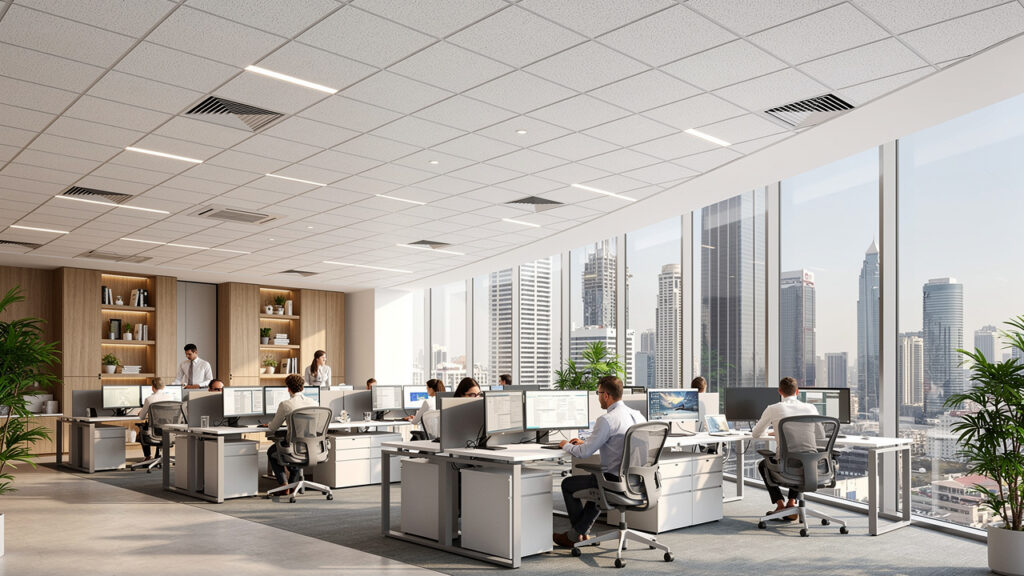
Open-plan offices without acoustic ceiling tiles quickly turn noisy, tiring, and frustrating for everyone inside. Conversations bounce off glass and concrete, filling the room with echo. After a few hours, focus drops and even small tasks start to feel heavy.
Calls clash, clicks travel, and confidential chats leak across desks. Noise slowly turns into stress and lower job satisfaction. In busy UAE towers and business parks, that same problem shows up on almost every workday.
Acoustic ceiling tiles give that sound a soft landing and strip away harsh echo from your office. These sound-absorbing panels sit above you, soak up excess noise, improve speech clarity, and support calmer open-plan floors. In this guide you will see what acoustic ceiling tiles are, which types suit UAE offices, how NRC and CAC ratings work, and how Waseem Technical designs and installs office acoustic ceilings across the UAE and GCC.
Ready to turn a noisy floor into a focused workspace? Keep reading to see how a smarter ceiling does the hard work quietly.
Key Takeaways
Acoustic ceiling tiles are sound-absorbing panels that sit in or on your ceiling and reduce echo and background noise. By trapping sound that would normally bounce around, they calm busy open spaces. This gives speech more clarity and meetings more privacy.
Different tile types such as mineral fiber, PET, fabric-wrapped tiles, and full suspended acoustic systems suit different office zones. Each material offers its own mix of sound control, fire rating, appearance, and moisture resistance. That mix matters a lot in UAE offices that run air conditioning all year.
Two key performance metrics guide acoustic ceiling tile selection for offices: NRC and CAC. NRC measures how much sound a tile absorbs inside a room. CAC measures how much sound the ceiling stops from passing between rooms or work areas.
Professional design and installation decide whether acoustic ceiling tiles perform well or only look good. Wrong grid spacing, gaps, or thin tiles in high ceilings can waste most of the potential benefit. Careful planning protects your sound, safety, and visual goals.
Waseem Technical uses a zone-based approach to design office acoustics across the UAE and GCC. Focus areas, collaboration zones, meeting rooms, and corridors each receive a different acoustic treatment so every part of the floor sounds right for the work that happens there.
What Are Acoustic Ceiling Tiles and How They Control Office Noise?
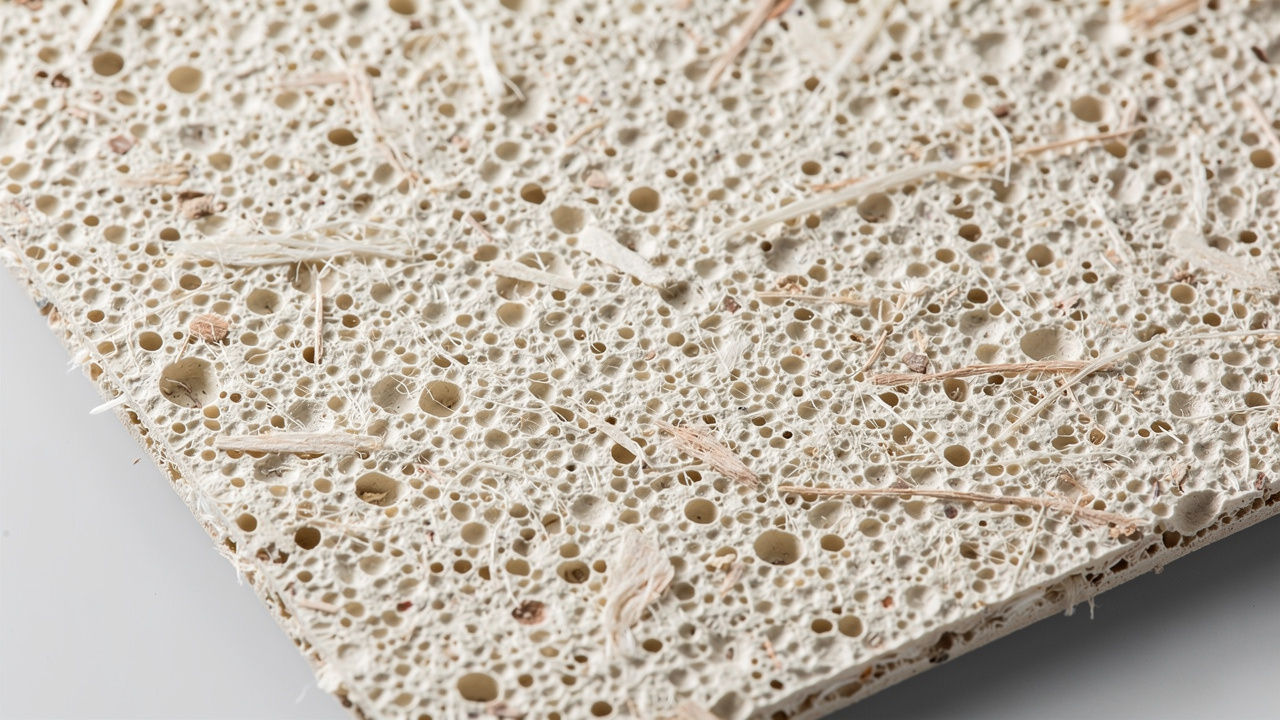
Acoustic ceiling tiles are sound-absorbing panels installed at ceiling level to reduce office noise, echo, and reverberation. These tiles replace or cover a hard ceiling so sound gets absorbed instead of bouncing around the room. In modern UAE offices, they form the main acoustic layer above open-plan floors, corridors, and meeting rooms.
Most acoustic ceiling tiles use porous or fibrous materials such as mineral fiber, fiberglass, or PET. When sound waves hit these materials, tiny air pockets and fibers slow the waves and turn part of the sound energy into a small amount of heat. Because less sound reflects back into the room, speech becomes clearer and background noise feels lighter.
Two performance values help you compare tiles:
NRC (Noise Reduction Coefficient) shows how much sound a tile absorbs on a 0 to 1 scale. Higher NRC means stronger absorption and less echo inside the room.
CAC (Ceiling Attenuation Class) shows how much sound the ceiling stops from leaking between spaces that share the same plenum above.
According to the U.S. General Services Administration GSA, high-performing office ceilings often use materials with NRC values of 0.70 or higher. That range suits focus zones, call centers, and busy open floors in Dubai, Abu Dhabi, and Sharjah. Tiles with higher CAC help keep conversations in meeting rooms and executive offices from spilling into open work areas.
Here is the key part: acoustic ceiling tiles do not work alone. They complement partitions, floor finishes, floor finishes, and soft furniture. When they sit in the right grid system and match the ceiling height, they become the backbone of a balanced acoustic plan for UAE workplaces.
Which Types of Acoustic Ceiling Tiles Work Best for UAE Offices?
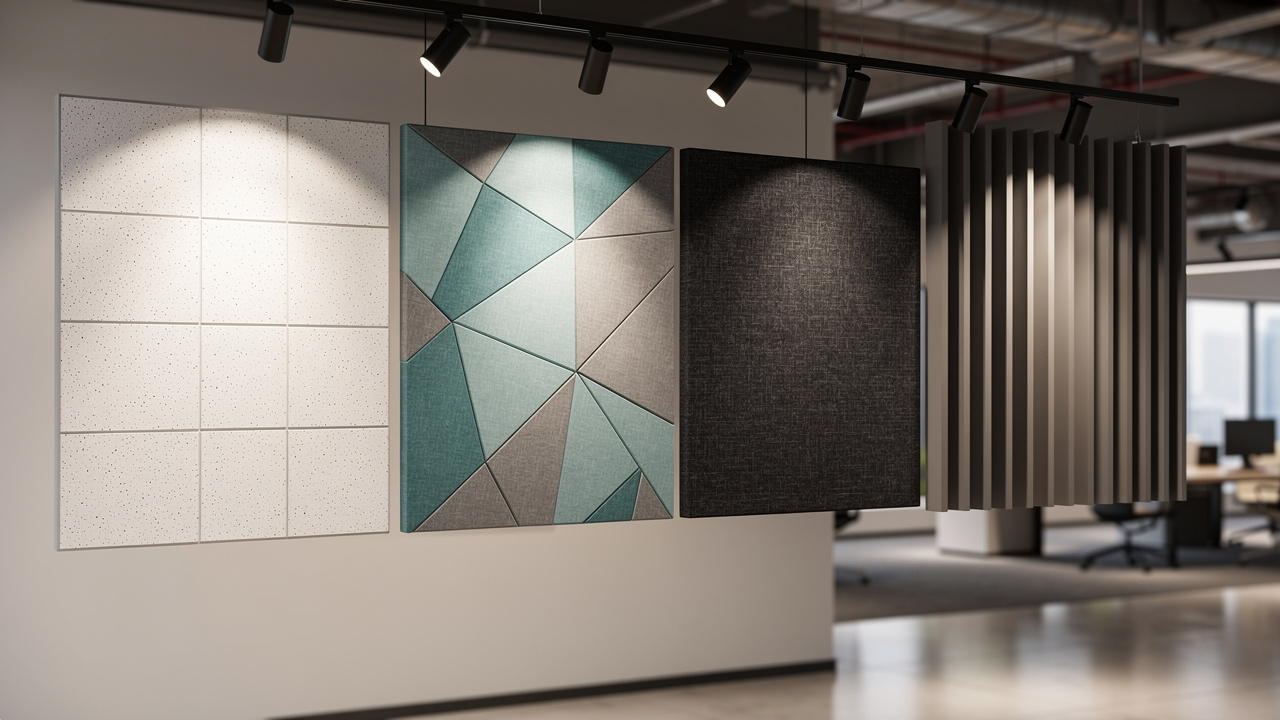
The best acoustic ceiling tiles for UAE offices match material, performance, and climate resistance with how each space is used. Different tiles work better in different zones, from hot-desking areas in Business Bay to private clinics in Abu Dhabi. Getting the type right protects both comfort and long-term durability.
Here is a quick comparison of four office-friendly options that Waseem Technical supplies across the UAE and GCC.
| Tile Type | Key Benefit | Best For |
|---|---|---|
| Mineral Fiber Tiles | Reliable sound absorption and fire performance | Corporate offices and open-plan floors |
| PET-Based Tiles | Lightweight, recycled content, and design flexibility | Modern and eco-focused office fitouts |
| Fabric-Wrapped Tiles | Premium look with strong acoustic performance | Executive suites and client-facing spaces |
| Suspended Acoustic Systems | Strong control of high ceiling reverberation | Large open offices and high-rise spaces |
Mineral fiber acoustic ceiling tiles remain a popular choice for standard offices and call centers. They offer good NRC values, solid fire resistance, and work well in standard 600×600 mm and 600×1200 mm grids — with polypropylene as an absorbent layer emerging as a comparable alternative backed by life cycle assessment research. They also balance cost and performance for large floors in towers across Dubai and Sharjah.
PET-based tiles use recycled polyester and come in many colors and shapes. They often support green building goals under LEED and Estidama, since they can contain a high share of recycled content. According to the U.S. Green Building Council U.S. Green Building Council, products with recycled content and low emissions support healthier, more efficient interiors.
Fabric-wrapped tiles add a richer look for boardrooms and reception areas. An absorptive core hides under fabric that can match brand colors or interior schemes. Waseem Technical often combines these tiles with PET wall panels to give premium spaces both a quiet feel and a polished appearance.
Suspended acoustic systems use thicker tiles or baffles hung below below high structural ceilings. These systems suit double-height offices or full-floor corporate spaces along Sheikh Zayed Road. Waseem Technical supplies all four tile types in standard and custom sizes, using CNC-precision cutting to follow curved layouts or lighting features without losing acoustic performance. Moisture-resistant versions help tiles stay flat and clean around supply grilles and chilled-water pipes in the UAE’s humid climate.
How Do Acoustic Ceiling Tiles Improve Productivity in Open-Plan Offices?

Acoustic ceiling tiles improve productivity in open-plan offices by cutting background noise, reducing echo, and improving speech clarity. When the ceiling absorbs sound instead of throwing it back, people hear colleagues more clearly and feel less drained across the day. That change supports both focused solo work and smoother teamwork.
Research on office acoustics keeps pointing to the same message: noise is one of the top complaints in open-plan workplaces. A study by Oxford Economics Oxford Economics found that more than half of employees say they lack quiet spaces, and many link that lack directly to lower productivity and higher stress. In a dense open floor, even small steps toward better acoustics can pay off in real performance gains.
Here is where ceiling tiles matter. By raising the average NRC of the ceiling, you shorten reverberation time. That means sounds such as ringtones or quick comments fade faster instead of hanging in the air. People need to raise their voices less, which further reduces overall noise. According to the World Health Organization World Health Organization, long-term exposure to high indoor noise levels links to stress and cardiovascular risks, so better acoustics support health as well as output.
Waseem Technical uses a zone-based method when planning acoustic ceiling tiles for UAE offices:
Focus zones such as coding areas or finance teams receive tiles with higher NRC values and sometimes extra wall panels.
Collaboration areas keep a livelier feel with slightly lower absorption so group energy does not disappear.
Meeting rooms combine high NRC tiles with good CAC ratings to keep discussions inside the room.
“Acoustic ceiling tiles do not only reduce noise, they create acoustic conditions that match each type of work from deep focus to active collaboration.”
— Lead acoustic engineer at Waseem Technical
According to the National Institute for Occupational Safety and Health NIOSH, controlling workplace noise is a key part of protecting both hearing and concentration. With the right acoustic ceiling layout, UAE companies can support staff wellbeing while also making every desk on the floor more productive.
Why Professional Installation and Material Selection Matter for Acoustic Results
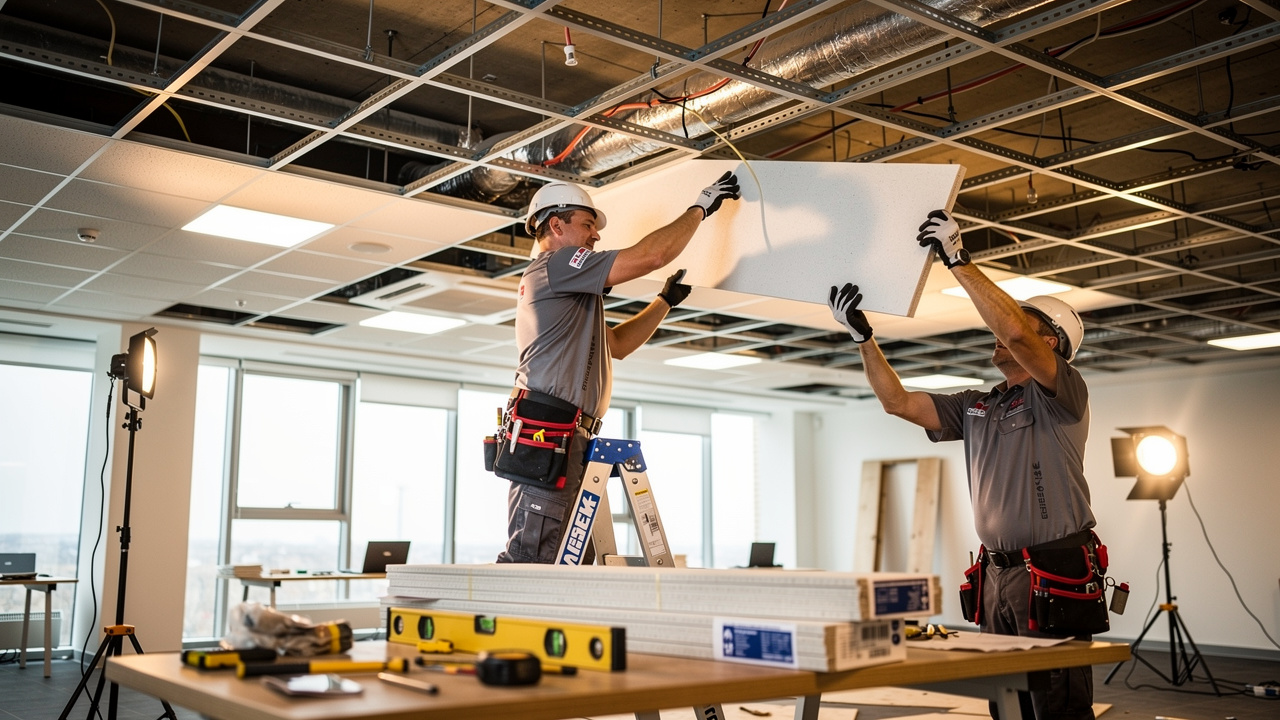
Professional installation and careful material selection decide whether acoustic ceiling tiles deliver the results shown in brochures. The same tile can sound very different if it sits in the wrong grid, at the wrong height, or in the wrong room. For UAE offices, humidity, fire rules, and ceiling height all add extra layers to that choice.
Many projects focus only on tile appearance and price. That shortcut often causes problems later:
Tiles with low NRC end up in focus zones.
Thin tiles go into very high ceilings.
Non–humidity-resistant tiles sit near HVAC equipment.
According to the U.S. Energy Information Administration U.S. Energy Information Administration, heating and cooling systems use roughly one third of energy in typical commercial buildings, so poor ceiling choices that fight HVAC design can raise costs as well as noise.
Installation quality matters just as much. Loose grids, wide gaps at perimeters at perimeters, or missing bracing reduce CAC and can even break fire compartment lines. UAE Civil Defence and Dubai Municipality refer to international codes such as NFPA and BS standards for fire-rated ceilings, so incorrect installation can affect safety approvals.
Waseem Technical approaches acoustic ceiling tiles as a full system instead of a single product. The team starts with a site survey to measure ceiling height, background noise, existing services, and moisture risks. They then specify tile type, NRC, CAC, thickness, and grid layout to match each office zone. CNC fabrication allows panels to fit around diffusers, sprinklers, and lights with clean edges and minimal gaps.
“An acoustic ceiling only performs at its best when design, product, and installation line up perfectly.”
— Senior acoustic consultant, Waseem Technical
Certified installation teams from Waseem Technical work across Dubai, Abu Dhabi, Ajman, Ras Al Khaimah, and the wider GCC. They install grids, tiles, and accessories following the practice for installation of metal ceiling suspension systems for acoustical tile and lay-in panels, alongside local safety codes, then provide handover support so facility managers know how to maintain and replace tiles over time.
The Bottom Line
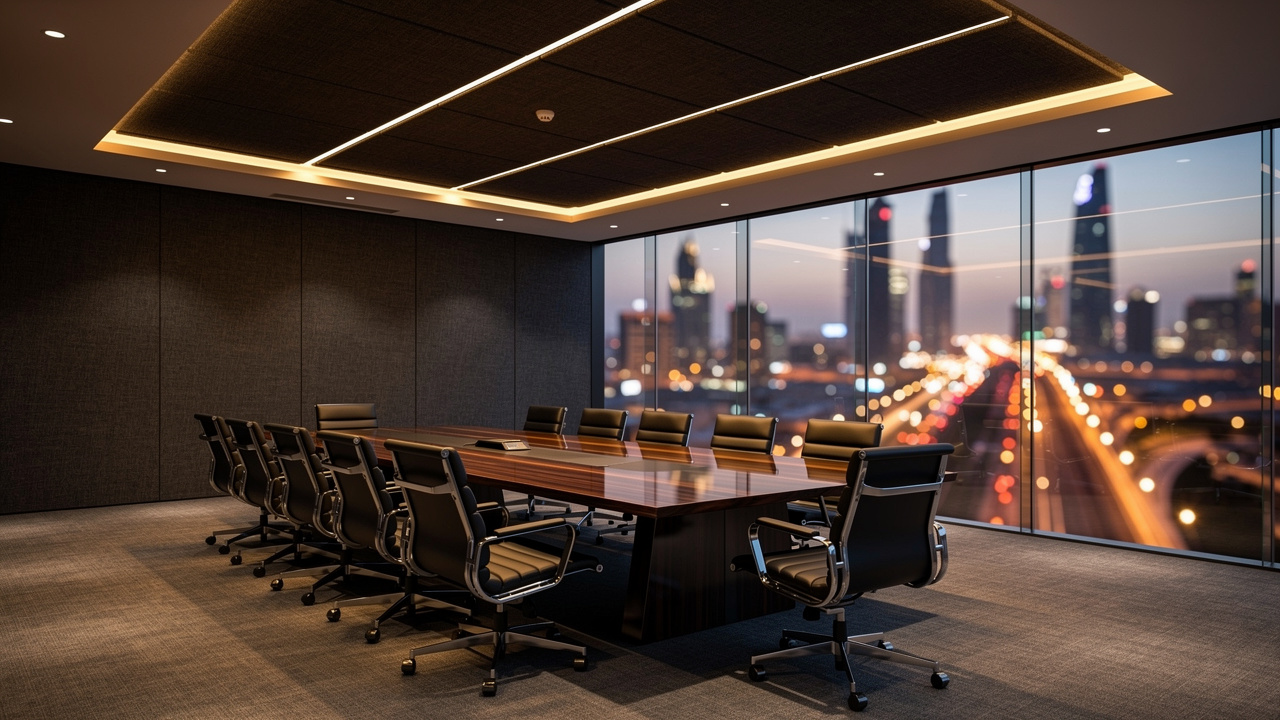
The bottom line for acoustic ceiling tiles in UAE offices is simple: they are a long-term investment in people, not just a cosmetic ceiling change. By absorbing echo and smoothing out background noise, they support clearer speech, calmer teams, and better work quality across every floor.
The right result comes from the right blend of tile type, NRC and CAC performance, ceiling height, and installation quality. When those parts match the way staff actually use each zone, open-plan offices in Dubai or Abu Dhabi can feel both lively and controlled.
Waseem Technical focuses only on soundproofing and acoustics, which means every ceiling design starts from proven acoustic practice, not guesswork. To explore what a smarter ceiling can do for your workspace, reach out today:
Phone: +971 50 209 7517 | Website: waseemtechnical.ae
Frequently Asked Questions
Question: What is a good NRC rating for acoustic ceiling tiles in an office?
A good NRC rating for office acoustic ceiling tiles is usually 0.70 or higher. Higher NRC suits focus zones, call centers, and training rooms, while collaboration areas often feel comfortable with tiles in the 0.55 to 0.70 range so the room does not feel too dead.
Question: Are acoustic ceiling tiles suitable for high-ceiling offices in UAE high-rise buildings?
Yes, acoustic ceiling tiles work very well in high-ceiling UAE offices when you choose thicker tiles or full suspended acoustic systems. Waseem Technical checks ceiling height during site surveys and recommends the right combination of tile thickness, suspension level, and extra baffles where needed.
Question: How do I maintain acoustic ceiling tiles in a UAE office environment?
Maintenance for acoustic ceiling tiles in UAE offices mainly involves gentle cleaning and spot replacement:
Remove light dust with a soft brush or low-suction vacuum, which is helpful in dusty conditions.
Avoid harsh chemicals that harm the porous surface.
Replace individual tiles in the grid if they become stained or damaged.
Question: Can acoustic ceiling tiles be customized to match an office interior design?
Yes, modern acoustic ceiling tiles come in many textures, finishes, colors, and edge profiles to support custom design. Waseem Technical uses CNC-precision fabrication to create special shapes and patterns that follow lighting layouts or brand elements while keeping the acoustic performance specified in the design.
Question: Does Waseem Technical serve offices outside of Dubai?
Yes, Waseem Technical serves offices across all UAE emirates including Abu Dhabi, Ajman, and Ras Al Khaimah, as well as GCC markets such as Saudi Arabia, Qatar, Kuwait, and Bahrain. This reach helps multi-site businesses keep a consistent acoustic standard across their regional portfolios.