Introduction
A comfortable interior depends on more than attractive furniture, lighting, and wall finishes. The way sound behaves inside a room can influence concentration, communication, and the overall experience of the people using the space.
In Asmara, Eritrea, acoustic PET panels offer a modern option for managing unwanted echo in offices, educational facilities, hotels, restaurants, meeting rooms, and residential interiors. Made from polyester fibre, these panels combine sound-absorbing properties with lightweight construction and a wide range of decorative possibilities.
As interiors incorporate hard surfaces such as tiled floors, glass, plaster, and concrete, reflected sound can become more noticeable. Conversations may overlap, meetings may become tiring, and voices may be harder to understand. Installing suitable acoustic panels can help address these issues without requiring a complete redesign of the room.
This guide explains what acoustic PET panels are, how they work, where they can be used in Asmara, and what to consider when choosing the right specification for a project.
What Are Acoustic PET Panels?
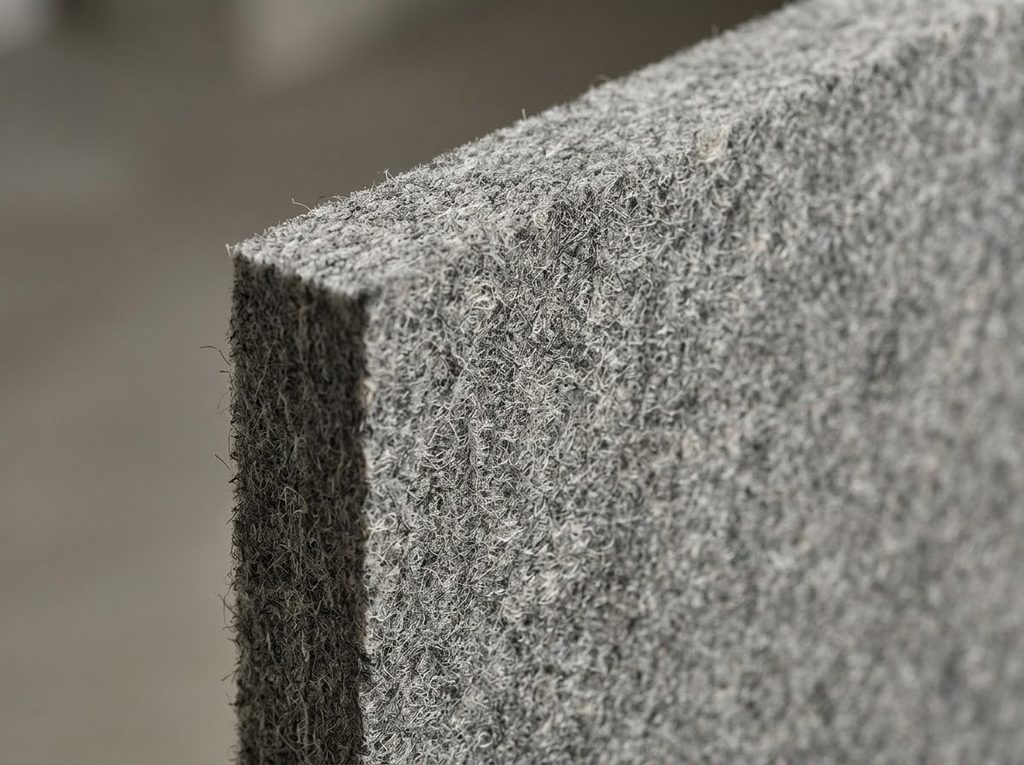
Acoustic PET panels are sound-absorbing boards or felt-like sheets made primarily from polyester fibres. Some products incorporate recycled polyethylene terephthalate (PET), a material commonly associated with plastic bottles and other polyester products.
During manufacturing, polyester fibres are processed into a porous, non-woven or bonded structure. When sound waves reach the panel, the structure helps dissipate part of the sound energy rather than reflecting all of it back into the room.
Depending on the product range, PET acoustic panels may be available in:
- Flat decorative wall panels
- Coloured acoustic boards
- Geometric and three-dimensional designs
- CNC-cut decorative patterns
- Grooved or fluted panels
- Suspended acoustic baffles
- Ceiling clouds and selected partition systems
The panel’s thickness, density, surface design, and mounting arrangement influence its acoustic performance. Therefore, products that look similar may not deliver the same results.
Acoustic PET panels are especially useful when a space needs sound absorption and a decorative finish within the same installation.
Why Consider Acoustic PET Panels for Projects in Asmara?
Different buildings have different acoustic requirements. A meeting room needs clear speech, a restaurant needs a comfortable balance between conversation and background noise, and a classroom needs an environment in which students can understand the teacher.
Acoustic PET panels can help address these needs when they are selected and installed appropriately.
1. Creating More Comfortable Offices
Office environments often contain hard walls, glass partitions, desks, computer equipment, and limited soft furnishings. These surfaces can contribute to reflected sound, especially in larger rooms.
PET panels can be installed on selected walls or incorporated into ceiling treatments to help control reverberation.
Potential applications include:
- Private offices
- Meeting and conference rooms
- Reception areas
- Open-plan workspaces
- Training rooms
- Video-conferencing spaces
Reducing excessive reflections can make speech easier to follow during meetings and presentations. Decorative panels can also introduce colour and texture to otherwise plain office interiors.
However, panels primarily improve the acoustic environment within a room. They do not automatically prevent conversations from passing through partitions into neighbouring offices.
2. Supporting Clearer Communication in Educational Spaces
Classrooms, training centres, and learning facilities benefit from good speech intelligibility. When sound continues reflecting from hard surfaces, a teacher’s voice can become less distinct, particularly in larger rooms or spaces with high ceilings.
Suitable PET acoustic panels can help reduce these reflections when enough absorptive surface area is provided.
Possible applications include:
- Classroom wall treatments
- Training-room acoustic panels
- Library study areas
- Lecture rooms
- Educational meeting spaces
- Selected ceiling installations
The objective is to help students and instructors communicate comfortably without needing to raise their voices unnecessarily.
Panel placement should be based on room dimensions, ceiling height, existing finishes, and the number of occupants. In larger educational spaces, a more comprehensive acoustic assessment may be appropriate.
3. Improving the Atmosphere in Hotels and Restaurants
Hospitality interiors must balance appearance with comfort. Restaurants, cafés, hotel reception areas, and lounges can become noisy when conversations overlap and sound reflects from multiple hard surfaces.
PET panels provide a way to introduce sound absorption without relying exclusively on curtains, upholstered furniture, or traditional fabric-covered treatments.
Design possibilities include:
- Decorative wall panels behind seating areas
- Reception feature walls
- Restaurant acoustic treatments
- Hotel meeting rooms
- Lounge ceiling clouds
- Custom-coloured panels coordinated with interior finishes
Different shapes and colours can help create visual zones while contributing to a more balanced sound environment.
The amount of absorption required depends on the size of the room, the number of people using it, the existing materials, and the acoustic target.
4. Enhancing Residential Interiors
Acoustic PET panels are not limited to commercial projects. They can also be incorporated into homes where sound reflections affect everyday comfort.
Common residential applications include:
- Home offices
- Study areas
- Television rooms
- Living-room feature walls
- Gaming rooms
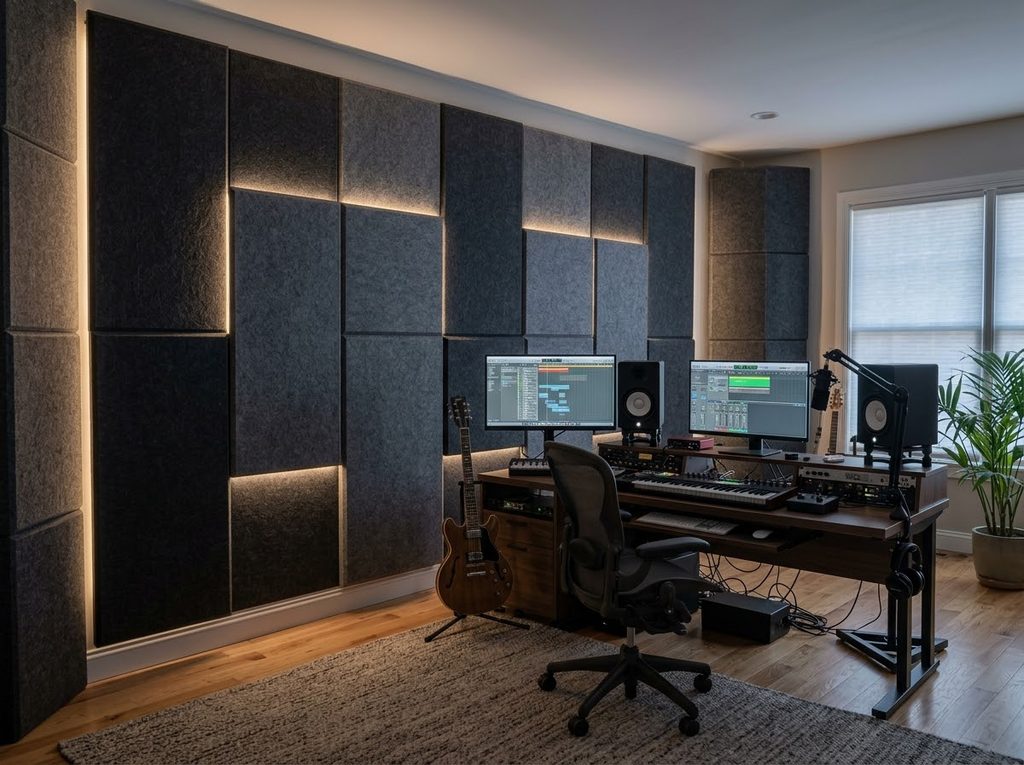
- Music practice areas
Panels can be selected in colours that complement the room’s furniture and wall finishes. Geometric patterns can create a decorative focal point, while plain panels provide a more understated appearance.
For television rooms and home theatres, PET panels can help reduce reflected sound inside the room. If the goal is to prevent music or voices from travelling into neighbouring rooms, a separate sound-isolation system may be needed.
How Do PET Acoustic Panels Reduce Echo?
When sound travels through a room, it can reflect from walls, ceilings, floors, windows, and furniture. Some reflections arrive shortly after the original sound, while others continue for longer periods.
When the room has many reflective surfaces, these repeated reflections can produce excessive reverberation. Speech may sound blurred, and background noise may feel more prominent.
PET acoustic panels help by allowing sound energy to enter their porous fibre structure. As sound moves through the material, part of the energy is dissipated through interactions within the fibre network.
The effectiveness of this process depends on several factors:
- Panel thickness
- Fibre structure and density
- The amount of wall or ceiling coverage
- Distance between the panel and the wall
- The frequency of the sound
- The existing acoustic conditions of the room
Understanding NRC Ratings
The Noise Reduction Coefficient (NRC) is a commonly used measure that summarises sound absorption across selected test frequencies.
Different PET panels can have different ratings. For example, published product data from MMT Acoustix lists NRC values ranging from approximately 0.30 for a 9 mm panel to 0.60 for a 24 mm panel in its stated configurations, with a higher value reported for a particular panel installed over an additional absorptive layer. These figures are product-specific, not universal ratings for every PET panel. See the manufacturer’s PET panel specifications.
When comparing products, check the test method, panel thickness, mounting arrangement, and any additional backing or air cavity used during testing.
Important distinction: PET acoustic panels are primarily sound absorbers. They can help reduce echo inside a room, but they are not automatically soundproofing barriers capable of blocking noise between rooms.
Choosing the Right PET Panel Thickness
Thickness is an important consideration when selecting acoustic panels. However, thicker panels are not automatically the best choice for every application.
The correct specification depends on the room’s dimensions, the sound frequencies that need attention, the desired visual appearance, and the available installation space.
| Panel specification | Possible consideration | Important note |
|---|---|---|
| Thin PET panels | Decorative treatments and selected higher-frequency absorption needs | May provide limited low-frequency absorption when directly mounted |
| Medium-thickness panels | General office and meeting-room applications | Verify the product’s tested performance |
| Thicker PET panels | Applications requiring greater absorption potential | Actual results depend on construction and mounting |
| Panels with an air gap | May improve absorption at some frequencies | Use data for the exact panel and cavity arrangement |
For rooms with substantial low-frequency noise, a specialist may recommend thicker absorbers, a suitable air gap, additional acoustic treatment, or another system. The correct approach should be based on the acoustic problem rather than thickness alone.
PET Panel Designs for Modern Interiors
One advantage of PET acoustic panels is their flexibility in decorative applications. Depending on the manufacturer, they may be supplied in a variety of colours, shapes, and surface patterns.
Flat Coloured Panels
Flat panels offer a simple, coordinated appearance for offices, classrooms, and residential rooms. They can be arranged in a single colour or combined to create contrasting sections.
Geometric Wall Designs
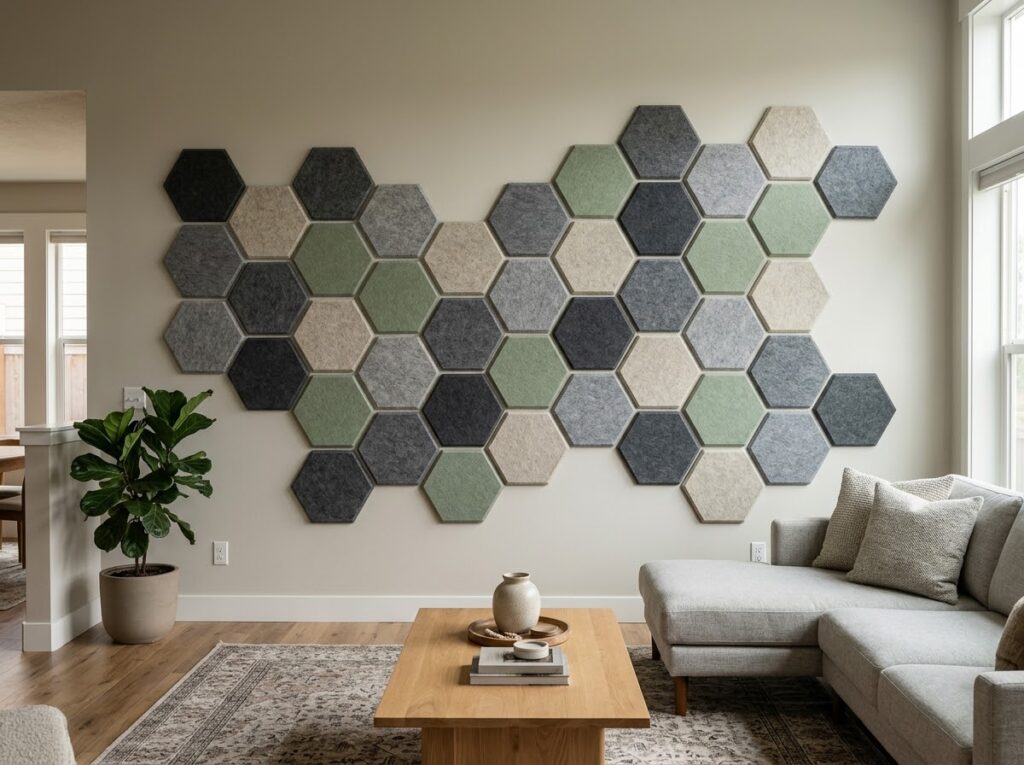
Hexagons, rectangles, circles, and other shapes can be combined to create decorative wall compositions.
Geometric layouts are particularly useful when an acoustic treatment also needs to function as a feature wall.
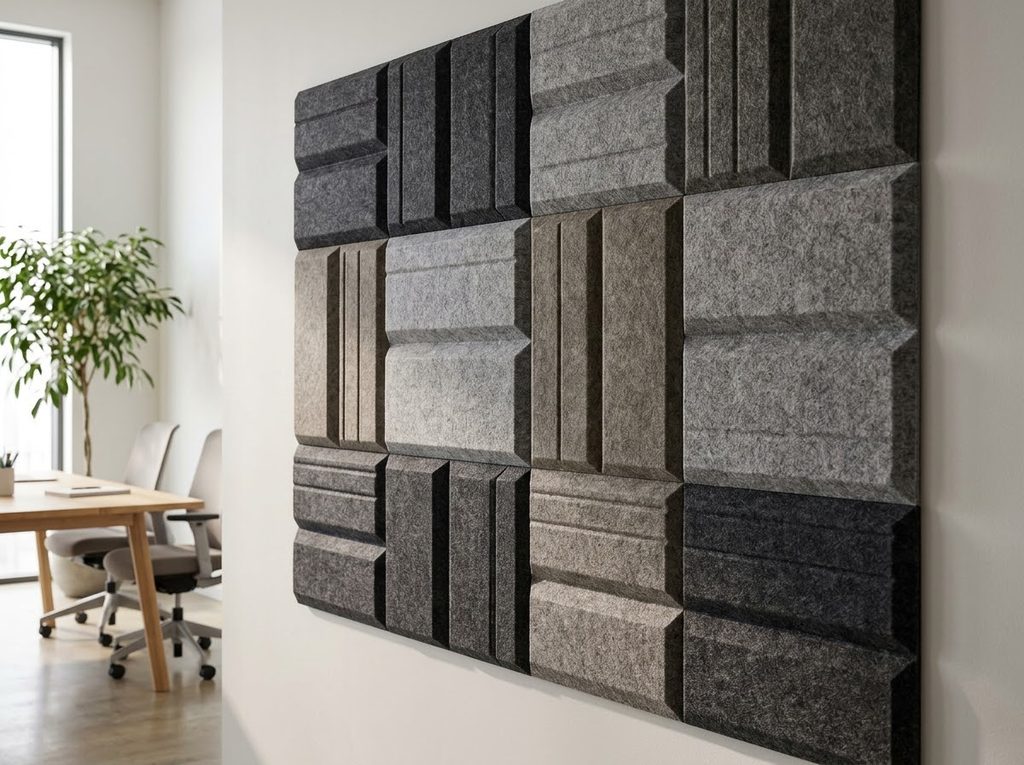
Grooved and Fluted Panels
Grooved surfaces introduce visual depth and linear texture. They can complement contemporary offices, hospitality interiors, and residential feature walls.
The acoustic performance depends on the complete panel construction, not simply on the decorative grooves.
Custom-Cut Panels
Some PET panels can be CNC-cut into logos, patterns, lettering, or other shapes. This can help businesses coordinate acoustic treatment with interior branding.
Custom designs should retain sufficient material and suitable fixing points. Extensive cutting can affect the panel’s strength and installation requirements.
Ceiling Baffles and Clouds
In suitable spaces, PET panels can be suspended vertically as baffles or horizontally as ceiling clouds.
These systems expose more panel surface to the room and can provide a different acoustic treatment arrangement from panels fixed directly to a wall.
Suspended installations must use approved fixings and account for ceiling structure, lighting, ventilation, and maintenance access.
Wall-Mounted vs. Suspended PET Panels
The installation method can influence both the appearance and the acoustic performance of a panel system.
Wall-Mounted Panels
Wall-mounted panels are commonly used in offices, classrooms, conference rooms, and residential spaces.
They may be attached using approved adhesive, mechanical fixings, or a manufacturer-specific mounting system. The wall must be suitable for the chosen installation method.
Direct mounting can be practical where space is limited, but the resulting absorption will depend on the panel’s construction and test data.
Panels Installed with an Air Gap
Some systems use battens, spacers, or a supporting frame to create an air cavity behind the panel.
The cavity can change how sound interacts with the absorber and may improve performance at certain frequencies. The result depends on the panel, cavity depth, backing, and overall assembly.
Suspended Ceiling Treatments
Ceiling baffles and clouds can be useful where wall space is limited or where sound reflections from above contribute to excessive reverberation.
Before installation, confirm the panel’s weight, support requirements, approved suspension method, and compatibility with other ceiling services.
Sustainability and Material Considerations
Some PET acoustic panels contain recycled polyester fibres, including material recovered from post-consumer plastic products. Using recycled content can be one consideration when specifying interior materials.
However, recycled content varies between manufacturers and product ranges. It should be confirmed through the product’s technical documentation rather than assumed from the term “PET.”
When reviewing sustainability claims, consider:
- The percentage of recycled content
- Product durability
- Whether the panel can be reused or recycled
- Packaging and transport requirements
- Cleaning and maintenance needs
- Manufacturer documentation
PET panels should be selected according to their verified material properties and acoustic suitability, rather than relying solely on environmental marketing claims.
Fire Safety, Indoor Air Quality, and Durability
Before installing acoustic PET panels in a commercial or public building, verify the documentation for the exact product.
Fire Performance
Fire classifications are specific to tested products and conditions. Do not assume that all polyester panels share the same fire rating.
Check the relevant test report and confirm that the product and installation comply with the requirements applicable to the project.
Indoor Air Quality
Where indoor air quality is a concern, request available emissions or certification documentation. Product claims should be supported by appropriate test information.
Cleaning and Maintenance
The cleaning method depends on the surface, fibre construction, and manufacturer instructions. Regular dust removal may be suitable for some products, while others have more specific care requirements.
Avoid excessive moisture or unapproved cleaning chemicals, particularly where they could damage the panel or affect its appearance.
Environmental Suitability
For any building project in Asmara, consider the expected indoor conditions, installation environment, and storage requirements. Confirm the manufacturer’s permitted temperature and humidity ranges before selecting the panel.
Common Mistakes to Avoid When Buying PET Acoustic Panels
Choosing Panels Only by Colour
A panel’s appearance does not establish its acoustic performance. Compare thickness, test data, and installation requirements before making a decision.
Expecting Complete Soundproofing
PET panels mainly absorb reflected sound. Noise passing through a wall, floor, or ceiling usually requires a suitable sound-isolation strategy.
Treating All NRC Ratings as Equivalent
Different products may use different test configurations and mounting arrangements. Confirm that the technical information applies to the exact product being considered.
Installing Too Few Panels
A small decorative section may not provide enough absorption for a large room with a high ceiling and multiple reflective surfaces.
The appropriate coverage should be determined by the room’s size, use, and acoustic needs.
Ignoring Installation Details
Poorly supported panels, unsuitable adhesives, or incorrect suspension systems can cause installation problems. Always follow the manufacturer’s instructions and verify that the supporting surface is suitable.
How to Select PET Acoustic Panels for Your Project in Asmara
Before choosing a panel, identify the main acoustic problem.
If conversations sound unclear because of echo, sound-absorbing wall or ceiling treatment may be appropriate. If the main issue is noise travelling between adjoining rooms, the project may require sound isolation rather than absorption alone.
Next, evaluate the room’s dimensions, surfaces, furniture, and occupancy. A conference room with glass walls may require a different treatment strategy from a small home office with curtains and upholstered furniture.
Then compare available panel specifications, including:
- Material composition and recycled content
- Thickness and density
- Tested acoustic performance
- Panel dimensions and finish options
- Approved installation methods
- Fire and indoor-air-quality documentation
- Cleaning and maintenance requirements
For large offices, educational facilities, or hospitality projects, an acoustic assessment can help determine the amount and placement of treatment needed.
Frequently Asked Questions
1. What are acoustic PET panels made from?
They are primarily made from polyester fibres. Some products contain recycled PET, but the recycled percentage varies by manufacturer and product.
2. What are PET acoustic panels used for?
They are used to reduce echo and reverberation in offices, classrooms, conference rooms, restaurants, studios, residential interiors, and other spaces where reflected sound affects comfort or communication.
3. Do PET panels soundproof a room?
Not by themselves. They primarily absorb reflected sound within a room. Reducing noise transmission between rooms generally requires a suitable sound-isolation assembly.
4. Can PET panels be installed on ceilings?
Some products are designed for suspended baffles, ceiling clouds, or other ceiling systems. Follow the manufacturer’s fixing and structural-support requirements.
5. Does a thicker PET panel always perform better?
Not in every situation. Thickness can influence absorption, but the result also depends on density, mounting, air gap, frequency, and the complete panel system.
6. Can PET panels be used in offices and classrooms?
Yes, suitable panels can help control reverberation in these environments. The amount and placement should match the room’s dimensions and acoustic requirements.
7. Are PET acoustic panels available in different colours?
Many manufacturers offer multiple colours, shapes, and decorative finishes. Availability depends on the product range.
8. What should be checked before buying PET panels?
Review the material composition, recycled content, panel thickness, test data, installation method, fire documentation, and maintenance instructions.
Conclusion
Acoustic PET panels provide a flexible option for managing reverberation in offices, educational facilities, hospitality interiors, and homes in Asmara, Eritrea. Their lightweight construction, range of colours, and potential for custom shapes make them suitable for projects where acoustic comfort and interior design need to work together.
The most effective solution begins with identifying the room’s actual acoustic needs. Panel thickness, mounting, coverage, and verified sound-absorption performance should all be considered before a specification is finalised.
By choosing an appropriate PET panel system and installing it correctly, property owners, designers, and project teams can create interiors with better sound comfort while maintaining a clean, modern appearance.