
Introduction
Noise control is an important consideration in residential, commercial, and industrial buildings. Conversations travelling through partitions, equipment operating in service rooms, and sound passing between adjoining spaces can affect privacy, comfort, and productivity.
For building projects in Brazzaville, Republic of the Congo, acoustic mass loaded vinyl (MLV) is one material that can contribute to an effective sound-insulation strategy.
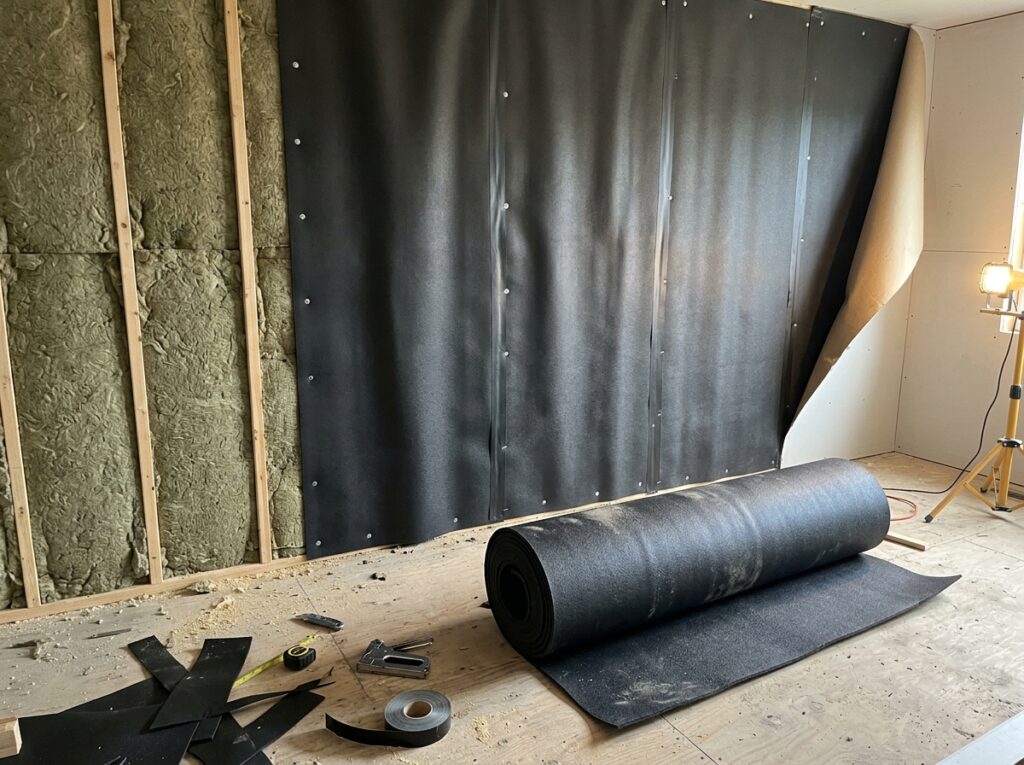
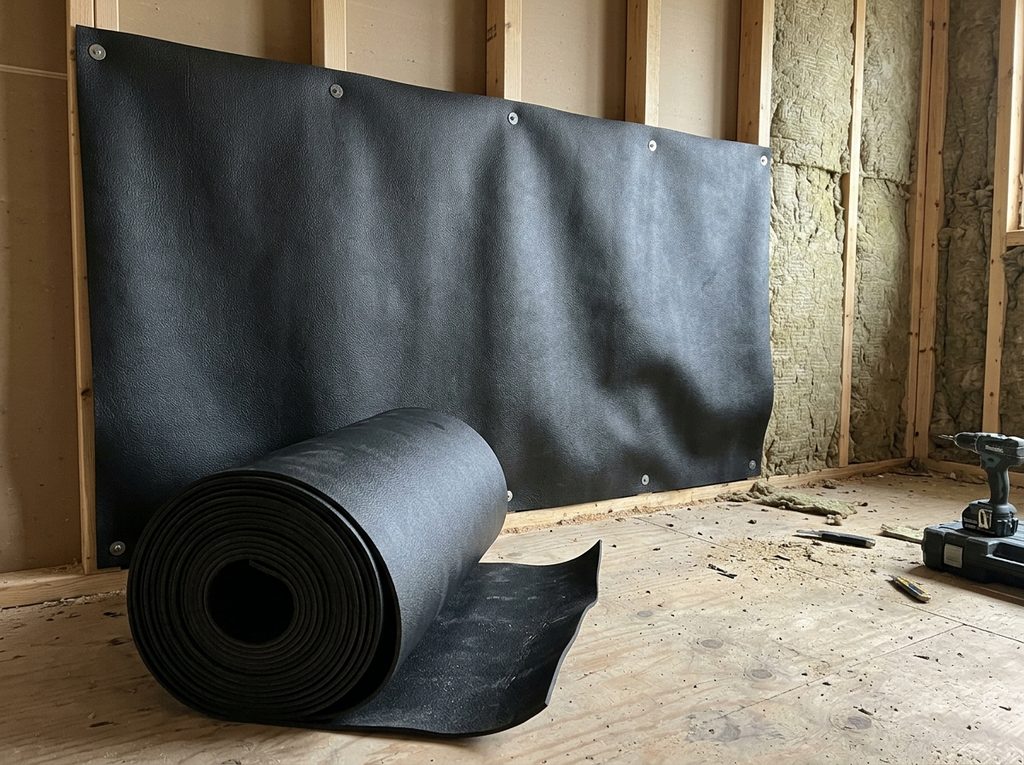
MLV is a dense, flexible sound-barrier material designed to help reduce airborne noise transmission when incorporated into a suitable construction assembly. Unlike bulky rigid barriers, it is supplied in flexible sheets or rolls that can be integrated into selected wall, ceiling, floor, and equipment-enclosure systems.
However, successful sound control requires more than simply adding a layer of vinyl. The type of noise, the existing construction, the material’s surface weight, and the quality of the installation all influence the result.
This guide explains how MLV works, where it can be used in Brazzaville, what buyers should check before selecting a product, and how to avoid common soundproofing mistakes.
What Is Acoustic Mass Loaded Vinyl?
Mass loaded vinyl is a flexible material designed to provide a dense barrier against sound transmission. It is commonly used as one component of a wall, ceiling, floor, or enclosure assembly where airborne noise needs to be reduced.
Its principal function differs from that of acoustic foam or decorative sound-absorbing panels.
- MLV: Primarily helps reduce sound transmission through an assembly.
- Acoustic foam: Primarily absorbs sound reflections inside a room.
- Cavity insulation: Can absorb sound within a suitable wall or ceiling cavity.
- Resilient isolation components: Help reduce vibration transfer between connected building surfaces.
- Acoustic sealant: Helps close gaps that would otherwise allow sound to pass through.
MLV is available in different surface weights and thicknesses. Product construction, reinforcement, flexibility, fire properties, and installation instructions vary between manufacturers.
The correct specification depends on the noise problem and the complete construction system in which the material will be used.
Why Consider MLV for Buildings in Brazzaville?
Brazzaville includes residential buildings, offices, hospitality premises, commercial properties, and facilities containing mechanical equipment. Each setting can present different sound-transmission challenges.
MLV may be useful when a project needs a flexible barrier layer without relying exclusively on thicker, heavier rigid materials.
1. Improving Privacy Between Residential Rooms
In homes and apartments, speech, television audio, and everyday activities may travel through lightweight partitions or poorly sealed openings.
MLV can be incorporated into a suitable wall assembly to help reduce airborne sound transmission between rooms.
Potential applications include:
- Bedrooms adjoining living areas
- Home offices
- Shared residential partitions
- Television and media rooms
- Internal walls around noisy utility areas
The final result depends on the complete assembly, including framing, board layers, cavity insulation, perimeter seals, and any paths that allow sound to travel around the treated wall.
For apartment-to-apartment noise, the floor, ceiling, doors, and adjoining structural elements may also need to be assessed.
2. Supporting Quieter Office Environments
Offices require environments that support focused work, confidential discussions, and productive meetings. Noise passing through partitions can reduce comfort and privacy.
MLV may form part of an upgraded partition system in:
- Meeting rooms
- Private offices
- Administrative areas
- Reception spaces
- Consultation rooms
- Training rooms
Before selecting a barrier, identify whether the noise is travelling directly through the partition or through a door, ceiling void, ventilation duct, or another route.
If speech is travelling through an unsealed opening, adding more material to the main wall may not resolve the problem. A coordinated solution should address the weakest parts of the construction.
3. Managing Noise Around Mechanical Equipment
Mechanical equipment can generate airborne noise and vibration that spread into surrounding areas.
MLV may be used as part of a suitable enclosure or barrier around selected equipment, provided that the material is compatible with the operating temperature, ventilation, maintenance requirements, and applicable safety standards.
Potential applications include:
- Mechanical service rooms
- Selected generator enclosures
- Pump and utility areas
- HVAC equipment systems
- Ductwork and certain pipe installations
Equipment enclosures must be designed carefully. Ventilation openings can become sound paths, while excessive enclosure temperatures can create safety and equipment-performance problems.
MLV alone should not be assumed to control structure-borne vibration. Mounts, resilient connections, or other isolation measures may be needed.
4. Reducing Noise Transfer in Hospitality Buildings
Hotels and other accommodation facilities benefit from a thoughtful approach to sound isolation. Noise passing between guest rooms, corridors, service areas, and meeting rooms can affect comfort.
MLV may be considered within selected wall or ceiling assemblies, subject to the project’s construction and performance requirements.
For effective results, the design should also address doors, service penetrations, ceiling cavities, and adjoining structural elements.
Sound absorption may be needed separately inside reception areas, restaurants, or conference rooms where excessive echo is the main concern.
5. Supporting Media and Entertainment Rooms
Home theatres, media rooms, and entertainment areas can generate sound that disturbs people in nearby rooms.
MLV can contribute to a sound-isolation assembly when combined with suitable board layers, cavity insulation, resilient connections, and properly sealed construction.
Low-frequency sound from subwoofers can be particularly difficult to control because it may excite walls, floors, and other structural elements. In such situations, a broader isolation design may be required.
How Does Mass Loaded Vinyl Work?
MLV functions primarily through its mass and its role as part of a continuous sound barrier.
When airborne sound strikes a wall or ceiling, some of the sound energy can pass through the assembly. A suitably designed barrier can make that transmission more difficult.
The actual performance depends on the entire system rather than the MLV sheet alone.
Surface Weight
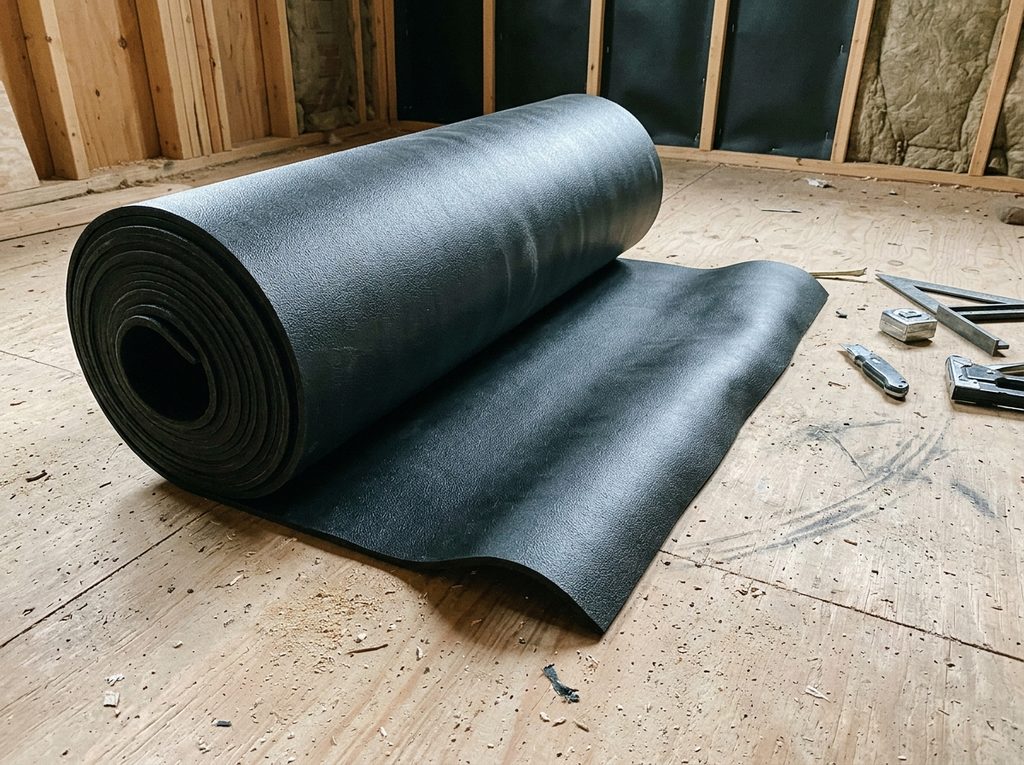
Manufacturers commonly offer different MLV surface weights. One published product range, for example, includes versions at approximately 0.5, 1, and 2 pounds per square foot. Its reported transmission-loss and STC values vary with the specific product weight. These figures are product-specific and should not be treated as ratings for a completed wall. See the manufacturer’s MLV product specifications.
Heavier products may provide different barrier performance, but the most suitable option depends on the complete assembly, available space, structural support, and project requirements.
Continuity of the Barrier
The barrier must be installed with appropriate detailing around joints, edges, and service openings.
Gaps around electrical boxes, switches, pipes, ducts, and other penetrations can allow sound to bypass the material. A carefully specified barrier with poorly sealed joints may therefore perform worse than expected.
Flanking Transmission
Sound does not always travel directly through the wall being treated. It may pass through adjoining floors, ceilings, ducts, doors, windows, or structural connections.
These alternative paths are known as flanking transmission. Identifying them is important when designing a complete sound-isolation solution.
The Complete Construction Assembly
Framing, board layers, cavity insulation, resilient components, and sealing details can all influence the performance of a wall or ceiling.
A standalone MLV rating should not be presented as the rating of the entire construction assembly. Where a particular sound-insulation target is required, use appropriate test data for the complete system or obtain professional acoustic advice.
Selecting the Right MLV Thickness and Surface Weight
Choosing a product requires more than selecting the thickest available sheet.
Buyers should compare the manufacturer’s data for surface weight, dimensions, flexibility, durability, installation requirements, and acoustic performance.
| Selection factor | Why it matters |
|---|---|
| Surface weight | Influences the barrier characteristics of the material |
| Thickness | Affects dimensions, flexibility, and compatibility with the assembly |
| Roll or sheet dimensions | Influence joint placement and installation planning |
| Reinforcement | May affect handling and suitability for certain applications |
| Fire properties | Must meet the requirements of the intended building use |
| Environmental limitations | Determine whether the material is appropriate for the expected conditions |
| Tested performance | Helps establish what the selected product can realistically achieve |
A heavier sheet may require more substantial support. Before installation, confirm that the framing or supporting structure can carry the material safely.
Check the Manufacturer’s Test Data
Ask for documentation relating to the exact product being considered. Review any stated transmission-loss or STC data, including the test method and the configuration used.
The STC rating is a single-number indicator of airborne sound isolation for a tested product or assembly under a defined procedure. It should not be used to promise the same result in a different wall, ceiling, or floor construction.
Installation Guidelines for Acoustic MLV
The installation method depends on the product and the intended construction assembly. Manufacturer instructions should always take priority over generic guidance.
Step 1: Identify the Main Noise Path
Determine whether the noise travels through a wall, ceiling, floor, equipment enclosure, duct, or another part of the building.
Check doors, windows, penetrations, and adjoining construction before deciding where MLV should be installed.
Step 2: Prepare the Supporting Surface
The surface or framing should be suitable for the intended installation. Where the product is applied to an existing substrate, follow the manufacturer’s requirements for surface condition and preparation.
Confirm that the structure can support the added weight and that the selected fixing method is compatible with the material.
Step 3: Plan the Sheet Layout
Measure the area and plan the position of joints, corners, openings, and service penetrations before cutting the material.
A well-planned layout can reduce waste and make it easier to maintain a continuous barrier.
Step 4: Install and Support the MLV
Use the approved fixing method for the selected system. Depending on the application, this may involve mechanical fasteners or another specified installation arrangement.
Avoid leaving unsupported sections that could sag or place excessive loads on individual fixings.
Step 5: Seal Seams and Penetrations
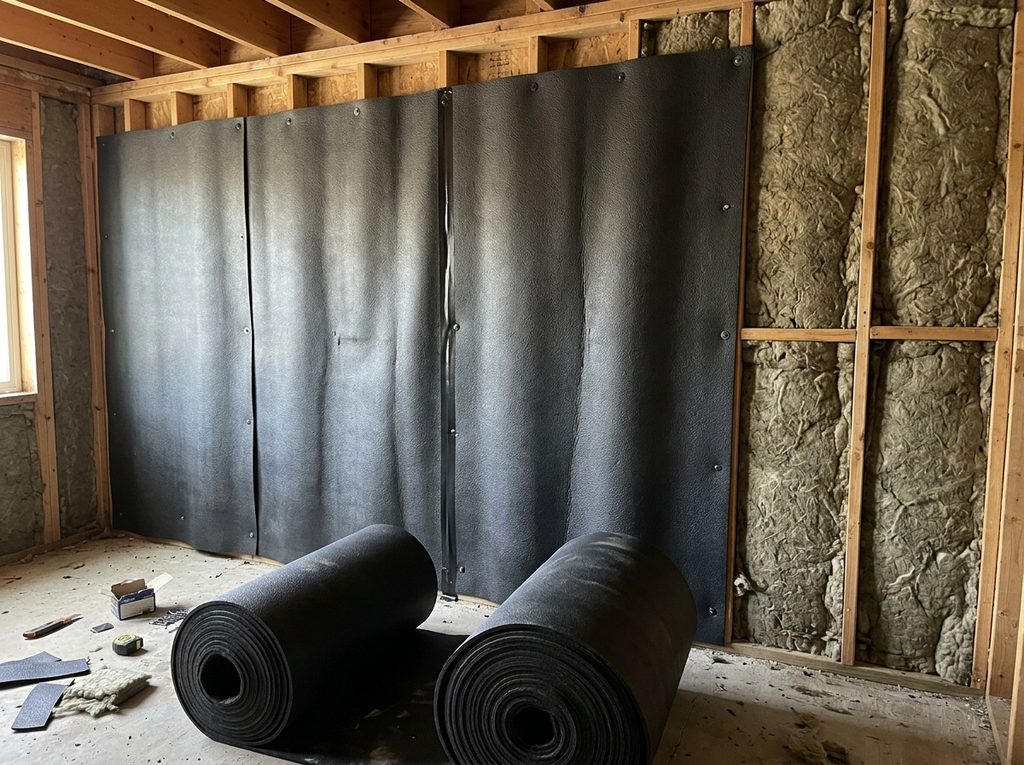
Treat joints, perimeters, and service openings using compatible sealing materials and the specified installation method.
Manufacturer guidance for MLV sound-barrier systems commonly emphasises maintaining the acoustic integrity of the assembly around electrical openings, plumbing, HVAC components, and other penetrations. Refer to the MLV installation specification.
Step 6: Complete the Required Covering Layers
Where the system requires gypsum board or another finishing layer, install it according to the approved construction details.
Take care not to damage the barrier or create unsealed openings during finishing work. Any fire-rated or tested assembly must be constructed in accordance with its applicable requirements.
Step 7: Inspect the Finished Work
Before closing concealed cavities, check that the barrier is supported, the joints are treated correctly, and the penetrations have been detailed.
Where the project specifies acoustic performance targets, appropriate verification or testing may help confirm whether the completed work meets the intended requirements.
MLV Compared with Other Noise-Control Materials
Different materials serve different acoustic purposes. Choosing the correct combination can be more effective than relying on a single product.
| Material | Primary role | Common application |
|---|---|---|
| Mass loaded vinyl | Helps reduce airborne sound transmission | Walls, ceilings, selected floors and enclosures |
| Acoustic foam | Absorbs reflected sound | Studios and rooms with echo |
| PET acoustic panels | Helps control reverberation | Offices, restaurants and meeting rooms |
| Mineral wool | Absorbs sound within suitable cavities | Walls, ceilings and equipment enclosures |
| Resilient channels or isolation clips | Reduces direct mechanical connections | Selected sound-isolation partitions and ceilings |
| Acoustic sealant | Seals gaps | Perimeters, joints and service penetrations |
For example, a wall assembly may use MLV as a barrier, mineral wool in the cavity, resilient components to reduce mechanical coupling, and acoustic sealant around openings. The precise combination should be based on the construction and target performance.
Common MLV Installation Mistakes
Expecting Complete Silence
MLV can contribute to reducing sound transmission, but no single flexible barrier guarantees a silent room. Other sound paths and structural vibration may still need attention.
Leaving Gaps at the Edges
Unsealed joints and penetrations can undermine the continuity of the barrier. Careful detailing is essential.
Ignoring Doors and Windows
A well-treated wall may still allow substantial sound through an unsuitable door, window, or frame. The entire room boundary should be assessed.
Using MLV to Solve Echo
If the primary issue is reverberation inside a room, acoustic absorbers may be more appropriate than a mass barrier alone.
Overlooking Structural Vibration
Machinery, footsteps, and low-frequency noise can travel through structural connections. Resilient isolation or changes to the assembly may be necessary.
Choosing Without Checking Fire and Environmental Requirements
Do not assume that all MLV products have the same fire classification, temperature tolerance, or environmental suitability. Verify documentation for the exact product and application.
Planning an MLV Sound-Insulation Project in Brazzaville
Before selecting a product, define the problem that needs to be solved.
Ask the following questions:
- What is the source of the unwanted noise?
- Is the noise airborne, structure-borne, or a combination of both?
- Through which wall, ceiling, floor, or service route does it travel?
- How much space is available for additional construction layers?
- What fire, structural, environmental, and maintenance requirements apply?
- Is there a tested assembly suitable for the project?
- Will additional sealing, absorption, or vibration isolation be necessary?
For larger commercial, hospitality, or industrial projects, an acoustic assessment can help identify the main transmission paths and avoid unnecessary material costs.
A clear specification should describe the intended assembly, the selected MLV product, installation details, and the performance target. This gives contractors and project teams a more reliable basis for planning the work.
Frequently Asked Questions
1. What is mass loaded vinyl used for?
MLV is a dense, flexible sound barrier used as part of suitable wall, ceiling, floor, and enclosure assemblies to help reduce airborne noise transmission.
2. Can MLV soundproof an entire room?
MLV alone cannot guarantee complete soundproofing. The result depends on the complete building assembly, the quality of the installation, and whether sound can bypass the barrier.
3. Is MLV suitable for existing walls?
It may be suitable for some renovation projects, but the installation method depends on the existing wall and the desired outcome. A specialist should assess whether additional layers, cavity work, or sealing are required.
4. Can MLV be used around machinery?
It may be incorporated into suitable equipment enclosures or barriers. Temperature, ventilation, access, fire safety, and structural vibration must be considered before installation.
5. Does a heavier MLV product always provide better results?
Surface weight influences barrier performance, but the complete assembly determines the practical result. Select a product using relevant technical data and the requirements of the project.
6. Can MLV reduce echo in a room?
MLV is primarily a transmission barrier, not a room sound absorber. Acoustic panels, ceiling absorbers, and other suitable treatments are generally more appropriate for reducing reverberation.
7. Why is sealing important during installation?
Gaps and untreated penetrations allow sound to bypass the barrier. Correct seam and perimeter treatment helps preserve the acoustic integrity of the assembly.
8. What should buyers check before purchasing MLV?
Review surface weight, thickness, product dimensions, tested performance, fire documentation, environmental limitations, installation instructions, and compatibility with the intended construction.
Conclusion
Acoustic mass loaded vinyl can be a valuable component of sound-insulation systems for residential, commercial, hospitality, and industrial projects in Brazzaville, Republic of the Congo.
Its flexible, dense construction makes it suitable for consideration in selected wall, ceiling, floor, and equipment-enclosure assemblies. However, successful noise control depends on selecting the correct product and integrating it into a complete system with appropriate support, sealing, and complementary acoustic measures.
Before choosing MLV, identify the source of the noise, determine how it travels through the building, and review the technical documentation for the proposed product and assembly. A carefully planned approach can help improve sound isolation while avoiding unrealistic expectations about what a single material can achieve.