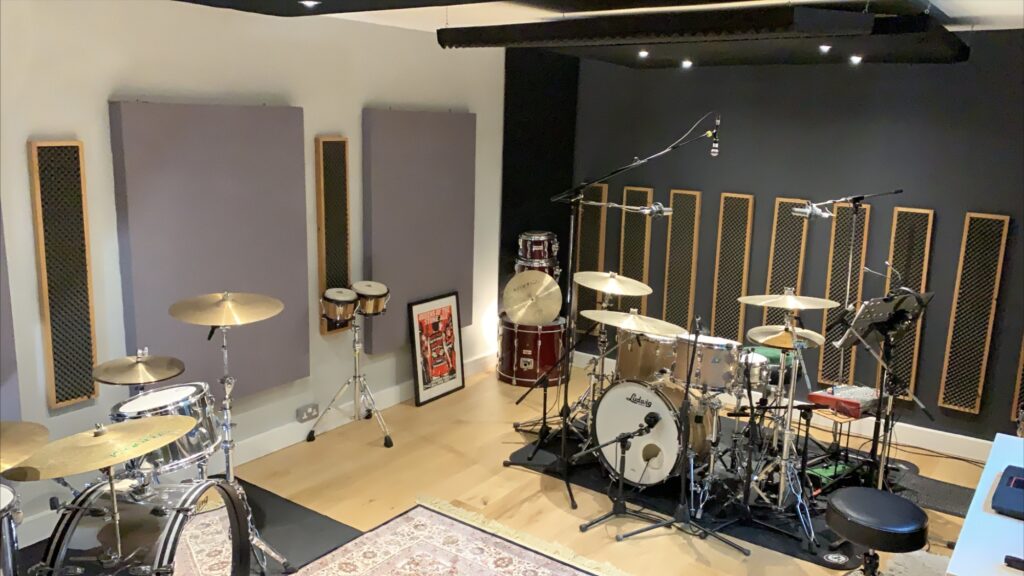
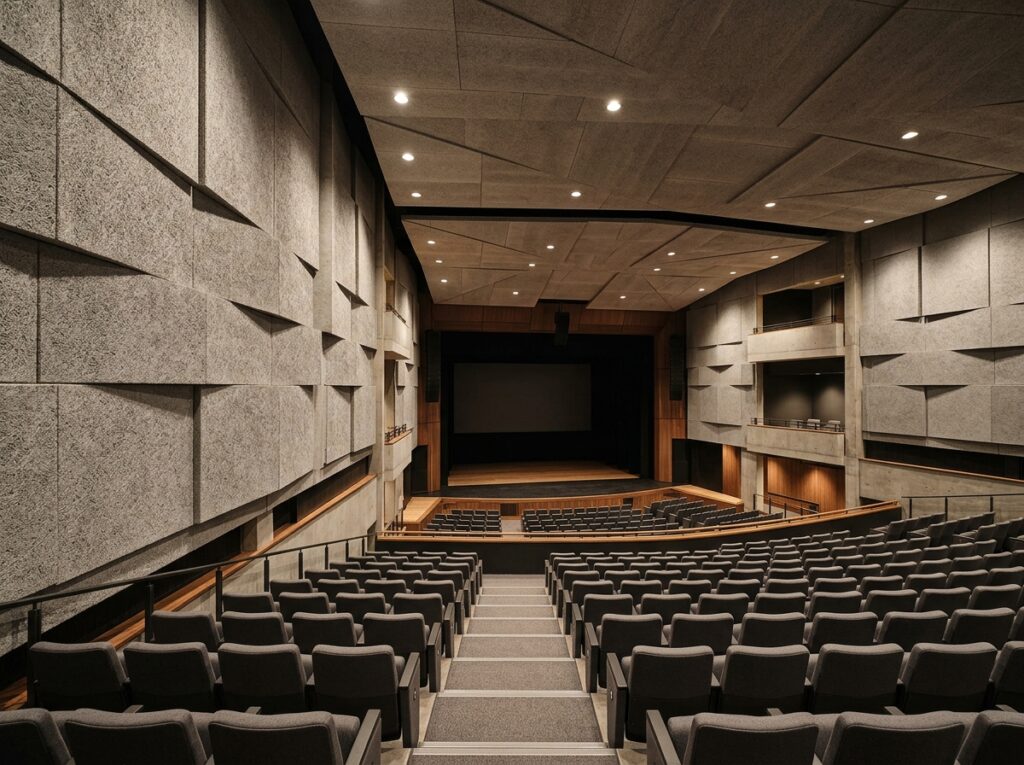
A beautifully designed interior can still feel uncomfortable when sound is allowed to bounce freely around the room.
This is particularly noticeable in modern commercial interiors where glass, concrete, stone, metal, plasterboard, and other hard finishes are used extensively. These materials can create an impressive visual environment, but when too many reflective surfaces are concentrated in one space, conversations may become harder to follow and background noise can become more noticeable.
The solution is not necessarily to make the entire room look “acoustic.”
Instead, acoustic treatment can be integrated directly into the architecture.
Acoustic wood wool panels offer one way of achieving this. These panels are generally manufactured from wood fibres bonded with a mineral or cement-based binder, creating a rigid yet textured surface designed for sound absorption. Cement-bonded wood wool products are used for both wall and ceiling applications.
For Dubai offices, hospitality environments, educational spaces, studios, restaurants, and residential interiors, wood wool can therefore become part of the architectural finish while simultaneously helping control reverberation.
When a Room Looks Right but Sounds Wrong
Consider a newly completed meeting room.
It has:
- A glass conference table
- Large glass partitions
- Hard flooring
- Plastered walls
- A suspended ceiling
- Minimal soft furnishings
Visually, the room may look excellent.
Acoustically, however, speech can reflect from one surface to another.
A speaker’s voice reaches the listener directly, but reflected sound arrives shortly afterward. As reflections accumulate, the room can begin to sound louder and less controlled.
The problem becomes even more obvious when several people are speaking.
Instead of adding random acoustic panels after the interior has been completed, designers can incorporate absorptive surfaces into the original architectural plan.
This is where wood wool becomes interesting.
Wood Wool Is More Than a Decorative Texture
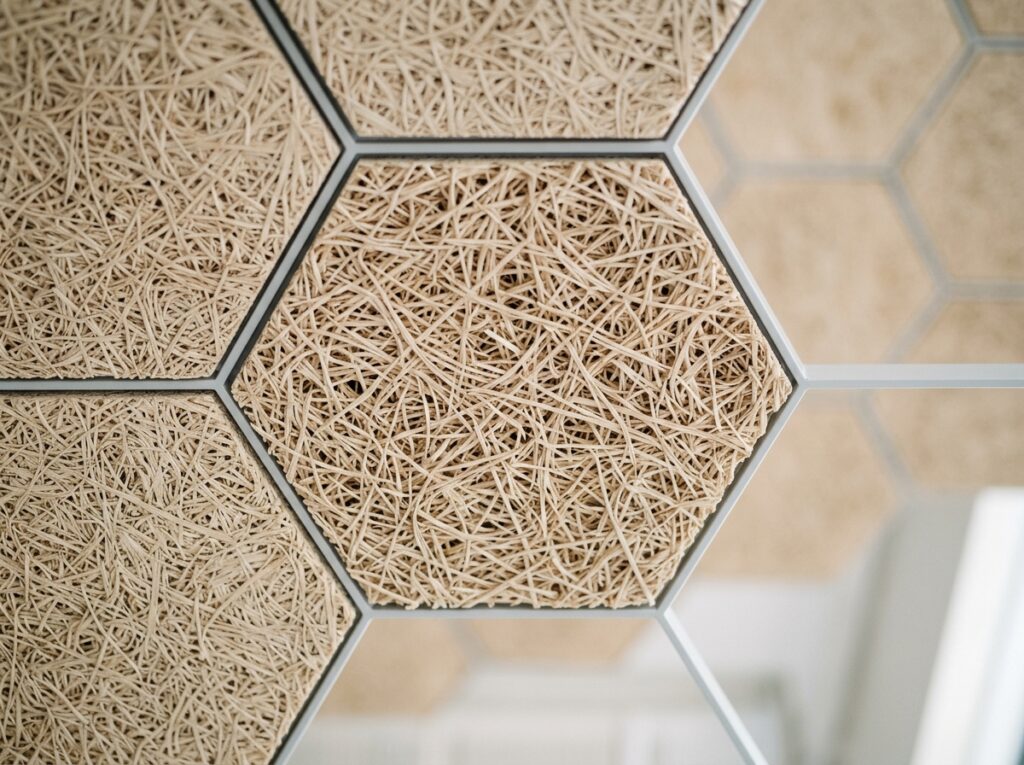
The distinctive appearance of wood wool comes from its visible fibre structure.
But that texture is not merely decorative.
The open, fibrous surface contributes to the way the panel interacts with sound, while the panel construction and installation configuration determine the overall acoustic performance.
Wood wool acoustic products are specifically manufactured as sound-absorbing wall and ceiling systems. Some systems can achieve high sound absorption classifications depending on panel thickness, backing, and mounting arrangement.
This means the same material can play two roles:
Architectural finish + acoustic treatment
That combination makes it useful for projects where acoustic products need to complement the interior rather than compete with it.
The Ceiling Can Become the Main Acoustic Tool
One of the most effective ways to use wood wool is to treat the ceiling as an acoustic surface.
Large ceiling areas offer substantial treatment coverage without consuming valuable wall space.
This is particularly useful in:
- Open-plan offices
- Restaurants
- Classrooms
- Training rooms
- Multipurpose halls
- Reception spaces
- Commercial interiors
Wood wool panels can be installed directly onto suitable battens or incorporated into suspended ceiling systems, depending on the selected product and design.
A suspended configuration can also create an air space behind the panel, and some systems incorporate additional acoustic backing for enhanced absorption.
The ceiling therefore becomes more than a finishing surface.
It becomes part of the room’s acoustic strategy.
Why Open-Plan Offices Benefit From Acoustic Zoning
Open offices create a unique acoustic challenge.
Employees may be:
- Talking to colleagues
- Joining video meetings
- Making telephone calls
- Collaborating in groups
- Working individually
- Moving between different zones
The objective is not necessarily to make the office silent.
The objective is to prevent sound from spreading uncontrolled throughout the entire space.
Wood wool can be incorporated into specific ceiling zones above areas where acoustic control is most important.
For example:
Workstations → acoustic ceiling zone
Meeting area → stronger absorption
Collaboration zone → targeted treatment
Circulation area → lighter treatment
This creates an acoustic zoning strategy instead of treating every square metre identically.
The result can be a more comfortable office without making the ceiling visually monotonous.
Boardrooms Need Speech Clarity
Boardrooms are often filled with reflective materials because they communicate a premium aesthetic.
Glass walls.
Stone tables.
Wood finishes.
Large screens.
Minimal furniture.
These materials can look sophisticated, but they can also contribute to reverberation.
Acoustic wood wool can be integrated into selected ceiling sections or feature walls to introduce absorption.
The objective is not to cover every surface.
Instead, the treatment should be positioned according to the room geometry and the locations where sound reflections are most problematic.
For a boardroom, this can help create a more controlled environment for:
- Presentations
- Negotiations
- Video conferences
- Team discussions
- Client meetings
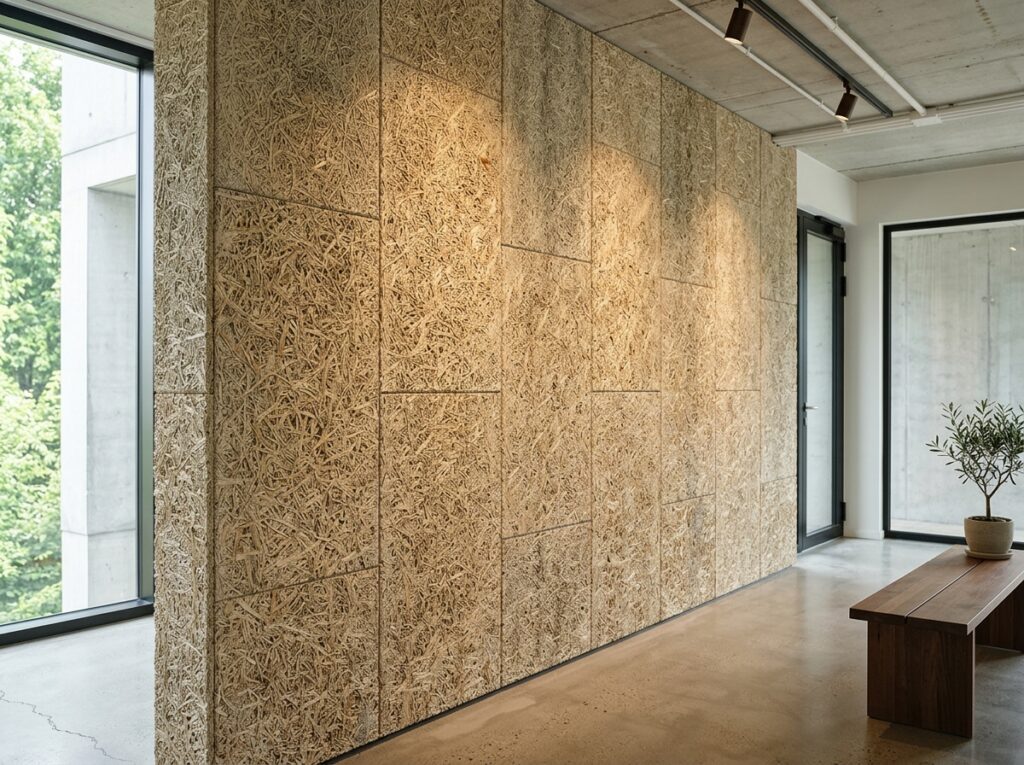
Creating an Acoustic Feature Wall
Acoustic treatment doesn’t have to disappear into the background.
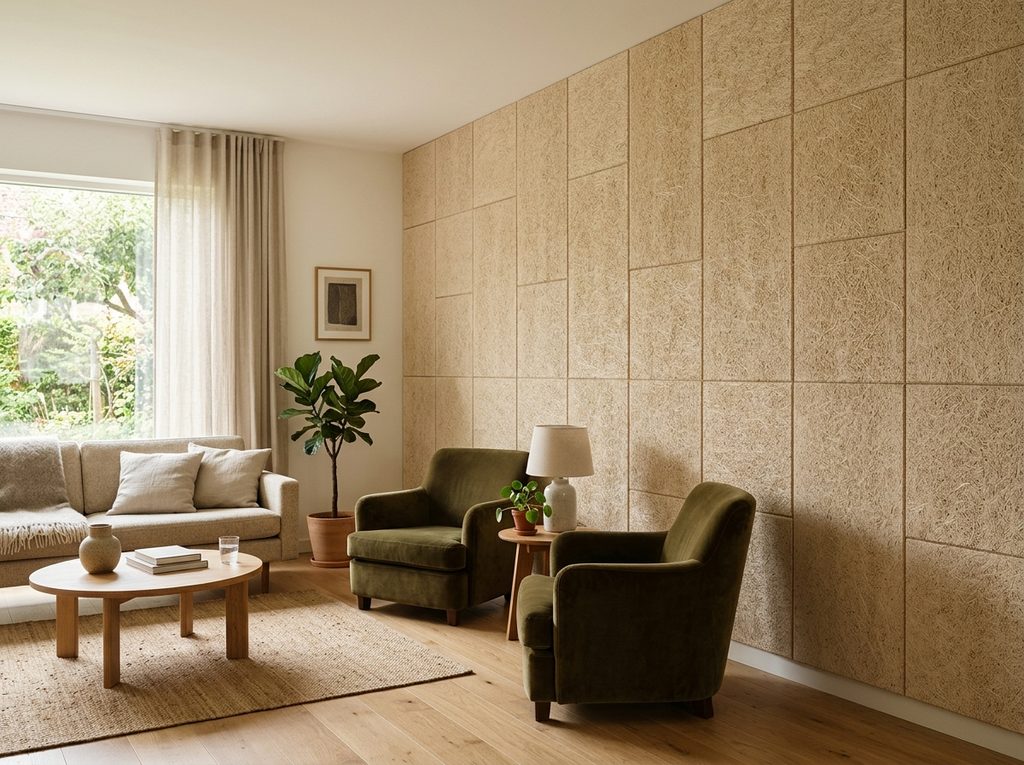
Wood wool’s distinctive texture can actually become a design feature.
A feature wall can use:
- Natural wood tones
- Painted finishes
- Geometric arrangements
- Repeated modules
- Contrasting colours
- Horizontal or vertical layouts
- Integrated lighting
Some wood wool systems are available in multiple colours and surface textures, allowing acoustic treatment to become part of the visual identity of a space.
This is especially useful in reception areas, restaurants, offices, and hospitality interiors where the walls need to contribute to the overall design concept.
Wood Wool Behind the Design
The visible panel is only one part of the acoustic equation.
Installation has a major influence on performance.
The same panel can behave differently depending on:
- Thickness
- Mounting method
- Air cavity
- Backing material
- Ceiling or wall location
- Percentage of surface coverage
- Room dimensions
For example, manufacturer data shows that wood wool acoustic panels can be supplied with mineral wool or acoustic fleece backing to increase acoustic performance.
This is why acoustic design should happen before the panels are ordered.
Simply choosing a panel based on its appearance does not guarantee the required acoustic result.
Restaurants: Controlling the Noise Without Killing the Atmosphere
Restaurants have a difficult acoustic balance.
A completely silent restaurant can feel uncomfortable.
A highly reverberant restaurant can become exhausting.
The ideal environment usually contains enough acoustic control to make conversations comfortable while retaining the natural energy of the space.
Wood wool can be incorporated into:
- Ceiling fields
- Feature walls
- Bar areas
- Dining zones
- Private dining rooms
- Decorative acoustic screens
The treatment can become part of the restaurant’s interior identity instead of appearing as an obvious technical installation.
Hospitality Spaces Need Acoustic Comfort and Visual Quality
Hotels and hospitality interiors place unusual demands on acoustic treatment.
Every visible component contributes to the guest experience.
Acoustic wood wool can be incorporated into selected areas such as:
- Lounges
- Reception areas
- Conference facilities
- Restaurants
- Corridors
- Event spaces
- Guest amenity areas
The material’s textured appearance can provide warmth and visual depth while helping reduce excessive reflections.
Where a more demanding acoustic result is required, systems with additional backing can be considered as part of the overall design.
Educational Spaces: The Importance of Hearing Clearly
Classrooms and training rooms depend heavily on speech.
If sound reflects excessively, students at the back of a room may struggle to understand the teacher.
The teacher may then compensate by speaking louder.
That increases the overall sound level.
The cycle can continue until the room becomes tiring for everyone.
Acoustic wood wool ceiling and wall systems can be used to introduce absorption and help create a more controlled acoustic environment.
Wood wool products are widely used for acoustic wall and ceiling applications in educational and institutional environments.
The important point is that treatment should be designed around the room’s size, occupancy, furniture, finishes, and intended use.
Wood Wool for Multipurpose Spaces
A multipurpose room creates a different challenge.
The room may be used for:
- Lectures
- Workshops
- Presentations
- Events
- Group activities
- Community gatherings
Each activity produces a different acoustic environment.
A ceiling treatment using wood wool can provide broad acoustic coverage without requiring the room to be permanently filled with freestanding acoustic products.
Suspended systems can also provide flexibility for integrating services and maintaining access above the ceiling, depending on the selected system.
Residential Interiors Can Benefit Too
Wood wool is not limited to commercial buildings.
In larger residential interiors, acoustic treatment can be useful in rooms such as:
Home Cinemas
For controlling internal reflections as part of a wider acoustic design.
Music Rooms
For reducing excessive reverberation.
Open Living Areas
Where hard finishes create an overly lively acoustic environment.
Home Offices
For improving speech control during calls and meetings.
Entertainment Rooms
Where multiple people gather and background noise can build up.
The treatment should remain proportional to the room.
A small room does not necessarily require the same acoustic strategy as a large commercial hall.
The Difference Between Absorption and Soundproofing
This distinction should always be made clear.
Acoustic wood wool is primarily an absorption solution.
It helps control reflections and reverberation inside a room.
It should not automatically be considered a soundproofing barrier between rooms.
If the objective is to stop noise from passing through a wall into another room, the construction may require:
- Additional mass
- Decoupling
- Acoustic insulation
- Sealing
- Sound-rated doors
- Acoustic glazing
- Structural isolation
Wood wool can improve the acoustic environment on the room side, but it does not replace a properly designed sound-isolation assembly.
Choosing Between Standard and Enhanced Wood Wool Systems
Different projects require different levels of acoustic performance.
A basic wood wool panel may be appropriate where moderate absorption is needed.
For spaces requiring greater absorption, systems with additional backing can provide stronger acoustic performance.
For example, manufacturer systems are available with mineral wool backing or acoustic fleece, with performance dependent on the complete installation configuration.
This gives designers several options without changing the basic visual language of the space.
Fire Performance Should Be Part of the Specification
Acoustic treatment also needs to satisfy the requirements of the building.
The selected wood wool system should be checked against the project’s fire-performance requirements rather than assuming every panel has identical characteristics.
For example, some cement-bonded wood wool products are tested and classified under EN 13501, while specific non-combustible versions are available for applications with stricter fire requirements.
For a Dubai project, the final specification should therefore be coordinated with the applicable project requirements, consultant specifications, and authority requirements.
A Better Way to Plan Wood Wool Treatment
Instead of starting with:
“How many panels do we need?”
A better acoustic design process starts with:
“What is happening with sound inside this room?”
Then consider:
Room Function
What will people actually do inside the space?
Room Geometry
Where are the major reflective surfaces?
Existing Materials
How much glass, concrete, stone, plaster, and other hard finishes are already present?
Occupancy
How many people will normally use the room?
Reverberation
Does the room sound excessively lively or echoing?
Treatment Coverage
Which surfaces provide the greatest opportunity for useful absorption?
Installation
Should the panels be fixed directly, mounted on battens, or installed within a suspended system?
Aesthetic Direction
Should the acoustic treatment blend into the architecture or become a feature?
This turns wood wool from a product purchase into a properly planned acoustic solution.
Designing Wood Wool Around Dubai Interiors
Dubai projects often combine contemporary architectural materials with demanding interior finishes.
A typical modern space may contain several of the following:
- Floor-to-ceiling glazing
- Marble or stone
- Decorative metal
- Plasterboard
- Timber
- Concrete
- Large open ceilings
Acoustic wood wool can introduce a textured absorptive element into this mix.
The objective is not to remove the architectural character.
It is to balance it.
A well-designed acoustic ceiling can remain visually strong while quietly improving the room’s acoustic behaviour.
Professional Acoustic Wood Wool Installation in Dubai
For a successful result, the installation should be treated as an acoustic project rather than simply a panel installation.
A professional service can include:
- Site inspection
- Acoustic consultation
- Room assessment
- Treatment planning
- Product and thickness selection
- Wall and ceiling design
- Acoustic backing selection
- Profile or batten planning
- Installation
- Finishing
- Integration with lighting and other services
This is particularly important when wood wool is being used across large commercial spaces.
The more complex the architecture, the more important the coordination becomes.
From Ceiling Panels to Complete Acoustic Design
The strongest wood wool projects do not simply place panels wherever there is empty space.
They create a relationship between:
Architecture + acoustics + lighting + furniture + room function
A ceiling grid can align with lighting.
A feature wall can reinforce a brand identity.
Panel lines can follow architectural geometry.
Different acoustic zones can correspond with different activities.
In this way, the acoustic treatment becomes part of the design rather than an addition made after the interior is complete.
Frequently Asked Questions
What is acoustic wood wool?
Acoustic wood wool is a fibrous wood-based panel material bonded with a mineral or cement-based binder and manufactured for applications including sound-absorbing walls and ceilings.
Does wood wool absorb sound?
Yes. Wood wool acoustic panels are designed to provide sound absorption, with performance depending on the panel and its installation configuration. Some systems can achieve high absorption classifications.
Can wood wool be installed on ceilings?
Yes. Wood wool acoustic panels are commonly used for ceiling applications and can be installed directly or within suitable suspended systems depending on the product.
Can it be used on walls?
Yes. Cement-bonded wood wool panels are also manufactured for acoustic wall cladding.
Does wood wool soundproof a room?
Not by itself. Wood wool is primarily an acoustic absorption material. Soundproofing between spaces requires a properly designed sound-isolation construction.
Can wood wool panels have acoustic backing?
Yes. Certain systems combine the wood wool panel with acoustic fleece or mineral wool backing for enhanced absorption.
Is acoustic wood wool suitable for offices?
Yes. Wood wool acoustic panels are used in office environments and can be incorporated into walls and ceilings.
Can wood wool become part of the interior design?
Absolutely. The visible texture, colours, panel arrangement, and installation pattern can all be incorporated into the architectural concept.
Give the Room a Better Acoustic Character
Good acoustic design does not necessarily mean hiding the architecture.
Sometimes the better approach is to introduce a material that contributes to both the appearance and acoustic behaviour of the space.
Acoustic wood wool offers that possibility.
Its textured surface can become a feature. Its installation can cover large wall or ceiling areas. Its acoustic performance can be enhanced through appropriate backing and mounting configurations. And its appearance can be integrated into offices, hospitality spaces, restaurants, educational environments, studios, and residential interiors.
For projects in Dubai, the most effective results come from treating wood wool as part of a complete acoustic design—not simply purchasing panels and fixing them wherever space is available.
If your space suffers from excessive reverberation, poor speech clarity, or an overly reflective interior, a professional acoustic assessment can determine where wood wool treatment can make the greatest difference.
The goal is not to add more panels. The goal is to create a room that sounds as considered as it looks.