Modern buildings in Muscat increasingly combine spacious layouts with materials such as stone, glass, concrete, ceramic surfaces, and decorative finishes. These materials can create elegant interiors, but they can also produce strong sound reflections that affect how comfortable a room feels.
In offices, hotels, restaurants, educational facilities, conference rooms, and residential properties, excessive reverberation can make conversations less distinct and create a constant sense of background noise.
Acoustic wood wool solutions provide a way to introduce sound absorption while maintaining a warm, textured architectural appearance. With professional planning and installation, wood wool can become part of the interior design while addressing specific acoustic requirements.
For projects in Muscat, Oman, wood wool acoustic treatment can be adapted to different room sizes, architectural styles, and usage requirements.
What Makes Wood Wool an Acoustic Material?
Wood wool acoustic panels are produced from fine wood fibres formed into rigid panels with a porous structure.
When sound reaches a conventional hard surface, much of its energy is reflected back into the room. The textured structure of wood wool provides an absorbent surface that can capture part of this reflected acoustic energy.
This makes wood wool suitable for helping manage:
- Reverberation
- Echo
- Reflected speech
- Excessive sound buildup
- Poor room acoustics
The final result depends on the panel specification, installation method, room characteristics, and amount of acoustic coverage.
Why Acoustic Comfort Matters in Modern Buildings
Visual design is only one part of a successful interior.
A beautifully designed restaurant can still be uncomfortable if conversations become difficult to hear. An impressive conference room can still perform poorly if presentations are affected by excessive reverberation.
Hard architectural finishes can make these problems more noticeable.
Wood wool treatment introduces additional sound absorption into selected areas, helping create a better balance between reflective and absorbent surfaces.
Key Benefits of Acoustic Wood Wool
Distinctive Natural Texture
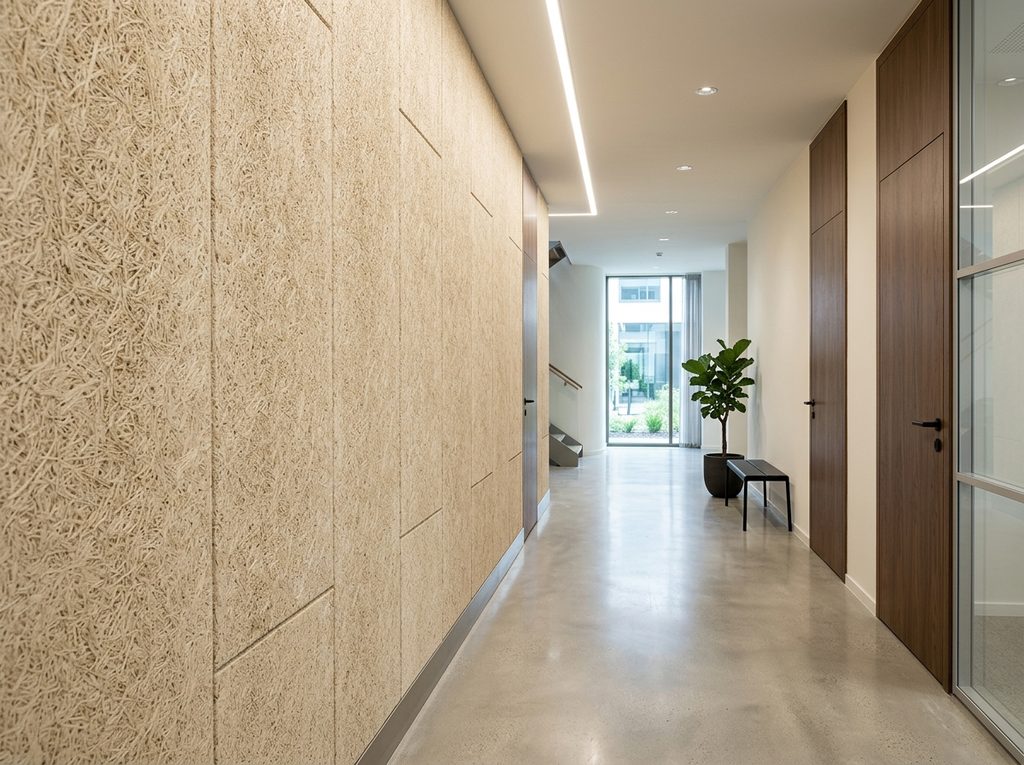
The visible wood fibres provide a textured finish that can add warmth to contemporary interiors.
Sound Absorption
The porous structure helps absorb reflected sound and can reduce excessive reverberation.
Architectural Versatility
Wood wool panels can be incorporated into walls, ceilings, feature areas, and other suitable surfaces.
Suitable for Commercial Spaces
Their rigid construction makes them suitable for offices, hospitality venues, educational buildings, and other busy interiors when correctly specified.
Design Integration
Panels can become part of the architectural concept rather than being treated as purely functional acoustic equipment.
Acoustic Wood Wool for Muscat Offices
Modern workplaces can contain large open areas, glass meeting rooms, hard flooring, and minimal furnishings.
These characteristics can make it difficult to control sound.
Wood wool treatment can be planned for:
- Open-plan offices
- Meeting rooms
- Boardrooms
- Reception areas
- Training rooms
- Collaboration spaces
- Breakout areas
Strategically positioned treatment can help reduce reflected sound and improve acoustic comfort without changing the overall function of the office.
Hospitality Applications in Muscat
Muscat’s hospitality environment includes hotels, restaurants, lounges, conference facilities, and other guest-focused spaces.
These interiors often place significant emphasis on appearance.
Wood wool can provide acoustic treatment while maintaining a natural architectural aesthetic.
Hotel Lobbies
Large open lobbies can have substantial reflective surfaces. Wood wool installations can introduce additional absorption while becoming a decorative feature.
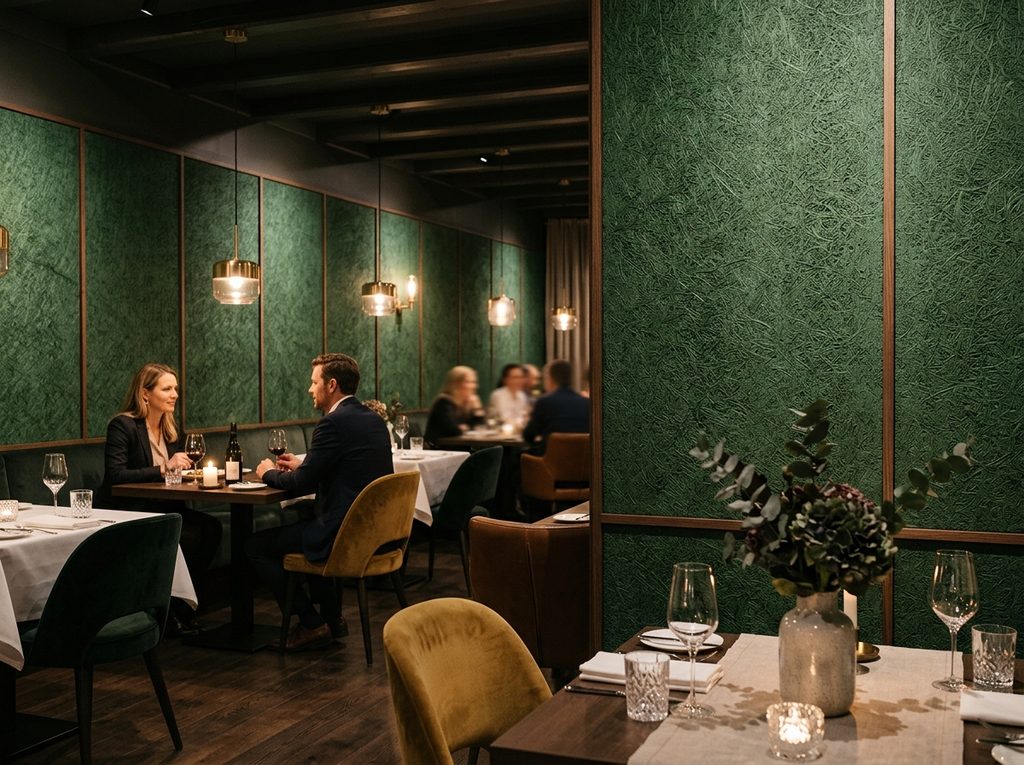
Restaurants
Wood wool can be incorporated into walls or ceilings to help control reverberation generated by conversations, music, and general activity.
Conference Facilities
Meeting and event rooms can benefit from controlled acoustics to support presentations and conversations.
Wood Wool for Restaurants and Cafés
Restaurants can become acoustically challenging when they are busy.
The combined sound of customers, staff, music, kitchen activity, and furniture can create a high level of reflected noise.
Acoustic wood wool can be integrated into the restaurant’s interior design through:
- Feature walls
- Ceiling sections
- Decorative panels
- Seating-area treatments
- Architectural partitions
The objective is to reduce excessive reverberation while preserving the restaurant’s visual identity.
Educational and Training Environments
Clear communication is important in classrooms and training spaces.
If a room has excessive reverberation, the voice of a teacher or presenter may become less distinct.
Wood wool acoustic treatment can help absorb some of the reflected sound and create a more controlled listening environment.
Possible applications include:
- Classrooms
- Lecture rooms
- Training centres
- Libraries
- Seminar rooms
- Study areas
The appropriate treatment level should be determined according to room size, occupancy, finishes, and intended use.
Residential Acoustic Applications
Wood wool acoustic panels can also be incorporated into residential spaces.
Potential applications include:
Home Offices
Acoustic treatment can help create a more controlled environment for calls and focused work.
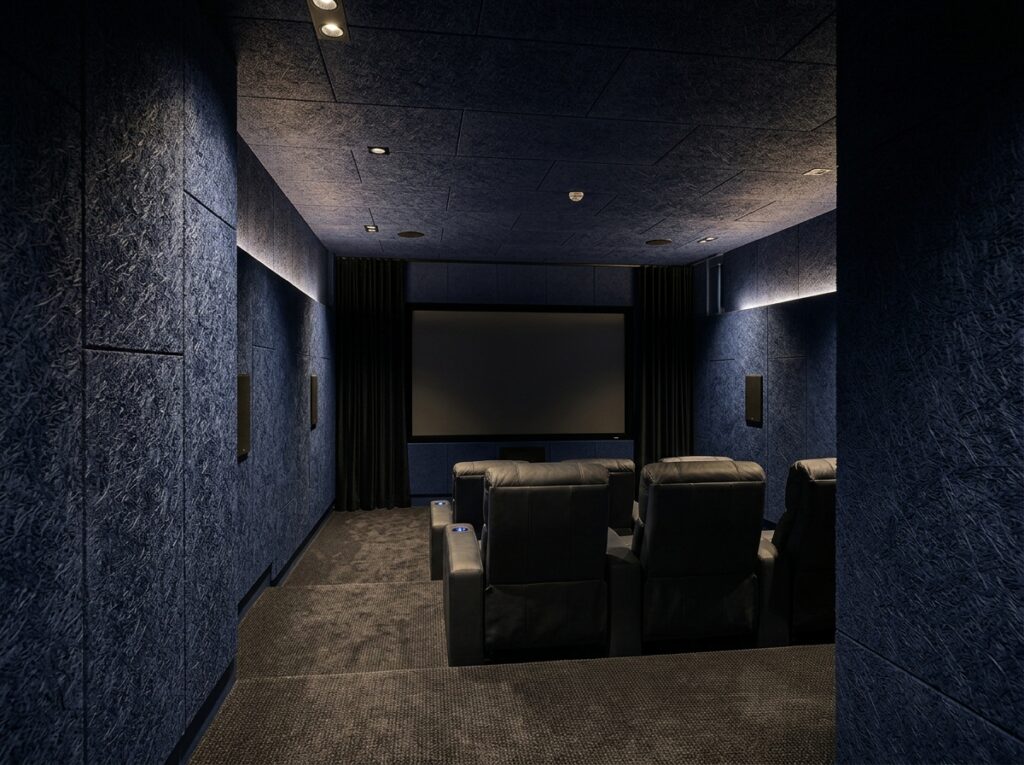
Media Rooms
Wood wool can help manage internal reflections generated by televisions, speakers, and other entertainment equipment.
Living Rooms
Large open living areas with hard floors and walls may benefit from additional sound absorption.
Private Entertainment Spaces
Rooms used for music, gaming, or gatherings can require greater control over reflected sound.
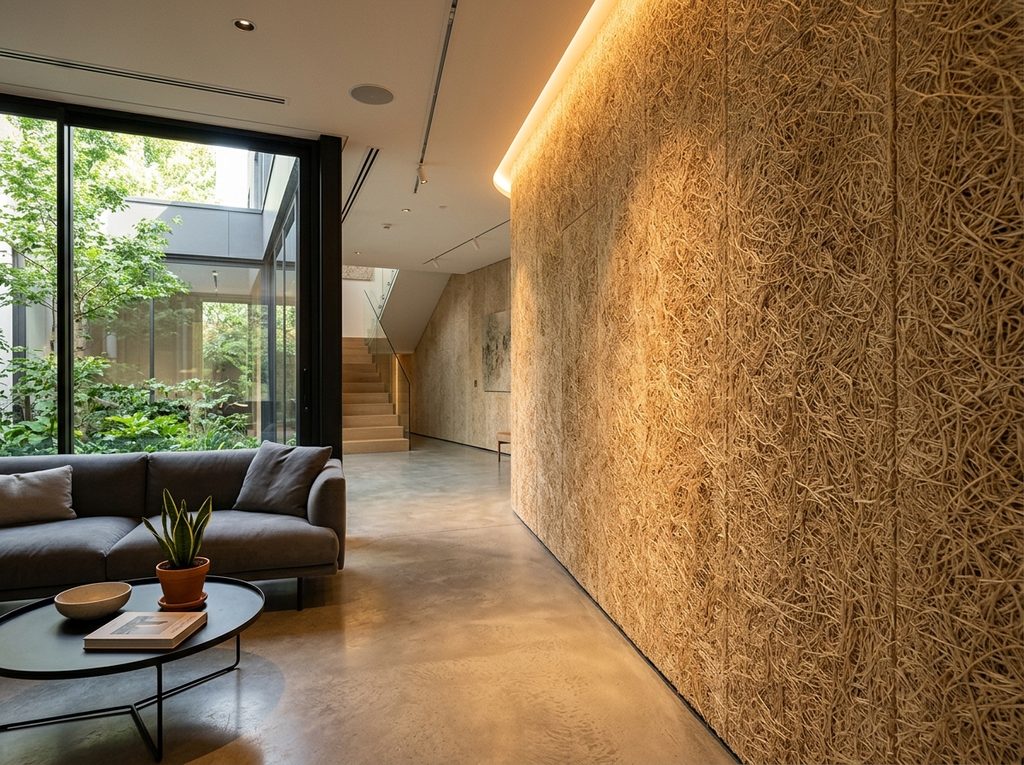
Designing Wood Wool Feature Walls
Acoustic treatment does not have to be visually hidden.
Wood wool’s textured appearance allows designers to make it part of the room’s identity.
A feature wall can be positioned:
- Behind reception desks
- Behind television screens
- Behind conference tables
- Along restaurant seating areas
- Within office collaboration zones
The panel layout can be coordinated with lighting, furniture, branding, and surrounding finishes.
Ceiling Applications
Large ceilings can become significant reflective surfaces, particularly in rooms with high ceilings.
Wood wool acoustic systems can be incorporated into suitable ceiling designs to provide additional sound absorption.
Ceiling treatment can be particularly useful where wall space is limited by:
- Windows
- Doors
- Displays
- Furniture
- Artwork
- Glass partitions
A combination of wall and ceiling treatment can provide broader acoustic coverage when required.
Choosing the Appropriate Wood Wool System
The most suitable acoustic system depends on the characteristics of the space.
Panel Thickness
Different thicknesses can provide different acoustic performance characteristics.
Surface Coverage
The amount of installed material affects the overall level of sound absorption.
Wall or Ceiling Installation
The intended installation location should be considered when selecting the appropriate system.
Colour and Finish
The visual finish should complement the interior rather than conflict with surrounding architectural materials.
Room Function
A restaurant, classroom, office, conference room, and residential media space can all have different acoustic requirements.
Acoustic Treatment Is Not the Same as Soundproofing
Wood wool panels primarily address sound inside the room.
They can help absorb reflected sound and reduce reverberation, but they do not by themselves provide complete sound isolation between rooms.
If the objective is to stop noise travelling through a wall, ceiling, floor, door, or window, additional soundproofing measures may be necessary.
A sound isolation system could incorporate materials such as:
- Mass Loaded Vinyl
- Acoustic insulation
- Multiple board layers
- Resilient channels
- Acoustic sealants
- Soundproof doors
- Acoustic glazing
The correct combination depends on the source and transmission path of the noise.
Why Professional Acoustic Planning Is Important
Acoustic materials are most effective when they are installed according to the requirements of the space.
Simply adding panels to a random wall may not address the most significant reflection paths.
A professional acoustic assessment can consider:
Room dimensions + Surface finishes + Occupancy + Noise sources + Existing acoustic materials
This information can then be used to develop an appropriate treatment strategy.
Maintaining Wood Wool Acoustic Panels
Wood wool systems generally require simple routine maintenance.
Basic care may include:
- Dusting with a soft brush.
- Using a suitable vacuum attachment.
- Removing marks carefully.
- Avoiding excessive moisture.
- Avoiding abrasive cleaning chemicals.
- Checking panels periodically for damage.
The manufacturer’s recommended cleaning procedure should always be followed.
Frequently Asked Questions
Are wood wool panels effective for echo reduction?
Yes. Their porous structure can absorb reflected sound and help reduce excessive reverberation.
Can wood wool be used in offices?
Yes. It can be incorporated into meeting rooms, open workspaces, reception areas, and collaboration zones.
Can these panels be installed on ceilings?
Yes. Suitable wood wool systems can be designed for ceiling applications using the appropriate mounting method.
Can wood wool be used in restaurants?
Yes. It can help manage reverberation while providing a distinctive architectural finish.
Does wood wool completely block outside noise?
No. Wood wool is primarily a sound-absorbing treatment. Dedicated soundproofing construction is required for significant sound isolation.
Professional Acoustic Wood Wool Services in Muscat
Every project has different acoustic challenges. A restaurant, hotel lobby, office, classroom, and residential room cannot necessarily use the same acoustic treatment strategy.
Professional acoustic services can include:
- Acoustic assessment
- Acoustic consultation
- Room acoustic planning
- Wood wool system selection
- Wall treatment
- Ceiling treatment
- Decorative acoustic design
- Installation
- Complete acoustic solutions
The focus should be on developing a treatment strategy around the actual requirements of the space.
Conclusion
Acoustic wood wool provides a combination of sound absorption, natural texture, and architectural flexibility. It can help reduce unwanted reflections and reverberation while becoming an attractive part of a modern interior.
For offices, hotels, restaurants, educational facilities, conference rooms, and residential properties in Muscat, professionally planned wood wool acoustic treatment can contribute to clearer communication and a more comfortable indoor environment.
With appropriate assessment, design, material selection, and installation, wood wool can be integrated into walls and ceilings as a functional architectural element rather than simply being added as a conventional acoustic panel.