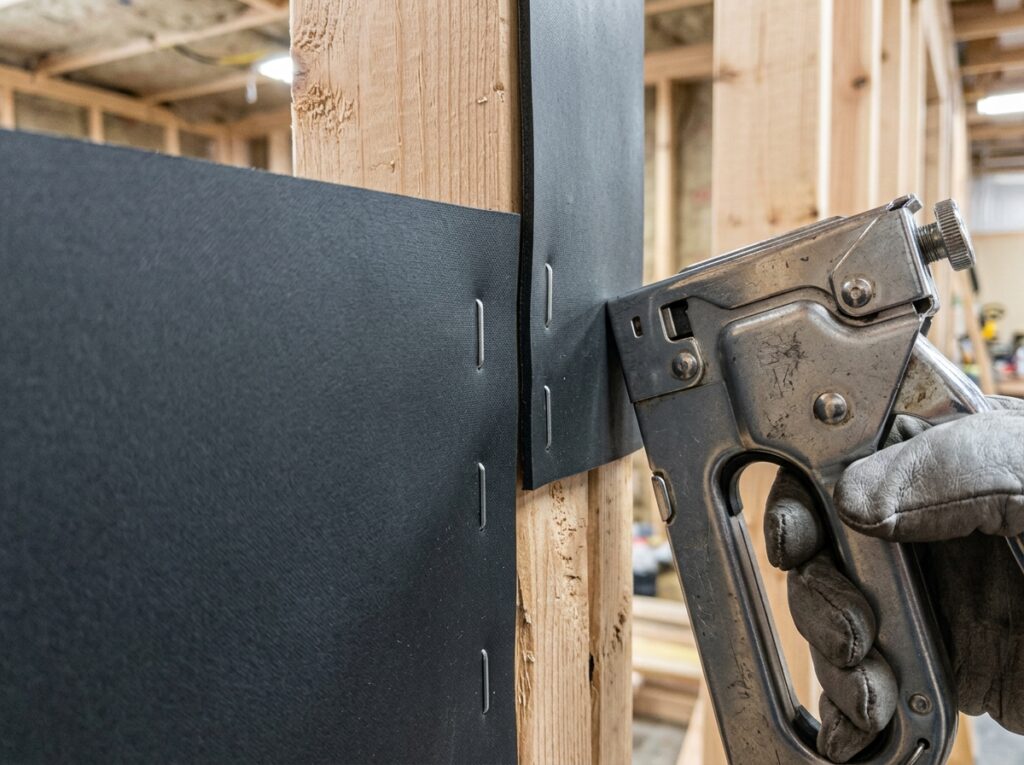
Noise control has become an important consideration in modern buildings, particularly where residential, commercial, hospitality, and entertainment spaces exist close to one another. Unwanted sound can travel through walls, ceilings, floors, doors, and partitions, affecting privacy and comfort. Mass Loaded Vinyl (MLV) is a dense, flexible soundproofing membrane designed to add mass to building assemblies without requiring the thickness associated with some traditional barriers. Its adaptable format allows it to be incorporated into walls, floors, ceilings, partitions, doors, and equipment enclosures.
For projects in Abu Dhabi, UAE, MLV can be an important component of sound isolation systems where controlling airborne noise is a priority.
What Is Mass Loaded Vinyl?
Mass Loaded Vinyl is a high-density, flexible membrane specifically engineered for sound isolation applications.
Its main function is based on the mass principle of soundproofing. When additional mass is incorporated into a building assembly, it becomes more difficult for airborne sound energy to make that barrier vibrate.
Unlike decorative acoustic panels, which are primarily designed to absorb sound inside a room, MLV is generally incorporated into the construction assembly to help limit sound transmission.
How Does MLV Work?
When sound reaches a lightweight wall or partition, the structure can vibrate and transfer some of that acoustic energy to the other side.
Adding a dense MLV layer increases the overall mass of the assembly.
The basic concept is:
More mass → Less vibration → Reduced airborne sound transmission
MLV can therefore be used as part of multilayer wall, ceiling, floor, and partition systems.
Its flexibility also allows it to follow the contours of surfaces and fit into areas where rigid sound barriers may be difficult to install.
Main Advantages of Mass Loaded Vinyl
High Density in a Flexible Format
MLV provides substantial mass while remaining flexible enough to be rolled, cut, and installed in different configurations.
Space-Efficient Soundproofing
Its relatively thin profile can provide additional mass without requiring extremely thick structural barriers.
Versatile Applications
The material can be incorporated into:
- Walls
- Ceilings
- Floors
- Doors
- Partitions
- Machinery enclosures
- Ductwork systems
Works With Other Materials
MLV can be combined with acoustic insulation, drywall, resilient systems, and other soundproofing components to create multilayer assemblies.
Suitable for Renovation Projects
Because it can be incorporated into existing construction systems, MLV can be useful when upgrading the acoustic performance of an existing room.
MLV for Residential Soundproofing
Noise between neighbouring rooms or properties can become a significant issue in apartments and homes.
MLV can be incorporated into suitable wall and ceiling assemblies to help reduce airborne sound transmission.
Potential applications include:
Shared Apartment Walls
Adding MLV to a properly designed separating wall can increase the assembly’s mass and help reduce airborne noise transfer.
Bedrooms
Where privacy is important, MLV can form part of a sound isolation system around bedrooms.
Home Offices
Conversations, calls, and equipment noise can travel between rooms. A properly designed soundproofing assembly incorporating MLV can help improve separation.
Home Theatres
Entertainment systems can produce substantial airborne sound. MLV can be incorporated into walls and ceilings as part of a sound isolation system.
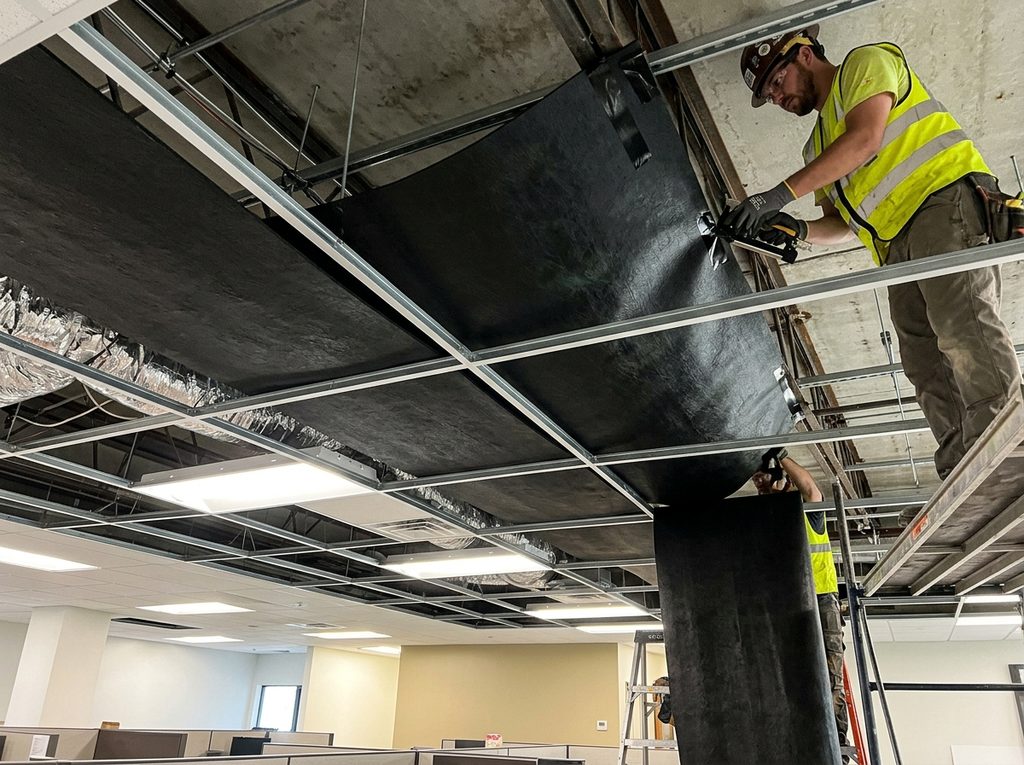
Commercial Applications
Commercial properties often contain rooms with different acoustic requirements.
MLV can be incorporated into partitions separating:
- Meeting rooms
- Boardrooms
- Private offices
- Conference rooms
- Training rooms
- Reception areas
For hotels, it can also be incorporated into wall and floor assemblies where limiting sound transfer between guest spaces is important.
Entertainment venues, restaurants, and commercial facilities may also require additional sound isolation to reduce noise travelling into adjacent areas.
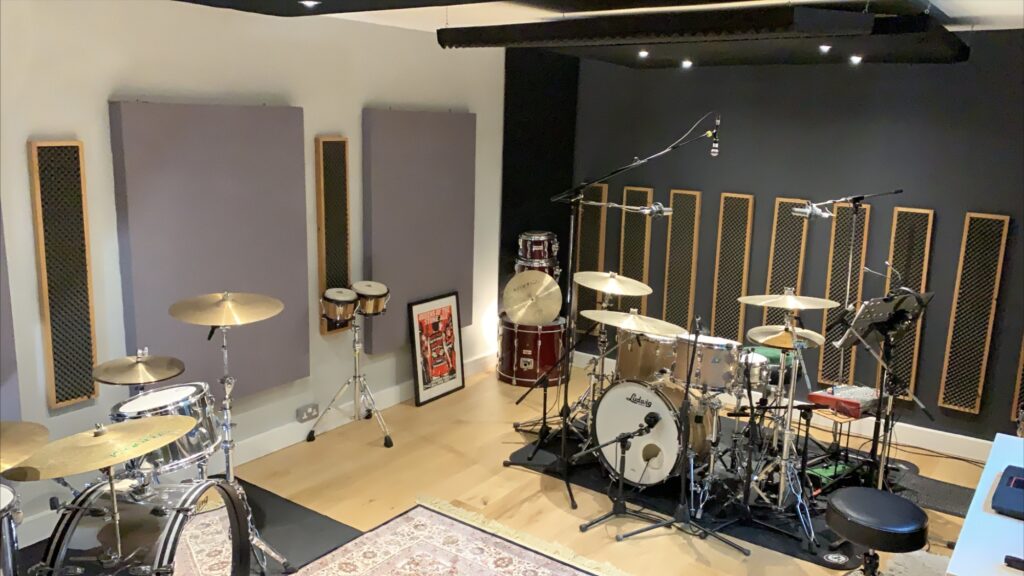
MLV for Studios and Music Rooms
Recording studios and music spaces require careful control of sound transmission.
Music, instruments, speakers, and vocals can generate significant airborne sound that may disturb neighbouring spaces.
MLV can become one component of a studio isolation system.
A more comprehensive construction may combine:
MLV + Acoustic Insulation + Resilient Construction + Multiple Board Layers + Acoustic Sealant
Each element performs a different function within the overall system.
MLV contributes mass, while insulation helps manage sound within cavities and resilient components can reduce structural vibration paths.
MLV in Mechanical and Industrial Areas
Mechanical equipment can generate continuous airborne noise that travels through surrounding structures.
Generators, compressors, pumps, HVAC equipment, and other machinery may require specially designed acoustic enclosures or barriers.
MLV can be incorporated into appropriate:
- Equipment enclosures
- Mechanical room partitions
- Acoustic barriers
- Wall systems
- Ceiling assemblies
- Ductwork treatments
However, industrial noise control often requires consideration of both airborne and structure-borne noise.
MLV Applications in Abu Dhabi
Abu Dhabi contains a wide range of residential towers, commercial properties, hotels, offices, entertainment venues, and industrial facilities.
Different environments create different noise-control requirements.
An apartment may need improved separation from neighbouring units, while a conference facility may require greater privacy between meeting rooms.
MLV’s flexible format allows it to be incorporated into various construction assemblies according to the specific sound isolation objective.
It can be especially useful for renovation projects where available wall or ceiling space is limited.
MLV for Floors and Ceilings
Sound can travel through more than just walls.
Noise can also move between floors through ceiling and floor assemblies.
MLV can be incorporated into appropriate floor systems to add mass and help reduce airborne sound transmission.
In ceiling assemblies, it can contribute to separation between rooms or building levels.
However, impact noise and vibration require additional considerations. Footsteps, dropped objects, and structural vibration may require resilient underlayments or other specialised acoustic solutions rather than MLV alone.
Choosing the Correct MLV
Several factors should be considered before selecting an MLV product.
Density
Different products can have different densities and weights. The appropriate specification should match the requirements of the soundproofing assembly.
Thickness
MLV is available in different thicknesses, which can influence its weight and acoustic characteristics.
Available Space
Projects with limited wall depth may benefit from the material’s relatively thin construction.
Noise Type
Determine whether the primary problem involves:
- Airborne noise
- Impact noise
- Structure-borne vibration
- Equipment noise
MLV is mainly used to address airborne sound transmission and should be combined with other materials when necessary.
Installation Area
The membrane specification should be suitable for the intended wall, floor, ceiling, door, or enclosure application.
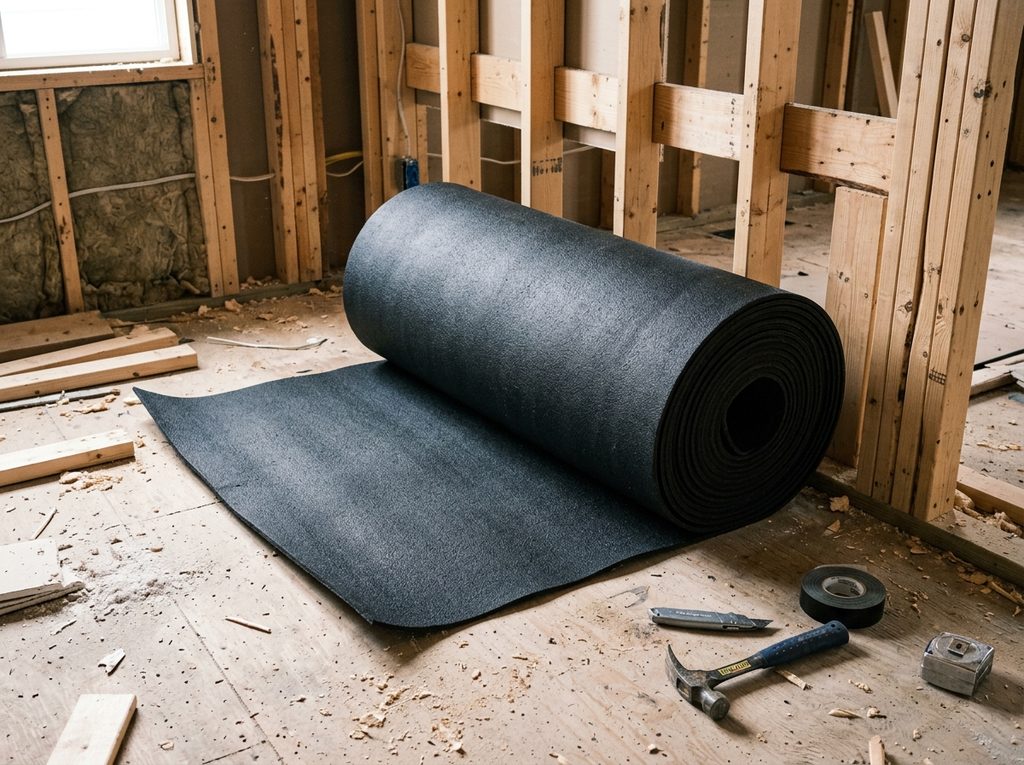
Why Installation Quality Matters
Soundproofing performance can be significantly affected by small gaps and weak points.
Even when high-density MLV is installed, sound may find alternative paths through:
- Electrical outlets
- Pipe penetrations
- Ventilation openings
- Door gaps
- Wall joints
- Ceiling connections
For this reason, proper installation should focus on creating a continuous and well-sealed sound isolation assembly.
MLV should be integrated correctly with the surrounding construction rather than simply placed on a surface without considering sound leakage paths.
MLV Compared With Acoustic Panels
MLV and acoustic panels solve different problems.
MLV:
Primarily helps reduce sound transmission through walls, ceilings, floors, and other assemblies.
PET or fabric acoustic panels:
Primarily absorb sound reflections within the room.
Wood slatted acoustic panels:
Combine decorative surfaces with sound absorption.
For example, a conference room may use MLV within the wall construction to improve privacy while using acoustic panels inside the room to reduce echo.
Maintenance and Handling
MLV is generally protected within a wall, ceiling, floor, or other construction assembly after installation, so routine maintenance is usually minimal.
During installation:
- Store rolls in suitable conditions.
- Avoid unnecessary damage to the membrane.
- Handle the material carefully.
- Protect edges and seams.
- Ensure penetrations are properly treated.
- Follow the manufacturer’s installation recommendations.
Correct installation is more important to long-term performance than routine maintenance after the membrane has been enclosed within the assembly.
Frequently Asked Questions
Is Mass Loaded Vinyl good for soundproofing?
Yes. MLV is specifically designed to add mass to construction assemblies and help reduce airborne sound transmission.
Can MLV be installed inside walls?
Yes. It can be incorporated between suitable layers of wall construction.
Can MLV be used in ceilings?
Yes. It can form part of ceiling assemblies designed to improve sound isolation.
Does MLV stop all noise?
No. MLV is one component of a soundproofing system. Doors, windows, joints, ventilation openings, structural connections, and other sound paths also need to be addressed.
Is MLV the same as an acoustic panel?
No. MLV primarily helps with sound isolation, while acoustic panels are generally used to absorb sound and control reverberation within a room.
Conclusion
Mass Loaded Vinyl provides a flexible and space-efficient method of adding sound-blocking mass to building assemblies. Its ability to be incorporated into walls, ceilings, floors, partitions, doors, and equipment enclosures makes it a versatile material for a wide range of sound isolation projects.
For residential, commercial, hospitality, studio, and industrial applications in Abu Dhabi and across the UAE, MLV can play an important role in reducing airborne sound transmission when incorporated into a properly designed system.
When combined with acoustic insulation, resilient construction, suitable board layers, and effective sealing, Mass Loaded Vinyl can contribute to quieter rooms, improved privacy, and better overall acoustic performance.