Contemporary architecture across Qatar increasingly focuses on creating interiors that are visually sophisticated, functional, and comfortable. Offices, hotels, restaurants, conference facilities, educational buildings, and luxury residences often feature expansive glass, stone, concrete, and other hard surfaces.
While these materials contribute to a modern appearance, they can also create unwanted sound reflections. Conversations may become harder to follow, background noise can accumulate, and large spaces may develop noticeable echo.
Acoustic wood slatted panels offer a practical way to address these challenges while introducing warmth, texture, and architectural character to interior spaces.
For projects in Doha and across Qatar, these panels can provide a combination of decorative design and sound absorption suitable for a wide range of modern environments.
What Are Acoustic Wood Slatted Panels?
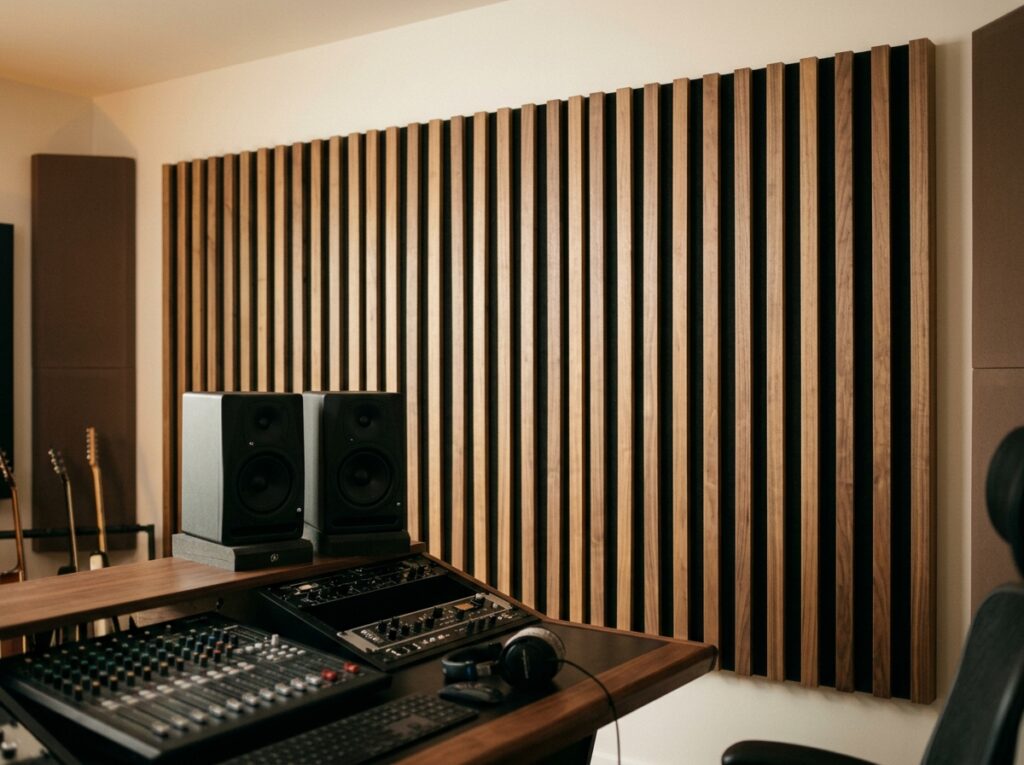
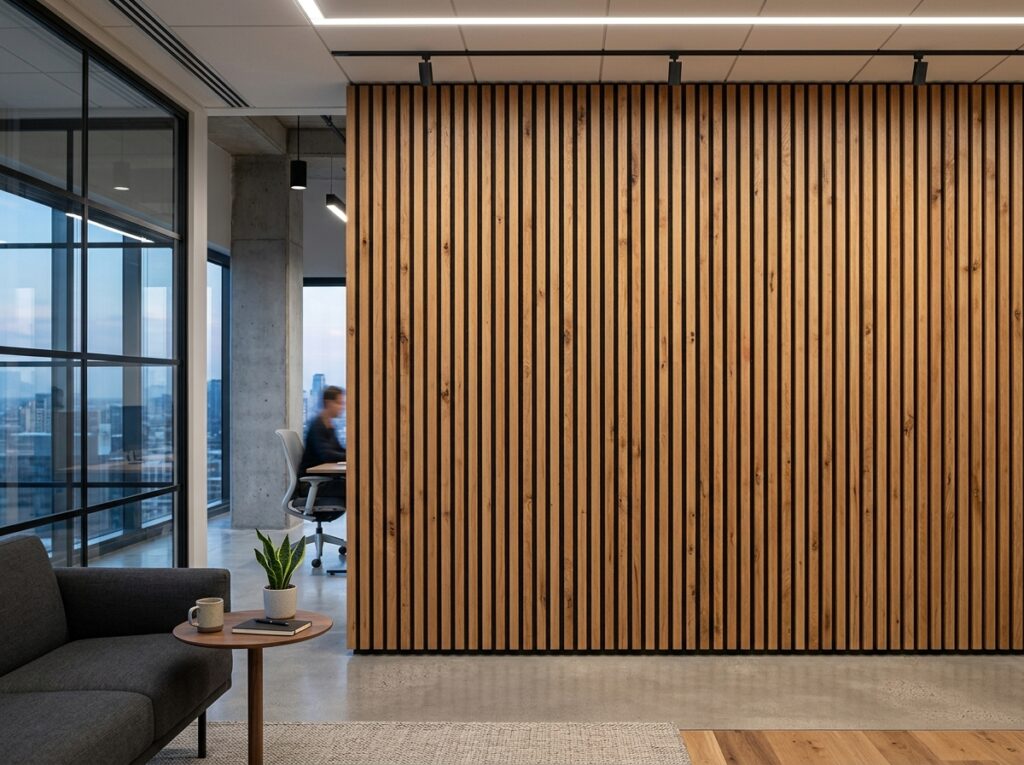
Acoustic wood slatted panels are decorative panels constructed from a series of wood or wood-finish slats attached to an acoustic backing layer.
The slats provide the visible architectural finish, while the material behind them contributes to sound absorption.
This creates a system that can serve two purposes at once:
Decorative wall or ceiling finish + Acoustic sound absorption
The linear arrangement of the slats gives interiors a structured appearance while the backing material helps manage reflected sound.
How Do Wood Slatted Panels Improve Acoustics?
Sound behaves differently when it encounters hard and absorbent surfaces.
Concrete, glass, tile, and stone can reflect a large amount of sound back into a room. When many of these surfaces are present, sound can bounce repeatedly between walls and ceilings.
The acoustic backing incorporated into slatted panels helps absorb some of this reflected energy.
With appropriate placement, the panels can contribute to:
- Reduced echo
- Lower reverberation
- Improved speech clarity
- Better acoustic comfort
- Reduced sound buildup
The effectiveness depends on factors such as panel construction, backing material, room dimensions, installation method, and overall coverage.
Main Advantages of Acoustic Wood Slatted Panels
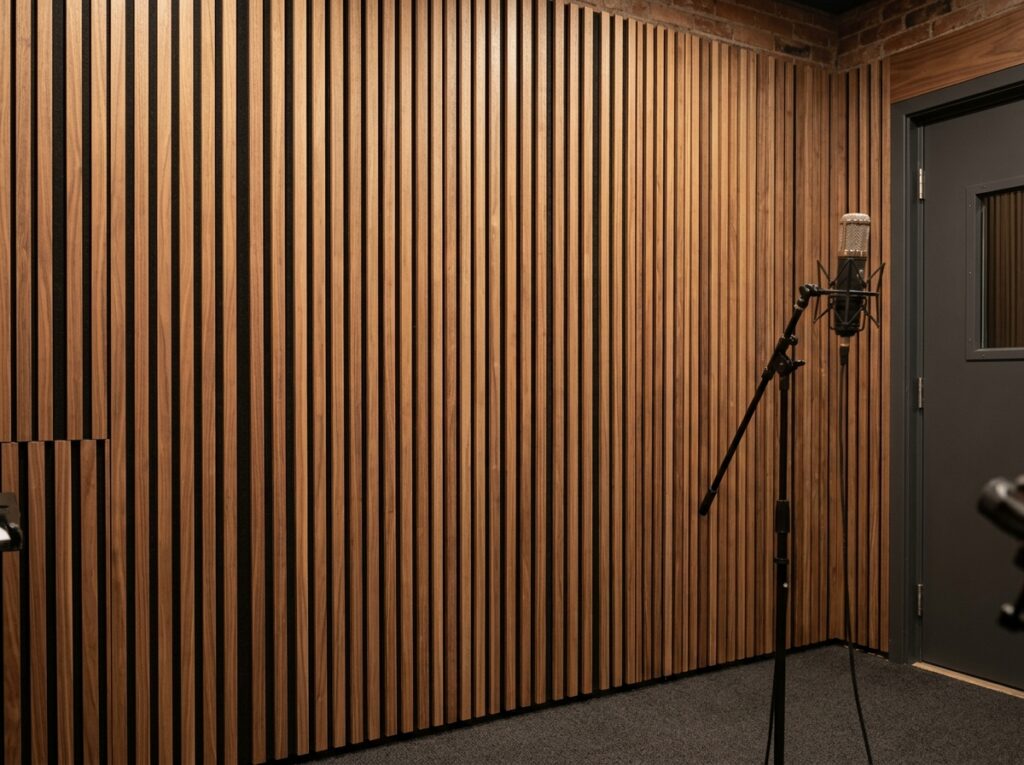
1. Attractive Wood Appearance
The slatted design introduces warmth and texture into modern interiors. It can soften spaces dominated by glass, stone, concrete, and metal.
2. Acoustic Functionality
Unlike ordinary decorative wood walls, acoustic slatted panels incorporate a sound-absorbing layer designed to help control reflected sound.
3. Modern Architectural Style
The clean linear pattern works well with contemporary commercial and residential designs.
4. Flexible Installation
Depending on the specific system, panels can be installed on walls, ceilings, feature areas, and other suitable surfaces.
5. Wide Design Possibilities
Different slat colours, spacing, orientations, and layouts can be used to achieve different visual effects.
6. Suitable for Feature Applications
Panels do not necessarily need to cover an entire room. They can be strategically positioned on selected surfaces to combine acoustic treatment with interior decoration.
Where Can Wood Slatted Acoustic Panels Be Used?
Their combination of appearance and acoustic functionality makes them suitable for many environments.
Corporate Offices
Modern offices often use open-plan layouts and glass partitions. These designs can create considerable sound reflection.
Wood slatted panels can be incorporated into:
- Reception areas
- Meeting rooms
- Boardrooms
- Private offices
- Collaboration areas
- Breakout spaces
They can help control reflected sound while maintaining a professional appearance.
Hotels
Hotels can use acoustic slatted panels in areas where design and acoustic comfort are both important.
Potential applications include:
- Hotel lobbies
- Restaurants
- Lounges
- Conference rooms
- Reception areas
- Guest room feature walls
Restaurants and Cafés
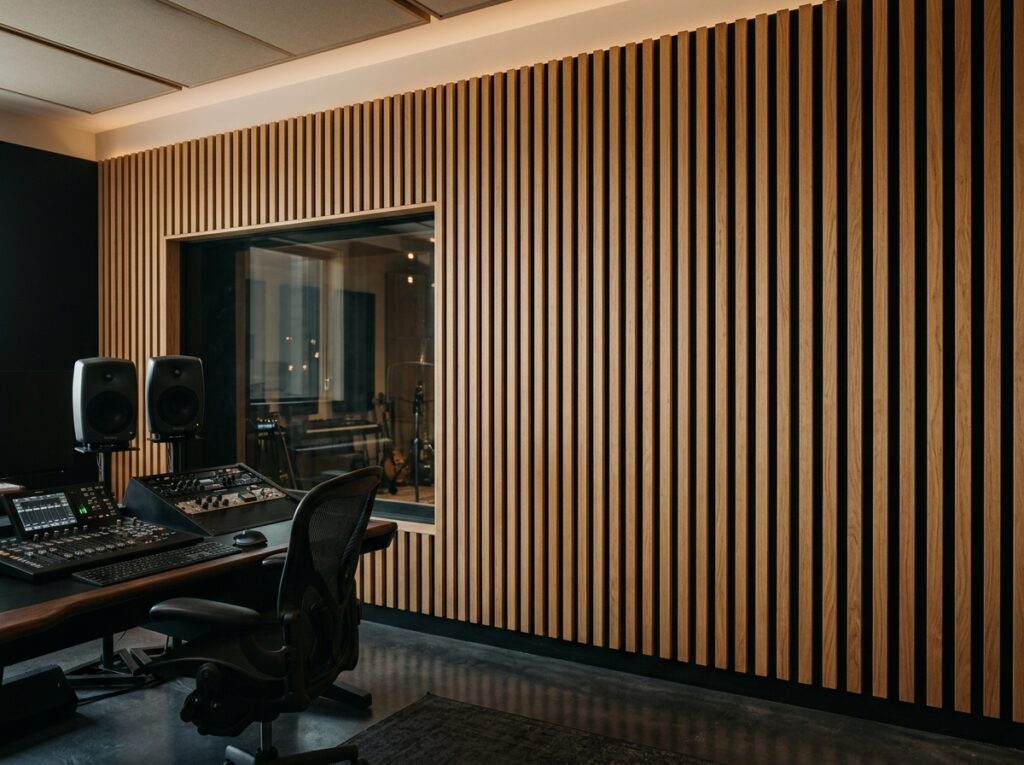
Busy dining environments can become increasingly loud as occupancy rises. Conversations, music, furniture, and hard finishes can all contribute to the overall sound level.
Acoustic slatted panels can help control reverberation while becoming part of the restaurant’s visual identity.
Residential Interiors
In homes, the panels can be used in living rooms, home offices, entertainment rooms, bedrooms, and media spaces.
Acoustic Wood Slatted Panels in Doha
Doha has developed a diverse architectural environment containing corporate buildings, luxury hotels, restaurants, educational facilities, cultural spaces, and high-end residences.
Many contemporary interiors use large reflective surfaces to create bright, spacious environments. However, these surfaces can also produce acoustic challenges.
Wood slatted acoustic panels can provide an attractive way to introduce sound absorption without making the interior appear heavily treated.
For example, panels can be positioned behind a reception desk, along a conference room wall, behind a television, or across a selected ceiling section.
Creating Feature Walls With Acoustic Slats
One of the most visually effective applications is the acoustic feature wall.
Rather than treating every surface, designers can use slatted panels to highlight specific areas.
Reception Areas
A slatted wall behind a reception counter can create a strong visual focal point while contributing to acoustic control.
Conference Rooms
Panels can be installed behind presentation screens or across selected walls to help manage reflections during meetings.
Entertainment Areas
In residential media rooms and hospitality lounges, slatted panels can add texture while helping improve the room’s acoustic environment.
Restaurant Interiors
A carefully designed slatted wall can become a major decorative element while providing useful sound absorption.
Vertical and Horizontal Slat Designs
The orientation of the slats can influence the overall appearance of the room.
Vertical Slats
Vertical arrangements can visually emphasize ceiling height and create a clean, elegant appearance.
Horizontal Slats
Horizontal arrangements can make a wall appear broader and create a different visual rhythm.
Mixed Arrangements
Different panel orientations can sometimes be combined to create more distinctive architectural patterns.
The best configuration depends on the surrounding interior and the desired visual effect.
Using Slatted Panels on Ceilings
Ceilings are often overlooked when designing acoustic interiors.
Large exposed ceilings can create extensive reflective surfaces, particularly in offices, restaurants, conference rooms, and hospitality spaces.
Acoustic wood slatted systems can be installed across suitable ceiling areas to introduce sound absorption while creating an architectural feature.
Ceiling applications can be particularly useful when wall surfaces are occupied by:
- Windows
- Displays
- Furniture
- Artwork
- Doors
- Glass partitions
Choosing the Right Acoustic Slatted Panel
The appearance of the panel is important, but acoustic and installation characteristics should also be considered.
Acoustic Backing
The backing layer is an important part of the system’s sound-absorbing performance.
Panel Thickness
Different systems may have different thicknesses and acoustic characteristics.
Slat Finish
Wood tones, colours, and finishes should be selected according to the surrounding interior.
Surface Coverage
The amount of panel coverage influences the overall acoustic result.
Installation Method
The existing wall or ceiling structure should be assessed before selecting the appropriate mounting system.
Acoustic Treatment vs. Soundproofing
Acoustic wood slatted panels are primarily designed for sound absorption, not complete sound isolation.
They can help reduce echo and reverberation inside a room, but they do not by themselves prevent sound from passing through walls or ceilings.
A soundproofing project may require additional materials such as:
- Mass Loaded Vinyl
- Acoustic insulation
- Multiple gypsum board layers
- Resilient channels
- Acoustic sealants
- Soundproof doors
- Acoustic glazing
The appropriate combination depends on the type of noise and the construction of the space.
Maintenance of Acoustic Wood Slatted Panels
Regular maintenance helps preserve the appearance of the panels.
Simple care can include:
- Dusting the slats with a soft microfiber cloth.
- Using a suitable vacuum attachment for difficult-to-reach areas.
- Removing minor marks carefully.
- Avoiding excessive moisture.
- Avoiding abrasive cleaning products.
- Checking the panels periodically for physical damage.
Specific maintenance requirements should always follow the manufacturer’s recommendations.
Frequently Asked Questions
Are acoustic wood slatted panels actually soundproof?
No. They are primarily designed to absorb reflected sound and improve room acoustics. Complete sound isolation requires a dedicated soundproofing system.
Can they reduce echo?
Yes. The acoustic backing can absorb reflected sound and help reduce excessive reverberation when the panels are properly selected and positioned.
Are they suitable for offices?
Yes. They can be used in meeting rooms, boardrooms, reception areas, open offices, and collaborative spaces.
Can acoustic slatted panels be used in restaurants?
Yes. They can help manage reverberation in busy dining environments while contributing to the restaurant’s interior design.
Can they be installed on ceilings?
Many acoustic slatted systems are suitable for ceiling applications, provided the correct mounting method is used.
Conclusion
Acoustic wood slatted panels offer an effective combination of sound absorption and contemporary interior design. Their linear wood appearance adds warmth and visual structure, while the acoustic backing helps manage unwanted reflections and reverberation.
For offices, hotels, restaurants, conference rooms, educational facilities, and residential interiors in Doha and across Qatar, these panels provide a flexible way to improve acoustic comfort without sacrificing architectural style.
Whether used for an entire wall, a decorative feature, or a ceiling installation, acoustic wood slatted panels can turn an ordinary interior surface into a functional design element while creating a more comfortable acoustic environment.