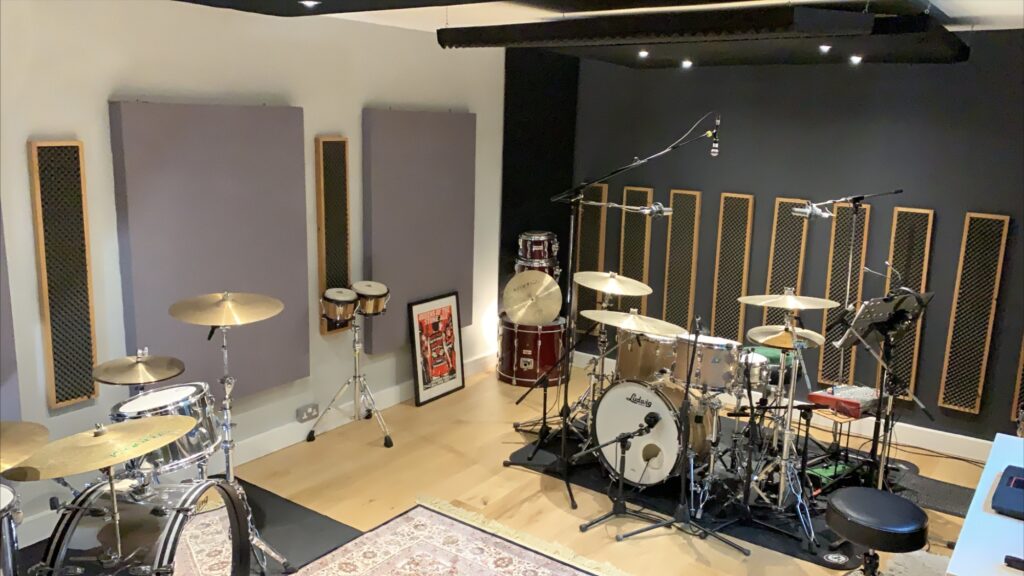
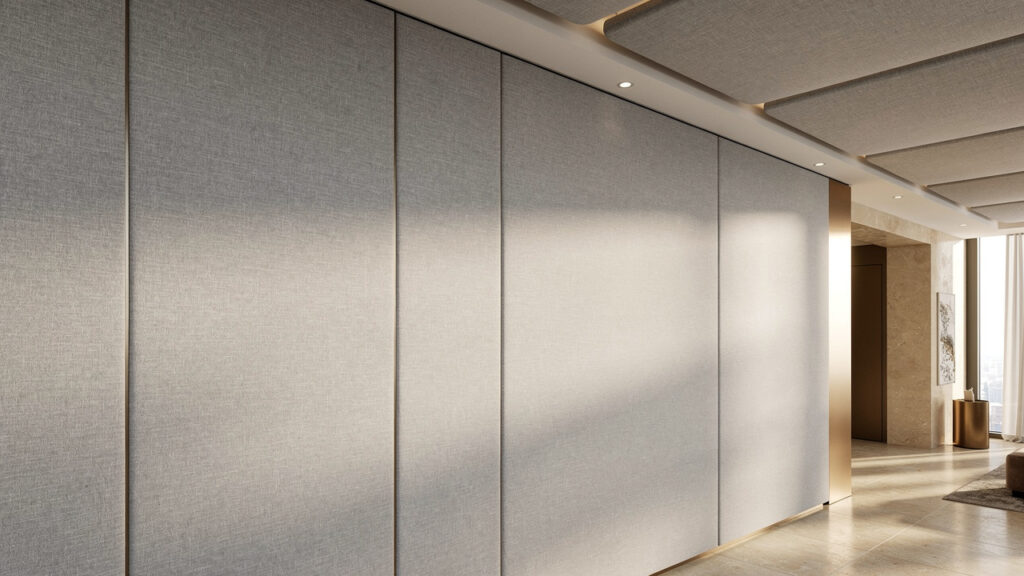
Noise from neighbors, traffic, and echo inside rooms makes many UAE homes and offices feel busy and tiring.
PVC profile tracks for acoustic wall and ceiling systems help turn those hard, noisy surfaces into calm, sound‑controlled finishes.
These PVC profile tracks are small framing channels that grip acoustic fabric over insulation panels so sound hits soft surfaces instead of concrete or gypsum. They sit around the edges of walls and ceilings, hold everything tight, and hide all fixings behind a clean fabric face. In this guide, you will see what these tracks are, why PVC suits UAE conditions, how Waseem Technical designs its system, and how to choose and install the right setup for your space.
Read on to see how the right track choice can calm your space.
Key Takeaways
PVC profile tracks act as the hidden frame that holds acoustic fabric and insulation on walls and ceilings. They grip the fabric all around the perimeter so the surface stays flat, smooth, and ready to absorb sound in a predictable way. That stable frame keeps your acoustic treatment working well for many years.
PVC outperforms metal and wood in UAE buildings because it resists heat, humidity, salt air, and dust. Metal can corrode and rattle while timber can swell and warp, but quality PVC profiles stay straight and clean. That means fewer call‑backs, less repair work, and more stable acoustic results.
Waseem Technical uses straight‑edge and V‑grooved PVC profiles that its teams cut and form on site to match real walls and ceilings. This flexible approach suits corners, curves, niches, and custom layouts without waiting for factory specials. The same system tensions the fabric evenly so you see sharp edges and no visible fixings.
PVC profile track systems suit many sectors across the UAE and GCC, from apartments and villas to offices, hotels, schools, and studios. A professional acoustic assessment from Waseem Technical helps match track type, fabric, and insulation to your noise problems so you get clear, measured improvement instead of guesswork.
What Are PVC Profile Tracks For Acoustic Wall And Ceiling Systems?
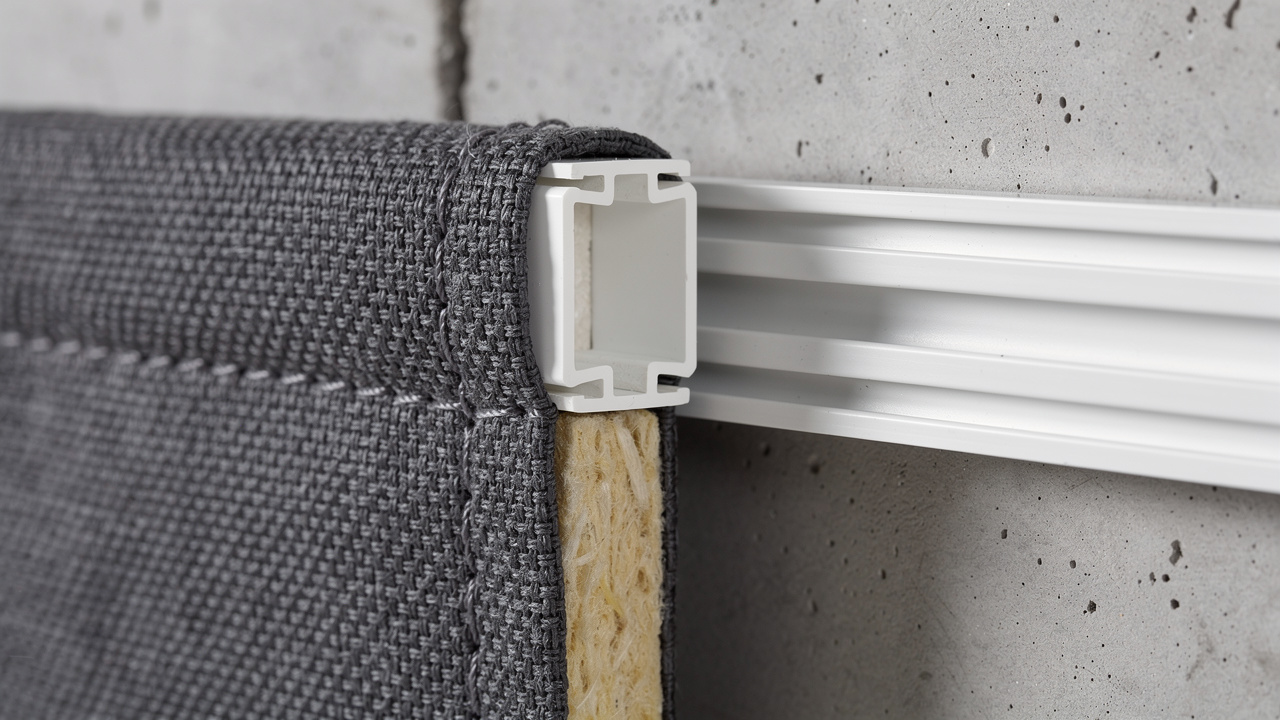
PVC profile tracks for acoustic wall and ceiling systems are small PVC channels that clamp acoustic fabric over sound‑absorbing panels. They create a neat frame around the perimeter so the fabric stays tight, hides fixings, and delivers a smooth, continuous finish. In stretch fabric systems, these tracks are the backbone that keeps the whole acoustic surface in place.
Each track sits around the edge of the wall or ceiling and sometimes as a divider inside large areas. Installers fix the track to the concrete slab, block wall, or metal framing, insert acoustic insulation such as mineral wool or polyester boards, then stretch the fabric and lock it into the track. Waseem Technical integrates acoustic panels from leading manufacturers such as Knauf, Saint‑Gobain Ecophon, and Rockfon inside these systems when projects call for them.
According to the World Health Organization, environmental noise removes more than one million healthy life years every year in Western Europe alone, and research on Sound Distraction and Mental Health in the Workplace further confirms that uncontrolled noise significantly affects employee wellbeing and coping capacity. That figure shows why better acoustic design matters for dense cities such as Dubai and Abu Dhabi. PVC profile track systems help by turning reflective concrete and glass into sound‑absorbing surfaces that limit echo and reduce sound transfer.
“Environmental noise is an important public health issue.” — World Health Organization
In many UAE projects, these tracks support fabric finishes chosen by interior designers for offices in DIFC, hotel lobbies on Palm Jumeirah, or villas in Abu Dhabi. Waseem Technical supplies PVC profiles with straight edges for flat, seamless walls and with V‑grooved edges for crisp shadow lines. In every case, the track decides how clean the final line looks, how tight the fabric feels, and how reliably the panels stay in place under daily use.
Why PVC Profile Tracks Outperform Traditional Materials In UAE Conditions
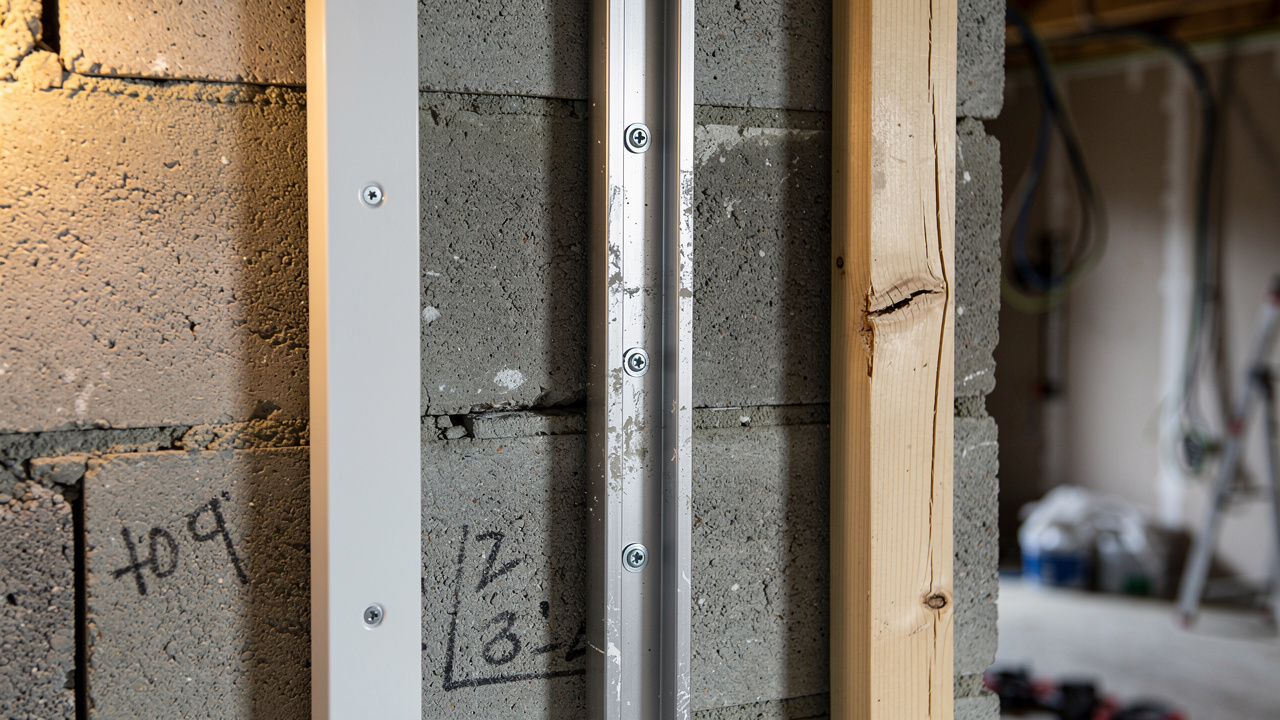
PVC profile tracks outperform aluminum and wood in UAE conditions because the material stands up to heat, humidity, and salt air without deforming, as demonstrated by studies on the Airborne sound insulation performance of lightweight partition walls using different construction materials. In Dubai, Abu Dhabi, and Sharjah, that stability keeps acoustic walls and ceilings straight and quiet while many metal and timber frames age badly. For long‑term acoustic performance, PVC is often the safer bet.
Summer temperatures in many inland UAE locations pass 45 °C according to the UAE National Center of Meteorology. Under those conditions, aluminum expands and contracts, which can loosen fixings or create small gaps at joints. Timber frames can dry, swell, and crack as humidity changes, especially near the coast, and research into the Multifunctional performance assessment of waste-based wall panels confirms that material selection for interior acoustic systems must account for thermal and structural interaction alongside sound control. PVC stays more dimensionally stable inside air‑conditioned interiors, so the fabric line remains smooth and sealed.
Coastal air around Dubai Marina and Corniche Road in Abu Dhabi carries salt that attacks metal. A study by NACE International estimated that corrosion costs reach about three to four percent of global GDP, which highlights the scale of the issue. PVC profiles do not rust, so they protect both the acoustic system and adjacent finishes from stains or damage.
Wooden frames bring other concerns in UAE buildings that need high hygiene levels, such as hospitals or clinics overseen by Dubai Health Authority. Timber can support mold growth in humid spaces if not detailed correctly. PVC is non‑porous and easy to clean with standard cleaning agents from facilities suppliers like Diversey or Ecolab. For busy malls, hotels, and schools, that simple maintenance helps keep surfaces looking fresh.
Here is a quick comparison of common frame materials.
| Property | PVC Profile Tracks | Aluminum Tracks | Wooden Frames |
|---|---|---|---|
| Response to humidity | No swelling or rot | No rot but corrosion at fixings | Swelling, risk of warping |
| Response to salt air | No rust | High corrosion risk without treatment | Surface damage from moisture |
| Thermal movement in ceilings | Low and steady | Higher expansion and contraction | Movement plus shrinkage or swelling |
| Cleaning and hygiene | Smooth and easy to wipe | Easy to wipe but joints can corrode | Needs sealing and frequent inspection |
| Typical life in UAE interiors | Long life with minimal maintenance | Good life but sensitive in coastal areas | Shorter life without careful detailing |
In short, PVC fits the harsh Gulf climate better than many traditional frame materials, which keeps acoustic investments from fading too fast.
How Waseem Technical’s PVC Profile Track System Works
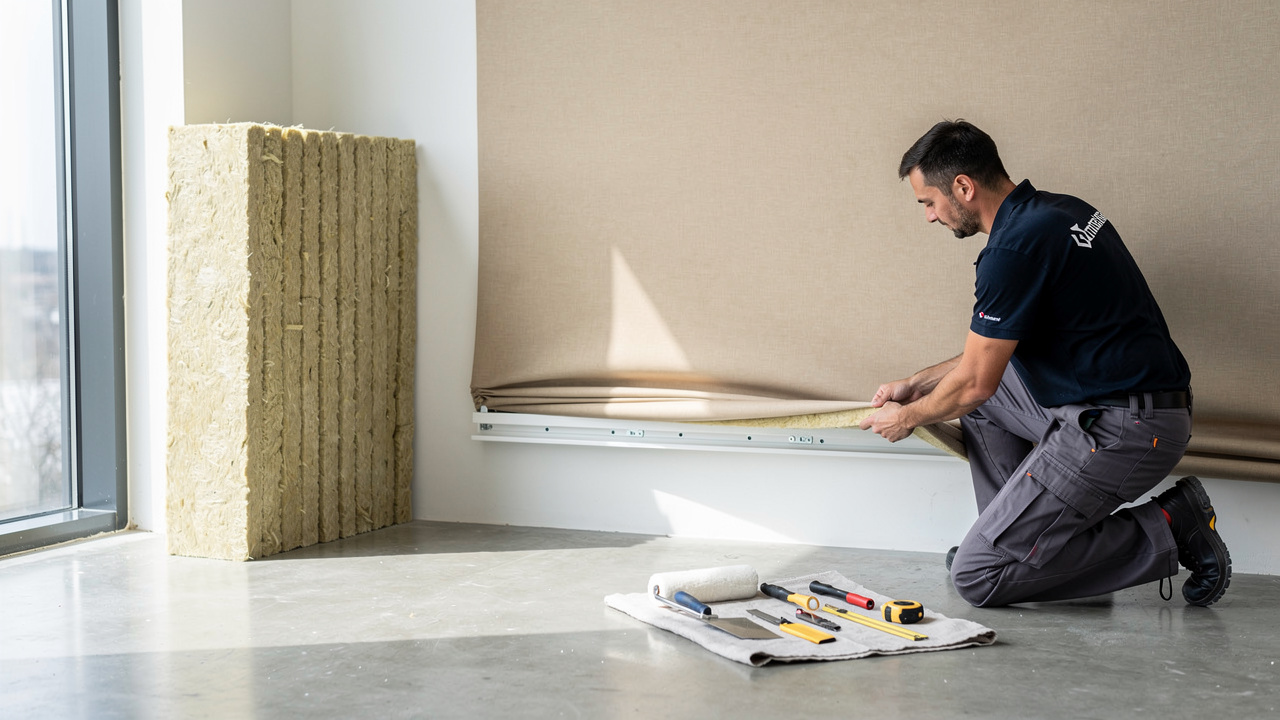
Waseem Technical’s PVC profile tracks for acoustic wall and ceiling systems form a complete stretch fabric acoustic setup from structure to final fabric face. The system starts with PVC tracks that match the room shape, then adds acoustic insulation and tight fabric so sound energy drops inside the wall or ceiling. The result is a quiet, high‑finish surface that suits premium UAE interiors.
The company offers two main edge styles. Straight‑edge profiles create a flat, continuous surface that blends into modern offices along Sheikh Zayed Road or home cinemas in Jumeirah. V‑grooved profiles add a small shadow line that designers often choose for hotels in Downtown Dubai or Abu Dhabi Corniche because it gives subtle depth to long walls and ceilings. Both versions grip the fabric firmly to avoid sagging.
On each project, Waseem Technical teams cut and shape the PVC tracks on site rather than relying only on factory lengths. This on‑site fabrication allows the tracks to wrap around curved feature walls, tight columns, ceiling bulkheads, and irregular corners without delay. Installers fix the track to the substrate, place acoustic insulation such as mineral wool from manufacturers like Rockwool or fiberglass boards from Owens Corning, then stretch the chosen fabric and wedge it into the track slot.
Once the fabric sits in place, technicians trim the excess and check tension by sight and touch. The track teeth or locking strip grip the fabric so it stays tight even when air pressure changes from HVAC systems by Daikin or Carrier. A workplace noise study by Oxford Economics found that 53 percent of employees say ambient noise harms their productivity, so this added control has real business value. With Waseem Technical, the same detail that gives sharp corners also supports better focus and speech clarity.
Tip from Waseem Technical: “Always check fabric tension from more than one angle under finished lighting. Small ripples that are invisible on site can appear clearly once the client switches on feature lights.”
Where Are PVC Profile Track Systems Used Across The UAE?
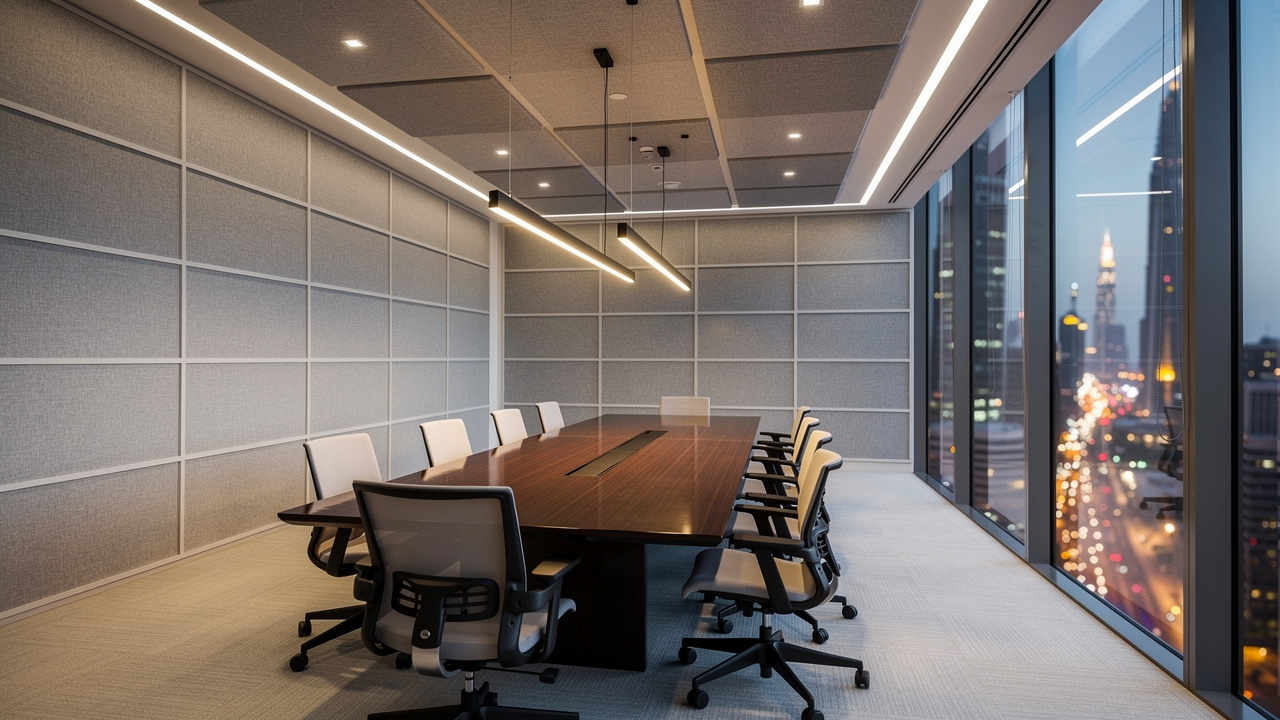
PVC profile track acoustic systems from Waseem Technical appear in many building types across the UAE and wider GCC. They suit any space where owners want better sound and a clean, fabric‑covered finish without bulky boxes or exposed panels. That mix fits residential, commercial, and industrial settings across Dubai, Abu Dhabi, Sharjah, and beyond.
Offices and conference suites use these systems for meeting rooms, open work zones, and boardrooms. Fabric walls on PVC tracks cut echo in glass‑heavy towers in DIFC or Dubai Internet City and help protect speech privacy during calls with clients in Riyadh or London. The clean look supports modern fit‑out standards used by global firms such as Deloitte or HSBC.
Recording studios, podcast rooms, and home theaters depend on precise control of reflections and bass build‑up. PVC profile track systems let designers adjust insulation depth behind the fabric, which sound engineers in Dubai Media City like for custom rooms. Homeowners in villas at Arabian Ranches or Saadiyat Island also favor the slim profile compared to bulky boxes.
Schools, universities, hotels, hospitals, and mosques use PVC track systems in lecture halls, prayer halls, corridors, and waiting areas. The fabric face hides impact marks better than painted gypsum while the insulation reduces noise for students and patients. Facility teams at institutions such as Khalifa University or large hotel brands in the Marina districts appreciate the long life and easy cleaning.
How To Choose And Install The Right PVC Profile Track System
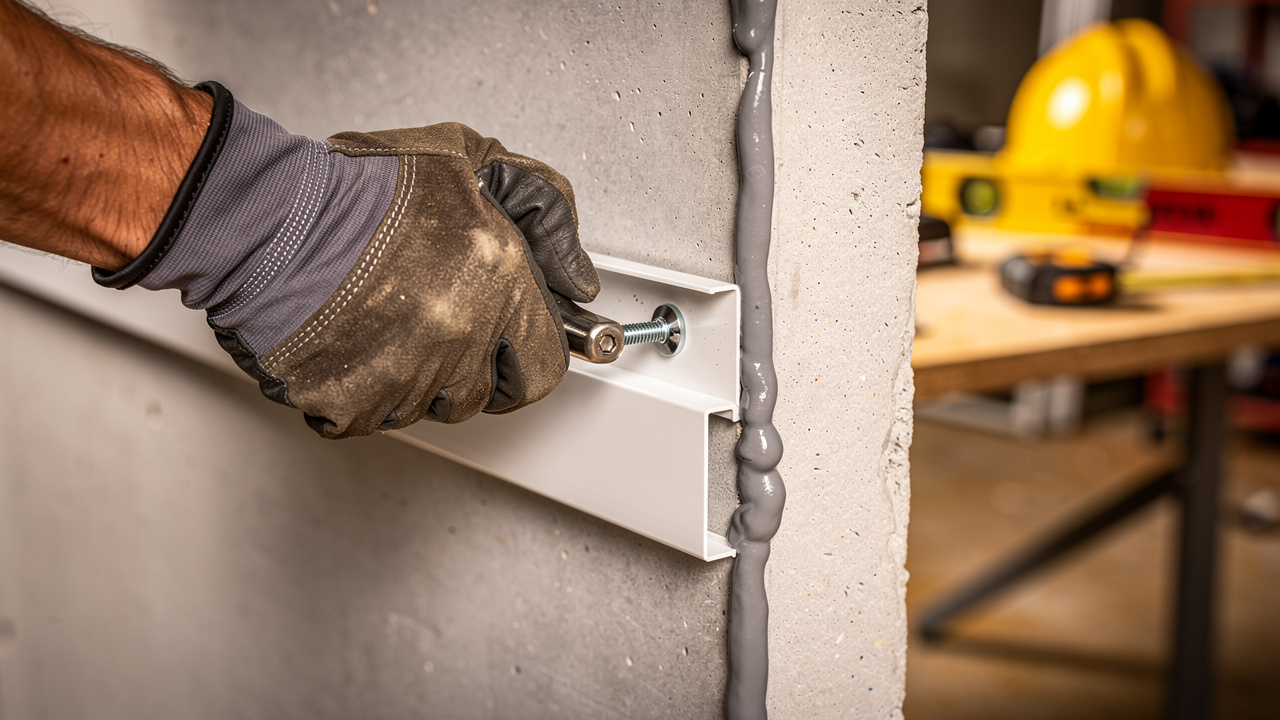
Choosing and installing the right PVC profile tracks for acoustic wall and ceiling systems starts with a clear look at the room, the noise problem, and local rules. The track profile, fabric type, and insulation all need to match your goals, from quiet bedrooms in Sharjah towers to speech privacy in Abu Dhabi offices. A careful plan pays off in measured acoustic improvement and fewer site issues.
A simple way to think about selection is:
Define the purpose of the room. Is it a bedroom, classroom, boardroom, restaurant, or cinema? Different spaces call for different levels of sound absorption and different fabric finishes.
Choose the track profile. Straight‑edge tracks suit simple, seamless walls and ceilings where the fabric should disappear into the interior. V‑grooved tracks work better when the designer wants lines that frame panels or follow lighting from brands such as Zumtobel or Fagerhult. Waseem Technical reviews drawings with architects and interior designers so the track choice supports both sound and style.
Select insulation and fabric. Mineral wool, polyester, or fiberglass boards provide the sound‑absorbing core, while the fabric controls appearance and surface durability — and research on Acoustic Insulation in plasterboard systems with mineral wool highlights how insulation type directly determines the final sound reduction outcome. Breathable fabrics usually deliver better absorption.
Fire safety is a key factor for any material in UAE buildings observed by UAE Civil Defence. PVC tracks in commercial or high‑rise projects should use flame‑retardant grades with test reports based on standards such as ASTM E84 and EN 13501. ASTM E84 sets Class A limits with a flame spread index not higher than 25 and smoke developed index not higher than 450, according to ASTM International. Waseem Technical keeps current fire documents ready for consultants, contractors, and approval teams.
For installation, good surface preparation and sealing matter as much as product choice, as detailed guidance on Measurement and Prediction of airborne sound insulation performance in vertical partition walls shows that construction quality directly determines whether rated acoustic values are achieved in practice. Substrates in Dubai and Abu Dhabi are often concrete or block, so tracks need solid fixings with correct spacing and stainless screws in coastal zones. Acoustic sealant along the back of the track and at joints stops sound sneaking through tiny gaps, which protects the Sound Transmission Class values measured in labs by groups like UL or Intertek.
Professional installation by Waseem Technical brings on‑site fabrication, correct fabric tension, perimeter sealing, and a final inspection. The team can also combine PVC track walls with other soundproofing elements such as acoustic doors, acoustic glass windows, and acoustic carpet. Research from Nielsen Norman Group shows that noise and lack of privacy sit among the top complaints in open offices, so a full system approach often matters more than a single product.
Wrapping Up
PVC profile tracks for acoustic wall and ceiling systems give UAE buildings a reliable way to control sound without spoiling the interior design. Compared with metal or timber frames, PVC stands up better to heat, humidity, and salt air, which keeps acoustic fabric walls and ceilings straight, tight, and effective for many years. That stability protects your investment and reduces disruption from future repair work.
Waseem Technical focuses on soundproofing and acoustics across the UAE and all six GCC countries, with more than 13 years of local experience. Its PVC profile track systems combine smart design, on‑site fabrication, and careful installation so homes, offices, hotels, schools, and studios gain real noise reduction. If you want a quiet bedroom, a focused workspace, or a high‑end cinema room, the team can guide every stage.
You can request a free acoustic check and soundproofing report from Waseem Technical for your villa, apartment, office, or commercial site. Call +971 50 209 7517 or visit waseemtechnical.ae to schedule a visit and see which PVC track system best suits your project.
Frequently Asked Questions
Question 1: What Is The Difference Between Straight-Edge And V-Grooved PVC Profile Tracks?
Straight‑edge PVC tracks create flat, seamless acoustic walls and ceilings that visually blend into the room. V‑grooved tracks add a slim shadow line that highlights panel joints and gives more architectural detail, which many hotels and offices in the UAE prefer for premium interiors.
Question 2: Are PVC Profile Tracks Suitable For Curved Or Irregular Architectural Layouts?
Yes, PVC profile tracks suit curved and irregular layouts very well. Installers from Waseem Technical cut and heat‑form the profiles on site to follow arches, columns, and flowing ceilings. That flexibility removes the wait for factory‑made specials and helps keep complex UAE projects on program.
Question 3: Do PVC Profile Tracks Comply With UAE Fire Safety Regulations?
PVC acoustic tracks can comply with UAE fire rules when you choose tested flame‑retardant grades. Waseem Technical supplies PVC profiles with third‑party fire reports that match UAE Civil Defence requirements for high‑rise, hospitality, education, healthcare, and public assembly buildings across Dubai, Abu Dhabi, and the wider GCC.
Question 4: How Long Do PVC Profile Tracks Last In UAE Conditions?
High‑quality PVC profile tracks usually last many years in UAE interiors because they resist heat, UV, humidity, and corrosion. With normal cleaning and no major physical damage, the frames often outlast fabric and insulation layers, which gives property owners a low total cost over the life of the acoustic system.
Question 5: Can PVC Profile Track Acoustic Systems Be Integrated With Other Soundproofing Products?
Yes, PVC profile track systems work well with other sound control elements. Waseem Technical often combines fabric track walls with acoustic glass windows, acoustic carpet, door seals, and ceiling panels to treat both airborne and impact noise. A free site survey helps pick the right mix for each home, office, or industrial site.