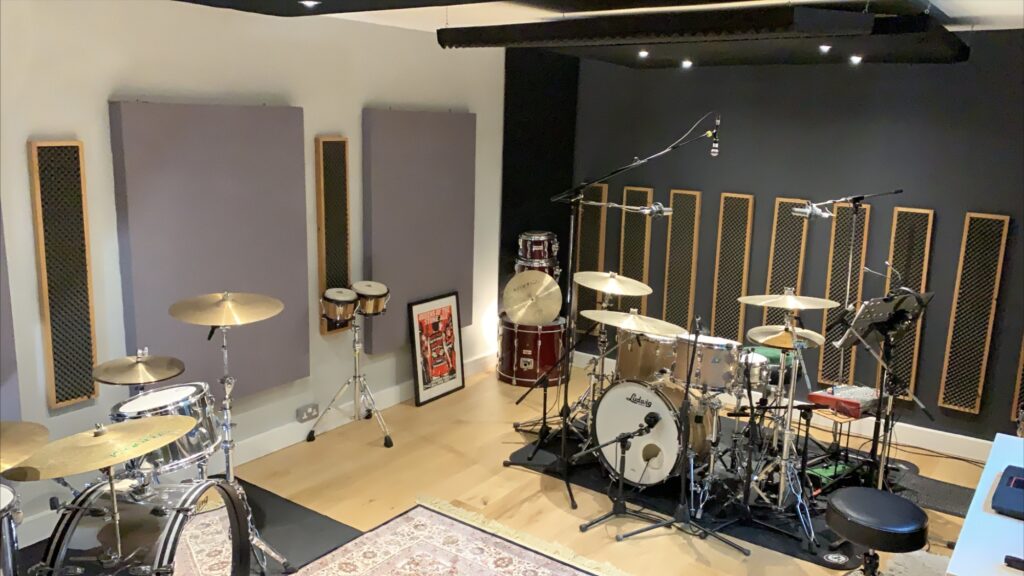
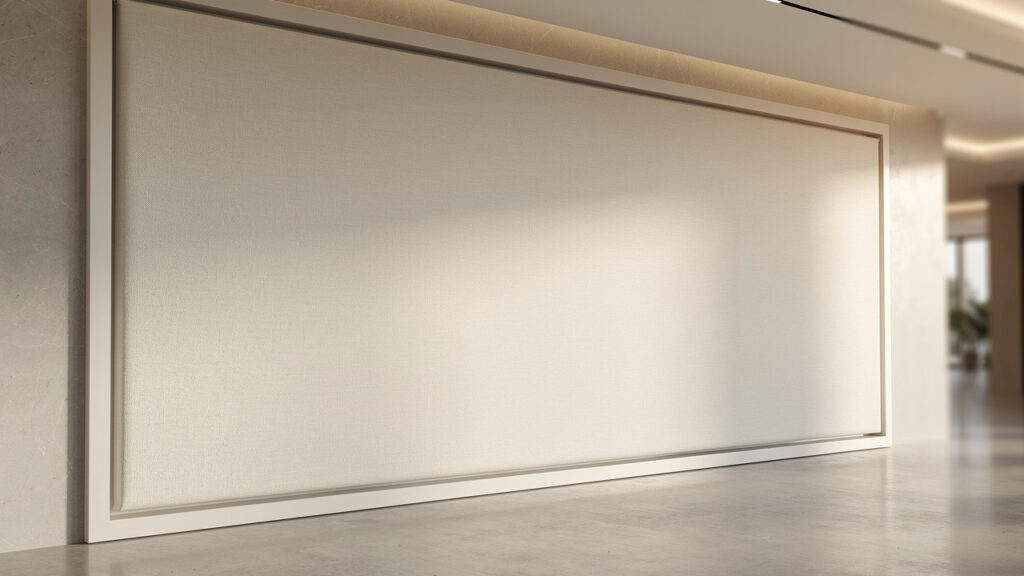
Seamless stretch fabric walls in UAE homes and businesses look luxurious, but poor framing and cheap materials can sag, crack, or fail quickly.
With harsh sun, humidity, and dust, many conventional wall systems start to age long before they should.
PVC profile tracks are slim PVC frames that grip stretch fabric over acoustic padding, creating clean, smooth surfaces with hidden fixings.
Their main advantages for fabric wall systems are climate resistance, a flawless finish, design flexibility, and real acoustic improvement.
This guide explains what these tracks are, how they compare to aluminum and wood, how they create a wrinkle‑free finish, and why Waseem Technical uses them across UAE projects.
“Fabric walls should look like part of the architecture, not an add‑on.” — Waseem Technical installation team
Keep reading to see how the right track system turns ordinary walls into long‑lasting, quiet, and elegant surfaces.
Key Takeaways
PVC profile tracks for fabric walls give UAE properties a reliable way to combine appearance, comfort, and durability.
If you only skim this guide, these points already show why many architects and facility teams choose this system.
PVC profile tracks are designed for stretch fabric wall and ceiling systems. They grip the fabric edge securely and keep tension even, so surfaces stay smooth over time.
The PVC material handles UAE heat, humidity, and dust without rusting or warping. It does not swell near coastal air and cleans quickly with a simple wipe.
The track hides fixings behind the fabric surface, removing visible screws and staples. The result looks like a single continuous panel from floor to ceiling.
When combined with acoustic insulation, the track system improves sound as well as looks. Echo and harsh reflections drop, so meetings, movies, and music all sound clearer.
Waseem Technical supplies and installs these PVC track systems across the Emirates. Their team handles design, fabrication, and fitting, giving clients one point of contact from first visit to final handover.
What Are PVC Profile Tracks And How Do They Work In Fabric Wall Systems?
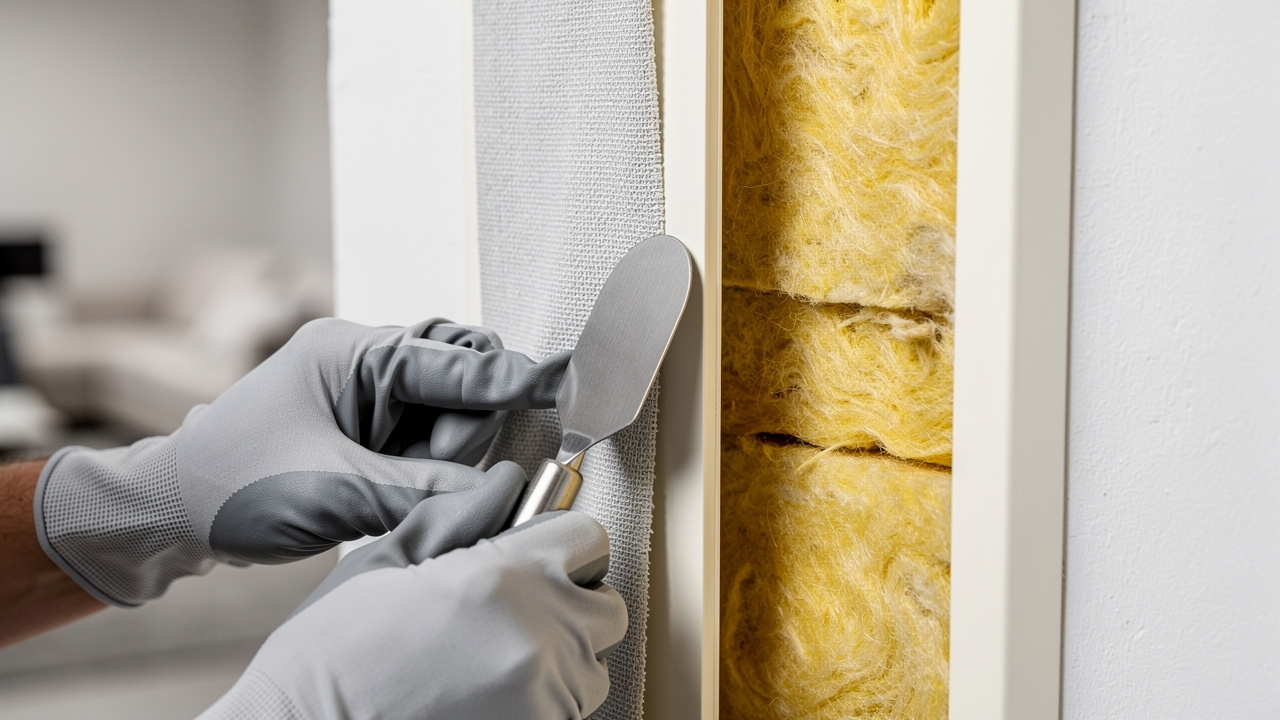
PVC profile tracks for fabric walls are shaped PVC rails that form a narrow frame around the room, holding and tensioning stretch fabric over acoustic panels.
Instead of gluing fabric to the wall, the installer tucks it into the PVC track, so the cloth stays tight and edges stay sharp.
This method sits at the core of most modern stretch fabric acoustic systems used in cinemas, studios, and high‑end offices.
Each PVC profile track has a small channel and gripping lip. Installers typically:
Fix the tracks to the wall or ceiling.
Place mineral wool or other acoustic insulation inside the framed area.
Push the fabric edge into the track with a blunt spatula.
The fabric locks in the channel, and tension spreads across the surface without visible staples, rails, or seams.
Two main edge styles shape the final look:
A straight edge profile finishes flush with the wall plane, so the fabric appears as a flat panel with crisp borders.
A V‑grooved edge creates a narrow shadow line that adds depth and frames each panel, which designers often choose for hotel corridors, boardrooms, and cinemas.
Because the tracks are PVC — a material whose specifications for rigid exterior profiles are defined in standards such as the specification for rigid poly (vinyl chloride) exterior profiles — installers can cut and bend them on site to follow curves, columns, bulkheads, and irregular corners.
That flexibility means a single system can follow almost any layout in Dubai apartments, Abu Dhabi villas, or complex commercial interiors.
Why PVC Profile Tracks Outperform Traditional Materials In UAE Conditions
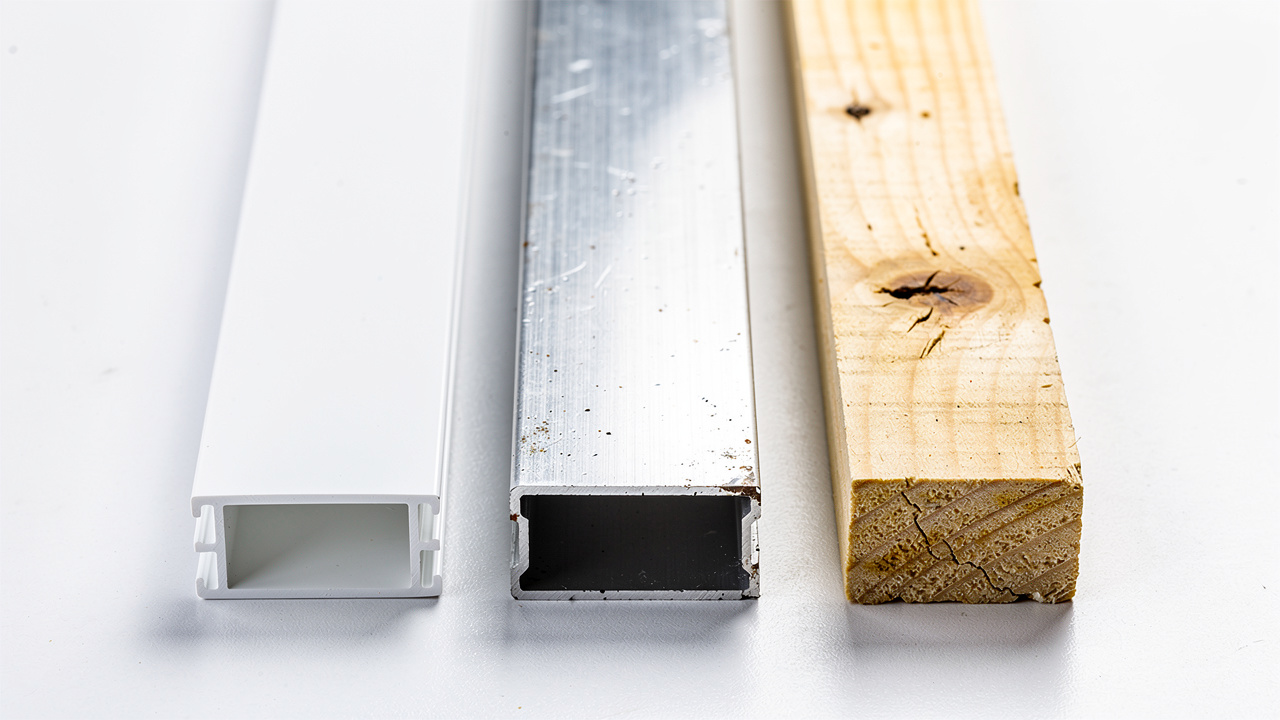
PVC profile tracks for fabric walls handle UAE climate stresses better than aluminum angles or timber battens.
In heat, humidity, and salty coastal air, PVC keeps its shape, grips fabric reliably, and avoids the corrosion and warping that cause many failures.
Aluminum can pit and discolor in coastal areas, especially near places like Dubai Marina or Abu Dhabi Corniche.
Timber swells and shrinks with moisture, which slowly pulls fabric loose, creates gaps, and opens up cracks at joints.
PVC, by contrast, does not rust, rot, or absorb water, so the track line stays straight and the fabric tension remains consistent year after year — a finding supported by the analysis of the strength and quality properties of welded PVC profiles in construction applications.
Fine dust and sand also matter.
Metal channels with rough edges catch grit, which can cut fabric and scratch finishes during installation or later adjustments.
Smooth PVC tracks collect less debris and are easier to wipe clean, which is helpful in cities that see frequent dust events.
Here is a quick comparison for fabric wall framing in UAE buildings:
| Factor | PVC Profile Tracks | Aluminum Channels | Timber Battens |
|---|---|---|---|
| Humidity and moisture | Do not swell or rot, keep grip on fabric stable | Can corrode at fixings, may stain nearby fabric | Swell, shrink, and can twist, loosening fabric |
| Coastal corrosion | No rust, suitable for marine air in GCC cities | Surface pitting and white staining common near the coast | Can decay if moisture reaches behind finishes |
| Heat and UV exposure | Formulated to resist softening and color shift in strong sun | Expands and contracts, may rattle or show gaps | Can dry out and crack over time |
| Dust and sand | Smooth surface, easy to wipe and re‑tension fabric | Rougher edges can trap grit | Rough and porous, harder to clean |
| Maintenance and lifespan | Rarely need more than cleaning, long service life with stable performance | Coatings or touch‑ups often needed in harsh areas | Regular inspections and occasional replacement usually required |
Lower movement in the track means fewer call‑backs for sagging fabric or cracking trims.
For facility managers responsible for hotels or office towers, that stability cuts both maintenance time and downtime for occupied rooms.
Tip: Schedule a quick visual check of fabric tension and track lines during routine room inspections. Early fixes are faster and cheaper than full rework.
According to the U.S. Department of Energy, better building envelope choices can reduce cooling energy use, so avoiding warped, leaky finishes has comfort and cost benefits.
How PVC Profile Tracks Deliver A Seamless, Professional Wall Finish
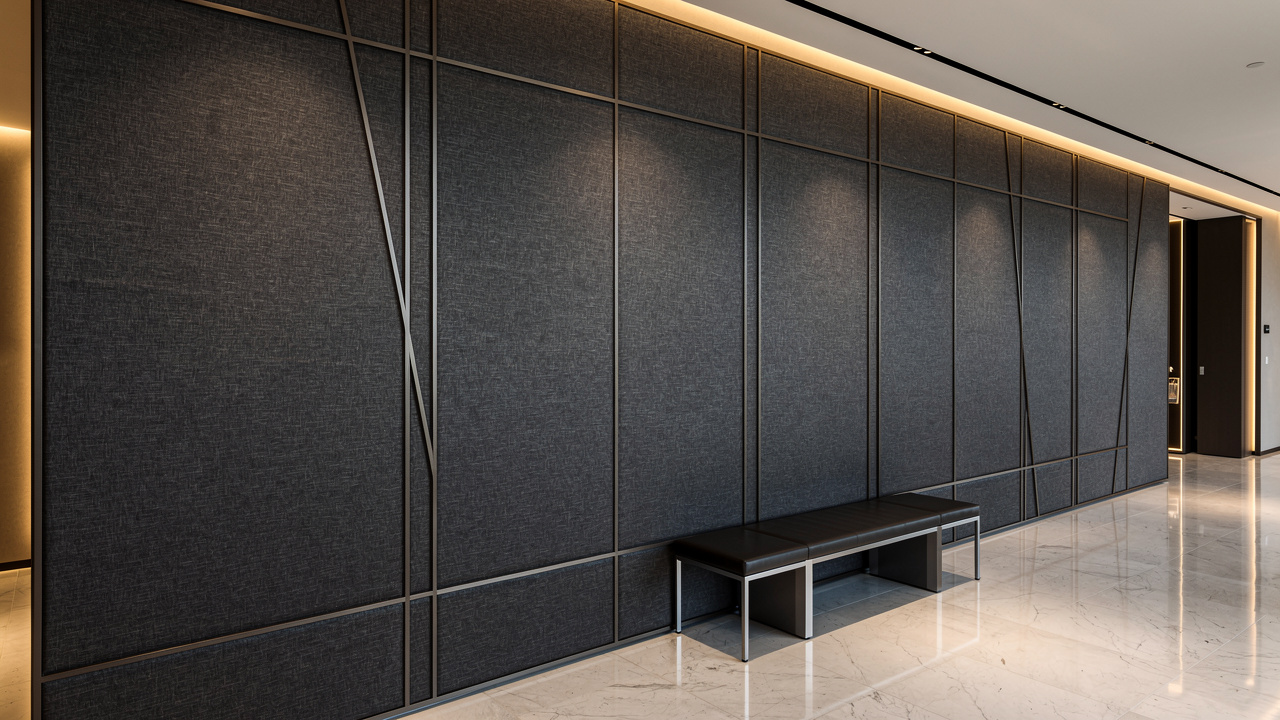
PVC profile tracks create a seamless wall finish by pulling the fabric evenly across the entire surface and hiding all fixings behind the cloth.
The track gives installers a consistent reference line, so every joint, corner, and reveal looks straight and intentional.
The process usually follows these steps:
Fix the tracks around the wall perimeter and around any openings.
Place insulation boards inside that frame, covering the wall substrate and any cabling or minor imperfections.
Stretch the fabric over the area and tuck it into the track a little at a time, working methodically along the edges so tension stays even.
Because there are no visible screws or stapled hems on the surface, the finished wall reads as one clean plane.
Straight edge tracks give a minimalist look, which suits modern offices and homes.
V‑grooved tracks add slim shadow lines that break up large walls and help hide any slight building irregularities, and modern PVC compounds formulated to the specification for rigid poly vinyl chloride profiles used in exterior applications ensure these profiles retain dimensional stability over time.
PVC tracks also make future updates much easier.
If a hotel wants to refresh its color scheme or a studio wants darker fabric, the installer can release the old cloth and lock in a new fabric on the same tracks.
That avoids fresh drilling into the wall and keeps dust and noise on site to a minimum.
Research from the Harvard T.H. Chan School of Public Health links better interior environments to higher cognitive performance and comfort for occupants.
A smooth, glare‑free acoustic fabric wall supported by PVC tracks contributes to that overall environment in offices, classrooms, and hospitality spaces.
The Dual Advantage Of Aesthetic Excellence And Acoustic Performance
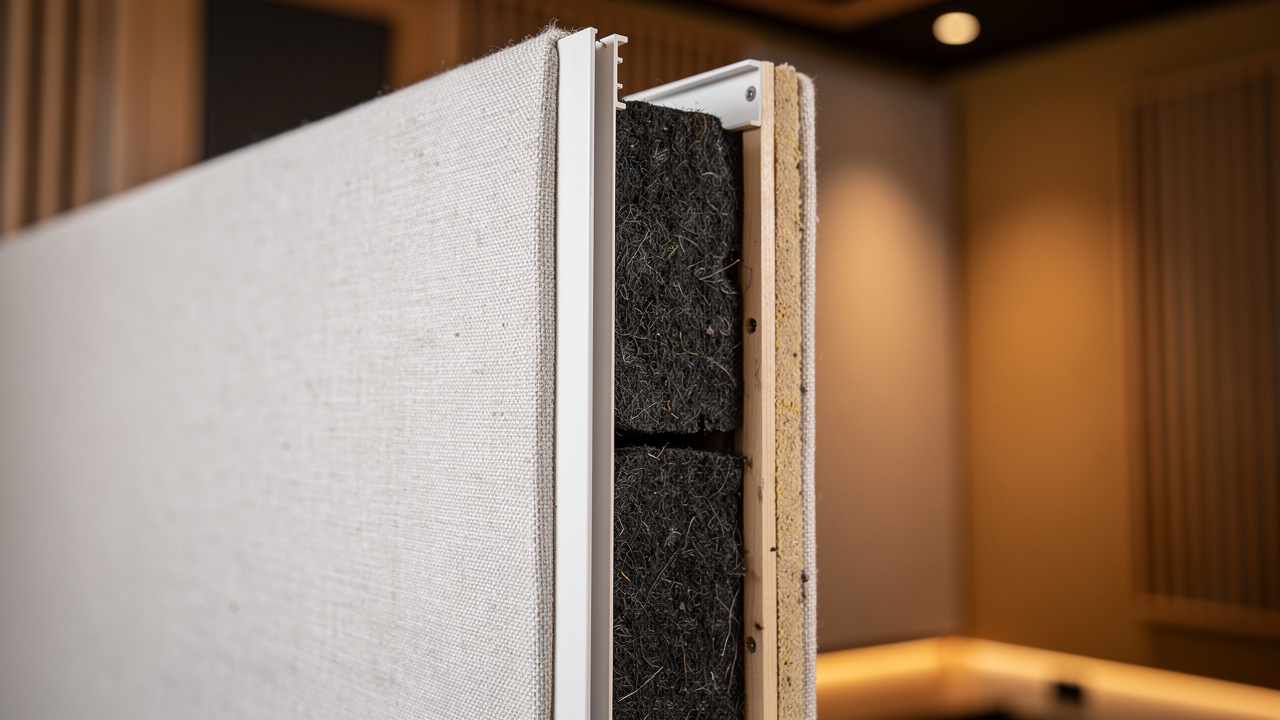
PVC profile track systems for stretch fabric walls offer a double benefit by pairing a refined visual finish with real acoustic improvement.
The same tracks that clamp the fabric also hold sound‑absorbing insulation, so walls look elegant while cutting unwanted noise.
Behind the fabric surface, mineral wool or other acoustic panels absorb sound energy that would otherwise bounce between hard surfaces.
The porous fabric lets sound pass into the insulation instead of reflecting straight back into the room.
This lowers echo and reverberation, which makes speech clearer in meeting rooms and keeps cinemas, home theaters, and restaurants more comfortable.
Because fabric, insulation, and PVC profiles form one integrated system, designers do not need separate bulky acoustic clouds or panels mounted on top of finished walls.
The fabric can match brand colors or interior themes, while the hidden layers quietly do the acoustic work.
That balance of style and performance is why architects across Dubai, Abu Dhabi, and Sharjah now write PVC track fabric systems into their specifications for premium projects.
Noise is more than a minor annoyance.
According to the World Health Organization, environmental noise ranks among the leading environmental risks to health in Europe, linked to sleep disturbance and stress.
By reducing reflections from walls, PVC track‑based acoustic treatments help keep background noise down and improve privacy in offices, clinics, and hotels.
The thermal side matters too.
A fabric layer over insulation slightly improves wall surface temperature consistency, which supports comfort in heavily air‑conditioned UAE buildings.
Guidance from ASHRAE highlights how limiting thermal bridges and exposed hard surfaces can help control condensation and drafts, and PVC track systems fit well into that approach.
“Good acoustics are comfort you can’t see, but you feel them every day.” — Waseem Technical project team
How Waseem Technical Installs PVC Profile Track Systems Across The UAE
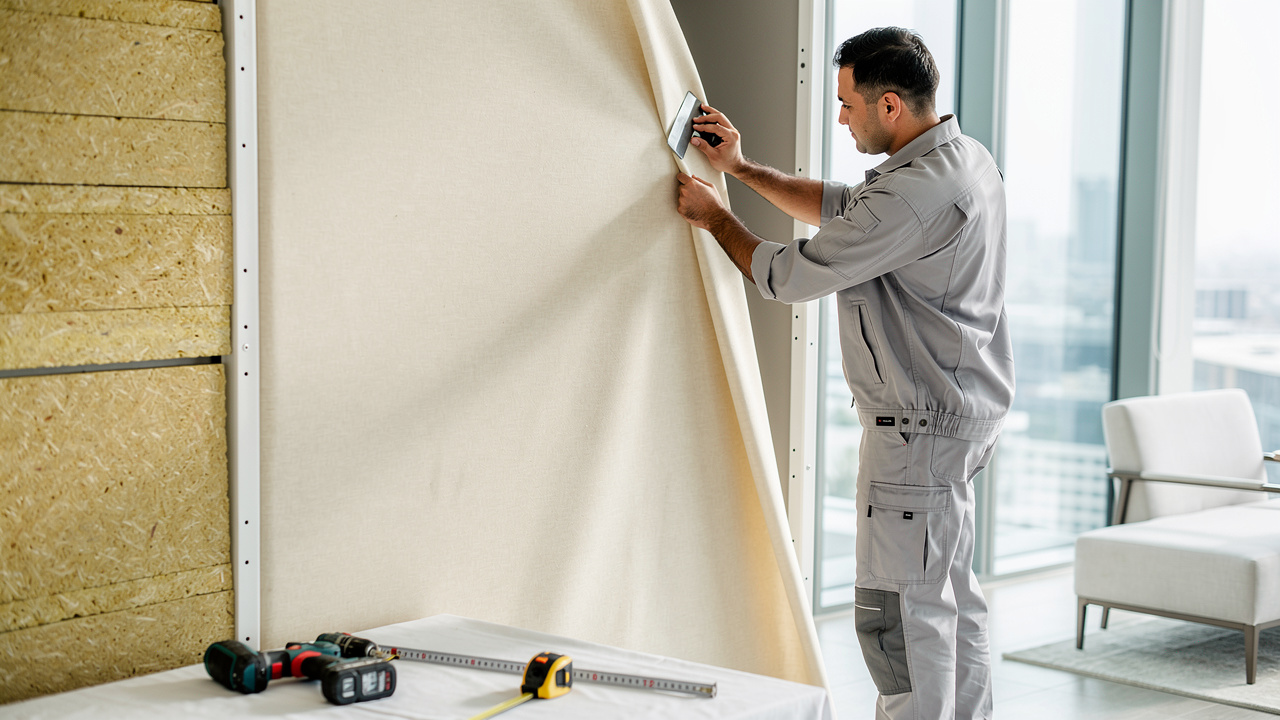
Waseem Technical installs PVC profile track stretch fabric systems as complete, ready‑to‑use packages across the UAE and wider GCC.
Their focus on soundproofing and acoustics, rather than general maintenance, keeps projects aligned with both visual and performance goals.
Every project starts with a free acoustic check.
A specialist visits the space, measures the room, listens to the noise issues, and reviews finishes, air‑conditioning noise, and neighbor noise.
Clients then receive a clear report with recommended wall or ceiling areas for PVC track fabric treatment, suggested insulation types, and fabric options that suit the interior style.
Once the design is agreed, Waseem Technical uses CNC cutting for acoustic panels so they fit precisely behind the PVC tracks.
Typical installation steps include:
Fixing the PVC tracks to walls or ceilings.
Placing acoustic insulation behind the future fabric surface.
Stretching and locking the chosen fabric into the tracks.
Working carefully around sockets, screens, and doors with neat detailing.
Because the system is cut and shaped on site, it works just as well for straight walls in apartments as for curved auditorium walls or complex hotel corridors.
Waseem Technical has more than thirteen years of experience across offices, recording studios, schools, hospitals, and private homes in Dubai, Abu Dhabi, Sharjah, and the rest of the GCC.
According to the U.S. Environmental Protection Agency, people spend about ninety percent of their time indoors, so this kind of acoustic and visual upgrade has a real daily impact.
Clients value that Waseem Technical handles specification, supply, installation, and aftercare for PVC profile tracks under one specialist team.
Conclusion
PVC profile tracks for fabric walls give UAE properties a practical way to gain both style and performance in one system.
These PVC frames resist local heat, humidity, and dust, keep fabric tension stable, and support crisp edges with no visible fixings.
When combined with acoustic insulation, the same tracks cut echo and noise, making offices, hotels, and homes more pleasant to live and work in.
With on‑site fabrication, installers can follow curves, corners, and complex layouts without expensive custom metalwork or high‑maintenance timber.
Waseem Technical brings this technology to life across the Emirates with free acoustic checks, precise CNC fabrication, and careful installation.
To explore a seamless, high‑performance fabric wall installation for your space, call or WhatsApp Waseem Technical at +971 50 209 7517 and book your acoustic consultation.
Frequently Asked Questions
Are PVC profile tracks suitable for curved or irregular walls?
Yes, PVC profile tracks work very well on curved or irregular walls. Installers cut and shape the profiles on site to follow bends, columns, and unusual corners. The fabric then stretches across these shapes while the track keeps tension even. No factory‑made special pieces are usually needed, which saves time and cost.
How do PVC profile tracks improve room acoustics?
PVC profile tracks improve acoustics by holding fabric in front of sound‑absorbing insulation panels. Sound passes through the fabric into the insulation, where energy is absorbed instead of reflected. This reduces echo and reverberation, which helps speech clarity and listening comfort. The approach suits home theaters, recording rooms, offices, classrooms, and auditoriums.
How long do PVC profile tracks last in UAE conditions?
PVC profile tracks usually last many years in UAE buildings, often well over a decade with basic care. The material resists heat, UV light, humidity, and rust, so it does not warp, crack, or corrode. Most maintenance comes down to occasional cleaning of the fabric and a quick check of mechanical fixings.
What is the difference between straight edge and V‑grooved PVC profile tracks?
Straight edge PVC tracks create a flat, flush finish where the fabric meets adjacent surfaces. This style suits clean, modern interiors. V‑grooved tracks form a slim shadow line that adds depth and breaks up large wall areas. Waseem Technical uses both options so designers can select the look that best fits each project.
Does Waseem Technical offer a consultation before installation?
Yes, Waseem Technical offers a free acoustic check before installation. A specialist visits your space, reviews noise issues, and prepares a clear report with recommendations. You can then decide how far to go with fabric walls and other acoustic upgrades. To book, contact Waseem Technical at +971 50 209 7517.