Noise control has become a major concern in Dubai’s modern apartments, villas, hotels, and commercial buildings. With high-rise living, tiled interiors, and open-plan layouts becoming common, many property owners are searching for effective flooring soundproofing solutions.
Two of the most popular options are acoustic floor underlay and acoustic floating floors. While both improve sound insulation, they work differently and suit different environments.
What Is Acoustic Floor Underlay?
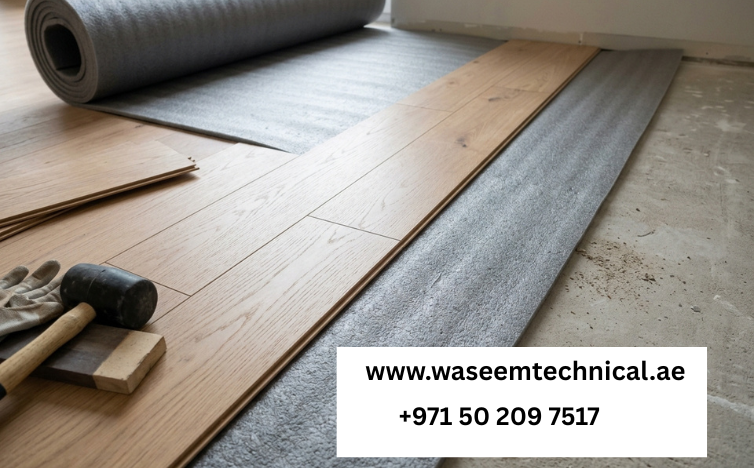
Acoustic floor underlay is a sound-absorbing layer installed between the structural floor and the finished flooring material such as laminate, vinyl, tile, carpet, or wood flooring.
Its primary purpose is to reduce impact noise caused by:
- Footsteps
- Furniture movement
- Daily household activity
- Equipment vibration
According to Waseem Technical, acoustic underlay absorbs vibrations before they transfer into the building structure, improving sound privacy in apartments, offices, hotels, and studios.
What Is an Acoustic Floating Floor?
Acoustic floating floors are advanced flooring systems where the top floor surface is separated from the structural slab using resilient layers, mounts, or acoustic insulation materials.
Instead of being directly connected to the subfloor, the floor “floats” independently, reducing sound and vibration transfer.
Floating floors are widely used in:
- Luxury apartments
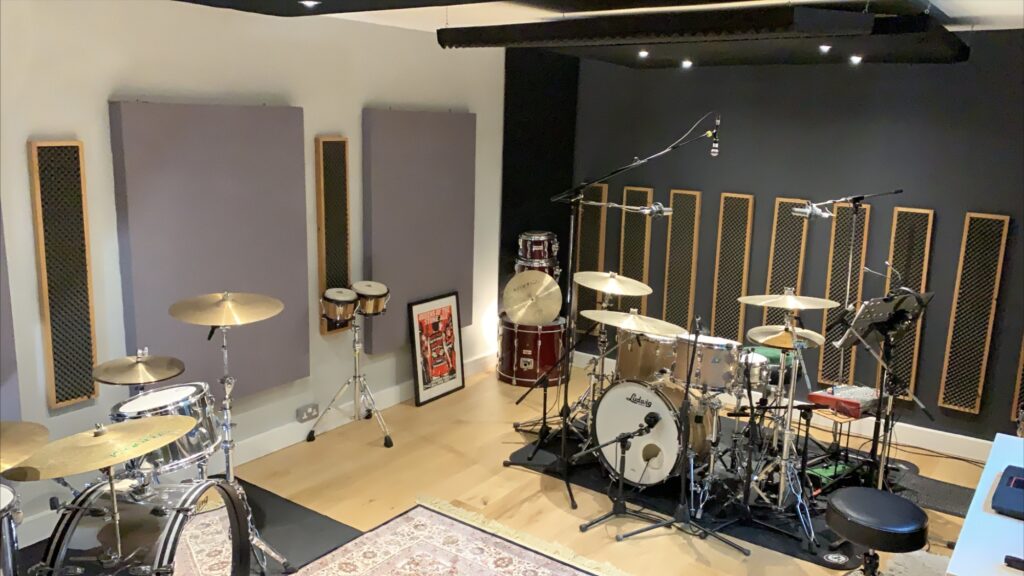
- Recording studios
- Hotels
- Cinemas
- Gyms
- Commercial buildings
Waseem Technical explains that floating floors are highly effective for reducing both airborne noise and impact vibrations in acoustic-sensitive spaces.
Underlay vs Floating Floor — Key Differences
1. Noise Reduction Performance
Acoustic Underlay
Acoustic underlay mainly reduces impact noise such as footsteps and furniture movement. It works well in residential apartments and offices where moderate soundproofing is required.
High-density rubber and foam underlays absorb floor vibrations before they travel into neighboring rooms.
Floating Floor
Floating floors provide stronger acoustic isolation because they completely decouple the flooring surface from the structural slab. This significantly reduces both impact and airborne noise.
Acoustic experts note that floating floors deliver superior sound insulation compared to standard underlay systems in high-performance acoustic environments.
Winner: Floating Floor
For maximum soundproofing in Dubai buildings, floating floors perform better overall.
2. Installation Complexity
Acoustic Underlay
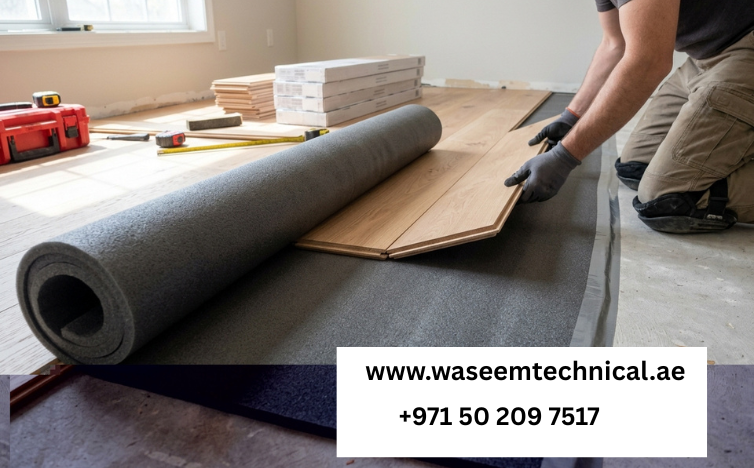
Underlay systems are easier and faster to install. The material is rolled out directly beneath the finished flooring surface.
Most residential projects can install acoustic underlay without major structural changes.
Floating Floor
Floating floor systems require more technical planning and installation expertise. Proper spacing, resilient mounts, and edge isolation are essential for performance.
Incorrect installation can reduce acoustic effectiveness and create movement issues. Reddit flooring discussions frequently mention that floating floors require careful subfloor preparation to avoid creaking and instability.
Winner: Acoustic Underlay
Underlay is simpler, quicker, and more affordable to install.
3. Suitability for Dubai Apartments
Acoustic Underlay
Underlay is highly popular in Dubai apartments because it provides effective footstep noise reduction without significantly increasing floor height.
It works especially well under:
- Laminate flooring
- Vinyl flooring
- Engineered wood
- Carpet systems
Floating Floor
Floating floors are ideal for luxury apartments and premium developments where stronger acoustic performance is required between units.
They are particularly effective in high-rise buildings where structural vibration control is important.
Winner: Depends on Budget and Noise Level
- Standard apartments → Acoustic underlay
- Luxury and high-performance projects → Floating floors
4. Comfort and Walking Feel
Acoustic Underlay
Underlay adds cushioning beneath the floor, improving walking comfort while reducing vibration transfer.
Floating Floor
Floating floors provide even greater cushioning and acoustic softness because of their isolated structure. Waseem Technical notes that floating floors create a softer and more comfortable underfoot experience.
Winner: Floating Floor
Floating systems generally provide better comfort and vibration isolation.
5. Cost Comparison
| Feature | Acoustic Underlay | Floating Floor |
|---|---|---|
| Installation Cost | Lower | Higher |
| Acoustic Performance | Moderate to High | Very High |
| Installation Difficulty | Easy | Complex |
| Structural Isolation | Limited | Excellent |
| Impact Noise Reduction | Good | Excellent |
| Airborne Noise Reduction | Moderate | Strong |
| Floor Height Increase | Minimal | Higher |
Which Flooring Solution Works Better in Dubai?
Choose Acoustic Underlay If You Need:
- Budget-friendly soundproofing
- Faster installation
- Basic footstep noise reduction
- Apartment flooring upgrades
- Moderate acoustic improvement
Acoustic underlay works extremely well for most residential flooring projects in Dubai. It offers a practical balance between performance and affordability.
Choose Floating Floors If You Need:
- Maximum sound insulation
- Professional acoustic performance
- Vibration control
- High-end luxury interiors
- Studio or cinema-grade soundproofing
Floating floors are the preferred choice for premium acoustic projects where high-performance sound isolation is required.
Can You Use Both Together?
Yes — and in many projects, this delivers the best results.
Acoustic specialists explain that acoustic underlay is often an essential component within floating floor systems themselves.
Combining both solutions improves:
- Impact noise control
- Airborne sound insulation
- Structural vibration reduction
- Overall acoustic comfort
Call us: Contact Waseem Technical Soundproofing Expert in Dubai: +971 50 209 7517
Final Verdict
For most Dubai apartments and offices, acoustic floor underlay provides an affordable and effective solution for reducing everyday floor noise. However, when maximum acoustic performance is required — especially in luxury buildings, studios, gyms, cinemas, and commercial projects — floating floors offer superior sound isolation and vibration control.
The right choice ultimately depends on your budget, building type, and acoustic requirements.