Soundproofing has become increasingly important in Dubai homes, offices, studios, hotels, and commercial buildings. Traffic noise, construction activity, shared walls, and open building designs often create unwanted sound problems that affect comfort and privacy.
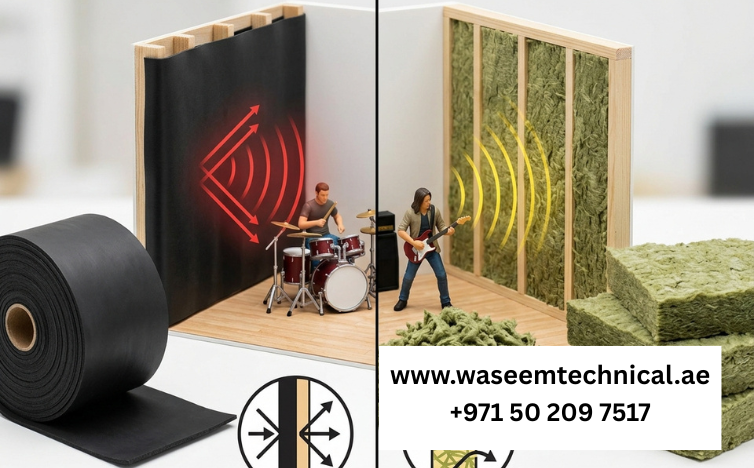
Two of the most commonly used soundproofing materials are MLV (Mass Loaded Vinyl) and Rockwool insulation. Both materials improve acoustic performance, but they work differently and are used for different soundproofing purposes.
Understanding the differences between MLV and Rockwool helps property owners choose the right solution for their specific acoustic needs.
What Is MLV?
MLV, or Mass Loaded Vinyl, is a dense and flexible soundproofing material designed to block airborne sound transmission.
It is commonly installed inside:
- Walls
- Ceilings
- Floors
- Drywall systems
- Mechanical rooms
MLV works mainly by adding mass to building structures, making it harder for sound waves to pass through surfaces.
What Is Rockwool?
Rockwool is a mineral wool insulation material made from natural stone and recycled materials.
It is widely used for:
- Acoustic insulation
- Thermal insulation
- Fire resistance
- Wall cavity filling
Rockwool absorbs sound energy inside wall and ceiling cavities, helping reduce noise transfer and reverberation.
Main Difference Between MLV and Rockwool
| Feature | MLV | Rockwool |
|---|---|---|
| Main Function | Blocks sound | Absorbs sound |
| Material Type | Dense vinyl barrier | Mineral wool insulation |
| Best For | Airborne noise blocking | Internal sound absorption |
| Flexibility | High | Moderate |
| Thermal Insulation | Limited | Excellent |
| Fire Resistance | Moderate | Excellent |
| Installation Location | Surface barrier layer | Inside cavities |
| Weight | Heavy | Lightweight |
How MLV Works for Soundproofing
Adds Mass to Walls and Ceilings
MLV blocks sound by increasing the density of surfaces.
The additional mass helps reduce transmission of:
- Voices
- TV sound
- Music
- Traffic noise
- Office noise
The heavier barrier makes it more difficult for sound waves to travel through walls and ceilings.
Controls Airborne Noise
MLV performs especially well against airborne sound.
It is commonly used in:
- Apartments
- Offices
- Recording studios
- Meeting rooms
- Hotels
because it helps improve sound isolation between spaces.
Works Well in Thin Spaces
One advantage of MLV is that it provides strong sound blocking without requiring thick wall systems.
This makes it useful for Dubai projects where space efficiency is important.
How Rockwool Works for Soundproofing
Absorbs Sound Energy
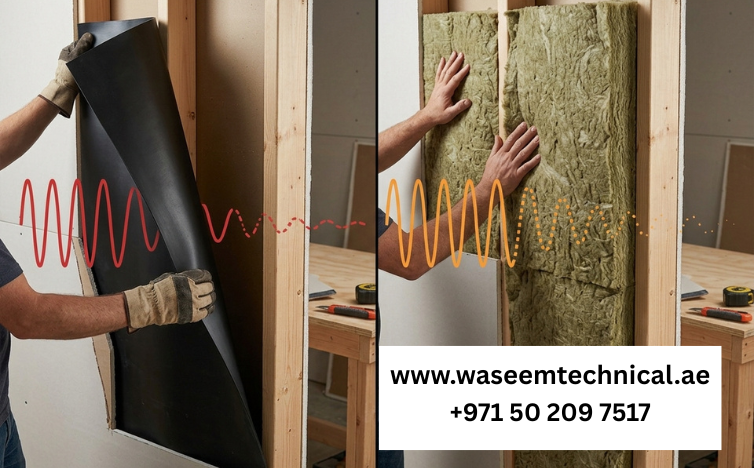
Rockwool reduces sound reflections and sound movement inside wall cavities.
Instead of blocking sound like MLV, it absorbs acoustic energy and reduces resonance within structures.
Improves Wall and Ceiling Performance
Rockwool is commonly installed between:
- Metal studs
- Ceiling joists
- Partition systems
- Floating floors
It improves overall wall and ceiling acoustic performance when combined with drywall systems.
Provides Thermal Benefits
Rockwool also offers excellent thermal insulation, helping reduce heat transfer in Dubai’s hot climate.
This dual-purpose performance makes it popular in residential and commercial projects.
Which Material Is Better for Dubai Apartments?
MLV Advantages
MLV is often better for:
- Shared apartment walls
- TV noise reduction
- Traffic noise control
- Bedroom privacy
- Office sound isolation
Its dense structure blocks airborne sound effectively in compact spaces.
Rockwool Advantages
Rockwool works well for:
- Internal wall cavities
- Ceiling insulation
- Thermal insulation
- Reducing echo inside walls
- Multi-layer acoustic systems
It performs best when combined with drywall and other soundproofing materials.
Which Material Is Better for Recording Studios?
Professional studios usually use both materials together.
MLV Helps:
- Block external sound
- Reduce sound leakage
- Improve isolation
Rockwool Helps:
- Absorb sound reflections
- Improve wall cavity acoustics
- Control internal resonance
Using both creates stronger overall studio soundproofing performance.
Which Material Performs Better Against Traffic Noise?
MLV generally performs better against direct airborne traffic noise because of its dense mass barrier design.
It is commonly installed behind drywall or under flooring systems to reduce:
- Road noise
- Construction sound
- Outdoor activity
- Mechanical equipment noise
Rockwool helps support sound reduction but works best as part of a layered acoustic assembly.
MLV vs Rockwool for Ceilings
MLV Ceiling Systems
Better for:
- Blocking sound transfer between floors
- Reducing neighbor noise
- Improving apartment privacy
Rockwool Ceiling Systems
Better for:
- Absorbing cavity resonance
- Improving thermal insulation
- Supporting suspended ceiling systems
Many Dubai ceiling systems combine both materials for maximum performance.
MLV vs Rockwool for Floors
MLV Flooring Applications
Used under flooring systems to reduce airborne sound and vibration transfer.
Rockwool Flooring Applications
Used inside floating floor systems to improve impact sound insulation and thermal performance.
Fire Resistance Comparison
Rockwool performs better for fire resistance because it is non-combustible mineral insulation.
MLV may offer some fire-rated options, but Rockwool is generally preferred for projects requiring stronger fire protection.
Thermal Insulation Comparison
| Feature | MLV | Rockwool |
|---|---|---|
| Heat Insulation | Limited | Excellent |
| Temperature Control | Basic | Strong |
| Energy Efficiency | Moderate | High |
Rockwool is the stronger option for combined thermal and acoustic insulation.
Why Dubai Buildings Often Use Both
Modern Dubai buildings frequently combine MLV and Rockwool because the materials complement each other.
Together they provide:
- Sound blocking
- Sound absorption
- Thermal insulation
- Vibration reduction
- Better wall performance
Professional soundproofing systems often layer materials for stronger acoustic results.
Common Applications for MLV
- Apartment walls
- Acoustic ceilings
- Recording studios
- Office partitions
- Mechanical rooms
- Home theaters
Common Applications for Rockwool
- Wall cavities
- Ceiling insulation
- Floating floors
- Thermal insulation systems
- Commercial partitions
- Acoustic ceiling assemblies
Importance of Professional Installation
Soundproofing performance depends heavily on proper installation.
Professional acoustic specialists ensure:
- Correct layering
- Airtight sealing
- Gap prevention
- Proper wall assembly design
- Optimized acoustic performance
Even high-quality materials can perform poorly if installed incorrectly.
Which One Should You Choose?
Choose MLV If You Need:
- Strong airborne sound blocking
- Thin soundproofing systems
- Apartment privacy improvement
- Traffic noise reduction
Choose Rockwool If You Need:
- Acoustic absorption
- Thermal insulation
- Fire resistance
- Internal wall cavity treatment
Choose Both If You Want Maximum Performance
The best professional soundproofing systems often combine MLV and Rockwool together.
Call us: Contact Waseem Technical Soundproofing Expert in Dubai: +971 50 209 7517
Final Thoughts
Both MLV and Rockwool are highly effective soundproofing materials, but they serve different purposes. MLV is better for blocking sound transmission, while Rockwool excels at sound absorption and thermal insulation.
For many Dubai homes, offices, studios, and commercial buildings, combining both materials creates the best acoustic performance and long-term comfort.