As commercial and residential construction continues to evolve across South Africa, controlling unwanted noise has become an important consideration for property owners, architects, and interior designers. Apartments, offices, entertainment venues, studios, hotels, and industrial environments can all be exposed to unwanted airborne noise from neighbouring spaces, traffic, machinery, music, and building equipment.
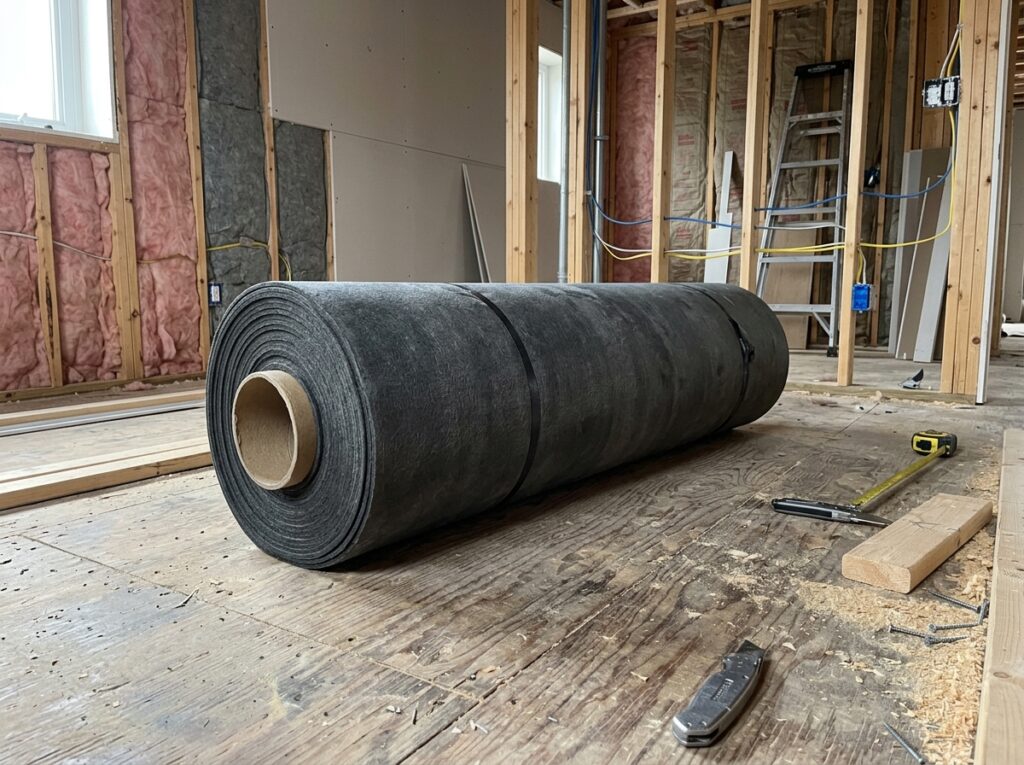
Mass Loaded Vinyl (MLV) is a dense and flexible soundproofing membrane developed to add mass to building assemblies without requiring excessively thick construction. Its versatility allows it to be incorporated into walls, ceilings, floors, partitions, doors, and specialised enclosures.
For projects in Cape Town and surrounding areas, MLV can be an important component of a professionally designed sound isolation system where reducing noise transmission is a priority.
Understanding Mass Loaded Vinyl
Mass Loaded Vinyl is a high-density acoustic membrane designed primarily to reduce the transmission of airborne sound.
Its basic principle is straightforward: adding mass to a barrier makes it more difficult for airborne sound energy to pass through it.
Unlike acoustic wall panels that are designed to absorb sound within a room, MLV is generally installed as part of the building structure itself.
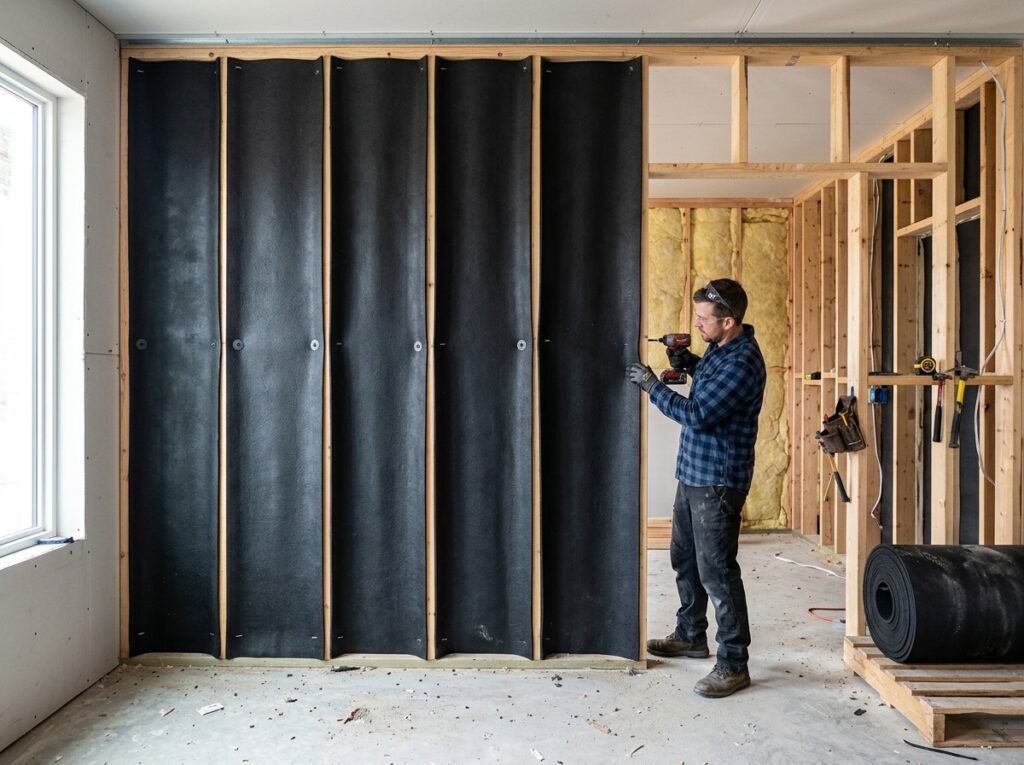
It can be incorporated behind or between layers of construction materials, creating an additional sound-blocking layer without requiring a massive increase in wall thickness.
Why MLV Is Useful in Soundproofing Systems
Traditional heavy sound barriers can take up considerable space. This can become a problem during renovations or projects where maintaining usable floor area is important.
MLV provides another option.
Its flexible format allows it to add substantial mass to an assembly while remaining relatively thin compared with many rigid alternatives.
This makes it particularly useful for:
- Apartment walls
- Office partitions
- Home theatres
- Studio rooms
- Hotel rooms
- Ceilings
- Floor assemblies
- Mechanical enclosures
- Industrial areas
The Main Benefits of MLV
High Density
MLV is manufactured with a high-density composition that provides additional mass for sound isolation applications.
Space-Efficient Construction
Its relatively thin profile allows soundproofing systems to incorporate additional mass without creating extremely thick walls.
Flexible Installation
The membrane can be rolled, cut, and fitted around different sections of a construction assembly.
Wide Range of Applications
MLV can be incorporated into walls, ceilings, floors, doors, partitions, and equipment enclosures.
Works With Other Acoustic Materials
MLV can be combined with other components to create a more comprehensive soundproofing system.
Low Maintenance
Once correctly installed and protected within a building assembly, the membrane generally requires little routine maintenance.
MLV for Residential Soundproofing
Noise between neighbouring rooms or properties can affect privacy and comfort.
MLV can be incorporated into residential construction systems to help reduce airborne sound transmission.
Common applications include:
Apartment Separating Walls
MLV can become part of a wall assembly between neighbouring apartments or internal rooms.
Bedroom Walls
Where privacy is important, additional sound-blocking mass can be incorporated into the surrounding construction.
Home Offices
A soundproofed home office can benefit from reduced transmission of conversations and other household noise.
Home Cinema Rooms
Entertainment systems can generate considerable sound. MLV can form part of the surrounding wall and ceiling assembly to help limit sound escaping into adjacent rooms.
Commercial Applications of Mass Loaded Vinyl
Businesses often need different levels of acoustic privacy depending on the function of each space.
In offices, MLV can be incorporated into partitions separating:
- Meeting rooms
- Executive offices
- Conference rooms
- Private workspaces
- Reception areas
Hotels can also use MLV as part of wall and floor assemblies where reducing sound transfer between guest areas is important.
Restaurants, entertainment spaces, and commercial facilities may require additional sound isolation to prevent noise from spreading into surrounding areas.
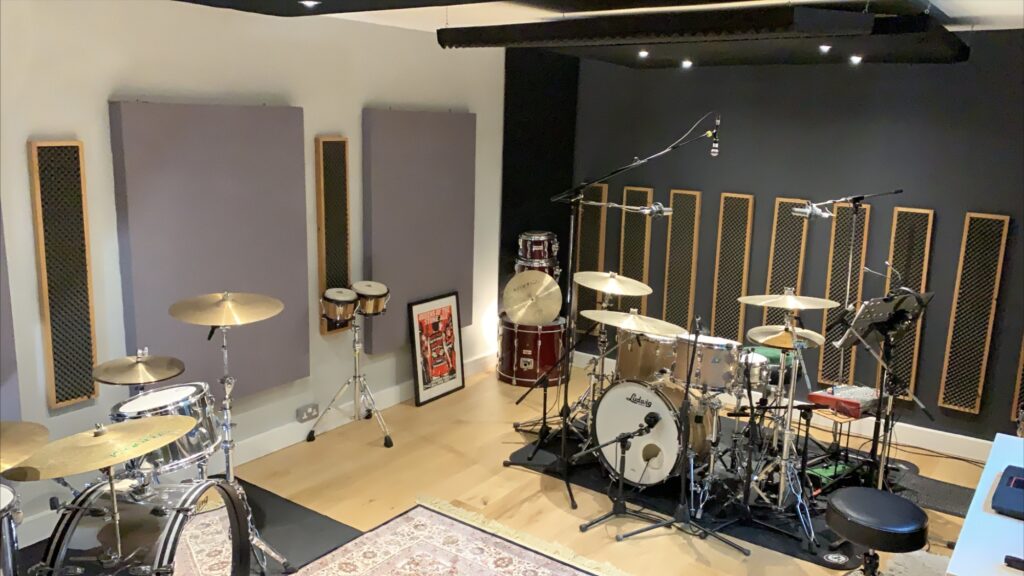
MLV for Recording Studios and Media Spaces
Recording studios require careful control over sound transmission. Music, vocals, instruments, and monitoring systems can generate sound levels that need to remain contained within the studio.
MLV can form one layer within a broader studio construction system.
A typical sound isolation strategy may combine:
Mass Loaded Vinyl + Acoustic Insulation + Resilient Construction + Multiple Board Layers + Acoustic Sealant
Each component serves a different purpose.
MLV contributes additional mass, insulation helps manage sound within cavities, resilient systems can reduce vibration transfer, and sealed joints help prevent sound leakage through gaps.
Industrial and Mechanical Applications
Industrial environments can present particularly demanding acoustic conditions.
Generators, compressors, pumps, machinery, and mechanical equipment can produce continuous airborne noise that travels through surrounding structures.
MLV can be incorporated into suitable:
- Equipment enclosures
- Mechanical rooms
- Acoustic barriers
- Partitions
- Wall systems
- Ceiling assemblies
For these applications, the complete acoustic design should also consider vibration isolation and structure-borne noise rather than relying on MLV alone.
MLV Applications in Cape Town
Cape Town combines residential neighbourhoods, commercial districts, hotels, restaurants, entertainment venues, studios, and industrial areas.
These different environments can present very different acoustic challenges.
A residential apartment may require better separation between neighbouring units, while a recording studio may need much stronger isolation from surrounding spaces.
MLV provides flexibility because the membrane can be incorporated into different construction assemblies according to the requirements of the project.
It can be particularly valuable in renovation situations where adding a conventional heavy barrier would consume too much usable space.
MLV for Floors and Ceilings
Walls are not the only areas where unwanted sound can travel.
Noise can also move through floors and ceilings between different levels of a building.
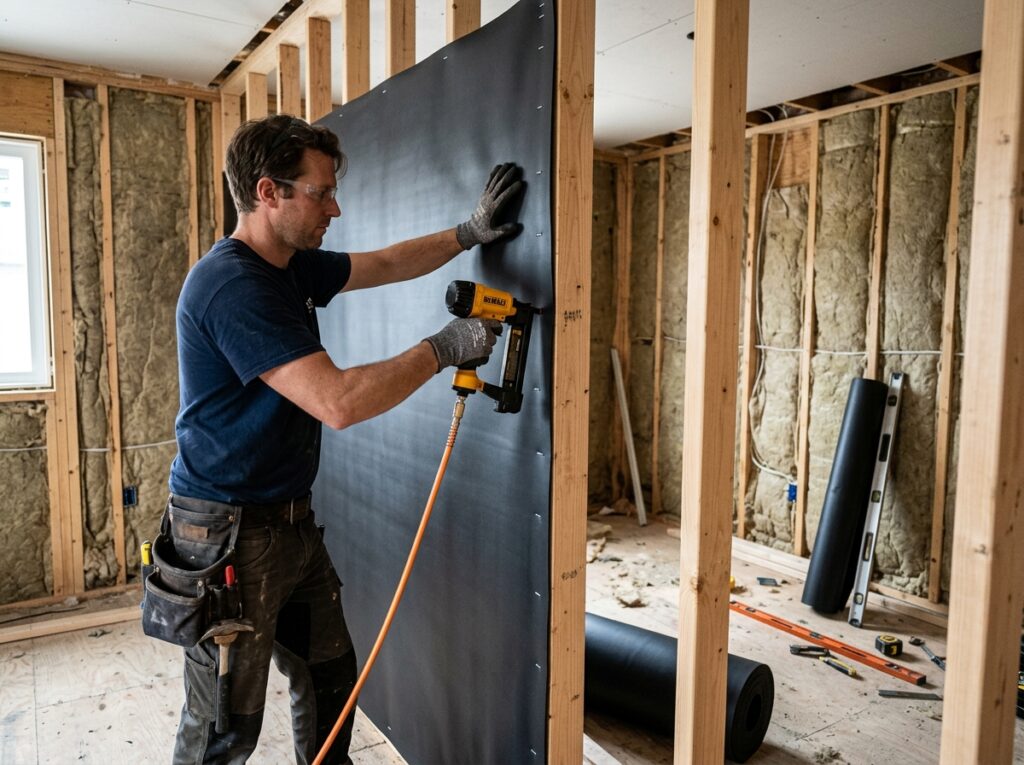
MLV can be incorporated into suitable floor assemblies to contribute additional mass and reduce airborne sound transmission.
In ceiling systems, it can be positioned as part of a layered construction designed to improve separation between floors or rooms.
The final performance depends on the entire assembly, including structural connections, insulation, board layers, and potential sound leakage paths.
What to Consider When Selecting MLV
Choosing the right membrane requires more than simply selecting a product based on its appearance.
Density and Weight
MLV products can vary in density and weight. The appropriate specification should match the requirements of the soundproofing system.
Available Space
Projects with limited wall or ceiling depth may benefit from the relatively thin format of MLV.
Surface Area
Calculate the total area requiring treatment before purchasing material to ensure sufficient coverage.
Type of Noise
Identify whether the primary problem is airborne noise, impact noise, or vibration.
MLV is mainly associated with airborne sound isolation and may need to be combined with other technologies for different noise problems.
Construction Method
The membrane should be selected according to how it will be incorporated into the wall, floor, ceiling, or enclosure.
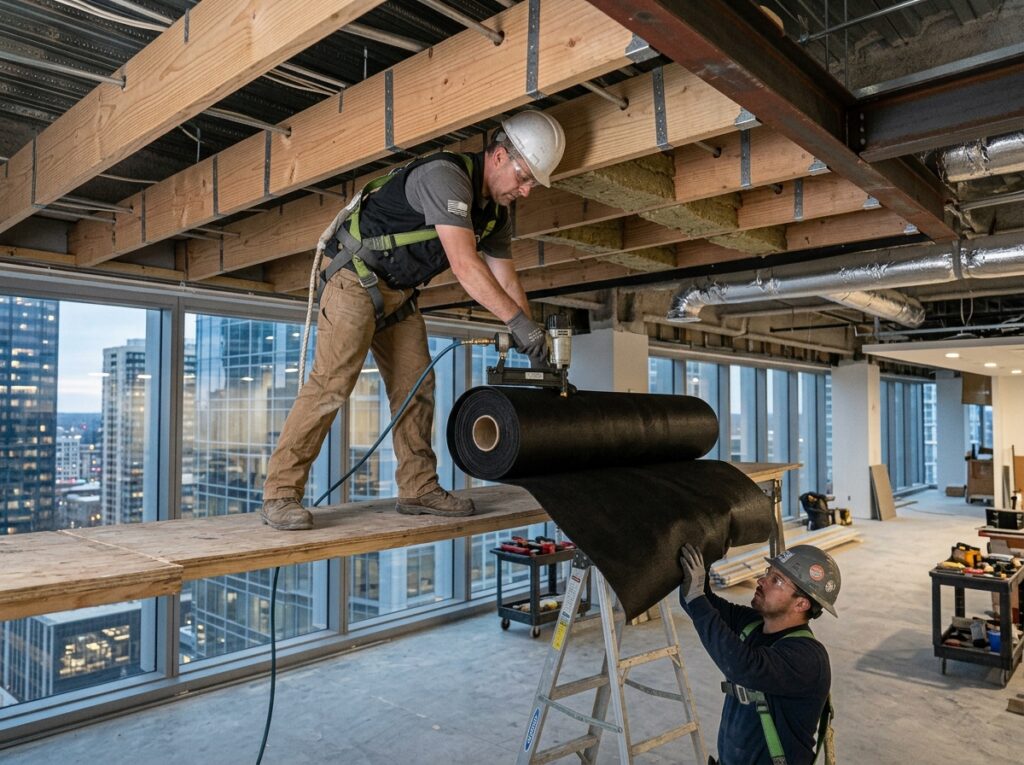
Proper Installation Matters
MLV performance depends heavily on installation quality.
Even a high-density sound barrier can be compromised when sound finds an alternative path around it.
Important installation considerations include:
- Maintaining continuous coverage where required.
- Properly treating joints between membrane sections.
- Sealing penetrations.
- Addressing electrical and mechanical openings.
- Minimising unnecessary gaps.
- Integrating the membrane correctly with surrounding materials.
Doors, windows, vents, service penetrations, and structural connections should also be considered when designing a complete sound isolation system.
MLV and Acoustic Panels Are Not the Same
It is important to distinguish between soundproofing barriers and sound absorption products.
Mass Loaded Vinyl is primarily used to help reduce sound transmission through construction assemblies.
Acoustic panels, such as PET or wood slat panels, are generally used to absorb reflected sound within a room.
For example, a recording studio may require both:
- MLV for sound isolation
- Acoustic panels for internal room acoustics
Using the appropriate product for the specific acoustic problem is essential for achieving effective results.
Frequently Asked Questions
Can MLV completely soundproof a room?
MLV can significantly contribute to sound isolation, but it is normally one component of a complete soundproofing assembly. The performance also depends on walls, floors, ceilings, doors, windows, joints, and other construction details.
Can MLV be installed behind drywall?
Yes. It can be incorporated between suitable layers of a wall assembly.
Is MLV useful for apartment soundproofing?
Yes. It can be incorporated into walls, ceilings, and floor assemblies to help reduce airborne sound transmission between spaces.
Can MLV reduce music noise?
It can help reduce airborne music transmission when correctly integrated into a suitable sound isolation system.
Does MLV absorb room echo?
Not primarily. MLV is designed mainly as a sound barrier. Materials such as PET panels, fabric panels, or wood slatted acoustic panels are generally more appropriate for controlling room echo.
Conclusion
Mass Loaded Vinyl provides a flexible way to introduce additional sound-blocking mass into walls, ceilings, floors, partitions, and specialised acoustic enclosures. Its relatively thin and adaptable format makes it particularly useful for projects where conventional heavy barriers would take up too much space.
For residential, commercial, studio, hospitality, and industrial projects in Cape Town and across South Africa, MLV can become a valuable component of a properly engineered soundproofing system.
When combined with acoustic insulation, resilient construction, suitable board layers, effective sealing, and appropriate installation techniques, Mass Loaded Vinyl can help reduce airborne noise transmission and create quieter, more private indoor spaces.