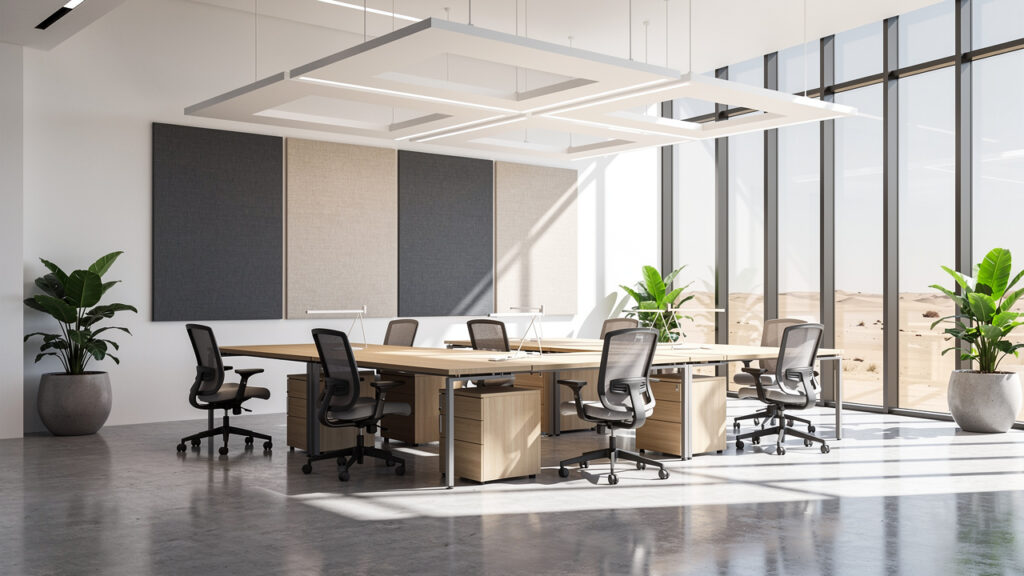
Open offices, glass walls, and marble floors turn many UAE commercial spaces into loud echo chambers. Fabric acoustic panels give those rooms a soft acoustic skin that stops sound from bouncing around. This guide explains the best places to install them so every panel actually works.
Without a placement plan, panels often sit on random free walls and do very little. Money goes out, noise stays in, and staff or guests still complain. That is the frustration many property and facility managers face.
Here is the good news. Fabric acoustic panels use a sound‑absorbing core wrapped in breathable fabric to cut echo and improve speech clarity. In the next sections you will see:
why many UAE buildings struggle with noise,
which walls and ceilings matter most in offices, meeting rooms, lobbies, and showrooms,
and how Waseem Technical designs layouts that suit each space.
Keep reading to map out your commercial space before a single panel goes on the wall.
Key Takeaways
Panel placement matters more than panel quantity. When panels sit at key reflection points, a modest treated area can sound much quieter. Random coverage around the room usually gives a weak result.
The loudest UAE commercial spaces share common trouble spots. Open offices, conference rooms, hotel lobbies, restaurants, and showrooms all need panels on hard parallel walls and overhead zones. Treating these areas first gives the biggest improvement.
Professional acoustic assessment removes guesswork. Waseem Technical studies room shape, finishes, and usage patterns, then recommends specific wall and ceiling areas for fabric acoustic panels. This approach saves budget and delivers predictable results.
Why Commercial Spaces in the UAE Struggle With Noise Control
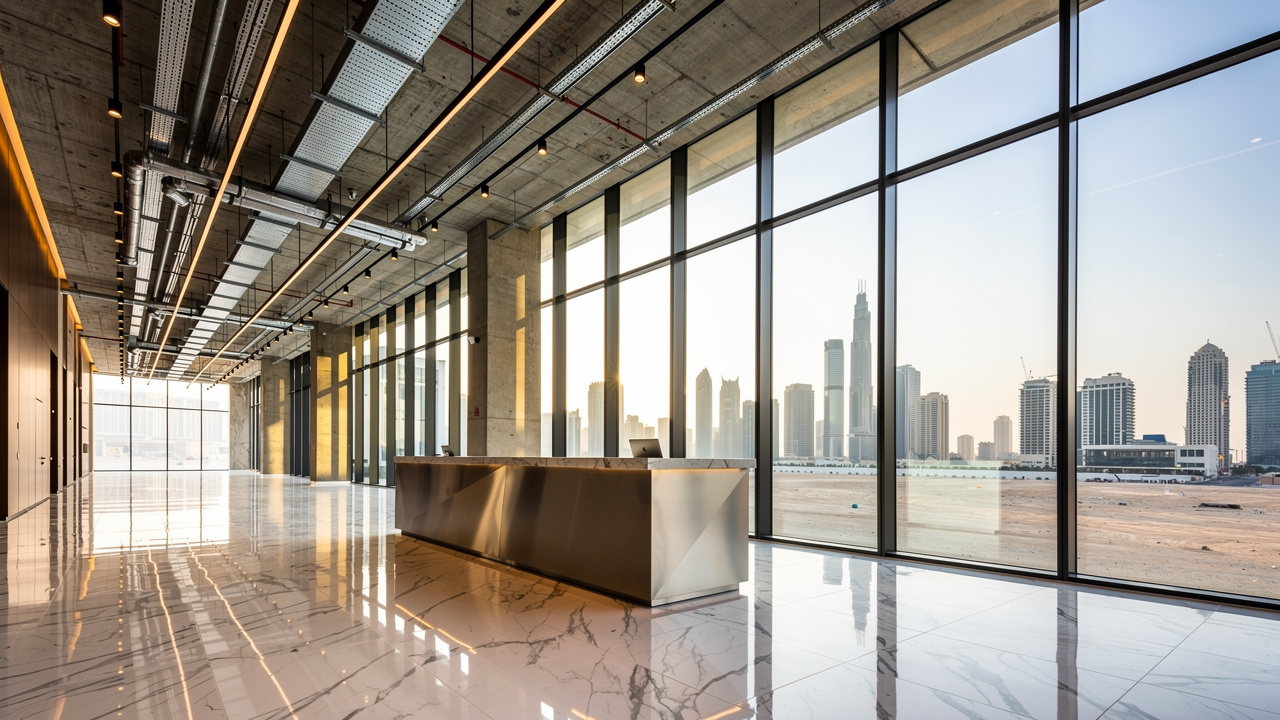
Commercial spaces in the UAE struggle with noise control because hard surfaces and open layouts cause echo and long reverberation. These design choices look impressive but give sound many places to bounce rather than be absorbed.
Office towers in Dubai, Abu Dhabi, and Sharjah often use glass facades, concrete cores, and polished stone floors, and research on the Numerical Evaluation of Cooling and thermal performance of reflective building materials confirms how hard exterior and interior finishes shape the acoustic and energy environment inside commercial spaces. Restaurants and hotel lobbies add metal, mirrors, and high ceilings. All of these surfaces reflect sound, so every conversation, plate movement, or phone ring spreads across the space.
“Good acoustics are as important as good lighting and air quality in a workplace.” — Adapted from research themes by the World Green Building Council
Noise inside these buildings is not just an annoyance, and studies on CORRELATION OF FAÇADE CHARACTERISTICS on energy and daylighting performance of office buildings further illustrate how facade design choices directly influence the internal acoustic and comfort conditions occupants experience. It affects how people work, meet, and relax. Research from the World Green Building Council links better acoustic comfort in offices to productivity gains of around five to eight percent. That is a big impact for facility managers who care about performance and staff retention.
Open‑plan layouts add to the issue. When there are few full‑height partitions, speech travels freely from one zone to the next. According to the International WELL Building Institute, acoustics often ranks among the top workplace complaints in open offices. Similar patterns appear in busy cafes and hotel lounges, where guests struggle to hear each other across a table.
In many UAE buildings, mechanical systems add another layer of background noise:
air conditioning units and fan coil systems,
extract fans in pantries and kitchens,
lift machinery and traffic from loading bays.
Without fabric acoustic panels or similar treatments, the result is a hard, reflective space that wears people out over the day.
Best Places to Install Fabric Acoustic Panels in Commercial Spaces
The best places to install fabric acoustic panels in commercial spaces are the surfaces that reflect the most sound. When you treat those reflection points first, you get a bigger improvement than if you simply cover random empty walls.
In simple terms, reflection points are the spots where sound from people or speakers hits a surface and bounces straight toward listeners. These are often the walls beside and behind seating areas, as well as the ceiling above. Panels in those positions reduce echo, shorten reverberation time, and raise speech clarity.
High‑quality fabric acoustic panels often reach Noise Reduction Coefficient (NRC) values of 0.85 or more, which means they absorb most mid‑range sound hitting them — a performance range validated by research on Sound Absorption Coefficient Data for laboratory-produced sound-absorbing panels. According to ASTM International, NRC values come from lab tests that average absorption across several key speech frequencies. When you place panels smartly, you need fewer of them to change how a room sounds.
Here is a quick view of where panels usually work hardest in common UAE commercial spaces:
| Space Type | Key Panel Locations |
|---|---|
| Open Office | Side walls near desks, ceilings above work zones |
| Meeting Room | Side walls beside table, rear wall, ceiling above table |
| Hospitality Lobby | Upper walls, ceiling clouds above seating, accent walls |
| Retail Showroom | Walls above displays, rear wall, ceiling in busy aisles |
| Shared Lobby Or Corridor | Upper walls, ceiling baffles, corners for low‑frequency build‑up |
Next comes a closer look at each space type.
Open-Plan Offices and Co-Working Spaces
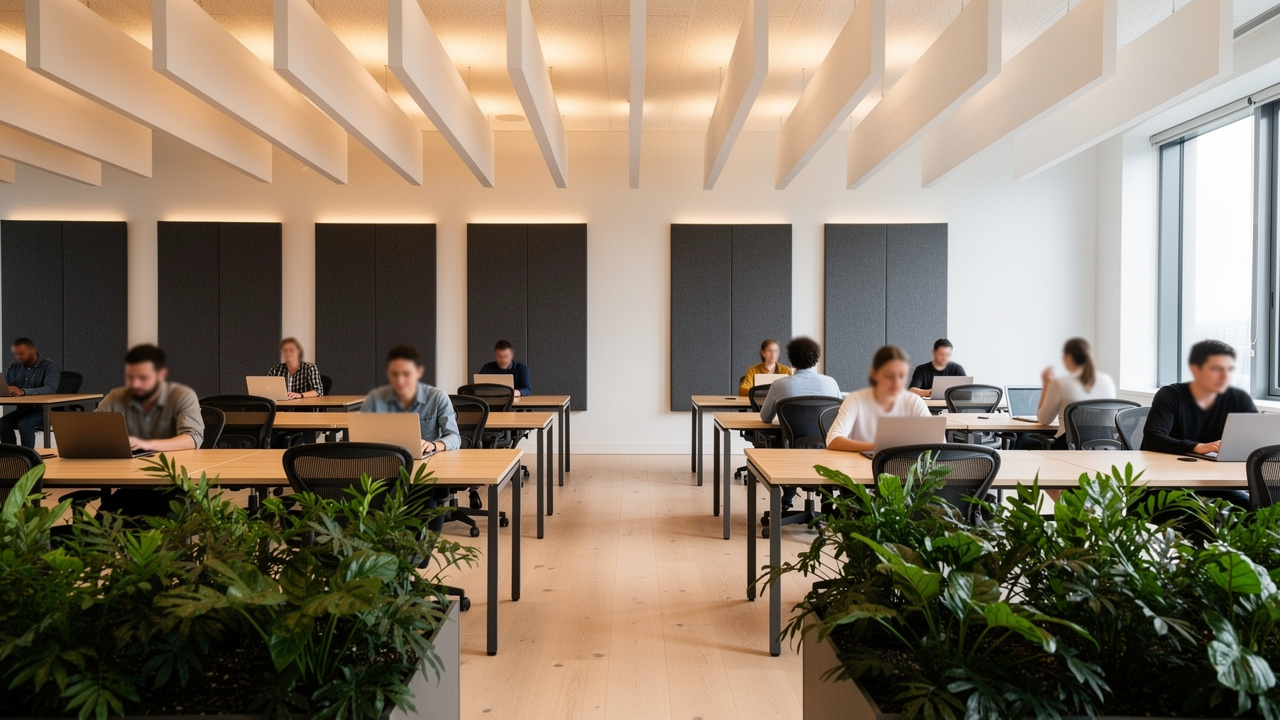
Open‑plan offices and co‑working spaces work best when fabric acoustic panels sit between work areas and main noise paths. In these rooms, people talk on phones, join video calls, and chat across desks, so speech noise travels far. The goal is to cut that travel distance and make conversations feel more local.
Focus on three key steps:
Treat long parallel walls. Start with wall panels along the main desk rows, especially on long parallel walls that face each other. These surfaces act like mirrors for sound, so covering sections at ear height has a strong effect.
Use ceiling panels over open work zones. Add ceiling baffles or clouds above open work areas to catch the speech energy that rises and would otherwise bounce off bare slabs.
Support quiet zones. Add extra coverage around focus rooms, phone booths, and video conferencing pods so breakout speech does not wash into open desks.
This mix reduces the Speech Transmission Index between zones and improves privacy, a finding consistent with FDTD-based simulation and optimization research on open plan offices that models how acoustic treatments reshape sound paths across workspaces. Staff notice that distant chatter becomes a soft murmur instead of a sharp distraction.
Waseem Technical supplies and installs fabric acoustic panels for offices across Dubai and the wider UAE, matching panel layouts to each client’s workstation plan and ceiling design.
Conference Rooms and Boardrooms
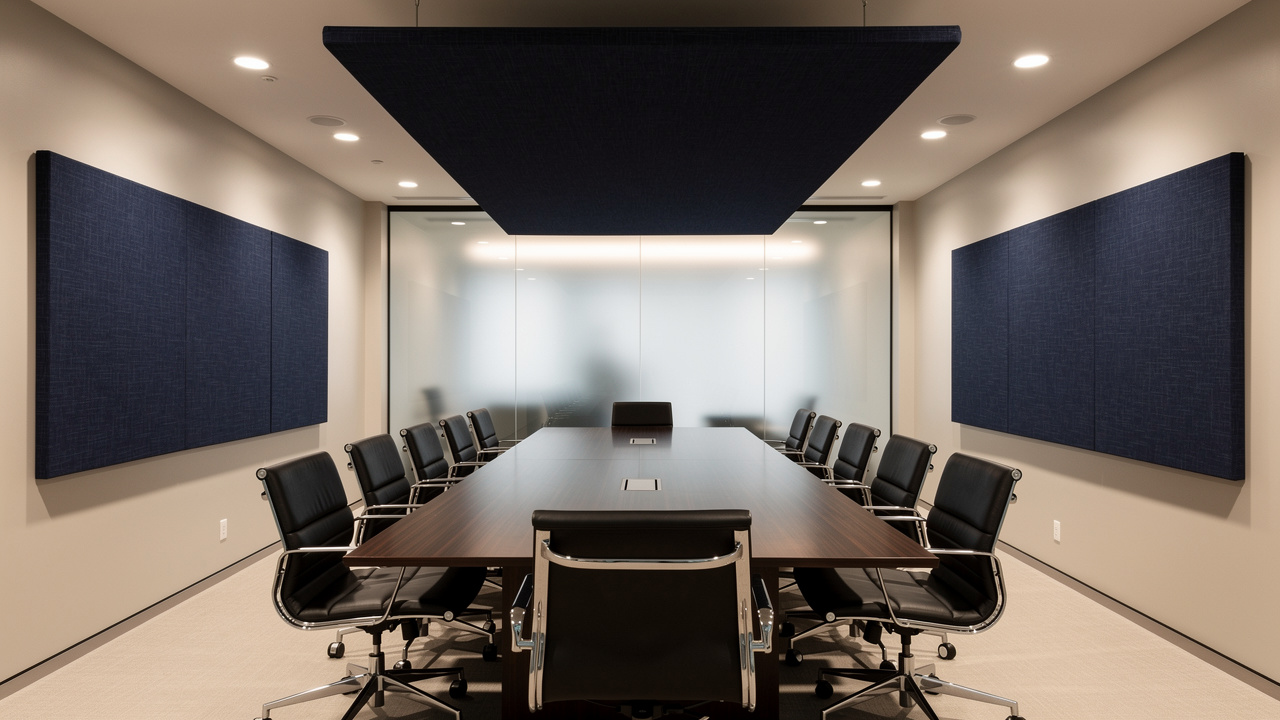
Conference rooms and boardrooms need fabric acoustic panels focused tightly on the meeting table area. Hard parallel walls and glass fronts often create flutter echoes that blur speech and make remote calls harder to follow. A few well‑placed panels can fix that without changing the look of the room.
Place panels in this order:
Side walls beside the table: Install panels on the two side walls that run beside the table, roughly at seated head height.
Rear wall behind listeners or presenters: Add more panels on the rear wall to reduce late reflections coming back toward speakers.
Ceiling above the table: A group of ceiling panels or a single large cloud above the table calms vertical reflections and improves microphone pickup.
Panels with NRC values around 0.85 to 0.95 give a noticeable drop in reverberation, and recent work on Development of Sustainable Sound absorbing panels made from natural fibers demonstrates how modern panel materials consistently achieve this absorption performance range in controlled room settings. Guidance from the Acoustical Society of America notes that shorter reverberation times help speech intelligibility in small rooms.
Waseem Technical can also provide UV‑printed fabric acoustic panels here, so brand logos or graphic walls double as acoustic treatment.
Tip: Many acoustic consultants aim for a mid‑frequency reverberation time between 0.4 and 0.6 seconds in boardrooms. That range supports clear speech for both in‑person and video meetings.
Hotel Lobbies, Restaurants, and Hospitality Venues
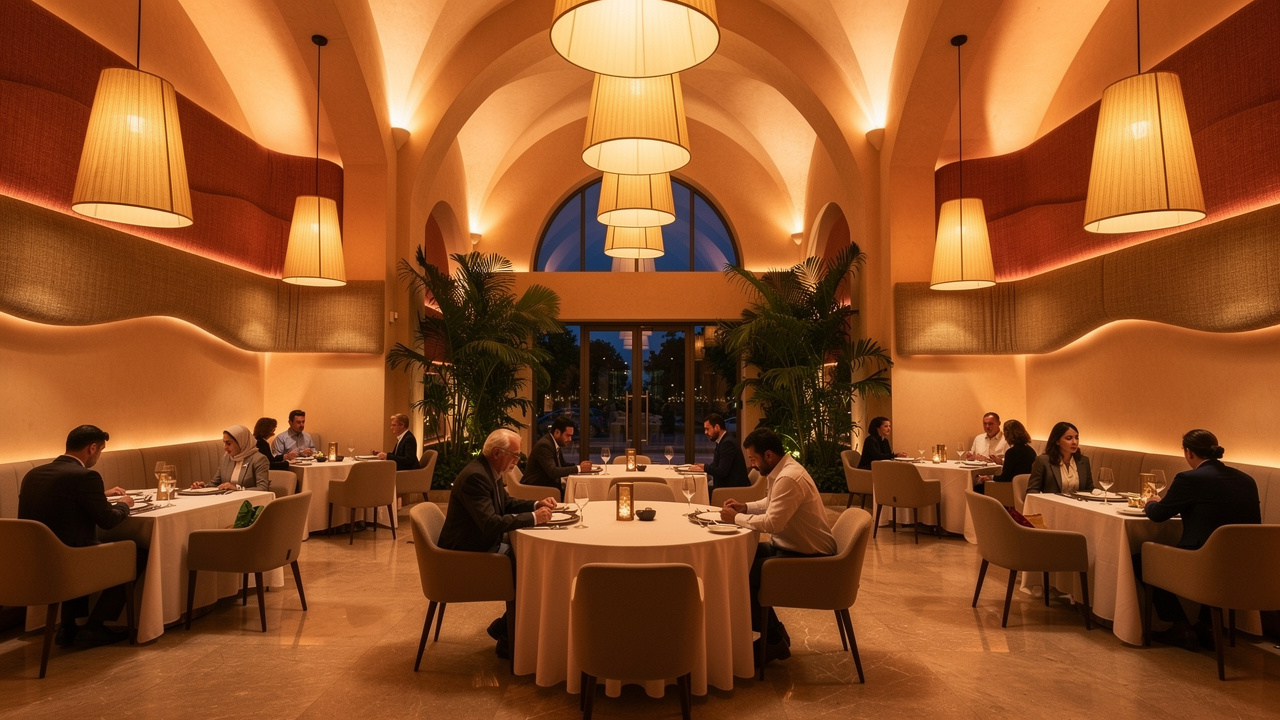
Hotel lobbies, restaurants, and lounges across the UAE often sound much louder than they need to be. Marble floors, floor‑to‑ceiling glass, and bare concrete ceilings keep reverberation times well above comfortable dining levels. Guests end up raising their voices just to talk across a table.
Fabric acoustic panels work best here when placed:
on high wall bands that circle the space, and
as ceiling clouds above seating or dining areas.
Upper wall zones are ideal because they do not take up valuable decor or branding space at eye level and still intercept a large share of reflected sound. Ceiling clouds can follow the layout of tables or seating clusters, helping each pocket of space feel calmer.
Color‑matched or UV‑printed panels fit neatly into interior design schemes without drawing attention, and research into Engineered fabric-based composite panels from natural and synthetic fibers shows how tailored fabric structures can simultaneously meet aesthetic, thermal, and acoustic requirements in demanding hospitality environments. For coastal areas such as Dubai Marina and Abu Dhabi corniche hotels, Waseem Technical often recommends moisture‑resistant acoustic fabrics that handle humidity and air‑conditioning cycles well. That way, panels keep both their look and acoustic performance over many years.
Retail Spaces and Commercial Showrooms
Retail spaces and showrooms face a mix of loud footsteps, conversations, and background music. High ceilings and long, shiny aisles tend to magnify these sounds. The right fabric acoustic panels make it easier for customers to talk with staff and focus on displays.
Effective locations include:
Rear wall of the store, which often reflects music and speech back into the space.
Side walls above shelving or display units, where panels can sit without blocking products.
Ceiling panels in checkout or high‑traffic zones, so queuing areas and entrances feel calmer.
Panels do not need to cover every surface; breaking up long reflective runs already changes how sound moves, a principle supported by studies on Development of low-cost textile sound absorber boards, which demonstrate that strategic placement of absorptive materials significantly alters acoustic conditions even in large, hard-surfaced commercial rooms. When panels sit above displays, customers still see merchandise clearly while the room sounds more controlled.
Custom printed fabric allows panels to carry brand visuals, product imagery, or wayfinding graphics. Waseem Technical often uses this approach in UAE showrooms that want premium presentation with quieter acoustics. The result is a space that looks polished, supports clear conversations, and keeps staff less fatigued through long shifts.
Shared Commercial Corridors and Building Lobbies
Shared corridors and building lobbies link many different tenants and functions, so uncontrolled noise in these areas spreads quickly. Hard finishes in lift lobbies and long passageways turn simple footsteps and short chats into long trails of echo. Visitors can feel unsettled even before they reach their destination office or clinic.
To calm these spaces, focus on:
Upper wall bands along long corridors, especially where people turn corners or queue near lifts.
Ceiling baffles or rafts in tall lobbies, which cut down on overall reverberation.
Corner positions, where low‑frequency energy tends to build up and create a boomy effect.
For very large lobbies, Waseem Technical often combines fabric absorption panels with sound diffuser panels, an approach aligned with findings on Upcycling microfiber waste from wastewater into acoustic panels, which highlights how varied absorptive materials can be deployed together to achieve broad-spectrum noise reduction in high-traffic interior spaces. Diffusers scatter remaining sound energy so the room feels natural rather than overly dead. This balanced approach suits reception halls, bank lobbies, and mixed‑use commercial atriums across the UAE.
How Professional Assessment Determines the Right Panel Placement

Professional assessment for fabric acoustic panels defines the right placement by mapping reflection points, noise sources, and room usage. That process replaces guesswork with a clear layout for each wall and ceiling.
A typical assessment from Waseem Technical starts with a site visit across Dubai or other Emirates. The team studies:
room dimensions and ceiling heights,
finishes such as glass, gypsum board, wood, and concrete,
and how people use each space during a normal day.
In key spaces, they may measure existing reverberation time with calibrated microphones to see how long sound lingers after a clap or test signal, a methodology consistent with Acoustic performance optimization of natural-fiber micro-perforated panels, which demonstrates the value of measured acoustic data in guiding panel selection and placement decisions.
From there, they mark primary reflection paths from people and loudspeakers to listener positions. They also highlight loud equipment zones such as pantries, printers, or reception areas. This map shows exactly where fabric acoustic panels will intercept the most sound energy instead of covering low‑impact surfaces.
“The effectiveness of fabric acoustic panels is directly dependent on where they are installed, not simply how many are installed. Incorrect placement produces uneven absorption and fails to address the primary acoustic problems within a space.” — Waseem Technical
Based on this analysis, Waseem Technical proposes panel sizes, thicknesses, and patterns for each area. CNC cutting equipment in their workshop allows panels to follow columns, sloped ceilings, and other irregular shapes without gaps. For higher noise spaces that approach industrial levels, they also consider guidance from the Occupational Safety and Health Administration, which sets 85 decibels as a key action level for worker hearing protection.
The assessment stage also includes coordination with architects, interior designers, and fit‑out contractors. That way, panel layouts respect fire exits, lighting, HVAC grilles, and signage. The result is an acoustic treatment plan that fits the building program and delivers predictable improvements once installed.
Maintaining Fabric Acoustic Panels in UAE Commercial Environments
Maintaining fabric acoustic panels in UAE commercial environments keeps acoustic performance stable and protects your long‑term investment. The encouraging part is that these panels need only light, regular care.
Dust is the main challenge in cities like Dubai and Abu Dhabi. Over time, dust can settle into the fabric surface and slightly reduce acoustic transparency. Property teams should:
vacuum panels gently every few months using a soft brush attachment, similar to how they clean upholstered furniture;
avoid harsh scrubbing that could damage the fabric weave.
For small marks, most acoustic fabrics accept mild detergent on a damp cloth, as long as the core does not become soaked. In coastal or humid districts, moisture‑resistant fabrics and cores help prevent warping or odors.
Manufacturer data from Armstrong shows many acoustic products keeping performance for 10 to 20 years with basic cleaning and inspections.
Waseem Technical often recommends periodic walk‑through checks in large commercial sites. During these visits, technicians confirm that fixings remain tight, no panels have shifted, and any building changes have not created new noise problems. Simple care like this helps fabric acoustic panels deliver value over a long service life.
The Bottom Line
The bottom line on fabric acoustic panels in commercial spaces is that smart placement delivers the biggest acoustic gains. Treating key reflection points on walls and ceilings matters far more than filling every empty surface.
UAE offices, hotels, restaurants, and showrooms all face the same basic challenge of hard, reflective finishes. With a clear assessment and targeted installation, Waseem Technical turns those loud rooms into comfortable places to work and meet.
For project advice or site visits across Dubai, the wider UAE, Qatar, Oman, Kuwait, and Saudi Arabia, contact Waseem Technical on +971 50 209 7517 or visit waseemtechnical.ae.
Frequently Asked Questions
Question 1: How many fabric acoustic panels does a commercial space typically need?
The number of fabric acoustic panels a commercial space needs depends on room size, finishes, and target reverberation time. Smaller meeting rooms may need only a few panels on key walls, while large open offices often require grouped ceiling and wall coverage after acoustic assessment. As a rough rule, treating 20–40% of the main reflective surfaces is common in offices and hospitality spaces.
Question 2: Can fabric acoustic panels be installed on glass or concrete walls in commercial buildings?
Yes, fabric acoustic panels can be installed on glass, concrete, drywall, wood, and metal in commercial buildings. Waseem Technical chooses mounting systems such as brackets, standoffs, or adhesive backings that match each surface, so panels stay secure without damaging structural elements or glazing.
Question 3: Are fabric acoustic panels compliant with UAE fire safety regulations?
Yes, commercial fabric acoustic panels can meet UAE Civil Defense fire safety standards when specified correctly. Waseem Technical uses mineral wool or fiberglass cores with certified fire‑rated fabrics, and provides documentation so consultants and authorities can approve the materials during project review.
Question 4: How long do fabric acoustic panels last in UAE commercial environments?
Well‑made fabric acoustic panels often last ten to twenty years in UAE commercial spaces with simple maintenance. Moisture‑resistant fabrics and stable cores are especially helpful in coastal districts, where humidity and air‑conditioning cycles place more stress on interior finishes over time.
Question 5: Can fabric acoustic panels be customized with company branding for commercial offices?
Yes, fabric acoustic panels can be customized with company branding for commercial offices. Waseem Technical offers direct UV printing on acoustic surfaces, so logos, graphics, or full wall artwork appear sharp and durable. This turns acoustic treatment into part of the overall interior identity while still controlling noise.