A beautifully designed interior can still feel uncomfortable when sound is not properly controlled.
Large areas of glass, plaster, concrete, tile and other hard finishes can create strong sound reflections. In offices, this may make conversations difficult to follow. In restaurants and hospitality spaces, it can cause background noise to build up. In conference rooms, excessive reverberation can reduce speech clarity.
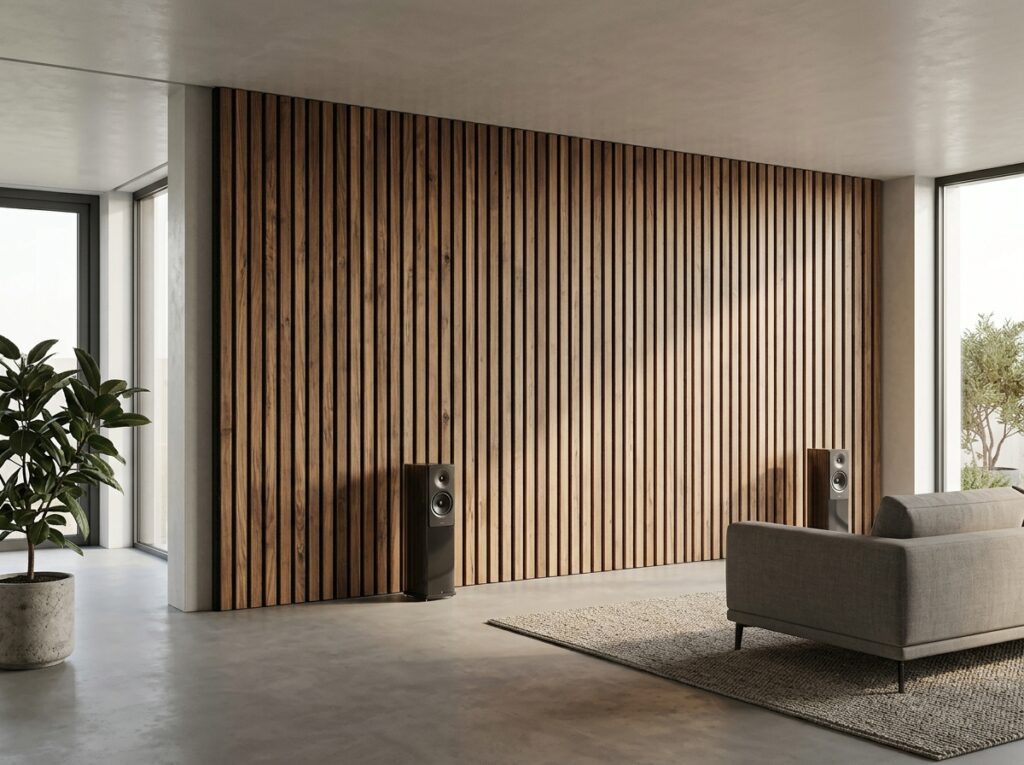
For projects seeking to combine architectural wood finishes with acoustic treatment, acoustic wood panels offer an effective way to address both visual and acoustic requirements.
In Ouagadougou, Burkina Faso, acoustic wood panels can be incorporated into offices, meeting rooms, hotels, restaurants, educational facilities, auditoriums, studios and other interior environments where appearance and acoustic comfort are equally important.
Unlike ordinary decorative wood cladding, acoustic wood panels are specifically constructed to interact with sound. Depending on the system, they may use grooves, slots, perforations, acoustic fabric, felt or an absorptive backing to allow sound energy to enter the panel rather than simply reflecting from a hard timber surface. Current technical systems demonstrate how panel construction and backing can significantly affect acoustic performance.
What Are Acoustic Wood Panels?
Acoustic wood panels are architectural wood-based panels designed to provide sound absorption while maintaining the appearance of timber.
They can be manufactured using materials such as:
- Natural wood veneer
- MDF
- Engineered wood
- Solid timber
- Laminated finishes
- Perforated wood
- Grooved wood
- Slotted wood
- Acoustic felt backing
The visible wooden surface provides the architectural finish, while openings or an engineered backing system allow the panel to contribute to sound absorption.
This makes acoustic wood panels different from conventional decorative timber boards.
A solid, uninterrupted wooden board is generally a reflective surface. An engineered acoustic wood panel, on the other hand, can be designed with perforations, grooves or slots and combined with an absorptive cavity or backing.
For example, one current acoustic wood panel system uses a perforated front surface, acoustic fabric and mineral wool backing and reports an αw range of 0.97–1.00 for its specified configuration. This performance is specific to that product and assembly and should not be generalized to all wood panels.
Why Wood and Acoustics Work Well Together
Wood is popular in architectural interiors because it introduces warmth, texture and natural visual character.
However, untreated wood surfaces are generally reflective.
The acoustic performance comes from the construction of the panel system, rather than simply from the fact that it is made from wood.
Depending on the design, sound can enter through:
- Perforations
- Linear slots
- Grooves
- Gaps between slats
- Acoustic fabric
- Acoustic felt
- Other openings in the panel
Behind these openings, an absorptive material or cavity can help dissipate acoustic energy.
This creates a system that can provide both a timber appearance and useful sound absorption.
Acoustic Wood Panels vs Decorative Wood Wall Panels
This distinction is important when planning an interior project.
A decorative wood wall may look similar to an acoustic wood panel but provide very different acoustic performance.
A true acoustic wood system may include:
Wood surface + openings + acoustic backing + cavity + installation system
The complete assembly determines the acoustic result.
For example, one current wood panel range specifies 9 mm PET felt backing behind its solid-wood acoustic panels and provides tested sound absorption information for the complete system.
Therefore, an attractive timber finish should not automatically be marketed as an acoustic treatment.
Acoustic Wood Panels for Offices in Ouagadougou
Modern offices require an environment where employees can communicate without excessive background noise.
Open-plan offices can be especially challenging because multiple conversations happen simultaneously.
Hard surfaces can cause these conversations to reflect around the room, increasing the overall acoustic energy.
Acoustic wood panels can be installed on selected walls or ceilings to introduce sound absorption while maintaining a premium architectural appearance.
Applications include:
- Executive offices
- Open-plan workspaces
- Reception areas
- Meeting rooms
- Conference rooms
- Boardrooms
- Collaboration spaces
- Training rooms
Wood finishes can also help create visual zoning within large office interiors.
For example, a meeting area can use a wood acoustic feature wall while workstations use different acoustic treatments.
This allows the acoustic strategy to become part of the interior architecture.
Meeting Rooms and Conference Spaces
Speech clarity is one of the most important requirements in a meeting room.
When sound reflects repeatedly between hard surfaces, the direct speech signal becomes mixed with delayed reflections.
This can make conversations less comfortable and reduce intelligibility.
Acoustic wood panels with appropriate perforation or slot patterns can help absorb these reflections.
Some systems are specifically designed for offices, meeting rooms, conference halls and educational facilities.
For a meeting room in Ouagadougou, the treatment strategy should consider:
- Room dimensions
- Ceiling height
- Wall construction
- Flooring
- Furniture
- Glass surfaces
- Number of occupants
- Existing reverberation
- Required speech clarity
- Panel coverage
The objective should be to achieve balanced acoustic treatment rather than simply covering the most visible wall.
Acoustic Wood Panels for Hotels and Hospitality Interiors
Hotels need to create environments that feel comfortable and visually refined.
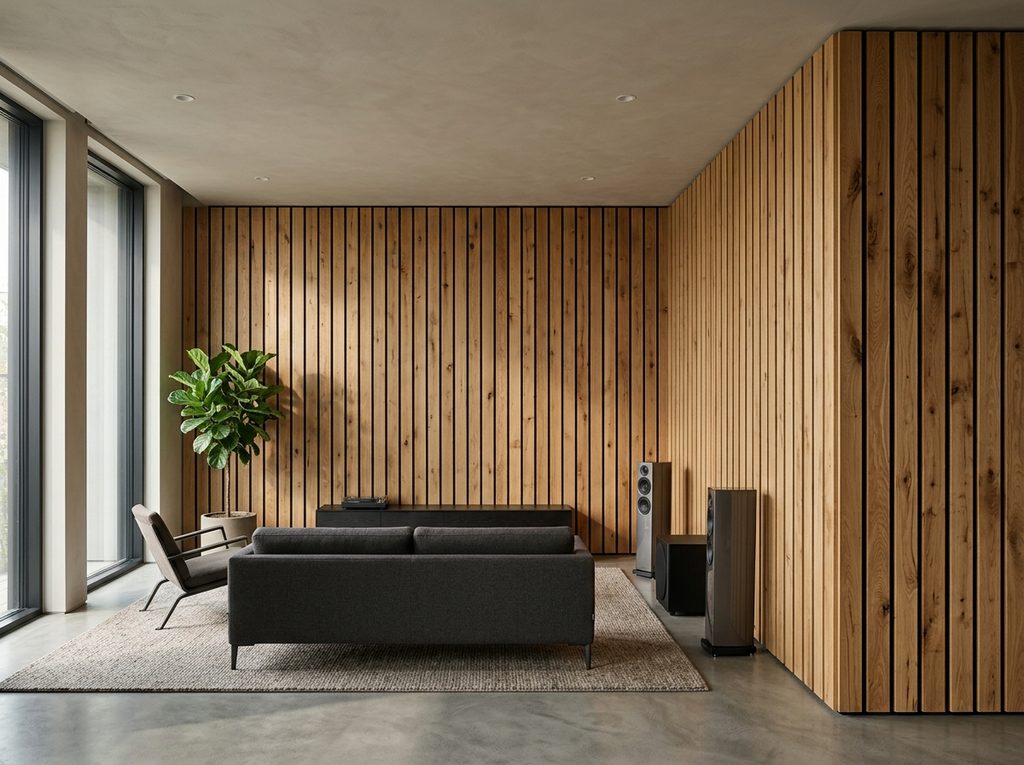
Wood is frequently selected for hospitality interiors because of its natural appearance and ability to create a warm atmosphere.
Acoustic wood panels allow designers to incorporate this aesthetic while addressing unwanted sound reflections.
Potential applications include:
- Hotel lobbies
- Reception areas
- Restaurants
- Lounges
- Conference rooms
- Banquet areas
- Guest-room feature walls
- Corridors
- Dining spaces
In restaurants, acoustic treatment can be particularly valuable because conversations, kitchen activity and background music can combine to produce a high overall noise level.
A carefully designed wood acoustic ceiling or feature wall can help reduce excessive reverberation without making the space look like a technical acoustic installation.
Acoustic Wood Panels for Restaurants
Restaurants often have a combination of highly reflective surfaces.
Tables, glass, flooring, ceilings and decorative walls can all contribute to sound reflection.
When the restaurant becomes busy, conversations can become progressively louder.
This can create an uncomfortable environment even when the restaurant has excellent interior design.
Wood acoustic panels can be incorporated into:
- Feature walls
- Ceiling systems
- Dining-area partitions
- Decorative screens
- Bar areas
- Reception zones
The wooden finish can complement furniture and architectural details while the acoustic construction contributes to sound absorption.
This makes wood acoustic treatment particularly useful when the designer wants the acoustic solution to look like part of the restaurant rather than an additional technical component.
Acoustic Wood Panels in Educational Facilities
Schools, training centers and educational facilities depend heavily on clear communication.
Teachers need to be understood, and students need to hear speech without excessive effort.
Large classrooms and auditoriums can contain significant reflective surfaces.
Acoustic wood panels can be used on walls or ceilings to control reverberation.
Current acoustic wood systems are marketed for applications including classrooms, educational facilities, conference halls and auditoriums.
The panel design can also be selected to suit the architectural character of the educational facility.
For example, linear wood panels can provide a contemporary appearance, while natural veneer finishes can create a warmer environment.
Wood Acoustic Panels for Auditoriums and Cultural Spaces
Large rooms can create more complicated acoustic challenges.
Auditoriums, cultural centers and performance spaces require careful consideration of:
- Reverberation
- Speech intelligibility
- Sound distribution
- Absorption
- Diffusion
- Room geometry
Wood acoustic systems can be incorporated into walls and ceilings to provide controlled acoustic characteristics.
Perforated and slotted panels can be particularly useful because their openings allow sound energy to interact with absorptive materials behind the visible timber surface.
However, large auditoriums should be professionally designed rather than treated using a simple decorative-panel approach.
Grooved, Slotted and Perforated Wood Panels
Different panel constructions create different acoustic behaviours.
Grooved Panels
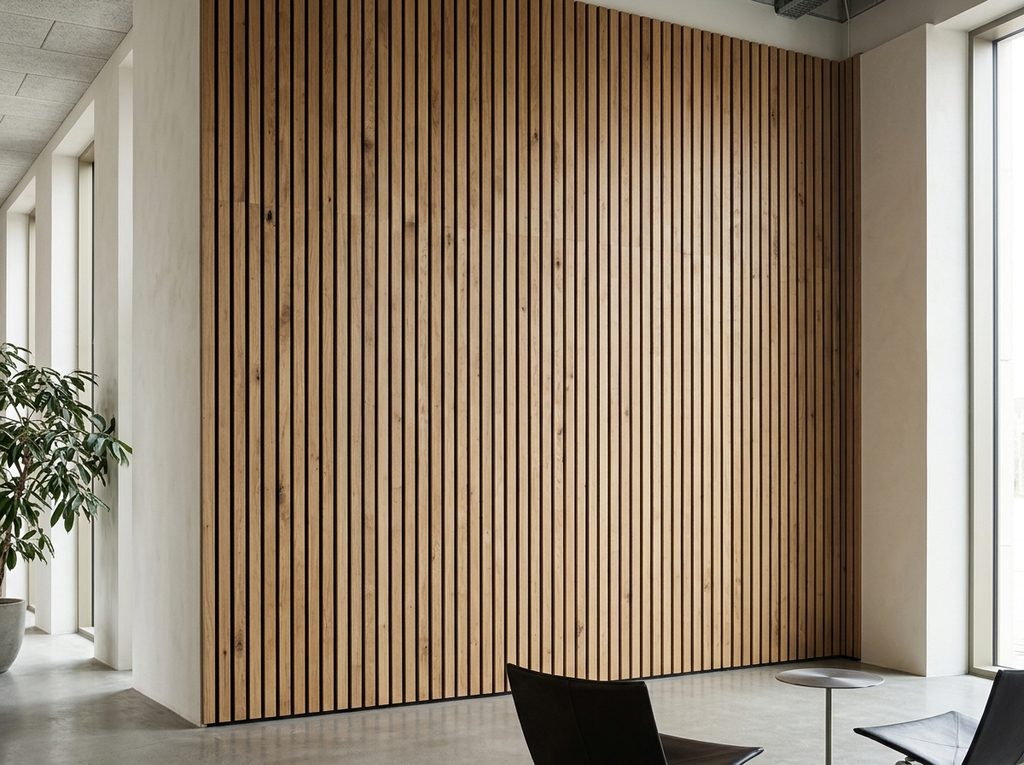
Grooves create linear architectural patterns and can contribute to sound absorption when combined with an appropriate backing system.
Slotted Panels
Slots create larger continuous openings that can expose an absorptive layer behind the wood surface.
Perforated Panels
Small holes allow sound to pass through the wooden face into the acoustic cavity.
Some current products use thousands of perforations per square metre, combined with acoustic fabric and mineral-wool backing, to create high sound-absorption performance.
The important point is that the pattern itself is not the entire acoustic solution.
The backing, cavity, panel thickness and installation arrangement all contribute to the final performance.
The Role of Acoustic Backing
A wood panel without an appropriate absorptive backing may provide limited sound absorption.
Acoustic backing materials can include:
- PET felt
- Mineral wool
- Glass wool
- Acoustic fabric
- Specialized porous materials
For example, one current acoustic wood system specifies a 5 cm glass-wool or rock-wool layer at 50 kg/m³ density to achieve its stated acoustic performance.
Another wood acoustic system combines a timber face with a 9 mm PET felt backing.
This demonstrates why acoustic performance should always be evaluated for the complete tested assembly.
Air Gaps and Acoustic Performance
The space behind a wood acoustic panel can also affect performance.
A panel mounted directly against a hard surface behaves differently from one installed over an absorptive cavity.
Increasing the distance between the panel and the structural surface can influence absorption, particularly at lower frequencies.
Some tested timber acoustic systems report strong absorption when installed with mineral-wool backing and an appropriate cavity. One current slatted timber system, for example, reports an NRC of 0.85 for a configuration incorporating 25 mm Rockwool at 60 kg/m³.
These figures should always be treated as assembly-specific test results, not universal ratings for every wood acoustic panel.
Choosing the Right Finish
Acoustic wood panels can be produced with different visual finishes.
Options can include:
- Oak
- Walnut
- Ash
- Maple
- Natural veneer
- Engineered veneer
- Lacquer
- Melamine
- Laminated finishes
Current technical ranges show multiple natural-wood and engineered finishes alongside different panel dimensions and acoustic constructions.
The choice should consider the overall interior design.
For example:
Oak can create a bright and natural appearance.
Walnut can provide a darker, more premium visual character.
Ash can produce a lighter contemporary finish.
The acoustic construction should remain the priority, with the decorative finish selected around the project’s architectural requirements.
Acoustic Wood Panels for Ceilings
Ceilings can play a major role in the acoustic behaviour of a room.
A large exposed ceiling can reflect sound throughout the space.
Wood acoustic ceiling systems can introduce absorption while maintaining a strong architectural appearance.
Potential applications include:
- Office ceilings
- Restaurant ceilings
- Hotel lobbies
- Conference rooms
- Auditoriums
- Educational spaces
- Reception areas
- Commercial interiors
A suspended or appropriately spaced acoustic wood system can also provide additional cavity depth behind the visible timber layer.
The final installation should be coordinated with lighting, HVAC, sprinklers and other ceiling services.
Sustainability and Responsible Wood Selection
Wood acoustic panels can also contribute to sustainable interior strategies when responsibly sourced materials are specified.
Some manufacturers provide certifications such as FSC or PEFC for relevant wood products. Current technical documentation for certain acoustic wood panels lists FSC and PEFC certification alongside EPD documentation.
However, sustainability credentials vary by manufacturer and product.
When environmental certification matters for a project in Burkina Faso or elsewhere in the UAE, GCC or African market, the exact documentation should be reviewed rather than assuming that every timber acoustic panel carries the same certification.
Fire Performance Should Be Checked Separately
Acoustic performance and fire performance are two different specifications.
A panel can have strong sound absorption while requiring a separate evaluation for fire classification.
Current technical data from different manufacturers shows that fire ratings vary by construction and product. For example, one wood acoustic panel range specifies Euroclass B-s1,d0, while other systems provide different fire-related certifications or optional fire-resistant constructions.
For commercial, hospitality, educational and public projects, the selected product should therefore be checked against the project’s applicable fire requirements.
Professional Acoustic Wood Panel Installation
Correct installation is essential.
A professional installation process may include:
1. Site Assessment
The existing room, finishes and acoustic issues are evaluated.
2. Acoustic Design
The required amount and location of absorption are determined.
3. Panel Selection
The appropriate wood finish, perforation, groove or slot design is selected.
4. Backing Specification
PET, mineral wool, glass wool or another appropriate acoustic backing is selected where required.
5. Layout Planning
Panel dimensions and joint positions are coordinated with the architecture.
6. Installation
Panels are securely installed using the manufacturer’s approved mounting method.
7. Services Coordination
Lighting, HVAC, electrical systems and other building services are coordinated with the acoustic installation.
8. Final Inspection
The finished installation is checked for alignment, fixing quality, surface consistency and overall finish.
This approach produces a more reliable acoustic result than simply attaching decorative timber boards to a wall.
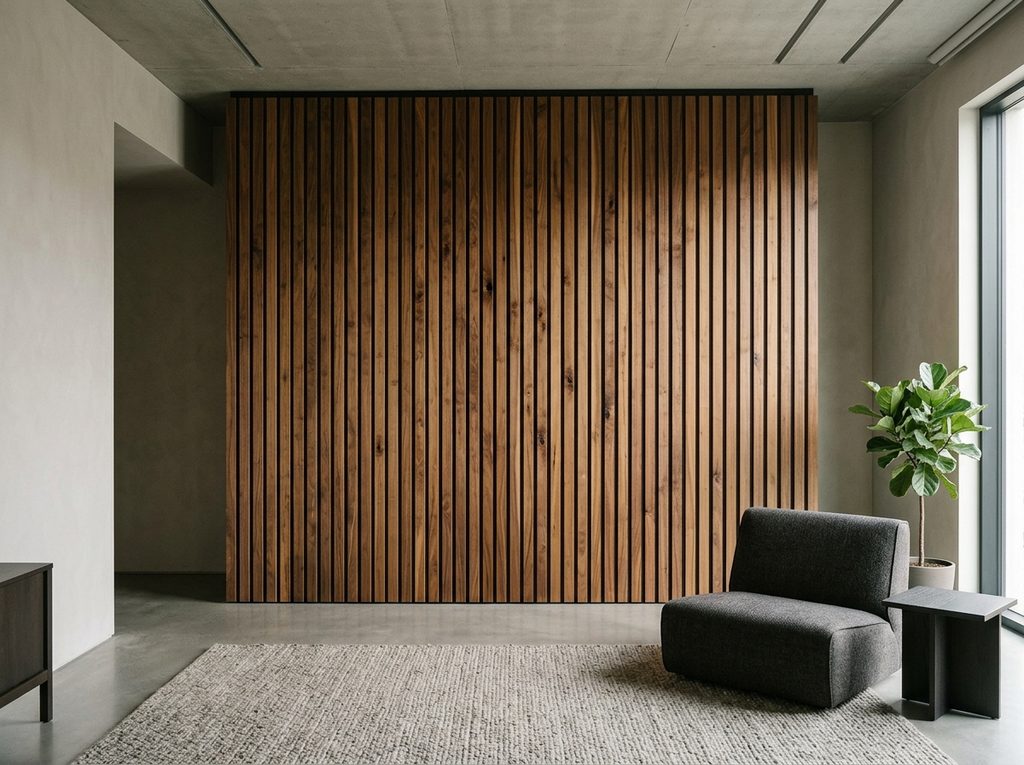
Acoustic Wood Panels vs Standard Wood Cladding
| Feature | Acoustic Wood Panels | Standard Wood Cladding |
|---|---|---|
| Primary purpose | Acoustic treatment + architectural finish | Decorative finish |
| Sound absorption | Designed into system | Usually limited |
| Perforations/slots | Often incorporated | Usually absent |
| Acoustic backing | Common | Usually absent |
| Reverberation control | Possible when properly specified | Limited |
| Custom finishes | Available | Available |
| Wall application | Yes | Yes |
| Ceiling application | Yes | Yes |
| Architectural appearance | High | High |
| Soundproofing between rooms | Not their primary purpose | Not their primary purpose |
The major difference is that acoustic wood panels are designed as a system, rather than simply as decorative timber.
Common Mistakes When Choosing Acoustic Wood Panels
Treating Decorative Wood as Acoustic Treatment
A visually attractive wooden wall does not automatically provide meaningful sound absorption.
Ignoring the Backing
The acoustic backing can have a major influence on performance.
Selecting Only by Appearance
The best-looking panel is not necessarily the best-performing acoustic system.
Ignoring the Ceiling
A large reflective ceiling can continue to contribute to reverberation even after the walls have been treated.
Using Generic Acoustic Ratings
NRC or αw values should always be checked against the exact product and installation assembly.
Forgetting Fire Requirements
Fire performance should be verified independently for the selected product.
Treating Soundproofing and Acoustic Treatment as the Same Thing
Wood acoustic panels primarily improve room acoustics. They are not automatically a solution for preventing sound transmission between rooms.
Where Can Acoustic Wood Panels Be Used in Ouagadougou?
| Application | Acoustic Purpose |
|---|---|
| Offices | Reduce reflections and improve comfort |
| Boardrooms | Improve speech intelligibility |
| Conference rooms | Control reverberation |
| Hotels | Combine acoustic comfort with premium design |
| Restaurants | Reduce excessive sound buildup |
| Classrooms | Improve speech clarity |
| Auditoriums | Support controlled room acoustics |
| Libraries | Reduce unwanted reflections |
| Cultural centers | Architectural acoustic treatment |
| Home theatres | Support sound absorption |
| Reception areas | Decorative acoustic feature walls |
| Commercial interiors | Combine design and acoustic functionality |
Frequently Asked Questions
Are acoustic wood panels soundproof?
No. Acoustic wood panels are primarily designed to absorb sound within a room and control reverberation. Soundproofing between rooms requires a suitable sound-isolation construction.
Are wooden acoustic panels better than PET panels?
Neither is universally better. Wood panels provide a natural architectural appearance and can combine timber with acoustic backing, while PET panels generally offer greater flexibility in lightweight shapes, colours and custom forms. The best option depends on the project’s acoustic and design requirements.
Do wood acoustic panels reduce echo?
Yes, when the selected panel and installation system provide appropriate sound absorption. Grooved, slotted and perforated systems can be designed to allow sound to reach an absorptive backing or cavity.
Can acoustic wood panels be installed on ceilings?
Yes. Many acoustic wood systems are designed for both walls and ceilings. Current technical ranges specifically list wall, partition and ceiling applications.
What is the best wood finish for an acoustic panel?
There is no universal best finish. Oak, walnut, ash and other finishes can be selected according to the interior design. The acoustic construction should be evaluated separately from the decorative finish.
Do perforated wood panels absorb more sound?
Perforation can allow sound to enter an absorptive cavity, but the final performance depends on perforation ratio, panel thickness, backing, cavity depth and installation. It should therefore be evaluated using tested data for the complete assembly.
Can acoustic wood panels be used in offices?
Yes. They are commonly specified for offices, meeting rooms, conference spaces and other environments where speech clarity and acoustic comfort are important.
Are acoustic wood panels suitable for restaurants?
Yes. They can be used on walls and ceilings to combine architectural wood finishes with sound absorption and improved acoustic comfort.
Conclusion
Acoustic wood panels provide an opportunity to combine architectural warmth with practical acoustic treatment in modern interiors across Ouagadougou, Burkina Faso.
Their effectiveness comes from the complete construction: the wood face, grooves or perforations, acoustic backing, cavity and installation method all work together to influence sound absorption.
For offices, conference rooms, hotels, restaurants, classrooms, auditoriums and cultural spaces, properly specified wood acoustic panels can reduce unwanted reflections while maintaining a refined architectural appearance.
The key is to avoid treating acoustic wood panels as ordinary decorative cladding. A professionally designed system considers the room’s dimensions, existing finishes, acoustic requirements, panel construction, backing, air cavity, fire requirements and installation details.
When these elements are coordinated correctly, acoustic wood panels can become both a design feature and a functional acoustic solution, creating interiors that look sophisticated while offering a more comfortable and controlled sound environment.