
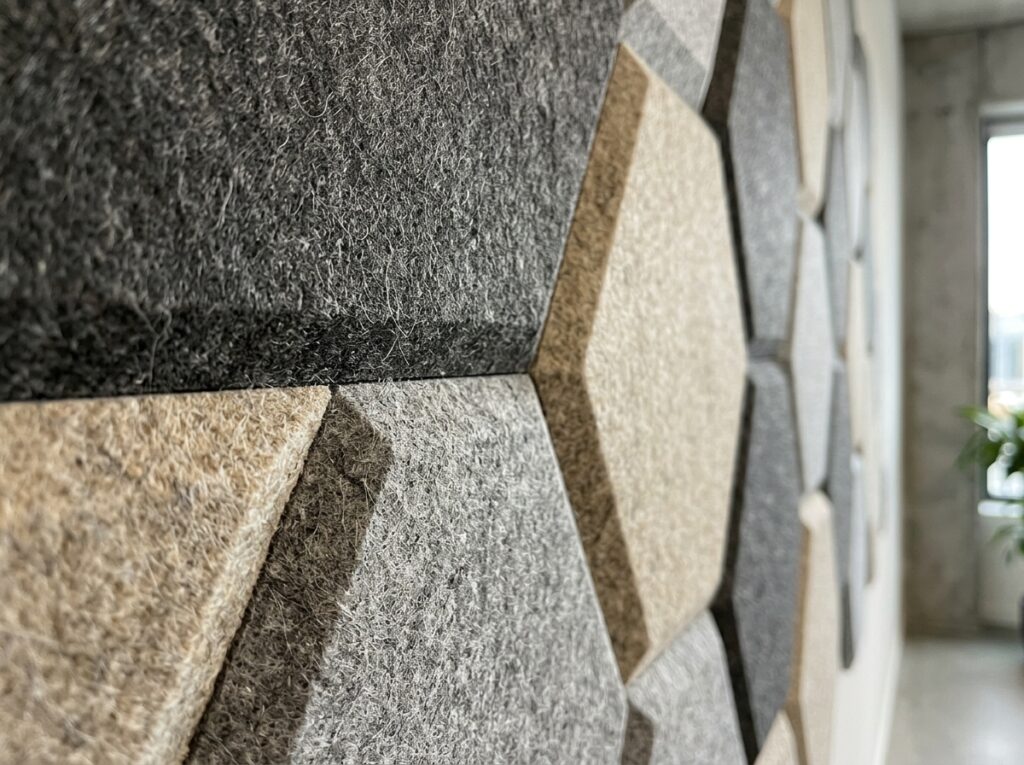
A comfortable indoor environment depends on more than temperature, lighting, and furniture. Noise and reverberation can also affect how people communicate, concentrate, work, and learn. In rooms with hard walls, floors, ceilings, and glass surfaces, sound may reflect repeatedly, making conversations less clear and creating an uncomfortable acoustic atmosphere.
Acoustic PET panels in Juba, South Sudan, offer a flexible approach to managing these reflections while providing a modern decorative finish. Made from polyester-based material, these panels are available in different colours, thicknesses, shapes, and configurations, depending on the manufacturer.
They can be used in offices, educational facilities, meeting rooms, hospitality interiors, and selected residential spaces where sound absorption is needed.
Choosing the right panel requires an understanding of how PET acoustic materials work, where they are most effective, and what product specifications should be checked before purchase.
What Are Acoustic PET Panels?
PET stands for polyethylene terephthalate, a type of polyester used in a wide range of applications. In acoustic panels, polyester fibres are formed into a porous or fibrous structure that allows sound energy to interact with the material.
Some PET acoustic panels are manufactured using recycled polyester, including material sourced from recycled plastic bottles. However, the percentage of recycled content varies between products and should be confirmed through the manufacturer’s documentation.
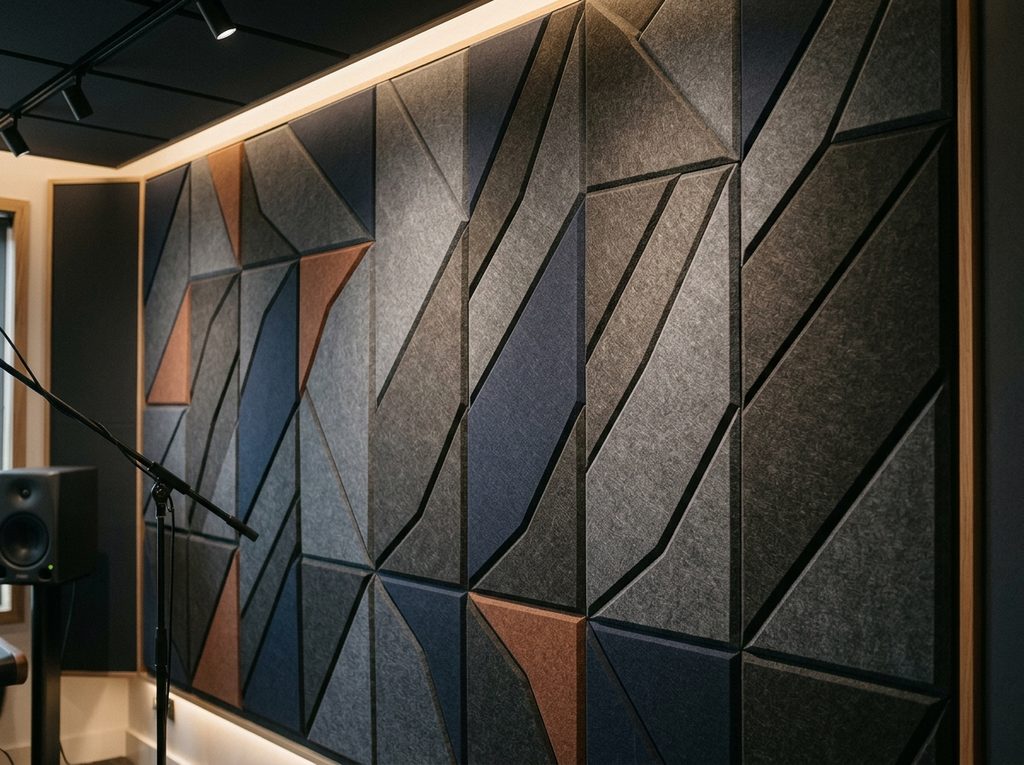
PET panels are available in formats such as flat wall panels, decorative geometric shapes, ceiling-mounted elements, suspended baffles, desk dividers, and acoustic screens. Not every product is suitable for every application, so the intended use must be checked.
Their primary purpose is to absorb sound and reduce reverberation within a space. They should not automatically be treated as soundproofing barriers.
Why Consider PET Acoustic Panels in Juba?
Juba’s offices, commercial properties, hospitality venues, educational spaces, and residential interiors may have different acoustic requirements. A meeting room may need clearer speech, while a restaurant may need less reverberation during busy periods.
Where hard finishes dominate, sound absorption can be an important part of the interior design.
1. Improved speech clarity
Sound reflections can overlap with direct speech, making it harder to understand conversations. Correctly selected PET panels can reduce some reflections and support clearer communication.
This can be valuable in conference rooms, classrooms, training spaces, and customer-facing offices.
2. Flexible design options
PET acoustic panels can be cut into different shapes and combined into patterns, subject to the capabilities of the product and fabrication process.
Designers can select colours that complement the interior, create feature walls, or use panels as visual dividers between working areas.
3. Lightweight construction
Many PET panel systems are relatively lightweight compared with some alternative wall finishes. This can make them practical for selected wall applications and suspended acoustic elements, although the support and fixing requirements must still be checked.
4. Potential recycled content
Some PET acoustic products use recycled fibres. For projects with environmental objectives, review the recycled-content declaration and any relevant environmental documentation rather than assuming that every PET product has the same composition.
5. Adaptability to different interior layouts
Flat panels can be used on selected walls, while suitable suspended products can be positioned above work areas or other locations where sound reflections need to be managed.
The appropriate installation depends on the product, available mounting points, ceiling height, and room layout.
How Do Acoustic PET Panels Work?
PET acoustic panels primarily work through sound absorption rather than sound blocking.
When sound waves encounter the fibrous structure, air movement within the material interacts with the fibres. Some acoustic energy is converted into small amounts of heat, reducing the sound reflected back into the room.
The effectiveness of this process depends on several factors:
- Panel thickness and density.
- The material’s fibre structure and construction.
- The frequency of the sound.
- The amount of surface area covered.
- The panel’s location within the room.
- The distance between the panel and the wall or ceiling.
- The mounting arrangement used in the acoustic test.
A thin panel may be useful for managing some mid- and high-frequency reflections, while lower-frequency control may require a different thickness, an air cavity, additional absorption, or a broader acoustic treatment strategy.
For this reason, it is important to review the tested performance of the exact panel instead of choosing solely by colour or appearance.
Common Applications for PET Acoustic Panels
Offices and open-plan workplaces
Open offices can contain several simultaneous conversations, phone calls, and other sources of sound. When reflective surfaces dominate, these sounds can become distracting.
PET panels may be installed on selected walls, used as acoustic desk screens, or suspended as suitable baffles. They can form part of a wider approach that also considers workstation spacing, ceiling treatment, partitions, and room layout.
Meeting and conference rooms
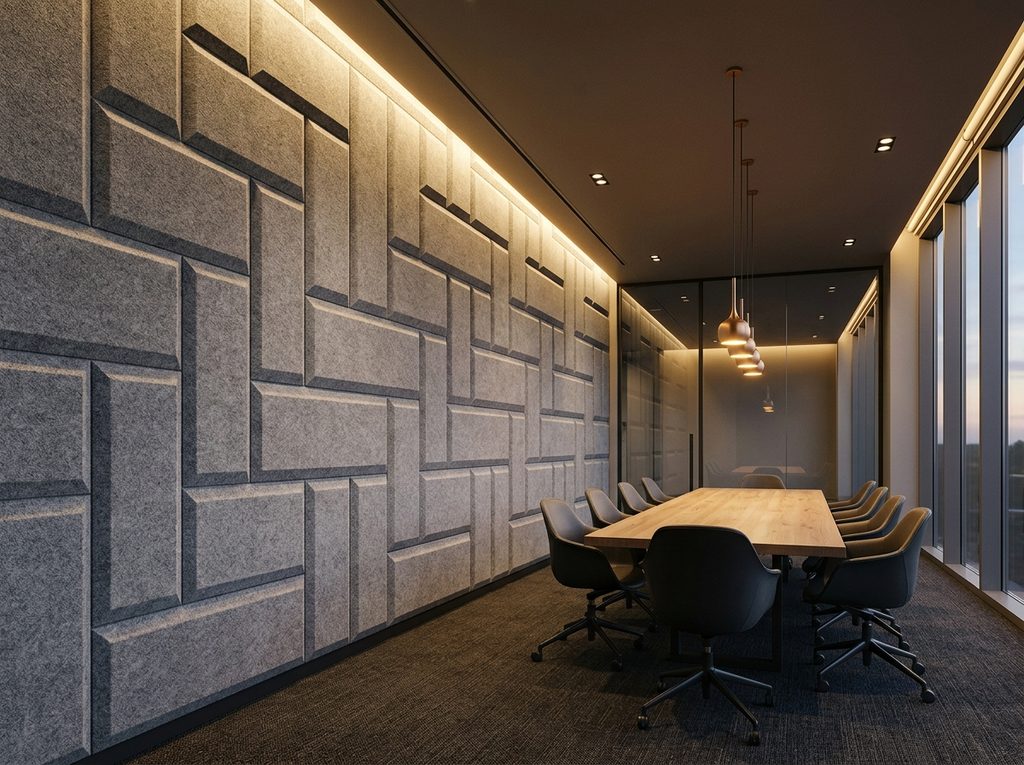
Meeting rooms need an environment in which people can understand speech without unnecessary effort. PET panels can help control reflections when the amount and placement of treatment are appropriate.
For video conferences, the microphone position, loudspeaker arrangement, background noise, and room geometry also influence the result.
Schools and training facilities
Classrooms and training rooms benefit from clear speech, especially where several people need to hear the same speaker.
Acoustic PET panels may help reduce excessive reverberation. Product selection should consider durability, cleaning, fixing security, and the relevant fire-safety requirements for the building.
Hotels, restaurants, and cafés
Dining areas, hotel lounges, reception spaces, and private function rooms often combine hard floors, glazing, and decorative surfaces.
PET panels can introduce sound-absorbing surfaces without requiring every wall to be covered. A targeted design may be sufficient, depending on the room and the acoustic objective.
Healthcare and professional environments
Reception rooms, consultation spaces, administrative offices, and waiting areas may benefit from reduced reverberation.
In such settings, the selected panel must also meet the cleaning, hygiene, durability, and fire requirements applicable to the intended space. A standard decorative panel should not be assumed to be appropriate for every clinical environment.
Residential rooms
Home offices, entertainment rooms, study areas, and shared living spaces may benefit from PET wall panels where hard finishes contribute to echo.
However, if the main concern is a neighbour’s television, street traffic, or sound travelling between rooms, wall panels alone will not provide the required sound isolation.
Choosing the Right PET Panel Thickness and Design
Thickness is one of the factors that influences the acoustic behaviour of a PET panel, but it should not be considered in isolation.
A thicker panel may provide improved absorption over a broader frequency range in a particular design, yet the result depends on density, mounting, and material construction.
When comparing products for a project in Juba, request the following information:
Panel thickness and dimensions: Confirm the available sheet sizes, thickness options, and dimensional tolerances.
Acoustic test data: Ask for sound absorption results and the relevant test method. Check whether the data relates to direct wall mounting, a suspended installation, or another configuration.
Material composition: Verify whether the panel is made from virgin polyester, recycled polyester, or a combination of fibres.
Fire performance: Request the appropriate fire classification documentation for the exact product and installation.
Colour and finish: Confirm the available colours and request samples if colour consistency is important.
Mounting requirements: Check whether the product is intended for adhesive fixing, mechanical fasteners, a frame system, or suspension.
Maintenance: Ask how the surface should be cleaned and whether the panel is suitable for the expected conditions.
These details help ensure that the selected panel meets the project’s functional and visual requirements.
PET Panels Versus Foam Acoustic Panels
PET panels and acoustic foam both have sound-absorbing applications, but they differ in material construction, available formats, surface finish, and product-specific performance.
PET panels are often chosen for their decorative flexibility, relatively firm structure, and suitability for flat panels, shaped designs, screens, and baffles. Acoustic foam products may be selected for other applications based on their design and tested characteristics.
Neither material should be judged by appearance alone. Compare their measured absorption, fire documentation, durability, installation requirements, and suitability for the intended environment.
PET Panels Versus Soundproofing Materials
This is one of the most important distinctions for buyers.
PET panels generally help reduce reflections within a room. They do not automatically prevent noise from travelling through walls, doors, windows, floors, or ceilings.
If a room in Juba is affected by traffic noise or sound from an adjacent office, the problem may require improvements to the building envelope. Depending on the source and pathway, solutions can involve sealing gaps, upgrading doors or glazing, improving wall construction, or addressing flanking transmission.
In some projects, absorption and sound isolation are both necessary, but they solve different parts of the problem.
Installation Planning for PET Acoustic Panels in Juba
Before installation, assess the room’s dimensions, ceiling height, reflective surfaces, and primary sound sources. Establish whether the goal is clearer speech, reduced reverberation, or a decorative feature with some acoustic benefit.
Prepare a layout that identifies panel locations, edges, corners, switches, sockets, lights, and other obstructions. Avoid planning coverage purely by visual symmetry if the acoustic objective calls for treatment in particular areas.
Check the substrate and use the fixing method approved for the chosen panel. Adhesives, fasteners, frames, and suspension systems are not interchangeable across every product.
For ceiling-mounted panels or baffles, ensure that the supporting structure and fixing system are suitable for the panel’s weight and the installation conditions.
After installation, inspect the panels for secure attachment, alignment, clean edges, and damage. Follow the manufacturer’s guidance for cleaning and maintenance.
How Much PET Acoustic Panel Coverage Is Needed?
There is no single coverage percentage that works for every room. The quantity depends on the room’s size, intended use, existing finishes, occupancy, and required acoustic outcome.
A small meeting room with excessive echo may need a different treatment plan from a large restaurant or open-plan office.
For more demanding projects, an acoustic consultant can assess the space and estimate the required absorption. The design may combine wall panels, ceiling absorption, baffles, carpeting, curtains, and other measures.
The objective is not necessarily to cover every available surface. It is to provide the right amount of absorption in the right locations.
What Influences the Cost of PET Panels in Juba?
The final cost depends on the product specification and the complete project scope.
Important cost factors include:
- Panel thickness, dimensions, density, and construction.
- Standard colours versus custom colours or shapes.
- Recycled-content and other documented product requirements.
- Total quantity and layout complexity.
- Wall mounting, framing, suspension, or other installation systems.
- Cutting, edge finishing, and custom fabrication.
- Delivery, import arrangements, and local availability.
- Labour, access equipment, and site preparation.
Request a quotation based on the same panel specification and quantity when comparing suppliers. This makes it easier to distinguish differences in material, installation, and delivery costs.
How to Evaluate a PET Panel Supplier
A suitable supplier should provide clear product information rather than relying on general claims about soundproofing.
Ask for technical data sheets, acoustic test reports, fire documentation where required, available sizes, finish samples, installation guidance, and warranty conditions.
Confirm whether the quoted product is intended for walls, ceilings, screens, or suspended applications. A product suitable for one use may not be suitable for another.
For a project in Juba, also verify delivery lead times, packaging, replacement availability, and the support offered if panels arrive damaged or require adjustment on site.
Frequently Asked Questions
What are PET acoustic panels made from?
They are made from polyester-based material. Some products incorporate recycled polyester fibres, but composition and recycled-content percentages vary by manufacturer.
Do PET acoustic panels block outside noise?
They primarily absorb sound reflections within a room. They should not be treated as a standalone barrier against traffic noise or sound travelling through a building.
Are PET panels suitable for office walls?
Many products are designed for office and commercial interiors. Confirm the selected panel’s mounting method, acoustic data, durability, and fire documentation.
Can PET panels be custom cut?
Some PET acoustic panels can be cut into geometric shapes, logos, patterns, and custom layouts. Confirm the product’s fabrication limits and finishing requirements before ordering.

Does a thicker PET panel always perform better?
Not necessarily in every application. Thickness is important, but performance also depends on density, fibre structure, mounting, air gaps, and frequency.
Are PET acoustic panels easy to maintain?
Maintenance requirements depend on the product’s surface and construction. Follow the manufacturer’s cleaning instructions and confirm suitability for environments with specific hygiene requirements.
How do I choose PET panels for a project in Juba?
Identify the acoustic objective, establish the required coverage, and compare product-specific test data, material composition, installation instructions, finish options, and delivery terms.
Conclusion
Acoustic PET panels provide a versatile way to manage sound reflections while adding colour and design flexibility to interior spaces. In Juba, South Sudan, they may be considered for offices, meeting rooms, schools, hospitality venues, and selected residential environments.
The right product should be chosen according to its tested acoustic performance, material composition, mounting arrangement, and suitability for the building. If the goal is to stop noise travelling between rooms or entering from outdoors, additional sound-isolation measures may be needed.
By comparing technical documentation and planning panel placement carefully, project owners and designers can select PET acoustic panels that support both interior design and acoustic comfort.