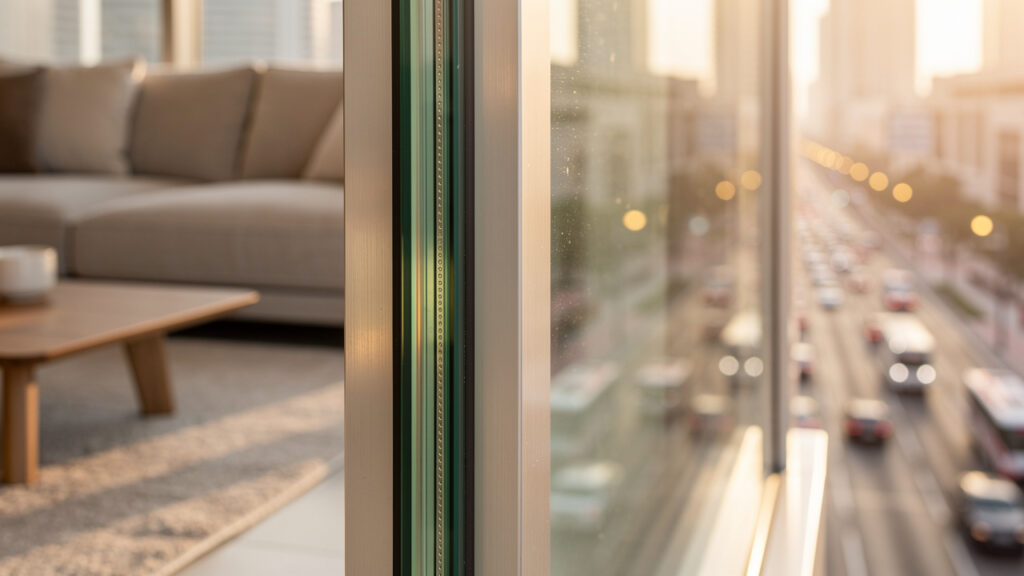
Busy streets in Ajman and Fujairah send traffic noise, construction clatter, and workshop sounds straight into many homes and offices. The result is broken sleep, low focus, and rising stress. Acoustic glass gives that noise fewer paths into your building and helps bring back calmer rooms.
This special type of glass uses a laminated build with a sound‑dampening layer, so outside noise reaches your space at a much lower level. In fast‑growing UAE cities, that change matters for apartments, villas, hotels, clinics, and offices. Waseem Technical specializes in acoustics and brings more than 13 years of experience to these projects across the UAE and GCC.
In the next sections you will see why noise keeps rising, how acoustic glass works, what Waseem Technical offers, and which benefits you can expect in real rooms. That way you can decide which upgrade fits your building and budget.
Key Takeaways
These highlights preview the full guide. They cover the local noise problem and the acoustic glass answer, and they show the role of Waseem Technical.
Ajman and Fujairah grow louder each year. Traffic and construction rarely pause, so many homes and offices now feel noisy inside even with windows closed.
Acoustic glass uses laminated panes and a PVB layer. That layer absorbs sound vibration instead of passing it on, so rooms feel noticeably quieter than with normal glass.
Waseem Technical designs and installs each system for the site. Good design and fitting matter as much as the glass. Clients gain quiet, comfort, and better property appeal.
Why Noise Pollution Is a Growing Problem in Ajman and Fujairah

Noise pollution in Ajman and Fujairah keeps rising because transport routes, construction sites, and industry sit very close to housing and workplaces. This constant sound load affects sleep, stress levels, and concentration. Research from the World Health Organization links long‑term environmental noise with higher rates of heart disease and sleep disturbance, so traffic noise is not just an annoyance; it is a real health factor.
“Environmental noise is an important public health issue, linked to sleep disturbance, cardiovascular disease, and reduced quality of life.” — World Health Organization
In Ajman, main corridors such as Sheikh Khalifa Bin Zayed Street carry dense traffic through long daytime and evening hours. Apartments around City Centre Ajman or in Al Rashidiya often sit only a few meters from these roads. Offices near Ajman Corniche have a direct line of sight to busy junctions. Standard single‑glazed windows pass most of this sound indoors, so people still hear engines, horns, and motorbikes with the windows firmly shut.
Fujairah faces a similar pattern, especially along Hamad Bin Abdullah Street and the nearby industrial zones. Heavy trucks serving the port, workshops, and warehouses pass close to villas in Al Faseel and apartments in Sakamkam. New towers and logistics buildings bring drilling, hammering, and concrete work that may start early and finish late. All these layers combine into a steady background roar that wears people down over time.
According to the European Environment Agency, at least one in five people in European cities lives with harmful road traffic noise levels. Growing Gulf cities share many of the same traits, with dense housing beside loud roads and mixed‑use blocks. For Ajman and Fujairah residents, acoustic measures like upgraded glass move from a nice extra to a practical need. Without them, even well finished interiors can still feel noisy and tiring.
How Does Acoustic Glass Actually Work?
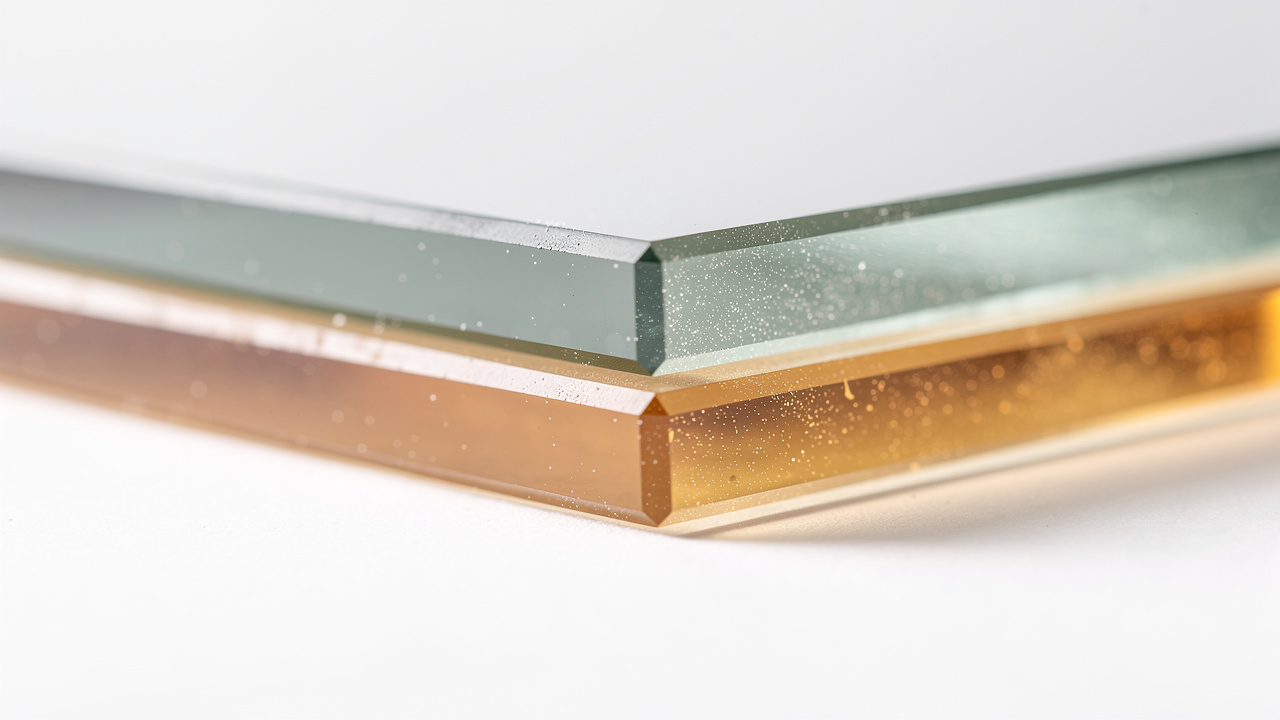
Acoustic glass works by turning incoming sound energy into tiny amounts of heat instead of vibration. It uses two or more panes bonded with a special polyvinyl butyral (PVB) interlayer. When sound hits the window, the glass tries to vibrate, but the soft PVB layer absorbs much of that movement. According to Saint‑Gobain Glass, high‑performance acoustic laminated units can reach weighted sound reduction values around 52 dB, while simple single glass often sits near 25 to 28 dB — a gap well documented in studies on the Role of HVAC in building energy and acoustic performance.
That jump in rating brings a clear change in how loud a room feels. A reduction of around 10 dB is heard as roughly half the loudness for most people. Research from Engineering ToolBox explains that decibels are logarithmic, so each 10 dB step represents a large shift in perceived volume. Moving from basic float glass to strong acoustic glass can turn harsh street noise into a soft murmur in bedrooms and meeting rooms.
Modern acoustic glass often sits inside double‑glazed or even triple‑glazed window units. In these units the air or gas‑filled gap between panes adds another barrier to airborne sound. The combination of laminated glass plus a sealed cavity works especially well for low‑frequency traffic rumble that simple double glazing struggles with. Ratings like Rw and Rw + Ctr help compare how well different builds perform against real road noise.
Standard windows also have weak spots called coincidence frequencies, where certain pitches pass through the glass very easily. Waseem Technical deals with this by mixing glass thicknesses inside the same unit, such as 6 millimeter and 10 millimeter panes around the PVB layer — a technique backed by findings on Simultaneous acoustic perfect absorption and advanced sound-dampening material design. Different thicknesses respond to different frequencies, so the weak spots of one pane are covered by the strength of the other. The result is smoother noise reduction across bass traffic sounds, human voices, and high‑pitched tools on construction sites.
Standard glass often cuts only around 25 to 28 dB of noise, while acoustic laminated glass can reach close to 52 dB, which people hear as a major drop in loudness.
| Aspect | Standard Window Glass | Acoustic Laminated Glass |
|---|---|---|
| Construction | Single thin pane | Two or more panes with a PVB layer |
| Typical Sound Reduction Rating | Around 25 to 28 dB Rw | Around 35 to 52 dB Rw |
| Indoor Experience Near Busy Road | Constant traffic clearly audible | Traffic sound reduced to muted background |
What Types Of Acoustic Glass Services Does Waseem Technical Offer?
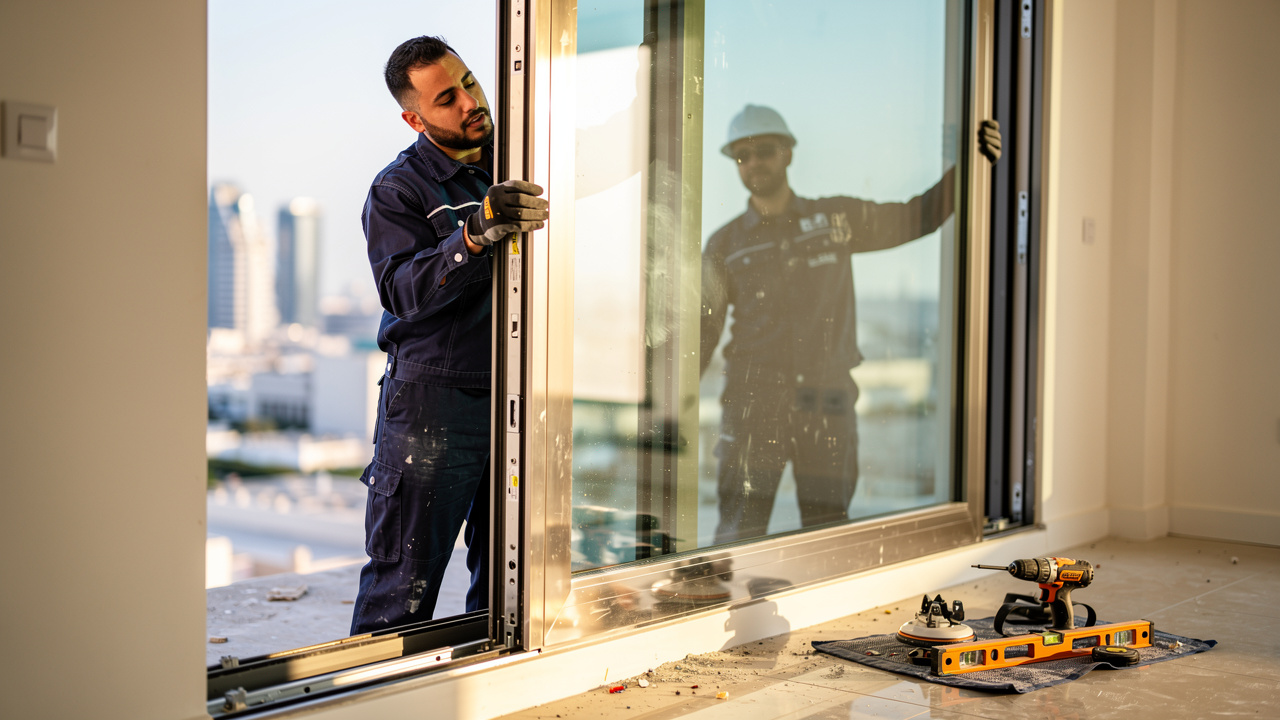
Acoustic glass comes in several formats, and Waseem Technical combines them into clear, practical packages for different property types. The focus is always on the real noise you face in Ajman and Fujairah, not only on catalog numbers. Our specialists survey each site, listen to the main noise sources, and check existing frames and walls. From there they propose glass‑based systems that match both the building and the budget, backed by more than 13 years of UAE experience.
Acoustic laminated glass windows sit at the front line between your rooms and the street. They use multiple glass layers and a PVB interlayer to reduce both low traffic rumble and sharper sounds from horns or drills. Waseem Technical fits these windows with tight seals and insulated frames so small gaps do not undo the acoustic gain.
Acoustic laminated glass doors suit balconies, terrace access, and interior partitions in apartments, villas, and clinics. They let sunlight pass while cutting sound transfer between living rooms, bedrooms, and work areas. Many Ajman and Fujairah clients use these doors to separate noisy reception spaces from quiet offices or treatment rooms.
High‑rise offices in Ajman near Sheikh Khalifa Bin Zayed Street or Ajman Corniche need strong protection from traffic and neighboring tower work. For these sites Waseem Technical designs larger acoustic glass units that integrate with curtain wall and unitized facade systems. The aim is a calm interior where staff can focus even while cranes and trucks operate outside.
Some interiors already have large clear glass walls that bounce sound around. Waseem Technical can add acoustic panels that mount on glass, hang just in front of it, or sit on nearby ceilings and walls. These panels absorb echo so speech in meeting rooms, classrooms, and restaurants becomes clearer and less tiring.
Complex spaces like recording studios, podcast rooms, and factories near Hamad Bin Abdullah Street or Al Jurf often need more than one product. Our engineers combine acoustic glass, fabric‑wrapped wall panels, PET panels, and hanging baffles to treat the full space. This joined‑up approach reduces both outside noise entering and internal echo between hard surfaces in locations such as Al Faseel and Sakamkam.
Tip from Waseem Technical: Always check frames and seals as well as the glass. Even a small gap can let in more noise than an entire pane.
Research from World Green Building Council links better acoustic comfort with higher worker satisfaction and performance. That means these glass‑based systems help not only with noise control but also with staff well‑being in UAE offices, schools, and healthcare buildings.
What Are The Key Benefits Of Installing Acoustic Glass In UAE Properties?

Installing acoustic glass in UAE properties brings more than quiet rooms. It cuts outdoor noise, improves temperature control, raises privacy, and can also lift property appeal. For owners in Ajman and Fujairah, a single upgrade can support comfort at home and performance at work.
Better glazing also affects energy bills. According to the U.S. Department of Energy, heat gain and loss through windows account for around 25 to 30 percent of residential heating and cooling energy use. In a hot climate like the UAE, glass that slows heat transfer helps air conditioning work less across long summers. That support adds up over the life of the building and matters for both villas and apartment towers.
| Benefit | Practical Impact in UAE Cities |
|---|---|
| Noise Reduction | Bedrooms, classrooms, and offices stay quieter even beside busy streets in Ajman or Fujairah, so people sleep better and concentrate for longer periods. |
| Thermal Comfort | Better insulation keeps cool air inside during long Gulf summers, which means AC runs fewer hours for the same comfort level. |
| Privacy | Less sound escapes to the street or next door, which helps clinics, meeting rooms, and studios keep conversations private. |
| Property Appeal | Buyers and tenants in the UAE pay more attention to quiet, efficient units, so acoustic upgrades can support higher rent or resale. |
| Safety And Security | Laminated glass holds together when broken, so shards do not fall inwards easily and forced entry becomes harder. |
Research compiled by World Green Building Council also links good acoustic conditions with lower stress and better cognitive performance. Waseem Technical pays close attention to frames, seals, and wall junctions so glass performance carries through into real rooms. Poorly sealed frames let sound slip around even the best pane. Careful detailing means clients feel the full benefit in daily life, not just on paper specifications.
The Final Word On Acoustic Glass For Ajman And Fujairah Properties
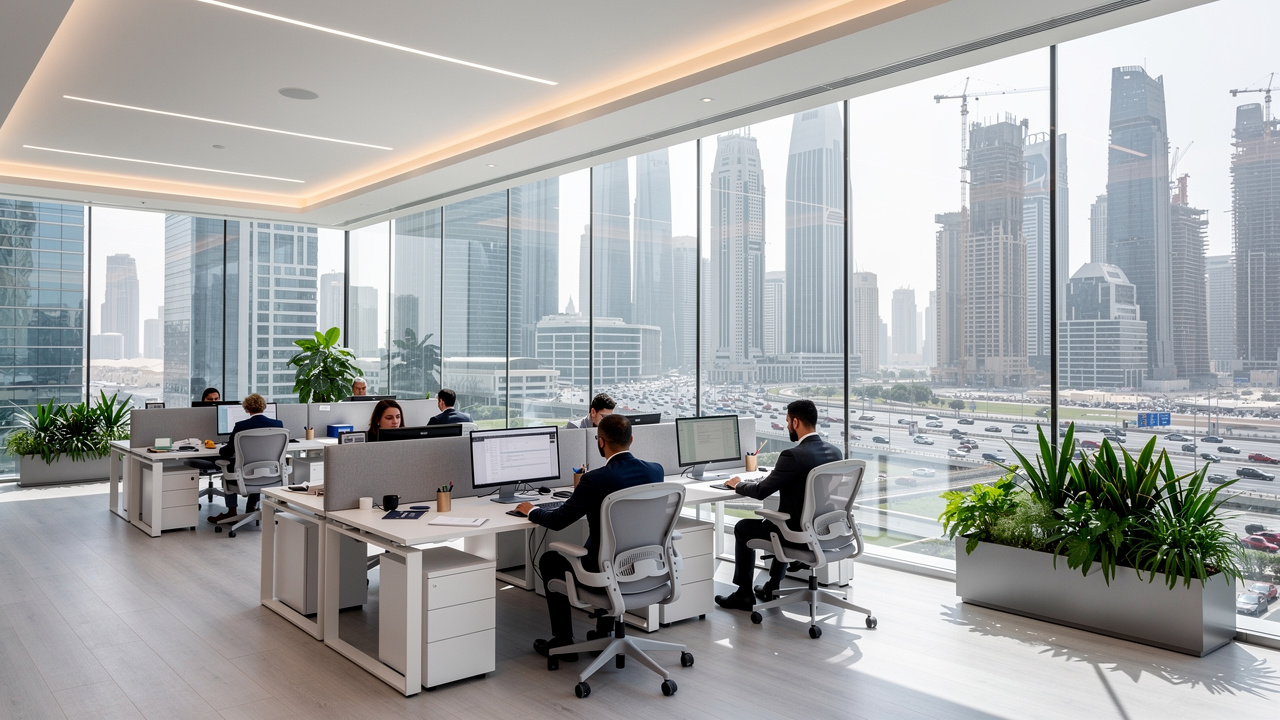
Rising noise from traffic, construction, and industry has changed daily life in Ajman and Fujairah. Acoustic glass offers a proven way to regain quiet rooms, cooler interiors, and stronger privacy without losing natural light or views. Waseem Technical brings more than 13 years of focused acoustic experience, covering homes and commercial sites across the UAE and wider GCC with well planned glass systems and professional fitting. To arrange a free on‑site assessment, call +971 50 209 7517 or visit waseemtechnical.ae and share your noise challenge.
Frequently Asked Questions
These quick answers cover the points people in Ajman and Fujairah ask most often about acoustic glass. Each reply stays simple and practical. You can always contact Waseem Technical for details on your exact building.
How much noise can acoustic glass actually block in a UAE home or office?
Acoustic glass can cut outside noise roughly by half or more compared to simple single glazing when installed correctly. Acoustic builds often reach ratings around 35 to 52 dB, while standard glass sits near 25 to 28 dB. Actual results depend on glass choice, frames, and seals.
Is acoustic glass worth it for an apartment near a busy road in Ajman?
Yes, it is usually a very strong upgrade for such apartments. Homes beside main Ajman roads face long hours of engine and horn noise that normal glass hardly softens. Better sleep, calmer living rooms, and improved rental appeal often follow the change.
Can acoustic glass also help with heat and UV protection in the UAE?
Yes, modern acoustic glass also helps with heat and sun. Laminated units and double glazing slow heat transfer, so AC does not work as hard in summer, and research into Towards net-zero emissions in residential heating and cooling underlines why efficient glazing is a meaningful step in reducing overall energy demand. Many PVB interlayers block up to 99 percent of UV, which protects furniture and flooring.
How long does acoustic glass installation take for a typical property?
Small apartment projects often finish within one or two working days, while large villas or offices take longer. The exact schedule depends on window count, access, and glass type. Waseem Technical confirms timing after a free site check.
Does Waseem Technical serve both Ajman and Fujairah for acoustic glass installations?
Yes, Waseem Technical installs acoustic glass across Ajman, Fujairah, and the wider UAE. The team regularly serves areas such as Al Rashidiya, Ajman Corniche, and Al Jurf, plus Al Faseel, Sakamkam, and streets around Hamad Bin Abdullah Street. GCC‑wide work is also possible for bigger projects.