Noise pollution is no longer limited to industrial zones or busy highways. Residential apartments, office buildings, hotels, studios, and commercial facilities all face increasing acoustic challenges. Understanding How to Maximize Acoustic Performance with Sound Insulation Panels is essential for creating environments that are comfortable, productive, and compliant with building standards.
At Waseem Technical, we provide professional acoustic solutions tailored to each space. Our sound insulation systems are engineered to control airborne and structure-borne noise effectively, delivering measurable acoustic improvement rather than temporary fixes.
This article explains how sound insulation panels work, how to install them strategically, and how to optimize their performance for maximum results.
Understanding Acoustic Performance Fundamentals
Before installing sound insulation panels, it is important to understand what “acoustic performance” actually means.
Acoustic performance is measured by:
- STC (Sound Transmission Class) – Indicates how well a structure blocks airborne sound.
- NRC (Noise Reduction Coefficient) – Measures how effectively a material absorbs sound.
- Decibel Reduction (dB) – Quantifies the reduction of noise levels.
To maximize acoustic performance with sound insulation panels, you must address:
- Airborne noise (voices, traffic, music)
- Impact noise (footsteps, dropped objects)
- Flanking transmission (sound traveling through adjacent structures)
Without a proper assessment, even high-quality panels may underperform.
Choosing the Right Sound Insulation Panels
Not all panels are the same. The effectiveness of a sound insulation system depends on:
- Material density
- Core composition
- Installation method
- Location of application
At Waseem Technical, our sound insulation panels are designed to provide superior mass and absorption characteristics. High-density mineral wool, acoustic foam composites, and layered barrier systems are commonly used to achieve optimal isolation.
When selecting panels, consider:
- Wall vs ceiling installation
- Partition walls in offices
- Home theaters or studio applications
- Industrial and mechanical rooms
Selecting the correct product type is the first step in learning How to Maximize Acoustic Performance with Sound Insulation Panels without overinvesting in unnecessary materials.
Proper Site Assessment Before Installation
One of the most common mistakes is installing panels without conducting a professional acoustic evaluation.
A site inspection should include:
- Identifying primary noise sources
- Measuring baseline decibel levels
- Detecting structural weak points
- Evaluating wall and ceiling construction
Sound can leak through small gaps, electrical outlets, duct systems, and poorly sealed doors. Installing panels without sealing these gaps reduces overall system efficiency.
Waseem Technical performs detailed site inspections to ensure that insulation panels are applied in the most effective configuration.
Strategic Placement for Maximum Efficiency
Placement matters more than quantity. Randomly covering walls with panels will not guarantee results.
For maximum acoustic performance:
1. Treat First Reflection Points
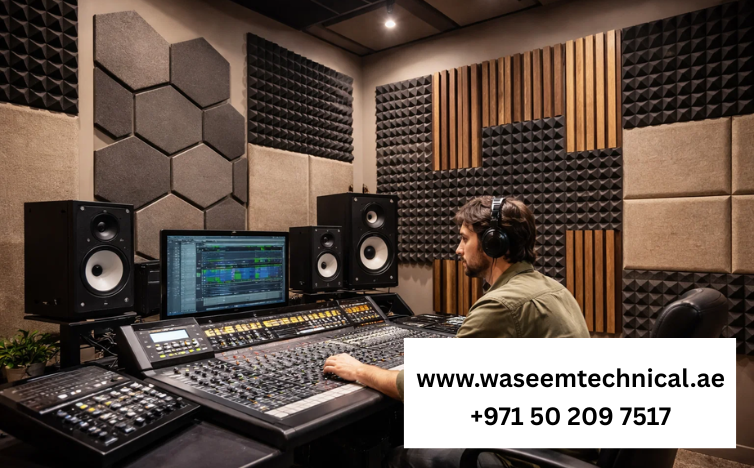
In offices and conference rooms, focus on reflection zones where sound waves bounce directly.
2. Reinforce Shared Walls
For apartments or commercial spaces, prioritize walls shared with noisy neighbors.
3. Ceiling and Floor Integration
Sound frequently travels vertically. Ceiling insulation and floating floor systems dramatically improve performance.
4. Combine with Acoustic Doors and Seals
Panels alone cannot block noise if doors and gaps remain untreated.
Learning to Maximize Acoustic Performance with Sound Insulation Panels requires understanding that insulation works best as part of a complete acoustic system.
Sealing Gaps and Preventing Sound Leakage
Even the highest-rated panels will fail if flanking paths are ignored.
Critical areas to seal include:
- Door frames
- Window edges
- Electrical outlets
- HVAC duct openings
- Wall joints
Acoustic sealants and isolation tapes significantly improve overall performance. In professional installations, perimeter sealing is considered mandatory, not optional.
This step alone can increase effective noise reduction by a noticeable margin.
Layering Techniques for Superior Sound Isolation
One advanced method to maximize performance is layered construction.
Layering typically includes:
- Base wall structure
- Sound insulation panel
- Resilient channel or isolation clip
- Additional drywall layer
This multi-layer approach increases mass and reduces vibration transmission.
In high-demand environments such as studios or executive meeting rooms, double-layered systems with isolation channels are often required to meet acoustic targets.
Installation Quality and Professional Expertise
Improper installation is a leading cause of underperforming acoustic systems.
Common installation errors include:
- Gaps between panels
- Incorrect fasteners
- Compression of insulation material
- Lack of decoupling
Professional acoustic contractors ensure:
- Tight sealing
- Correct density placement
- Structural integrity
- Code compliance
At Waseem Technical, our experienced technicians follow structured installation protocols to ensure optimal acoustic performance.
Maintenance and Long-Term Performance
Sound insulation panels are generally low maintenance. However, periodic inspection ensures durability.
Recommended checks include:
- Structural shifts
- Water damage
- Sealant deterioration
- Mechanical system modifications
If any changes occur within the space, re-evaluating the acoustic setup ensures continued efficiency.
Why Choose Waseem Technical
When considering How to Maximize Acoustic Performance with Sound Insulation Panels, choosing the right provider is as important as choosing the right material.
Waseem Technical offers:
- Professional site inspections
- Customized acoustic solutions
- High-performance sound insulation panels
- Expert installation services
- Solutions for residential and commercial projects
Our sound insulation products are designed to meet regional building requirements while delivering measurable noise reduction results.
Call us: Contact Waseem Technical Soundproofing Expert in Dubai : +971 50 209 7517
Conclusion
Maximizing acoustic performance requires more than simply installing panels. It involves:
- Selecting appropriate materials
- Conducting professional site assessments
- Strategic placement
- Sealing flanking paths
- Using layered construction methods
- Ensuring proper installation
Understanding to Maximize Acoustic Performance with Sound Insulation Panels allows homeowners and businesses to achieve long-term acoustic comfort and improved sound control.